The Tale of a Boy at Sea

Yesterday, I read a unique book that chilled me to the bone. It wasn’t the curious case of an unsolvable mystery, it wasn’t a multi-murder crime thriller, and it wasn’t a sweet romantic proposal story. It was the tale of a young boy stranded at sea for ten days.

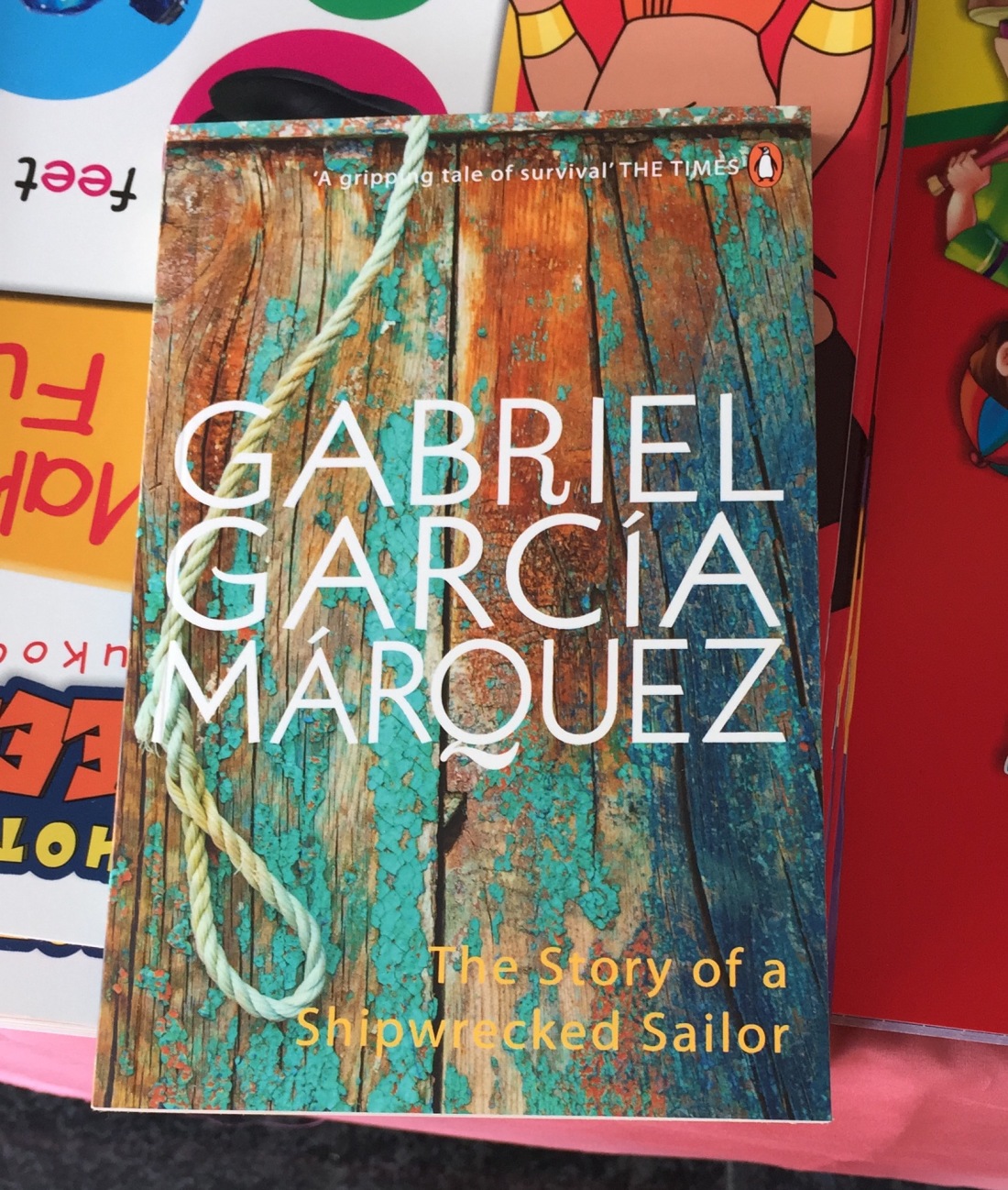
It’s not Life of Pi, but I wouldn’t blame you if you had thought so. That book is ever more popular after its movie counterpart. However, the book I just read is “The Story of a Shipwrecked Sailor,” and the author is Gabriel García Márquez.
the-story-of-a-shipwrecked-sailor-gabriel-garcia-marquez

It surprised me too. I had never heard of Márquez writing such a book. But I was curious. It was a small book, just about 100 pages. And yet as I held the book in my hands contemplating whether to buy it, all my sense of reality told me I should opt for an ebook, instead, because it would take far less physical space. I asked a friend to help me decide, and he warned me that Amazon would have the same book, for a lower price.

And so when I was almost convinced I shouldn’t buy the book, I flipped the book over and read the epilogue. That’s when I realised: this was Márquez’s first book. That piqued my interest. Besides, the cover was gripping, and it even had a review from The Times that called the narrative, “A gripping tale of survival.” And at that moment, I took a chance. I lost all sense of common sense and decided to go for it. After all, I had nothing to lose.

I’m glad I made the decision. I know I shouldn’t have gone by just the cover of the book, but this is one of those times when the gut and the cover got it right. It’s a simple story, in the first person point of view. A boy in a ship leaves for Colombia after being in port for six months. He set out homewards, to his family and soil he could call his own. In the middle of the sea, however, disaster strikes and all of his shipmates go down. He holds on to a raft and survives the sea—amidst sharks, hallucinations, hunger, and thirst—for ten days. He then makes it to land and becomes a national hero.

It’s typical and predictable in all aspects. But the best part of it is that the author narrates all the typicality and the commonness of it in such a matter-of-fact way, that you can’t help but keep turning the pages. You’d want to know what’s coming, even though your sixth sense tells you it’s nothing great for the hero.

The story reeks of emotion. You feel for the hero. When he stretches his neck looking for land, you stretch with him. When he plunges his hand into the sea trying to catch some fish, you gasp knowing that the sharks are waiting around the corner. When he wonders how shoes taste like, you’ll find yourself imagining the taste on your tongue. And as he tries to pry out the soles of his shoes, you wish you could pry it with him.

It’s an ordinary story, but it gives you an extraordinary experience. I now know why Gabriel García Márquez got a Nobel prize for literature.
The Kindling

kindle-vs-books

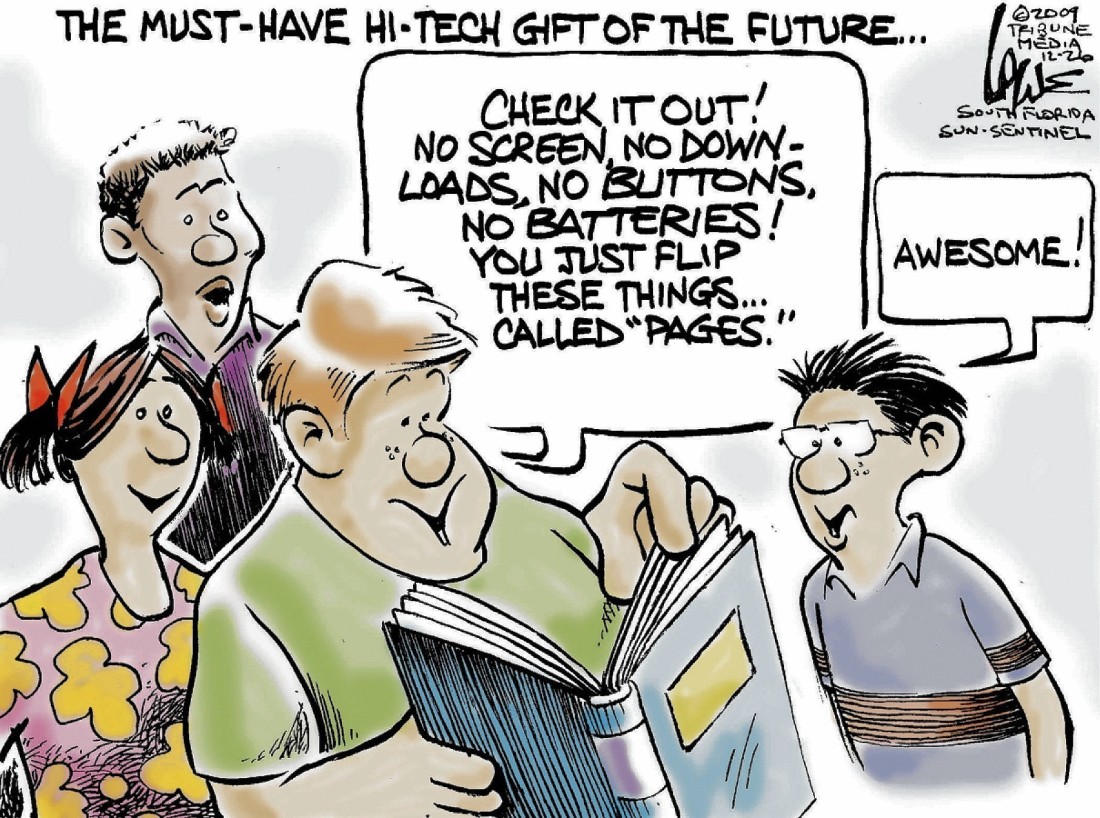
“Get real,” she said. “No one’s going to spend time reading bulky books in future. Why would they, when we already have audio books and kindle?”

My friend and I were having coffee at a famous fast food chain. We had left the office for lunch but decided to grab a muffin and an espresso instead.

When someone said such a thing, I’d flare back at them without a second thought. But now I held my tongue. My friend made sense, and I hated myself for admitting it. I said nothing, however. My coffee lingered under my tongue sending shots of bitterness through my system.

I love reading physical books. And I’ve admitted more times than I know, that despite the Kindle app’s animation to turn pages, an ebook just doesn’t feel the same way. But I’m reading four or five books now, and all of them are on my mobile. It’s easy because I never know when I’d get the time to read a page or two, and my phone’s just lying there in my pocket.

But I’m also against the digital revolution that’s almost killed paperbacks. It saddens me that leather bounds are now classed as exclusive collector’s items.

Books are books. They’re made up of words that can twist and tug at the deepest of heartstrings, and not antiques held together with age-old rust and dust.

Books are books. They’re living things filled with opinions and teachings. They can weigh in when you’re down, though sometimes even weigh too much when you’re carrying a burden.

Books are books. They are a mark of history written. They’re proof that people lived through them; they behold fingerprints and memories of thousands of enlightened minds who’ve cherished every page, every word, and every curve of the “g”s in them.

Whereas Kindle is cold. It’s a case that displays what it contains, and it contains a new thing every day.

Kindle is just a Kindle. It’s sleek to the touch, fits into your arms, and easy to carry.

Kindle is just a Kindle. It’s got hundreds of voices screaming for your attention, and if you’re ever appalled by the violence in one page, you can always find some zen in another.

The Kindle is just a Kindle. It’s versatile with multiple stories and multiple stands. It will neither weigh in for you nor weigh you down.

Kindle is kindling in the name only. It kindles not one but many emotions, which is good for some but too many for most. Bulky books rekindle spirits. There’s no escape from the secrets within a bound book. You either take all it in or give it all up. There’s no intervention, and there’s no mid-ground.

But even as all these thoughts rushed through my head, I still kept my mouth shut. As much as I hated it, ebooks and Kindles are the new way of reading.

With the rise of 140 characters, facebook-like attention spans, and books you can listen to while watching silent movies, many people think hot chocolate and the sofa near the foggy window is more suitable for the family kitten. My friend was right. In future, not many people would read heavy books. We’d intake lines and lines of words like we inhale air. And like air, most of it wouldn’t even reach our brains. It’s the age of the Kindle and unkindled souls.

I Wrote a Novel

Sometimes you can’t help but wonder. What would it be to be a published author? I’ve wondered that since I was 13, and now, I have a chance.

Inkitt.com is running a contest, and they call it Story Peak Novel Contest. I’m in. And so is my novel, Praveena.

I posted one chapter of it a day last November during the National Blog Posting Month. Whether you read it then or not, you can now.

And if you do like it, please consider reserving a copy. The best three novels that get 100 readers or more will have a chance to get published. It’s a small ray of hope I’m clinging to.

I’m counting on everyone of you reading this now to help me get there. I’d appreciate it a lot.

Read it here: My novel on Inkitt.

Again, if you think it’s good, please reserve a copy for yourself (and tell everyone you know to reserve their copy, too).

Understanding  Metamorphosis

I’m not sure what brought it up, but a colleague mentioned Franz Kafka wrote the saddest stories ever. A pathos fan myself, my interest was piqued. My colleague recommended and lent me the ebook version of Metamorphosis, a supposed stunner.

It was a small book, and I managed to tolerate reading it on a screen. I finished it last night and gave it a two-star rating on Goodreads. And then I scrolled through reviews to see what other readers had said thought about the book. I was stunned; a lot of people had given four or five stars, and words like “wonderful,” “amazing,” “deep,” and “emotional” jumped out at me.

I scratched my head. Huh?

Jack

It was as if they had read a different book altogether. I wondered if my copy had been just the preface, and if there was more to the tale than I had read.

I had expected dramatic change, something that would topple the lives of all the characters. I know all that did happen, still, it was too matter-of-fact, like.

It’s not that I didn’t like the story, but I didn’t see what the big deal was. It was well written, sure. It had an uncanny plot, yes. And an unconventional ending. But other than that, I didn’t feel the sadness ebbing from the words, I wasn’t moved to tears, my eyes didn’t burn, my nose didn’t stream, and my neck didn’t hurt from crouching.

It was a good story with a beautiful narrative. It wasn’t gripping or as sad as I had hoped. Nevertheless, the comments on Goodreads unsettles me. I feel almost inhuman not seeing what’s so intriguing about the book.

Have you read Metamorphosis? Pray tell, what did I miss?

Understanding Zen

I just finished reading, Zen and the Art of Motorcycle Maintenance. It’s an achievement, believe me. It took me almost 9 months to finish that book.

zen

And it wasn’t because I read many other books at the same time. No, while I read this book, I read no other. And it still took me 9 months. I should say, though, I was also studying for my exams and, for about three to four months, I didn’t even touch Zen.

Still, it’s a long time to read a five hundred+ page book. An international best seller, at that.

I read slow, but even I’m not that slow. After all, Harry Potter, the Inheritance series, and Chronicles of Narnia are all about the same size and I’ve sat through all night glued to those books. Why then did this book take so long?

It’s the writing for the most part. It was complex, it was all over the place, with two different narratives that just kept throwing me off the original message.

But there were so many good parts in the book that just jumped out at me. The best thing that came out of spending 9 months on one book is that it seemed like a lifetime. And the book is about a man’s discoveries over a lifetime. In hindsight, it feels like I’ve learnt so many different things, at different stages of my own life.

The book transcends from Pirsig’s life, into my own; my learnings, and my own understanding of how the world works.

Disclaimer, though: I don’t mean to sound all enlightened and zen-like. There are so many parts of the book that I read without taking in a thing.

But these blank parts of the book that I read three months ago, make sense to me now. What I though I understood while reading a paragraph is so different from when I understand after finishing the book.

And I’m counting on the same thing happening with other complex topics in the book.

And I’m sure when I read it the second time, I’ll see more things I didn’t see this time. Or, maybe, when I’m in the shower worrying about my hair fall, I’ll realise I should let the future be.

future