Strange thoughts

When I saw that my favourite podcast had an episode with Jacinda Ardern as the guest, I instinctively tapped to listen.

Iโ€™m one of the millions of people who admired Jacinda Ardernโ€™s leadership from afar.ย When she was prime minister, I only knew about New Zealand as a great hiking spot. My view of her work and approach to leadership was rather narrow. But since moving here, Iโ€™ve heard lots of varying perspectives of her time as leader, and grown to appreciate the nuances that come with a job like that. Iโ€™ve also concluded that political theatre is sadly not an accurate reflection of the kind of society we ought to be building.

The podcast episode was lovely. Jacinda was honest and funny and surprisingly relatable. I enjoyed hearing about her childhood in the Mormon Church and then the sharp contrast of her adult life of sharing a flat with three gay men. Life has a wonderful way of making us confront our discomforts.

But then she and the host had an exchange that made me gasp. Iโ€™m paraphrasing:

JA: It (breast cancer scare) wasnโ€™t the primary catalyst for leaving, but it was the first moment I remember thinking, โ€œOh, maybe you could leave.โ€œ And I thought, โ€œWell, thatโ€™s a dark thought, isn’t it?โ€

Host: I think a lot of women have that thought, โ€œIf I get sick I can leave!โ€

JA: Yes! Honestly when you start thinking that way, that has to be a catalyst for sitting down and having a serious internal conversation.

That little conversation caught me off guard because I recognise it, in myself and others. I know both women and menโ€”but mostly womenโ€”who find it easier (and preferable) to have an external factor make that decision for them, whether at work or in life, rather than taking on the cognitive burden of making the call themselves.

What is it about living that makes us think that way?

Hello, again.

When I first started this blog several years ago, I was so young and naive that I needed my brother to help set it up. He was already working in the tech field so he knew all about this thing called blogging that was taking over the internet, with so much promise to change the world with powerful words and images. And I guess blogs did that for a long time… until louder forms of content showed up and we gradually lost interest in reading long-form prose, instead craving more and more short and snappy and entertaining pieces.

But I digress.

When my brother helped me set up this blog, he told me he was going to buy a domainโ€”my nameโ€”and pay for it. I pushed back. Would it be worth the money? What if I don’t publish any writing and the domain just sat there useless?

He told me to use that doubt as fuel. To write and publish something every day, “even when you have exams,” I remember him saying, making sure our dad was out of earshot. That way, I could feed my passion for writing and also make the spend worth it.

So I did. I took that advice to heart and wrote every day. For nearly a decade, I made sure that I wrote something, anything, and hit publish. I wrote my exams in the morning and on my blog in the evening. Once I started working, I went to office at 7am so I could write before work.

If I had to travel for weeks, I’d spend hours binge writing so I’d have enough posts to scheduleย for the days I’d be away. I wrote everywhereโ€”in airports and train stations, in my head on my morning runs or while doing the dishes. I wrote ferociously and veraciously (no, Claude, that’s not a typo). I wrote poetry, short stories, random musings, travelogues, book reviews, and so many things. I even taught myself how to write myself out of a writing block.

Even when I moved countries, I kept writing. Even when I enrolled in a full-time degree while working full-time I managed to keep my one-haiku-a-day habit alive.

And then a few months ago, after far too many months working 12-14 hours a day, my mind finally showed me how exhausted I was. When I wasn’t working, all I wanted to do was to while away. Writing for the sake of writing started to feel a bit too heavy.

So I skipped writing for a day and felt deeply guilty about it. It didn’t feel right to let go, even temporarily, of the only thing my entire personality and life was centred around. Since I was 12, all I’ve ever wanted was to be in a constant state of writing.

Then I skipped another day. And another. And another. And I wasn’t feeling as guilty anymore. I just told myself I was writing on LinkedIn thrice a week and that still counted as writing.

It didn’t. Because as much as I enjoy the stories on LinkedIn, the cognitive load required to filter out the bullshit, to read between the lines, to not judge a post by its pouting lips but by its intellect takes a lot out of me.

And so I found myself tonight, as most nights these days, scrolling through LinkedIn and trying to conjure up the energy to write something that’s professional, meaningful, and enjoyable. And I somehow found myself here, instead.

My 2025 in booksโ€”reflecting on the meh, relishing the mastery

Every January, I give myself a target to read a certain number of books during that year. For the first time this year, I read some fantasy fiction that I never would’ve if it hadn’t been for my best friend who loves steampunk, urban fantasy, and exploding worlds in the sky. She chose books we’d read together, so I ended up peering into stories about astronaut schools and moon-hopping rebel cadets; about bone witches discovering their witchiness and bitchiness at the same time; about vampire knitting clubs; and all such woo woo-ness.

Although I enjoyed these strange stories at the time, many of them didn’t challenge me too much. That sounds pretentious, I realise, but they were largely short-lived fun. Not unlike the feeling you get after watching a salacious TV series about steamy affairs and greedy cocaine snorting gangs. You know it’s wrong, and you feel bad that you enjoyed the experience of being embedded in that world, even if just for a few hours.

Surely my year in books wasn’t all that bad?

It wasn’t. I was just blowing things out of proportion. Because when I scrolled through my Goodreads account, I realised I’d also read some fantastic books that kept me obsessed, curious, questioning, and challenging my own assumptions and long-held beliefs.

Like This I Would Kill For by Anne Buist, a book that goes into the mind of a psychiatrist who has bipolar disorder. It was the first time in my life that I’d considered that a mental health physician could live with a complex mental health condition themselves, and that that doesn’t mean they can’t function or do their job admirably.

Or Theory & Practice by Michelle de Krester, a book that challenged my notions of what a story is and how narrative fiction should look and read.

Or The Lasting Harm by Lucia Osborne-Crowley that chronicles a day-by-day account of the now-renown trial of Ghislaine Maxwell, and goes into harrowing details of Epstein’s empire of abuse. This book kept me up at night.

As did the controversial Ayn Rand’s popular Atlas Shrugged that made me think about the parallels between our modern AI-driven world of business and creativity, and the world that John Galt tried to destabilise. I wrote about it, too.

That book nicely sandwiched Cal Newport’s thoughts on the nature of workplace communication in A World Without Email, where he explores how much we’ve let email run our lives even when we’re supposedly switched off, and Johann Hari’s rather disturbing, illuminating, and complementary observations in Stolen Focus: Why You Can’t Pay Attentionโ€”and How to Think Deeply Again.

It was with that solid backdrop that I went into the next great read of the year: The Culture Map: Breaking Through the Invisible Boundaries of Global Business by Erin Meyer, a beautiful and honest exploration of why we sometimes struggle to like our international colleagues, and how our traditions and cultures influence the way we think, work, and approach life and play. This stuff should be essential reading in colleges and universities. This is what young people should know as they step into the real world of The Workforce.

Then there was Chai Time at Cinnamon Gardens by Shankar Chandran. It had been on my list for a few years and is the kind of book that immediately reveals its nature in the title, and stays true to every unspoken promise it made in said title. Having read Song of the Sun God by the same author earlier in the year, and as someone born and raised in Sri Lanka during the civil war, I knew what I was getting into with Chai Time and felt connected to these books in a way that I hadn’t connected with a person this year.

Your Face Belongs to Us: A Secretive Startup’s Quest to End Privacy as We Know It by Kashmir Hill pulled me sharply back to modern day reality, making me pick up my jaw from the ground several times over the course of fabulous narrative prose. The author tells a story I wish weren’t trueโ€”the tale of dangerously powerful people like Hoan Ton-That (an Aussie computer engineer) Richard Schwartz (former Rudy Giuliani advisor), and Peter Thiel, and the unregulated facial recognition technology they championed, offered, and sold to businesses, private investors, and law enforcement agencies. A technology so questionable that even Google and Facebook considered it too immoral to release.

One of my favourite pieces of screenwriting comes from BBC’s Sherlock: “Don’t make people into heroes, John. Heroes don’t exist, and if they did, I wouldn’t be one of them.” Once again this year, I was reminded of how true those words are when I settled into finally reading Flawed Hero: Truth, Lies and War Crimes by Chris Masters. The author, a journalist, explores how Australia fell in love with Ben Roberts-Smith VC MG, the most decorated soldier of the Australian army, who after leaving the force, became the epitome of success and gallantry, and the general manager of Seven Media in Brisbane. Masters goes on to explain the biggest defamation trial in modern Australia, one that shed light into the horrific war crimes, bullying, executions, blooding, and abuse that Ben Roberts-Smith (or BRS for ease) was responsible for. I was living in Australia when the war crimes allegations against BRS came to light and the defamation trial was being heard. So I knew what I was getting into with this book but that didn’t make it any easier to digest. Heroes really don’t exist.

It wasn’t all dismay and despair, though. This year’s reading list also included some gloriously heartwarming stories of love, life, and choices that make your heart sing…

Like Two Steps Onward by Graeme Simsion and Anne Buist, a sequel to the story of two people who first met on the Camino de Santiago (Two Steps Forward), and find that circumstances bring them together again to walk the Chemin dโ€™Assise.

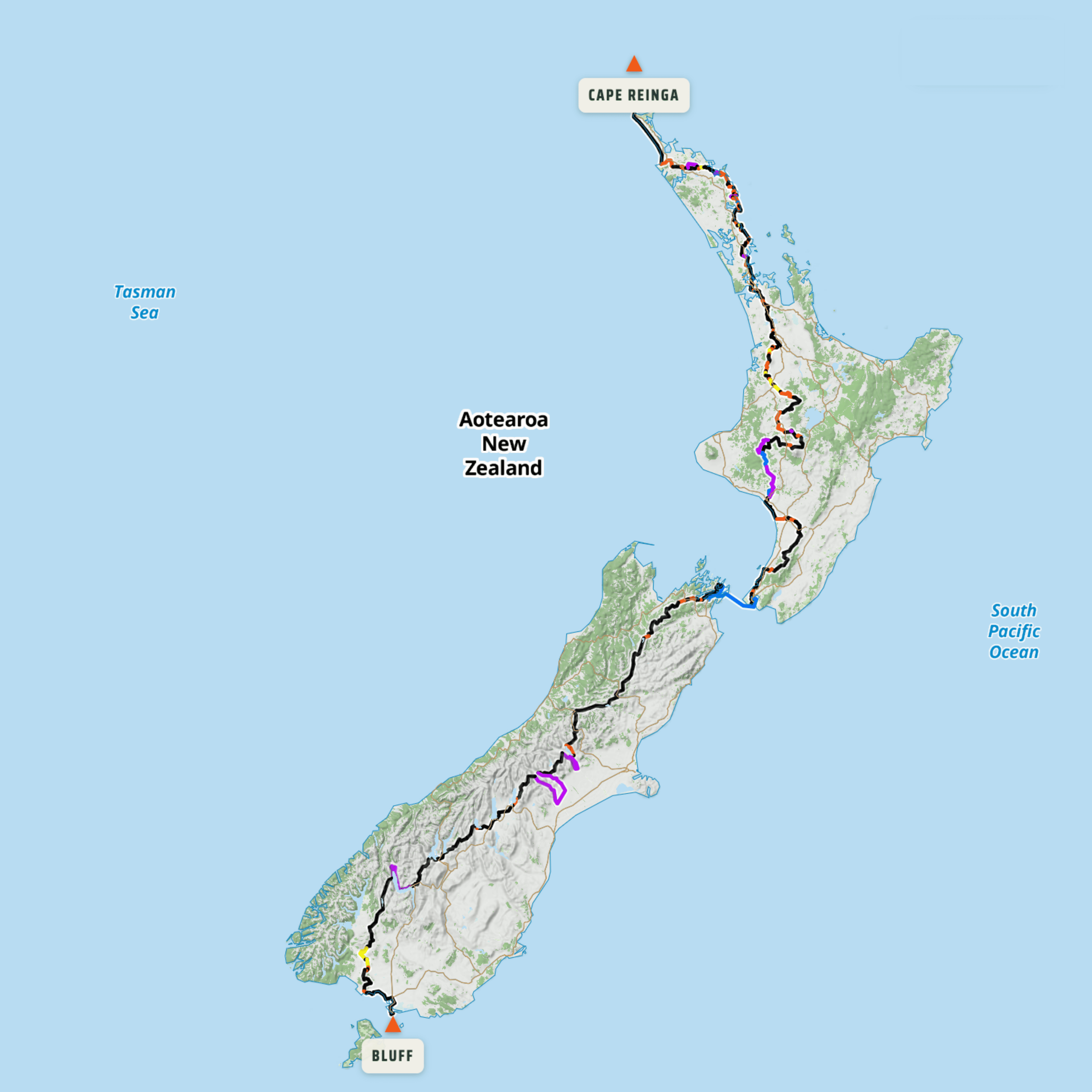
Like Northbound: Four Seasons of Solitude on Te Araroa by Naomi Arnold. This woman, who’d been watching the Te Araroa and dreaming of walking it for 20 years finally did it when she was 41. Te Araroa is a 3000 kilometre through hike that goes through the entire length of New Zealand. Most people take 3-5 months to walk the trail, during the spring-summer walking season. But the author, an adult with life and responsibilities and an active job, did it in 10 months. I love this book because the author talks about how we can become obsessed with the idea of perfection (of walking every damn inch of the trail), and how that sometimes leads to missed opportunities and more pain than pleasure.

Like Tomorrow, and Tomorrow, and Tomorrow by Gabrielle Zevin, a great story about soulmates who aren’t lovers. This is such a deep exploration of love and relationships, how personal insecurities get in the way of happiness and honesty, and all the reasons we hold people close in our lives. All the feels.

Richard Flanagan is one of my favourite Australian writers. His love for Tasmania, nature, people, history, and country shine through in his personal examination of morality and storytelling. Question 7 is one of those books that doesn’t seem all that coherent on a surface level but illustrates how seemingly random events lead to the here and now. Reading Flanagan is like stepping into a dream where you confront reality in poetic form.

I can’t speak of poetry and dreams without paying homage to Dirrayawadha by Anita Heiss. The author of Bila Yarrudhanggalangdhuray (glorious read, btw), Heiss has a way with words and stories that made me fall in love with Australia’s aboriginal heritage like nothing else did. She sets humble fiction within the harsh history of Australia; her simple prose slices through any illusions that modern/migrant Australia might still have about the role of invasion in the destruction of aboriginal culture and lifestyle; and she shows that love stories and happily ever afters are so much more nuanced than “boy meets girl.”

So there you have itโ€”the end of another year of reading, thinking, learning about life, work, and the purpose of everything. It’s been a great year of pushing boundaries, sitting in discomfort, keeping an open mind (as much as possible), and reading more of writing that brings me joy.

What are your favourite reads from this year, and what’re you looking forward to reading in the next?


My bookshelf from 2025 – full list of books I enjoyed this year.

My 2022 in books

stock image of a brown dog wearing glasses, an open book on a table in front of it

Itโ€™s been a good reading year for me. I managed to finish 53 books, with 2 more unfinished. Many of the 53 were audiobooks, often consumed in bed, while cooking, or while stretching muscles. Some required my rapt attention while others were shallow enough for me to be scrolling mindlessly while listening. But all of them were enlightening in a different way. Hereโ€™re my favourite reads of 2022.

  1. Toxic: The Rotting Underbelly of the Tasmania Salmon Industry, Richard Flannagan – non-fiction
    You can almost hear Flannagan despair at the transformation of his homeland. The Tasmanian author illustrates the realities of the farmed fish industry that keeps most of Australia fuelled every week. We learn about the intense and disgusting conditions of salmon farming, paired with gory details of what constitutes food for the fish we so desire. Brilliantly confronting.
  1. Bila Yarrudhanggalangdhuray: River of Dreams, Anita Heiss – historical fiction
    Sheer beautyโ€”both the narrative and the setting. The tale of a womanโ€™s connection to land, family, and the joys and challenges of fitting into a society unlike your own. This is a captivating read that explores the often unspoken elements of inter-racial friendships and relationships. Set in colonial Australia, itโ€™s a good perspective into the lives and loves of people who made this country.
  1. Ballad of the Whiskey Robber: A True Story of Bank Heists, Ice Hockey, Transylvanian Pelt Smuggling, Moonlighting Detectives, and Broken Hearts, Julian Rubinstein – biography
    A gripping telling of the life and adventures of Attila Ambrus, a Transylvanian immigrant in Hungary. This is an outrageous and hilarious life story of a renowned ice hockey player, whoโ€™s had a range of oddly interesting jobs including gravedigger, church painter, building superintendent, and a bank robber. Oh, and he loves his whiskey. Reading this book is like watching a thriller TV series from the โ€˜70s. Thereโ€™s humour, silliness, stupidity, and lots of running around.ย 
  1. The Brain that Changes Itself: Stories of Personal Triumph from the Frontiers of Brain Science and The Brain’s Way of Healing: Remarkable Discoveries and Recoveries from the Frontiers of Neuroplasticity, Norman Doidge – Science
    The most educational books Iโ€™ve read in a while. Lots of fascinating facts about the brain and its miraculous ability to retrain itself after what most people would consider irreversible damage. They stand as seperate books, and you donโ€™t have to read one to understand the other. However, since I read both in that order, it helped connect them both better. The author explains how our brains are wired and how one portion of the brain can โ€œlearnโ€ to compensate for another. Both books refer to medical journals on neuroscience, but they’re are written for the average reader with no medical knowledge or experience. You donโ€™t even need to know the lobes of the brain to appreciate neuroplasticity. The second book brims with stories and anecdotes from people whoโ€™ve experienced neuroplasticity in their lives. Like the man with Parkinsonโ€™s Disease who controlled and nearly eliminated all his symptoms just by walking at a specific pace and routine. Absolutely worth your time, and both books will leave you craving more knowledge on the subject.
  1. On Eating Meat: The truth about its production and the ethics of eating it, Matthew Evans – non-fiction
    This is a no BS, no greenwashing book about the realities of being a meat lover in a society thatโ€™s increasingly meat conscious. A confronting book, you could say. Former food critic and chef, the author is now a farmer living in a large farm with his family and a few cows. Most of the book is self-referential, almost memoir-like. Evans outlines the evils of todayโ€™s meat farming industry, but also explains why vegans shouldnโ€™t be the ones demanding to stop it. In a time where vegan activism is taking over the news, the author argues that meat eaters should be fighting for a better way of creating meat for humanity. Itโ€™s an interesting readโ€”especially if you eat meat. This isnโ€™t an attack on meat eaters or vegans. Itโ€™s an interesting examination of the way we exploit animals for cheap meat, diminishing their dignity and trivialising death. Iโ€™ve been vegan for almost 5 years, and I thoroughly enjoyed a meat-eaterโ€™s perspective on sustainable meat.
  1. Devotion, Hannah Kent – historical fiction
    If youโ€™ve read anything by this author, youโ€™ll know you can rely on her to rattle your core. Set in 1836, the story follows the protagonist, her family, and their village of Old Lutherans embarking on their journey from Prussia to Adelaide, South Australia. The first half is a vividly-beautiful illustration of the Prussian village, contrasted sharply in the second half, by the harshness of living in a sickly and overcrowded ship for months. This is the story of a young girl who loves and loses two great things in her life: the nature in her village and her best friend. At the time in colonial Australia, the first free-settlers were arriving in the country. South Australia is the only state in the country that wasnโ€™t a penal colony, and so the arrival of European settlers is a big part of the stateโ€™s long and proud history. Beautiful writingโ€”worth every moment.
  1. The Stranger, Kathryn More – dystopia
    For a fan of The Handmaidโ€™s Tale and 1986, this book wasnโ€™t hard to like. Itโ€™s set in a fictional town in the middle of nowhere where the teenage protagonist lives as the lover of the townโ€™s leader/protector. Cut off from the rest of humanity, the people of this little town live in constant fear of the mystery illness that plagues the โ€œoutsideโ€. A stranger rides into the town one day, challenging everything the townsfolk and our protagonist have ever known. Though Covid is never mentioned, you often get the feeling that this townโ€™s story could’ve easily been the reality we escaped. This is described as a feminist book, but I think itโ€™s also a clichรฉd narrative of feminism: gun-wielding woman teaches abusive men a lesson, empowers young girl. Still, the storyline is interesting and the setting is curious enough to read this book.
  1. Where the Crawdads Sing, Delia Owens – historical fiction
    Set in 1960s America. This is essentially a nature book. Such glorious descriptions of nature and the young girl who lives alone in the marsh. This is an interesting read because itโ€™s a coming-of-age story, weaved in with a crime investigation. Thereโ€™s a lot of sharp plot turns and twists to keep you entertained and wanting more. Itโ€™s also a fascinating idea to feature an independent main character who becomes an accomplished naturalist and creative, when all the world looks at her as an illiterate, naive, and vulnerable girl. I love a good strong female lead. Thereโ€™s a hero, too, of course. He teaches her to read, falls in love with her and leaves her, only to come back and become the only one who stays by her. The romance is young, awkward, and silly, and so artfully portrayed.ย 
  1. Wild Abandon, Emily Bitto – literary fiction
    This book stayed with me a long time after I read it. Itโ€™s a raw depiction of a range of characters whoโ€™re the most human they can be. This is a study of human characteristics and how no one can know what or why someone does something. The story follows a young Australian who travels to the United States to get over his break-up, get some perspective, and enjoy himself. He meets eccentric people with uncommon hobbies, and ends up taking care of and feeding exotic animals in a veteranโ€™s property. When all is said and done, he returns home a changed man. I love that the author has taken a storyline thatโ€™s already beaten to death, and has successfully revived it.
  1. Before You Knew My Name, Jacqueline Bublitz – fiction-thriller
    The 18-year-old protagonist moves to New York City to find a better life. She soon becomes Jane Doeโ€”an unidentified body by the river. Another, slightly older woman, has also moved to NYC at the same time to recover and find a fresh start. Except, sheโ€™s the one who finds the body. The story follows the intertwining lives of the two women, uncovering the killer in the end. This is not a pleasant read. Thereโ€™s a lot of trauma in the storyline. But itโ€™s a well-told story thatโ€™ll make you feel things.

Whatโ€™re your favourites of 2022?

Dealing with names

Please swipe through to view the full gallery. Artwork by Anpu, posted on Facebook.

This is fascinating to me. A lot of people in my life do all the right things, according to this artwork. And I appreciate it when people genuinely want to respect me and my ethnic name.

But I donโ€™t care if you get my name wrong because I think we get too attached to names and labels and the cultural baggage that comes with them.

Colonisation created a global hierarchy. So did capitalism. Yes, itโ€™s terrible that the world’s colonial history decimated hundreds of tribes and tribal languages. We should learn from that history. Languages arenโ€™t meant to compete with each other for attention and recognition. Fighting for recognition doesnโ€™t necessarily bring recognition. If weโ€™re to live in one world together, we all need a common language to communicate. That means every one of us will have to make compromises. People like me, who arenโ€™t native English speakers, may have to be ok with English speakers struggling with our names. The same way, English speakers will have to deal with a thick Indian accent if they want their software issues sorted and a rough African accent if they want their parents in aged care looked after. Itโ€™s called co-operative existence.

For me, a person is a person. As long as youโ€™re polite and considerate and not racist, youโ€™re fine. If you canโ€™t remember my name, thatโ€™s ok. Because guess what, I often get Michael and Matthew mixed up. Beth and Beck are too much alike. By the time we get to Chris, Cris, and Kris, Iโ€™m dying. And donโ€™t even get me started on Mick being short for Michael.

If you need an easier way to remember me, just ask. I’d do the same for you. We all take shortcuts sometimes.

Humans named things and each other so we can refer to them in conversation. Thatโ€™s all. Donโ€™t read too much into it. A name is a name. Itโ€™s not your soul. From where I come from, often, a name is a caste. Itโ€™s religion. Itโ€™s the foundation of hate crimes and human butchery. No one should strut around wielding it like a flag. Thatโ€™s the kind of devotion that rips countries apart.

Names and labels are just signposts for a dirt road thatโ€™ll change and disappear over time. Just because no one will remember a dirt road 50 years from now doesnโ€™t mean the road didnโ€™t exist or serve its purpose. So what if you forget my name? For as long as my being was here and in your life, itโ€™s served its purpose. Thatโ€™s all we all areโ€”signposts. Sometimes we have letters missing, sometimes weโ€™re scarred or scratched, and some other times we’re just facing the wrong way. Regardless, here and now. If we are, we are.

Whatโ€™s in a name when a rose by any other name would smell just the same?