More About People

People come in all shapes and sizes. That’s the beauty of life; the variety. There are the good-humoured people who appreciate others’ efforts and views. We don’t find too many such people around here now though.

Then, there is the other kind, who can’t live without disturbing and distracting others, but despite all these kinds of people,variety, to this day, remains to be the spice of life.

This poem – ‘More about people’ by Ogden Nash; I found this in my mother’s treasured ‘Poems for pleasure’, a collection of a few of the best poetry ever found. When I first read this poem, I was amused; how true and how simply said!

Sometimes, when we attempt creative writing, we look to add tough vocabulary because we feel that’s creativity; using words no one else is familiar with. But many a time, the most creative of works consist of simple words. The simplicity of the thought and the usage of words themselves are rejuvenating. We fail to realize this at times.

This is yet another amazing lesson poetry has taught me. They say brevity is the soul of wit, but this poem plainly states that unpolished and naked words can be witty as well.

Coming back to the poem, what a complete picture it gives! And all it says is, more about people.

The best thing about the poem is that it’s undeniable. It is simply and truly said. See for yourself.

More about people

                                     ~Ogden Nash

When people aren’t asking questions 
They’re making suggestions 
And when they’re not doing one of those 
They’re either looking over your shoulder or stepping on your toes 
And then as if that weren’t enough to annoy you 
They employ you. 
Anybody at leisure 
Incurs everybody’s displeasure. 
It seems to be very irking 
To people at work to see other people not working, 
So they tell you that work is wonderful medicine, 
Just look at Firestone and Ford and Edison, 
And they lecture you till they’re out of breath or something 
And then if you don’t succumb they starve you to death or something. 
All of which results in a nasty quirk: 
That if you don’t want to work you have to work to earn enough money so that you won’t have to work.
Second Time Around

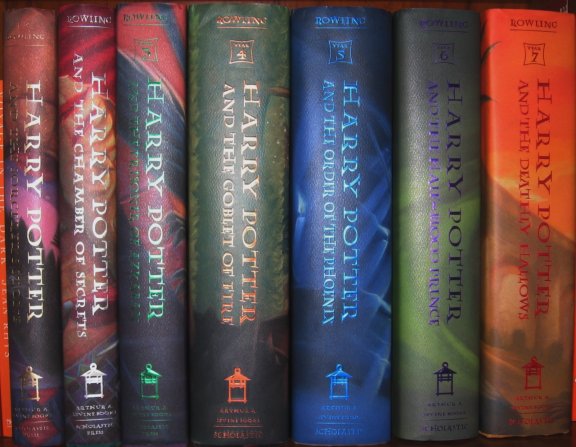
Which book would I want to re-read for the second time? That was the prompt a few months back. Re-reading? I can name a few. I read books but I don’t own much, and of the few that I have at my disposal, the book that I’ve read on multiple occasions is ‘Harry Potter and the Philosopher’s Stone’.

Harry Potter:

I got ‘Harry Potter and the Philosopher’s stone’ from a cousin and I have read that book almost twelve times now. Though I don’t have the others of the series, I’ve read them more than once too. The series actually made me recommend it to some of my other friends, who thoroughly enjoyed it. I read somewhere from a HP fan that Harry Potter has lessons for generations. A lot of fans say that, and people might think that Harry Potter is a school text-book. I see the books as an account of the lives of a few teenagers and the transition they undergo over the years and how events mould their characters effectively.

Wikipedia says that according to Rowling, ‘death’ is the underlined theme of the series, but one can quite easily identify other dominant themes like, adolescence, friendship, power-hunger, confronting fears, making choices, obsession. It’s the presence of these wide topics that make the series an interesting read, and in the words of most fans, a lifetime’s lesson.

Throughout each chapter of every book of the series, JKR’s mystical storytelling tactics are prevalent and urge the reader to have the pleasure of a second-time read.

Even now, after many years of having read the books, whenever I feel like I’m having a bad day, Harry Potter helps. Sometimes people around us – Harry Potter haters – seem to think that Harry Potter is only for children; they are of the opinion that it’s just a fantasy tale of a few troublesome teens. Yes, they are not perfect; there are a few flaws in the books, I don’t deny it; but I have to add that it introduced me to the pleasure of reading and writing.

Though a whole lot of people enjoyed HP, similarly, a large people criticized it as even foolish and unnatural. I just have this to say: Harry Potter is a novel that could be enjoyed only by those who would allow themselves to be lost in a powerful den of words. Only those who are willing to convince themselves to believe wholeheartedly in the impossible and to find solace in it, will enjoy the series. Those who seriously want to dwell only on reality; those who deny to let in the subtle and fantasy-like emotions, are never going to enjoy a book such as this. Also, in my opinion, the reader has to place himself in between the characters to appreciate JKR’s words.

Something I really enjoyed about the books is that they were not too descriptive. There were a lot of vivid descriptions, yes, but the thing was  that some parts and scenes of the story were left to the readers’ imagination.  I like the kind of stories that respect the readers’ imagination. I’m not sure if that was the reason for my liking the series, but it certainly was one of the reasons.

Reading Harry Potter is like dwelling in a completely different world; a world that you wouldn’t want to come out of. A world where an entirely different lifestyle exists. Once in, I wouldn’t want to come back to reality that has, nowadays, become more far-fetched than Harry Potter‘s world of magic itself.

My love of war

I just don’t know why, but ‘war’ has always been a topic of great interest to me. Particularly war poetry. Soul sucking words detailing gut wrenching moments – I could dwell all day in it.

Here in this blog, I’ve already registered my thoughts about the futility of war as told in one of my favourite war poems “Dulce et decorum est” by Wilfred Owen.

When I wonder why I enjoy war poetry so much, I can only draw the conclusion that I adore warriors. I have always thought of the idea of fighting for one’s country as an honour and pleasure. I guess these poems are repeatedly proving me false. Maybe that’s why I like them so; because they have opened my eyes to reality. ‘Opened my eyes’ in the sense, not in a gentle way as teaching an over-excited toddler, but ruthlessly bringing out how much of wrong doing the process of war includes.

I still remember those days when I was just another girl, stuffed with glorious fancies about soldiers and the concept of war. I looked up to it as a holy sacrifice; something soldiers take up on themselves and still not brag about it. I held that sacrifice as holiness, because that’s how movies portrayed it. We are bound only to pity soldiers and not to stand up to the injustice they’ve been thrust into. I realized, in the hard way, that it’s nothing more than a mass suicidal charge.

One of the first war poems that affected me greatly was “Charge of the Light Brigade”; thoughts of Lord Tennyson. It was the truth and the matter-of-fact tone that got to me. It hit me hard on the head saying, “Here’s the truth, fool!”. It gave me a whole new perspective. Indeed truth it was, I learnt later from Wilfred Owen’s “Anthem for Doomed Youth”.

Knowing all these, have changed my conventional view of Army and soldiers. I still respect the Armed Forces for all they do and for the courage to wear that uniform despite knowing well that it’s sure and ugly death. But, that I do not approve of war is still intact in my heart growing steadily and it’s largely due to the understanding of the destruction war brings on families of soldiers; understanding gained from a soldier was passionate with words and died in the First World War.

All the world’s a stage

Copy of seven ages of man

All the world’s a stage,
And all the men and women merely players:
They have their exits and their entrances;
And one man in his time plays many parts,
His acts being seven ages. At first, the infant,
Mewling and puking in the nurse’s arms.
And then the whining school-boy, with his satchel
And shining morning face, creeping like snail
Unwillingly to school. And then the lover,
Sighing like furnace, with a woeful ballad
Made to his mistress’ eyebrow. Then a soldier,
Full of strange oaths and bearded like the pard,
Jealous in honour, sudden and quick in quarrel,
Seeking the bubble reputation
Even in the cannon’s mouth. And then the justice,
In fair round belly with good capon lined,
With eyes severe and beard of formal cut,
Full of wise saws and modern instances;
And so he plays his part. The sixth age shifts
Into the lean and slipper’d pantaloon,
With spectacles on nose and pouch on side,
His youthful hose, well saved, a world too wide
For his shrunk shank; and his big manly voice,
Turning again toward childish treble, pipes
And whistles in his sound. Last scene of all,
That ends this strange eventful history,
Is second childishness and mere oblivion,
Sans teeth, sans eyes, sans taste, sans everything.

— Jaques (Act II, Scene VII, lines 139-166)

The seven ages of man, as told by the man who celebrates yet another birthday today.

Alright, he’s done that for years now and will do so in future as well. That’s not the matter. No. I am not going to write another blissful blog post about how Shakespeare influenced the language and literature that we hold dear. That’d be a crappy and boring read; too many people would be doing it. Having read that excellent speech recorded in the pages of literature, I’d be surprised if you are even reading this. That’s the point. Shakespeare’s words need neither prologue nor epilogue. Thus, I wind up.

Futility of war

I am totally in love with this poem. The reason? Actually, I can’t explain. I’ve met many people, who say, “Life is a battle; battle it out.”, but is it? Is life really a battle? Is that all our lives are about? This poet disagrees, and I agree with him.

War is a man-made thing. Man must take the responsibility and discredit for creating and cultivating the sense of war on innocent minds. Life, is never affected by war. Yes, there are many who have lost lives, loved ones and belongings because of war, but the real reason behind war is not war itself, but humans. War, in its nature is destructive, and many-a-time, so is man. The effects of war are really the consequences of mankind and its idiotic fancies.

Deep down, we all know the fact, but we prefer blaming it on war, for, some among us, still call it a necessity. If no one disturbs another, then where, in  the world, is the need for war? The UN will be out of its job. So this poem made me think, and I realized, that when one person thinks and reflects from within, a lot of change can happen. After all, as Michael says,

“Take a look at yourself, and then make a change”

I think, it’s time for us to call off war. We need to stop battling among ourselves for petty reasons, and that small act will become the great change in the world, someday, hopefully.

Right to enlighten:

Well, in my opinion, there is no one better to portray the uselessness of war than a soldier himself. Owen was a soldier in the First World War. He wrote poems in the hospital when he was injured in war. He recovered and returned to war, never to return again. His poems are based on war and they reveal the fact that words can be powerfully haunting. His poem that hooked me and held me captive is titled as,

“Dulce est decorum est”

He was a mighty soldier, who could vividly create a scene of war before our very eyes. A brilliant read, definitely worth.

“Dulce est decorum est”

                                            ~Wilfred Owen~

Bent double, like old beggars under sacks,
Knock-kneed, coughing like hags, we cursed through sludge,
Till on the haunting flares we turned our backs
And towards our distant rest began to trudge.
Men marched asleep. Many had lost their boots
But limped on, blood-shod. All went lame; all blind;
Drunk with fatigue; deaf even to the hoots
Of disappointed shells that dropped behind.

GAS! Gas! Quick, boys!– An ecstasy of fumbling,
Fitting the clumsy helmets just in time;
But someone still was yelling out and stumbling
And floundering like a man in fire or lime.–
Dim, through the misty panes and thick green light
As under a green sea, I saw him drowning.

In all my dreams, before my helpless sight,
He plunges at me, guttering, choking, drowning.

If in some smothering dreams you too could pace
Behind the wagon that we flung him in,
And watch the white eyes writhing in his face,
His hanging face, like a devil’s sick of sin;
If you could hear, at every jolt, the blood
Come gargling from the froth-corrupted lungs,
Obscene as cancer, bitter as the cud
Of vile, incurable sores on innocent tongues,–
My friend, you would not tell with such high zest
To children ardent for some desperate glory,
The old Lie: Dulce et decorum est
Pro patria mori.*

*It is sweet and fitting to die for one’s country