Of poetry

I adore poetry. I try writing poetry, too, from time to time, but I fail almost every time. I still try, though. It’s such a disciplined and sensual form of art that I know I want to get it right some time or the other. How much command over the language a poet must have to express limitless vision in limited words.

It all started when I read Tennyson’s Charge of the Light Brigade. From there, my craze only magnified as I read Wilfred Owen’s Anthem for Doomed Youth and Dulce et decorum est. Those three war poems changed the way I see words and respond to their lure—it’s weird how war is always the starting point of enlightenment.

Once I understood the underlined meaning in these poems, I wanted more. I was addicted, and was desperate to quench the dryness that these poems left in my throat.

I had read poetry before, of course. I had read some of Shakespeare’s sonnets, and yet, these poems were different. Reading Shakespeare requires effort sincere effort and interest. These poems, though, thrust themselves at me. I didn’t have to know the details of war to understand its effects as told by Tennyson and Owen. They inflamed a strong passion in me for simple, yet well-articulated words.

For instance, this one in particular:

“Dulce et decorum est pro patria mori.”

Which translates to: “It is sweet and fitting to die for one’s country.” Ah, the intensity of those words—coming from a soldier nonetheless, who knows what he’s talking about better than anyone else ever would. But what makes it even better is the placement of the phrase: “The Old Lie:”

“The Old Lie: Dulce et decorum est pro patria mori.”

The entire poem walks us through a vivid description of the war zone, and then, we get to the end where the poet claims that all the bullshit stories we tell young soldiers are empty words; lies. Poor Owen, he must’ve believed them all, like the rest of the lot. What a great poet he turned out at the hospital, before recovering and heading to the battleground again.

But that’s the power in good poetry: When said “write”, a writer writes, but a writer who said it right, writhes the emotion out of readers.

Wilfred Owen was one such writer. He made me, the reader, feel what he felt. The pain, the anguish, the heartbreak, and the loss of hope—I felt them all because the poet put them in such an artistic narrative. And that’s why we should read good poems, because like John Keating says, we need science and business to sustain, but we need poetry to live.

And what would we do if not live?

Tis a Sin

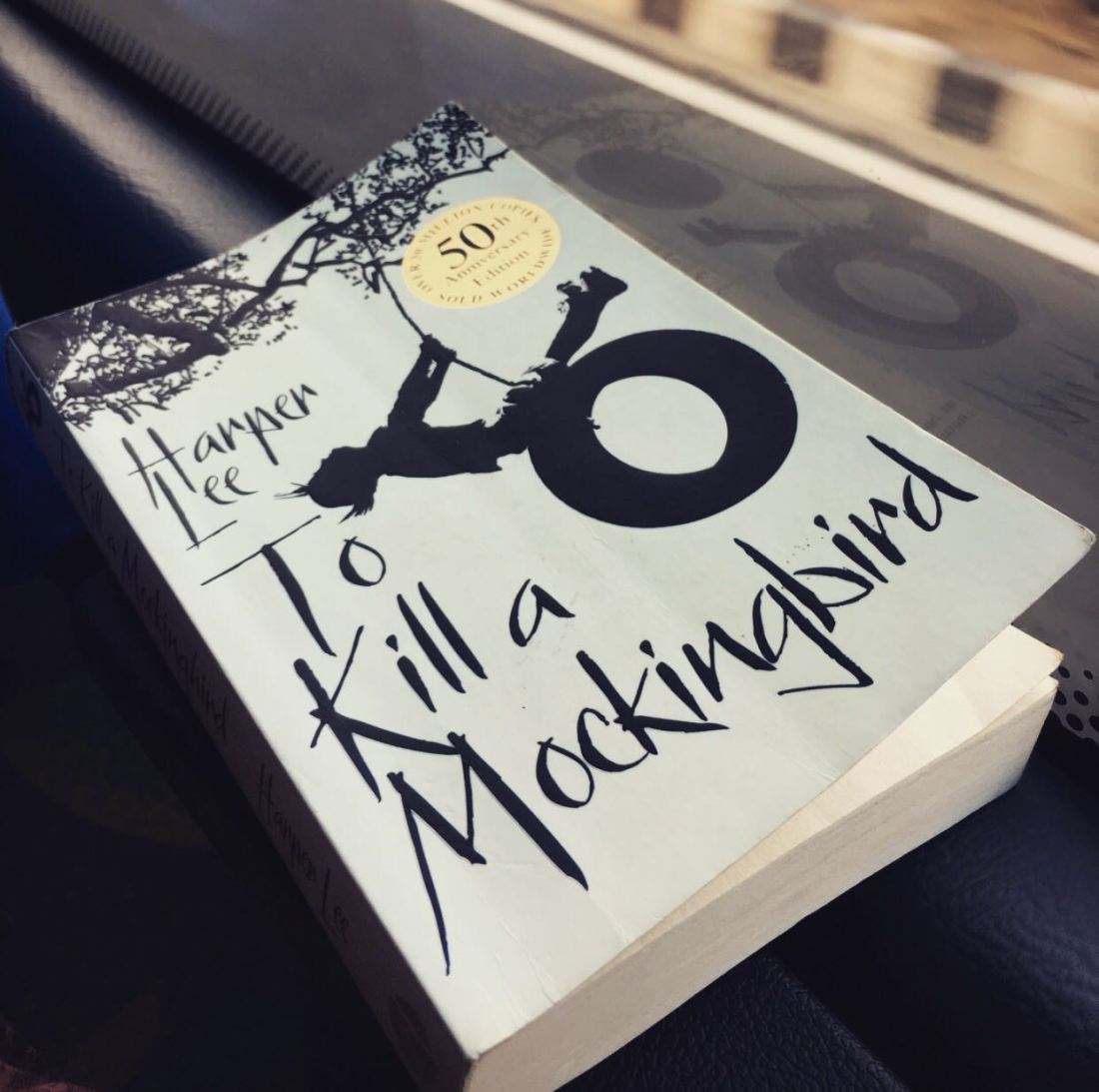
I’ve just finished reading a classic novel that I should’ve read ages ago. However, like so many other books, I took my time to get my hands on To Kill a Mockingbird. Needless to say, I regretted not reading it sooner. But there was also something different about this book than the others I’ve been reading.

To Kill a Mockingbird is a simple story. It has a complex plot that’s worth talking about for years together, but the story line was simple enough. Harper Lee had chosen a not-so-uncommon incident, and worked out a narrative around it. I didn’t realise it until after I finished reading it, but the entire plot wove around a single strand, one strong piece of gossamer that shone bright enough to attract and magnetic enough to keep me attracted through to the last page.

I can’t remember the last time I read a book so captivating, so relatable, and so enchanting. I loved the brother and sister. I loved how the brother would nag the sister saying she was becoming too much like a “girl.” Brothers do that, and not many books illustrate it as well as this one does. Throughout the story, the relationship between the brother and sister blossomed from childhood trebles, evolving into an everlasting bond of friendship and reliability. That’s how real brother-sister relationships mature, and I was amazed when I realised that no other book I’ve read (so far) ever mentioned anything like it.

Every character was a an entity in itself. Scout was an atom of energy, reminding me of my younger days when I frowned at pink flower frocks, picking, instead, a pair of comfortable overalls. Jem was a natural, a protective brother who watches out for his sister, loveable yet condescending at times — just like mine. As for Dill, he’s the kind of person we’d come across in life who has it all — or so it would see —  and yet, has nothing worth having.

Calpurnia, the beacon that lit up the Finch household, was the ever-smiling help at home that makes every child learn while they yearn for her cookies.

And Atticus, dear Atticus, what a father he made. Standing by the suppressed, jovial and just Atticus was the perfect protagonist. When he’s a typical father who doubts his parenting skills, when he demands the truth without raising a tone, when he caresses his daughter’s hair, when he embraces Jem’s adolescence — Atticus’s every action makes the reader love him even more.

How could anyone be unaware of such vivid writing and vivacious narrating? If it’s a sin to kill a mockingbird, tis a greater sin to let great works go unappreciated. At least now I can cherish it, late though it is.

Hold It Down

I sometimes read poetry, and often, I come across a poem that strikes me so hard that I have to save it, savour it, and share it.

One such poems, by Gina Myers, is Hold It Down.

When I first read the poem, I was so awed that I wondered why I hadn’t heard of the poet before. I studied literature, but I’m ashamed, neverthelss, to admit that there are so many popular writers I’ve never event heard of. I read, but I don’t read that much. I’ve felt small when friends talk about books and writers they cherish whereas I’m just lost.

Regardless, I read the poem again, and realised it didn’t matter that I hadn’t heard of the poet before; the poem speaks louder than the poet could’ve.

It’s a little long, but it’s worth it. Here it is from Poetry Foundation:

It’s 70 degrees outside but in the drugstore
Christmas music plays over the speakers as
I stand in line balancing my checkbook
in my head, stretching things thin until
my next paycheck when the rent is due.
The security guard cracks a joke, but
I wasn’t paying attention, so I just smile
& step forward in line. Images move
across the screen. When I think about money
it seems impossible. All over the country
people are moving into the streets
& we’re here in Atlanta starting a new life.
Darkness surrounds the latest revision
of our shared history. Everything clouded.
Yesterday 1 couldn’t tear myself from the news
& already today the events have been distorted,
the numbers downplayed. It’s late fall
& in the early morning crispness, the leaves
fall from the trees & cover the sidewalks.
This new feeling we lack a name for, struggle
manifested in the streets & in parks & on bridges
across the nation. The headlines read
“Protesters clash with police,” but as we watched
the live stream, we saw aggression only by officers
dressed in riot gear. We saw people tossed
on the ground, hit with batons,
a woman punched in the face, an eighty-four year old
woman’s face drenched in pepper spray.
The images endless in this land of the free.
I’m losing focus, distracted by the newsfeed
on the computer screen, hitting refresh.
The cat paws at my leg, demands its own attention.
This shift entirely unexpected but necessary.
Leaves blot the window. Every so often
I leave & start from scratch, imagine
damaged relationships & sick cities
where there was no damage & no sickness
greater than anywhere else. In Atlanta,
everyone drives. The bartender called us
“hardcore” when we said we’d walked there.
She said, “No one in Atlanta walks anywhere.”
Walking home from work in post-daylight
savings time darkness I pass no one on the
sidewalks. I pass the traffic backed up by
the stoplight. The weekend passes too quickly—
I wish it would last longer, which is what this all
is really about: time & my lack of control
over it, my inability to do what I want with it.
And there’s a greater futility at work
here too—a greater frustration in my inability
to control my environment or to stop my country
from killing its citizens. The police beat people
standing still, linking arms, holding cardboard signs.
Each day I think more & more about the past,
about where things began to go wrong, where I, too,
began to go wrong. Before I moved, before I
got sick, before I unfriended you on Facebook,
before I decided I no longer loved you,
before New York, before college—thinking back
to childhood when we could run fearless
through the neighborhood at night, when
we didn’t think about the future, when we loved
our country because we didn’t know better.

Gina is a modern poet. Perhaps that’s the reason I relate to her writing so much. The story and the panic-inducing lifestyle of a youngster is all too familiar. And as I read through the poem, words jumped at me making me feel it’s me she’s talking about.

We’ve all had that mid-life crisis moment, when we look around us feeling repulsive at the society we call home. People are mean — to animals and to each other. Just as we’re trying to figure out our purpose and way in life, we watch our fellows taking incredible measures to hurt each other, and that’s heartbreaking.

We look around us and wonder why the country’s gone to the dogs. We look at authority wishing they’d be less brutal, we look at weapon-wielding children and wonder where the flowers had gone to. It’s the reality of our lives, a sight that none of us wants to see.

Growing up is a curse. We’re forced to see things and know things, and understand situations we’d rather not. It’s disturbing and painful, making us wish we were kids again, when we loved without conditions because we didn’t know better.

This poem is the heart of a broken person. It’s the heart of every 21st-century person.

Poetry on War

There’s something so disturbing, yet divine about death, devastation, and destruction.

If that makes me an evil an twisted sadist, so be it. I’m addicted to war poetry. And in a world that’s addicted to war itself, that’s saying something.

Anything about young soldiers dying before their time, having their lives sucked out through their rifles, and soul-less bodies strewn across no man’s land, is so powerful that it makes me crave more and more. It’s pain, but it’s gratifying. It’s sorrow, but it’s a lesson. It’s proof of what we, as a breed, are capable of, of what I could do to my neighbour if I wanted to.

It’s scary to read Sassoon, Owen, and Tennyson. It’s scary that mere words on paper can bring to life the worst acts of terror we inflict upon this world.

And it’s amusing how even after pulling so many meaningful lives apart, we’re still willing to walk the same path. Every time we raise a weapon, every time we declare war on war, every day since the first boy was killed in action, we’ve been doing the same, wishing for a different outcome.

And even if we do get a different outcome, does it make a difference to the soldiers dreaming of firelit homes and clean beds?

Alas. Thus is the way of the world.


Dreamers

Soldiers are citizens of death’s grey land,

Drawing no dividend from time’s to-morrows.

In the great hour of destiny they stand,

Each with his feuds, and jealousies, and sorrows.

Soldiers are sworn to action; they must win

Some flaming, fatal climax with their lives.

Soldiers are dreamers; when the guns begin

They think of firelit homes, clean beds and wives.

I see them in foul dug-outs, gnawed by rats,

And in the ruined trenches, lashed with rain,

Dreaming of things they did with balls and bats,

And mocked by hopeless longing to regain

Bank-holidays, and picture shows, and spats,

And going to the office in the train.

— Siegfried Sassoon

Of Poetry

I’ve always enjoyed poetry. But I never understood reason, until now.

Poetry is

It’s true, people write in poems things they can’t speak of, things that are too personal, things that make us vulnerable, that make us cringe at ourselves, laugh at our stupidity, and scorn at our vanity.

Every poem is a bitter reminder of the truth we’d rather not hear. Every rhythm and every rhyming couplet — from “black wires grow on her head,” to “The old Lie: dulce et decorum est pro patria mori” — every piece of poetry is a whiplash to humanity.

And maybe it’s necessary, to take that serum once in a while, to hit ourselves with a dose of poetry and question everything we ever stand by.