I swear

Until March of this year, my vocabulary had limited swear words, uttered sparingly and with extreme caution. Using the F word in any gathering that’s not your bosom buddies was a thing to frown upon, and you might even get a talking to from strangers and colleagues alike. It’s not uncommon for people to mutter it under their breath, but it was certainly unsuitable to say out loud.

Seven months on, and I now live in Australia. Though my swear vocabulary is still rather limited, I hear them in conversations around me countless times a day, in varying pitches. For instance, my non-Australian housemate, who’s lived here for four years, walked into the kitchen one morning.  I was peeling papaya. He hey-ed at me, and I, him. He then opened the fridge and went, “Oh, fuck.”

That’s how we roll here. Most words deemed uncivilised and unfit, even for domestic use are casual and overused in Australia.

You hear these words in places and in situations that have no reason to have them. The reason my housemate said what he said when he looked into the fridge that morning is because there was some food leftover that he’d forgotten about. It was still good enough to eat, though. Besides, it’s not as if he worried about wasting either. Regardless, that situation warranted swearing.

My point is, swear words are so common that they’ve melded into everyday colloquialism. I knew it even before I got here, though. Refer to any website offering travel advice, and you’ll always have a note about says how heavy swearers Australians are.

It’s not just the F word. The  C word gets around quite a lot, too. Chances are, you can’t and won’t have a regular conversation with any (or most) Australians without hearing the swear words a fair few times.

I’ve been here a while now, and it doesn’t bother me as much. I’ve come to realise that in Australian speech, these—and the many other swear words I don’t recall—are meant as emphasis words. Like literally in place of figuratively. Like actually, honestly, really, very, and all other adverbs that all writing guides cast away as unnecessary.

It doesn’t bother me since I’ve been here a while now. But I can imagine how gutting it would be for someone new—like my mother, for instance. Once, ages ago, burnt out after work, I swore in front of my mother. Recalling that incident, she asked me a couple of days ago if I’ve stopped swearing now that I’m no longer under the same stress.

“Of course, ma. I don’t swear at all nowadays.”

Well, at least that puts her mind at ease.
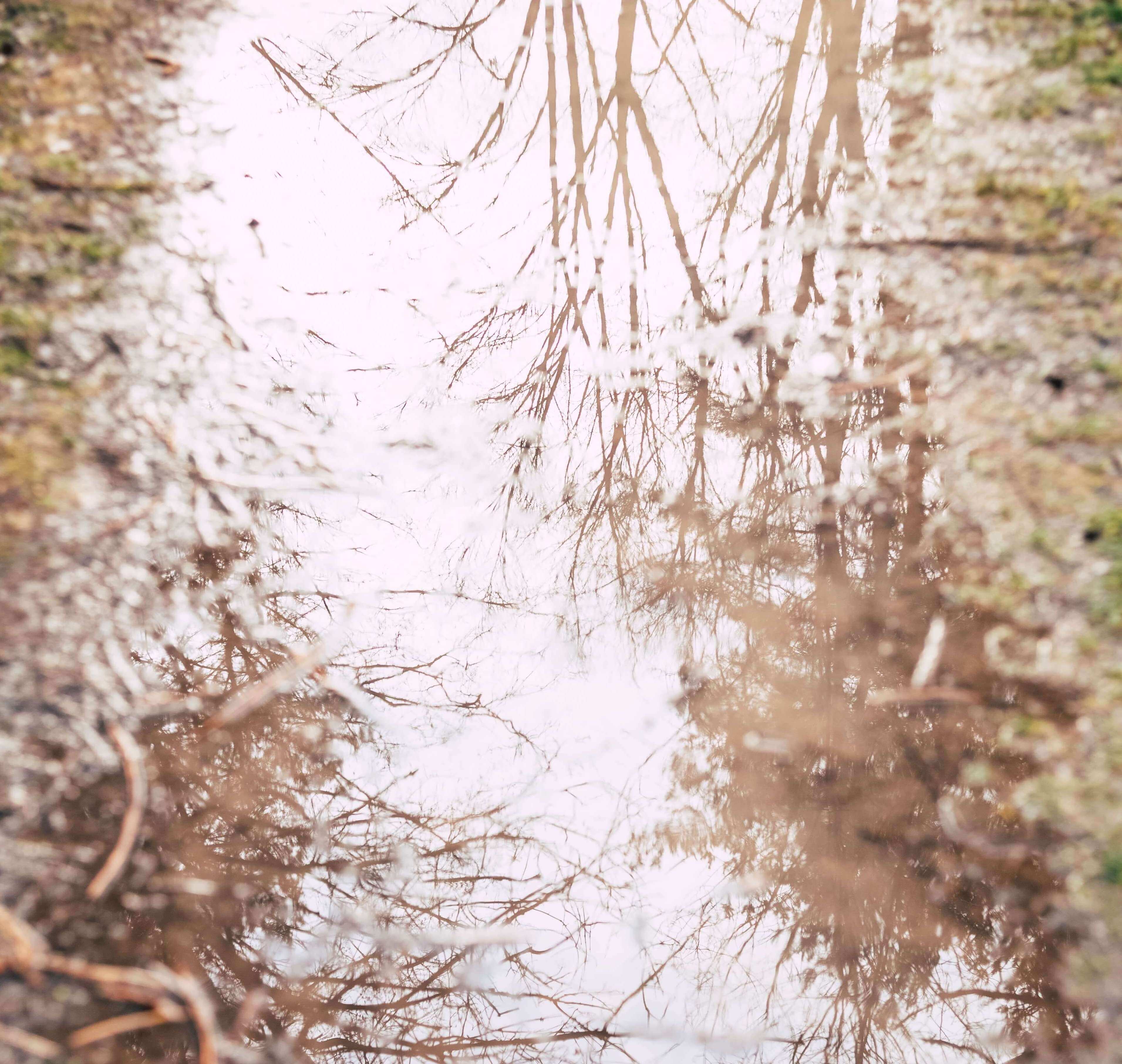
Is it real?

Reflection of trees on a puddle of water - Markus Spiske on Unsplash

I write quite a lot of non-fiction. Stuff that’s based on people I meet, places I visit, personal experiences and opinions, and such. So often, I also use my own life incidents to fuel my fiction pieces. 

After all, it’s easy to write a story calling upon your own emotions. There’s even a word for it in literature: ethos. 

Not only do such pieces flow easily, but they’re also genuine and factual. They need minimal research—just a Wikipedia entry to cross-verify dates or an opinion blog to confirm that you’re indeed talking about what you think you’re talking about.

Except, there’s a problem with using too much ethos. 

It’s a strange thought, but it hit me when I was in the bus one day. I found myself thinking about a topic to write about and realised I’ve written about almost everything that I ever thought mattered in my life. About moving to Australia, being an insecure teenager, exams and stress, growing up in India, and even about my absolute disregard for the useless education system I had the misfortune to follow.

I’ve written about my family’s challenges as well—about all the stories I grew up listening to when my mother didn’t know how else shut me up.

Now, it’s as if extracted so much from myself and incorporated into my writing that I’m short of life experiences to write about. It’s ironic too, because I still have a lot of time (hopefully!) to accumulate memories, thoughts, and opinions. There’s still so much of the world that I haven’t seen, and I want to. There’s so much left for me to do, and yet I can’t write about any of those until after I’ve done them all.

That’s the problem with using reality as a reference. You can also run out of reality.

Good challenge for imagination, though.


Image credit: Markus Spike on Unsplash.

Groups matter

One of the first things I did when I moved to Canberra was joining a writing group. I’d been writing for almost ten years, and I’d never had a peer group to read my work aloud to and hear feedback from. I didn’t even think I needed a support group until I had one.

Not only did they coerce me to share some of my work, but they were also accommodating and friendly in their suggestions. For the first time, I felt as if people read my work, not just to tell me they’ve read it, but to actually help me improve it.

It felt amazing. We bonded, sent over our short stories and poems to see what others thought of them, and even met up outside our allocated meeting times to write together.

Within myself, triumph blossomed. From being the written counterpart of a bathroom singer, I went on to become a voice they thought was worthy of their time.

Not long after I joined the group, we all went on a retreat. Thirteen in all, to an ancient manor set in the heart of small Victorian town Goulburn. It was a two-day getaway in the dead of winter. Beautiful Goulburn is perched a little north of Canberra and a little more south of Sydney.

Victorian mansion in Goulburn

With my minimalist backpack and a well-equipped laptop in my friend’s car, we drove up to this strange town I’d never heard of, to spend the weekend in a stranger’s house with a few people who were strangers until a couple of months ago.

I couldn’t have been more excited. I was looking forward for two days of writing, sharing, and revising. 

What I didn’t anticipate, however, was that a roaring fireplace, wine and whiskey, and impeccable homemade food on a Friday night don’t always add up to a night of relentless writing. The frost hugging our windows didn’t help much either. 

None of us wrote anything that night.

We drank and talked. Someone told about his experiences with ghosts. Many of us laughed. 

Except—unlike drunk college students, waking up with guilt stretching over their faces, the next day we woke up full of fervour for the art of writing—and a little light headed, of course. 

We spent the day in silent rumination, writing. Some continued perfecting works-in-progress, while some others picked their brains, chipping away at creating new ones.

That night, we shared, laughed, drank, and danced again. As the weekend wound, and the sun shone on our faces on Sunday morning, we packed up our recyclable bottles and editable writing and drove back home to Canberra.

Looking back now—a month away from our next retreat—I realise that weekend wasn’t about drinking. It wasn’t about escaping from family and responsibilities. It wasn’t even all about writing. 

That retreat was about presence. It was about sharing our personal selves with others like us, telling family stories, ranting, and reassuring each other. It was about sitting by someone as they struggled to get words onto their screen, silently motivating, never judging, and being there when they needed to talk to about the best way to end a murder mystery.

Everyone needs a group like that they can run away with.

Joy, unexpected

“Happy Wednesday!”

She called out to me, clicking her mobile phone off. We passed each other outside the shopping mall—I was going in, and she out. Her leggings, shirt, braid, and hat mostly comprised of pink—which often is an immediate turnoff for me. However, that bubblegum look did catch my eye, and she caught my eye for a quick second, enough to smile widely and wish me a great day. 

Instinctively, my face broke into a wide smile, and I responded with an enthusiastic “You too!”

This was new to me. And as I turned back to face my path, the smile on my face was fixed, ecstatic for no good reason. Perhaps she sensed it, for “Pass it on!” she waved after me.

“I will!” I meant to say, but it came out as “Thanks!” instead.

Regardless of what I said, for the next few moments I felt elated, as if I’d won a competition and nothing could bring me down. All of a sudden, I wanted to yell at the couple and their two children walking ahead to have a great day. I didn’t, though, because a lot of folks I’ve seen in my neighbourhood aren’t too receptive to strangers addressing them.

That said, my good mood continued throughout the day. I remembered that woman and her flip phone, and imagined her wheeling her travelling bag down the street, cheering up many other people’s lives. 

It was a small gesture, negligible some might say—a smile and a greeting. But it made such a difference to me. And it made me think. 

It costs us nothing to be friendly, and yet so many of us walk the streets with impassive expressions, eyes cast down, afraid to look at the person walking past us. We meet new people and mechanically say “hello” and “how are you,” not even looking at them. As they speak, we nod but don’t listen. We converse and co-exist without knowing or understanding the other person. 

Not everyone’s like this, I admit. However, I have come across a lot of such people. Enough to know that that’s what makes the lady in pink so special. She stood out from the masses—she was bold, and became an encounter I cherish.

It’s nice to be nice. It’s contagious.

Writing is living

I was attending a panel discussion about poetry when someone mentioned how research is a great way to accumulate ideas, facts, and anecdotes, and how during the process of writing a poem, you learn to strip out the unnecessary details and keep only what makes your piece worth reading. 

That got me thinking. Planning for a story, a poem, or a novel is all about collecting random information in one place. It’s essential prep work. And only when you have that massive pile of overwhelming information can you condense it and identify key elements that add value to your work.

Unless we go through that rigorous cutting of the bulk in our work, the piece itself will sag under the weight of too much information. What we once deemed good becomes its downfall. 

Life is like that too. 

We all spend so much time and money acquiring things—books, furniture, clothes, jewellery, bags, shoes, and so much more that take up and over our lives. We don’t realise these things are baggages that can hold us back.

Just as in writing, the solution is to get rid of what we don’t need. 

To live minimally, so we reduce our impact on our surroundings, and be aware of ourselves. Makes for a quick getaway too. To do all that, we need to get rid of the possessions we so lovingly accumulate. It isn’t easy, and to paraphrase Faulkner, it’s like killing your darlings. But if we want the result to be worthy at all, it has to be done.