Fine and solo

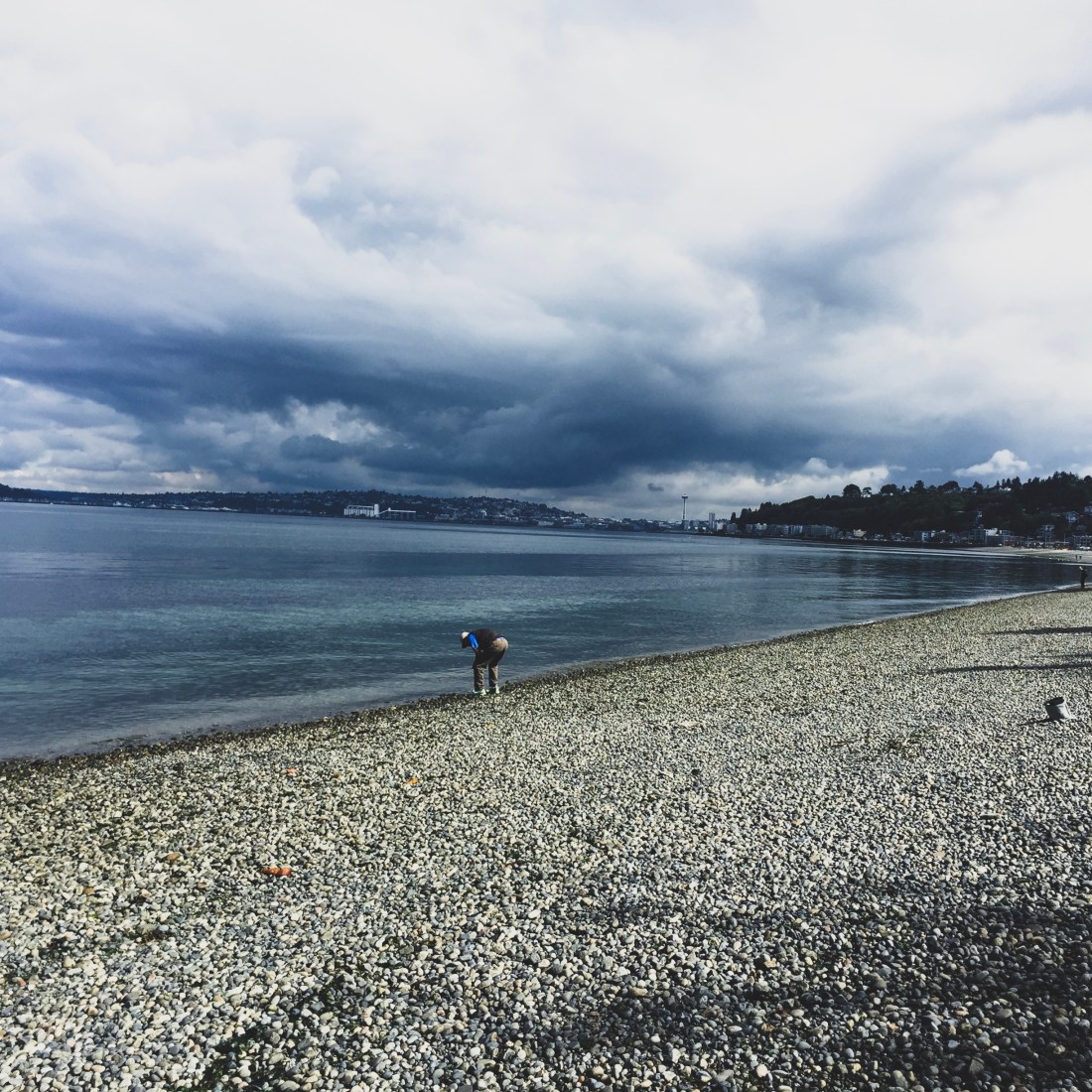
I hate it when people barge in on me while I’m trying to get some me-time. That’s why I’m always wary of approaching others who seem fine at being alone. It so happened while I was waltzing off on my own in Alki beach, I saw a gentleman standing by the shore observing the coming and going of the waves. He stood there for a while in silent rumination about things I’d never discern. In a vast emptiness that surrounded us, for he and I were the only ones on the beach, he seemed oblivious to my existence.

Although I felt an itching urge to engage this man in an animated conversation, I refrained. I stood afar and watched him as he picked up a few shells, scrutinised them, and dropped some of them back. I never saw him turn around.

one in the crowd

Perhaps he had a grandchild who loved seashells, I thought as I walked away.

Dear Diary…

Writing in a diary is precious, isn’t it? The first time I realised its beauty I was reading The Diary of Anne Frank. Born into a Jewish family in Hitler’s Germany, Anne maintained a diary during the few years she and her family were hiding from captivation. Her father, the only survivor of the concentration camp that wiped out the family, published her diary. To this day it remains a stunning reminder and a heart-wrenching portrayal of the life of a teenager in wartime.

It was the emotions and the ultimate simplicity of that diary that inspired me to start writing my own diary. Every day I’d record my thoughts, frustration, observations, and general musings. When I looked at the entries months afterwards, I noticed a lot of silly mistakes. But I also saw a lot of potential and my true self coming out of the diary. That’s how I understood so many aspects and characteristics of myself. It was so sincere and so flippant that I saw myself for the first time.

I loved what I discovered so much so that I incorporated diary entries as part of a story I wrote. I had a couple of chapters dedicated to diary entries of my main characters. And I felt the difference, too. I dug deep into the character to extract their innermost emotions, because the diary of a character speaks truer words about them than the character themselves. It’s so because diaries are for personal readership. Anyone who keeps a journal knows that no one would and should read it but themselves. That gives them immense confidence to be themselves and let their guard down.

I did. That’s why I managed to impress myself so. It’s the same of anyone else. Because we know it’s private, we allow ourselves to be real. We charade our true emotions and opinions in public for fear of people hating or misunderstanding them. While we project what we want to project to the world, a diary is where we take a break and project our actual thoughts.

During a particular rough time in my life, I was so self-pitying. No one else who met me would’ve known that at the time. I didn’t realise it myself—until months later I read what I’d written in my diary. It’s such a harsh way of telling yourself who you are and I think that’s a pretty powerful technique in storytelling.

I just started reading a book that’s made up of nothing but diary entries. I’ve only read about 50 pages but I already see the depth at which a journal characterises the person. I see two different personalities in the same journal entry—one when the character narrates what they did in public, and the second when the character writes down how they felt at that moment. There’s a lot of interesting juxtaposition and a beautiful arc of a story.

Although it’s so good so far, I wonder if it’d get boring as the story progresses. Too much of a good thing, perhaps? I can’t wait to find out.

Start with you

Time and energy are our primary assets. How we use them defines the purpose of our lives. More often than not, however, we expend them on achieving matetrial goals like building a house or buying a car. Throughout our lives, we hustle and struggle to acquire things that we may never enjoy. People say a house is an investment. And so they allocate up to 25 years worth of their labour to paying off housing loans. Sure, it’s beneficial while calculating tax, but at the end of 25 years, when the house becomes theirs for real, it’s just another asset they pass on to the next generation.

My point—we invest so much of our time and energy on physical matters while we should be investing on our mental and spiritual health, instead. It’s what we do for ourselves that completes our existence. That’s what we should all be focussing on: ourselves. That’s not to say we should embrace a narcissistic personality, though. It’s, instead, prioritising our psychological needs engaging in activities that fill our heart with joy and soul with compassion. Unless I invest in my happiness, I wouldn’t feel content with my life.

That’s why we should never regret doing things for ourselves. It’s not only our right but also a duty to nourish our soul. Whether it’s rereading a favourite book, dining out with a close friend, or spending time with a family member, it’s important to do more of what makes us happy.

Only when we’re happy from within do we emit the same joyousness. When we’re satisfied with ourselves, we seek to share the same triumph with our surrounding. When we love ourselves, it transcends to others as well.

And that’s why I believe we shouldn’t ever apologise for starting with ourselves.

Old news

It’s 6:30 am on the 15th of February. And I’m angry.

It’s is not how I’d hoped to start my day. My first realisation for the day was how bloody America has become. A teenager has gunned down high school students—again.

I don’t live in the US. I’m no longer a high schooler, and I’m no parent. I know no one in Florida or anywhere near its vicinity.

But I’m angry nevertheless. It pains me—who lives 11.30 hours ahead of PST—that someone somewhere has unrestricted access to such vile weaponry. I’m silly that way. Because I care about what’s becoming of this place that I no longer want to call home.

Just last week I was proud—thrilled that a fellow human propelled a rocket to space. A single man’s determination and persistence has given us all a lifetime worth of achievement. Last week as Falcon Heavy made a safe landing, we celebrated human-ness  and our intense ability to reach beyond our confines. Our race had pursued the nigh-impossible and proven nothing’s impossible. For one week, I was proud of humankind.

This week, I’m repulsed by it.

Sure, life’s full of good and bad incidents. And philosophers would argue we wouldn’t appreciate the good unless we experience the bad. Which is all sage advice, except the bad is no longer bad when it extinguishes the innocent and exalts the unworthy.

Elon Musk had to fail hundreds of times before he could succeed. That’s the bad pill we need to swallow so we can appreciate the good one when it comes.

A teenage murderer isn’t the kind of bad that leads to realising goodness. Nothing good ever comes from entrusting a loaded weapon to someone unauthorised to wield it. That causes more than an unfortunate turn of events—that’s a consequence of utter insensibility.

Scrolling through social media, I saw videos and text messages from students inside the school during the shooting. They’re communicating with family and friends outside and most of them seem calm and collected.

Calmness in the face of adversity is healthy, some might say. I’d say no, though.

Although panic gets us nowhere, calm indicates familiarity. Despite grieving, people have grown accustomed to such incidents. It’s the first time for some folk, but nothing unheard of. Violence and guns amiss are so common that no one’s surprised that it happened again.

Everyone’s shocked because it happened, of course, but no one’s surprised that it happened. And there lies the fundamental fault in our stars.

Love’s not love…

In our obsession to explain every thing under the sky, we’ve also defined our tendency of being unable to accept ours. Imposter’s syndrome is a clinical term that refers to one of the most fundamental emotions of humans.

‘I don’t think I deserve credit because I don’t feel like I did a good job.’ We all feel that sometimes. No one person is always satisfied with the yields of their efforts. That’s when we’re so guilt-ridden that we refuse to admit achievement.

We don’t realise, however, that anything that’s sloppy to us may seem exceptional to someone else. Ironic and though difficult, we must accept that. We all see the same thing in different ways — we have our own perspectives — and when someone declares how much we mean to them, not only is it decent to smile, acknowledge, and thank them, but it’s also a mark of self-help.

For only when we accept recognition from others can we appreciate our own self. We’re so hard on ourselves sometimes that we don’t love ourselves enough. How are we to love others if we can’t love ourselves first?

How we love others depends on how we love ourselves. When we’re unconditional towards our own self, and satisfy our self, we become happier from the inside out. That reflects when we interact with others, too. That’s why it’s almost impossible to enclose love in a dome. Love’s not only the love that young frivolous couples share, but love’s what we all share towards one another, living or otherwise. The more we love ourselves, the more we have to share. And the more we share, the more we receive.

It’s one infinite loop.