Jobseekers

I participated in a job fair a couple of days ago, and learnt so much that I wasn’t prepared to learn. I saw how convoluted our education system is, and how twisted and desperate it’s made our graduates. Also, how difficult it is to find jobs and how the pressure transforms even the respectable into shameless persons.

Let’s take it one at a time. It was my first time attending a job fair as a recruiter, on behalf of my employer. I arrived a little late and the first thing I noticed when I walked in was our stall groaning with a mob clamouring to shove resumes at my colleague. The volume of the crowd stunned me. I had expected a maximum of two hundred people visiting our stall over the course of the day, but in reality, we had two hundred people in the booth at any time during most of the day—from 10 am to 6 pm.

Every person had the same look and the same mentality: to give out their resumes no matter what role we needed. Most of them were fresh graduates, eager (read desperate) to land a job, and it didn’t matter that we needed technical qualifications and experience they don’t possess. Some of the folks I spoke to were blatant and honest: they needed a job, any job they can get. They didn’t mind which city they’d work in, they didn’t mind which role, the compensation we’d offer, the responsibilities they’d undertake, or the amenities they’d receive. I collected over hundred resumes of such fresh graduates. And it amused me—how flexible they are, their eyes screaming a yearning to find a job regardless of all that matters.

That’s when I realised it’s the fate of most graduates in India. We’ve colleges in every other street, with almost every politician chairing a chain of educational institutions. The result is an army of graduates, few qualified but most of them mediocre, unable to find proper jobs that pay what they deserve. And so to make up for lost time and time, these graduates hunt for whatever jobs they can find. From there stems the desperation that reeks through their skins.

It’s sad.

But collecting these resumes, promising them I’d forward them to my team knowing well that I wouldn’t, I could only squirm with disgust. I know I shouldn’t blame them for almost-begging for jobs. I know they have no choice, that they have loads of loans to pay off, and parents who moan at their unworthy degree. This system’s been around far too long to change in a heartbeat. I doubt it’ll ever change. Until each of these graduates realises—before they fall into the pit—how futile it is to take up an expensive, once-prestigious, course in a country that’s made education an unaffordable bounty, and replaced quality with cheap textbooks, and campus buildings in disarray.

Doing more of what you love

doing more of what you love

Photography, nowadays, is thriving as a hobby. I look around and every other Tom and Dick seems to have a DSLR, caressing it as it’s their life’s dream to caress it. Some of those wannabes, though, turn out as good photographers. In fact, they’d become so good that people start paying for them to come take pictures at their wedding. Or pre-wedding, or pre-engagement, or maybe even the pre-proposal—preposterous though it sounds.

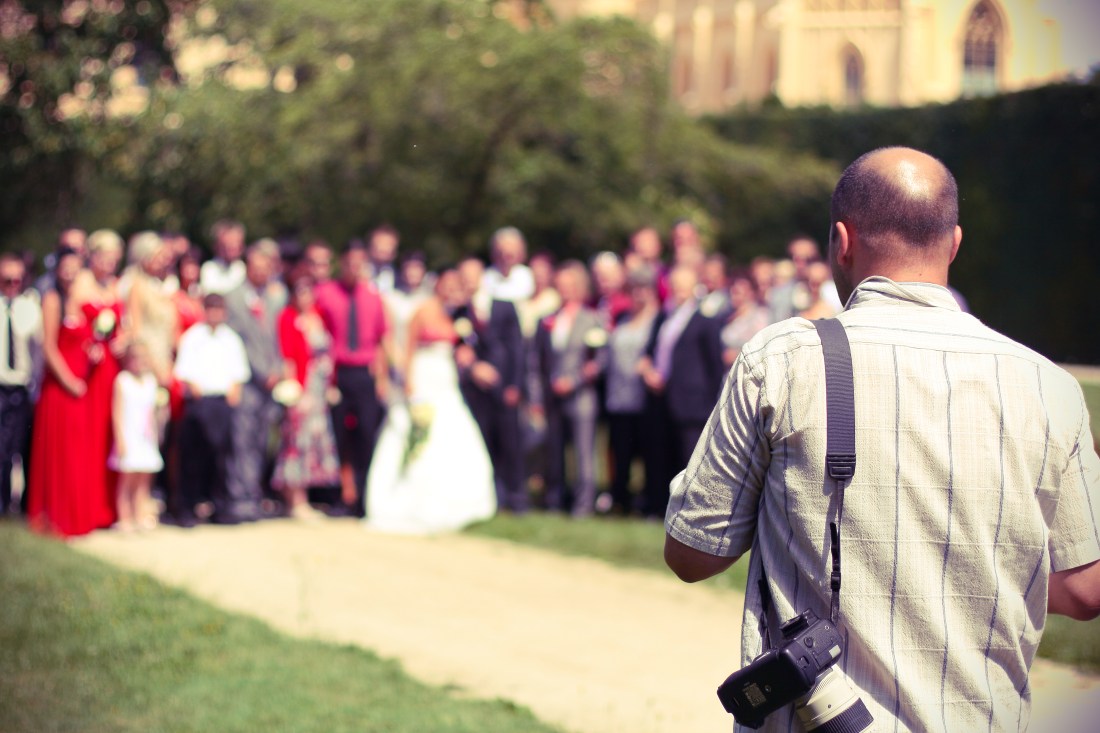
It’s a good thing to earn by doing what you love, yuo might think. I thought so, too, until I looked into the eyes of a professional photographer at a wedding yesterday.

We weren’t the early birds, meaning the new couple and the old photographers had already gotten through at least a hundred people posing on stage with shiny white teeth, pouting lips, flashy jewellery, and studded dresses. The bride and groom though tired, received us with happy faces, but the photographer and his accompanying videographer weren’t tired—they looked bored, instead.

Drooping eyes, stifling yawns, dawdling walks, forced patience—they symbolised everything that points to someone who’s been doing what they’ve been doing for so long that it speaks to their soul no more. Then I wondered: At what point does doing what you love become such a vexing routine that you no longer love it?

Perhaps the photographer had reached it, the tipping point. Perhaps the idea of capturing blooming faces, grooming parents, ruling aunts, and unruly children didn’t thrill his heart anymore. It looked to me like he wished to be anywhere but there. And I felt sorry for him.

He would’ve had a phase in life, young and excited to achieve what he has now. He would’ve spent eager hours in the darkroom looking for something that would light up his life. He would’ve tossed and turned in bed wondering if his applications would get through, if he’d get the job as a photo journalist or even an assistant; he would’ve thought it a great opportunity to get coffee for a popular photographer, just the idea of being in close proximity with them keeping him up till the crack of dawn. He would’ve dreamt awake, slept in dreams, and waited with bated breath. He would’ve once given anything to have what he has now.

Except now, years later maybe, he has not a sliver of joy in his eyes. Perhaps he didn’t sleep the previous night, perhaps he spent it in the darkroom in his studio developing photos from the previous wedding, perhaps he was trying to figure out how to make space in his calendar for all the people booking his service. Perhaps the blooming faces and ruling aunts got on his nerves now. Just perhaps he would now give anything to give up all of it.

That’s what his eyes told me during the couple of minutes we were on stage, holding our not-so-natural smiles for the photographer to capture the moment and the videographer the moments. By the time we left the stage, the photographer turned his attention to the next group, our faces, our smiles, and our moments once a source of pride, now just a fleeting flash in his memory, from an event he cared naught for.

Morning’s here

My alarm goes off as it always does, and I wake up to my well-crafted routine: yet another week of working all day and reading through the night.

I’m awake tireless as the fresh morning oxygen spreads through the room, seeping through me, soaking me from within, waking the rest of the deep-sleeping cells in my brain.

Though it’s only five AM when I look through my mosquito-proofed window, I see that the navy sky has already lost most of its depth, while lighter hues of blue appear in batches like patches on rough skin. Day breaks early, the long-lingering aftermath of a dry and scorching summer; a May that followed months of rainless skies.

Somewhere far away, a lone young cuckoo calls, jerking the others in the family awake. They all call to each other greeting the rising day, as I turn away—it’s time for my workout.

A few burps, some burpees and lunges later, I put a pot on the stove and cast my window’s curtains aside. Turquoise has replaced the navy and white streaks meld with the blue as the morning prepares to wake the sleeping sun. Grabbing my tea, I sit facing my window, looking through the checkered mosquito-net, looking beyond at the now cloud-filled sky.

I look closer, harder, squinting my eye at the unblemished white blanket that hangs over my roof, trying to catch a glimpse, a peek, at the waning crescent of a moon while she waits in stillness for the gliding clouds to gobble her remains. As she goes by, a gentle breeze wafts through the bars of my window, bringing with it, scent of warming wet sand and photosynthesising begonias from the neighbour’s balcony. It tricles my ears, whispering morning hope as I close my eye lids to embrace it. It kisses my eyelashes, teasing me to fall back, to grab a pillow pressing my face against its cool surface.

Breathing in deep, I open my eyes. For to fall back asleep would be to waste away the glory of day rise I had experienced. I drown my tea and reach for my towel. Turning away from the window where the sun steps out from under his covers, I head for a shower, a rhythm in my head.

Ah, June, how I adore thee.

What’s the point of attending a wedding?

attending a wedding

It’s not the first time that I’ve wondered or written about this, and yet every time I accept a glittery invitation from a glowing bride-to-be, I cringe a little on the inside. Most of my acquaintances are work friends, some of them unavoidable colleagues. And when they hand me their wedding invitations asking me to please come with my family—who they don’t even know—and stay on for the reception afterward, get on stage for a group photograph, and a special selfie later on…

Phew.

Just to think about the happenings on at a wedding is tiring enough, and to add pain to pressure, we’d plan to “go as a team”. Because it’s a colleague, and because we’d have to face them every day once they return from their wedding celebrations, the team would make a unanimous decision to attend the reception at least.

When the day dawns bright and sunny for others, and dull and boring for me, we start calling up each other. “Where are we meeting, how’re we going?” “Let’s take a cab, and share the fare, let’s stay for a couple of hours and share the ride back.” “Let’s get them a gift card, and every one can pitch in a pinch of their salary.”—No one would care if one of us a little low on cash.

We’d call a cab and the driver takes forever to find our picket fences. We’s cruise along the street, on a ride that takes the better part of an hour. And as we near the venue, everyone would scramble on Google Maps trying to locate a wedding hall that seems to have disappeared from the street. The invitation would state the “event” starts at five and we’d be still trying to find the place at five thirty. After going round in circles, we’d at last find the place and head in—only to find that the bride still isn’t ready. The groom would be standing by his room door, on the phone with his busy boss as if his office couldn’t live without him.

I’d sneak a glance at my phone and it’d be 6 pm. The invitation would say 5, and the actual event would start at 7. We’d hang around people watching, manoeuvring around excited cousins running about munching sweets and old classmates of the bride in bright dresses, pouting their lips to flashes from iPhone 7s.

I’d look around at the groom and his best man talking with serious eyes and nervous laughter. The sister would run up to her brother—the groom—and flatten out his suit like a mother flipping out.

And we’d wait, sipping on a watery coffee, too understanding, too decent, and too annoyed to complain, until they exchange the rings, cut the cake, and call us for photos and gifts. We’d get in line after the bunch of squeaky young girls who spread whiffs of sweat and perfume as they flip their curls in my face. And when it’s our turn to wish the happy couple, I, along with the rest of the team, pull on a big fat smile on my face as if there’s no where else I’d rather be. We’d then pose for a group photo and a video clip for the couple’s photographer, and then someone in the team would pull out their iPhone demanding a groupie—as they call it now. First a front-facing, everyone-pouting photo for Facebook, and then a say-cheese Boomerang for Instagram, and at last a decent photo for the office WhatsApp group.

And I, since I’m not an absolute kill joy, would smile and go along. And at last, the photo session would end, we’d exit the stage so that the next group of friends can repeat the same process, and we’d head out in search of food, hoping it’d be worth the price of the cab and the gift.

Pray, tell me, am I missing the point?

When death rattles the gate

When I hear that someone died, my first thought always is, “Well, that’s what people do.” I don’t mean to sound cocky but even though I haven’t lost too many people close to me to the unavoidable oblivion, I’m conditioned to death and destruction. Every day, I walk to work on the perilous national highway. I’d witness an accident or what remains of an accident at least once a week. Many a Monday morning, I’ve walked over streaks of dried blood and stepped over shattered glass. Perhaps that’s why I’ve become a little hard on the inside, and cold about reacting to news of death.

However, when I heard a colleague passed away yesterday, I realised that even I’m not all parched on the inside.

He wasn’t a friend, and so we seldom conversed. Though we sat in close proximity to one another, we didn’t work on the same projects, and so both os us were happy not forcing small talk.

But I knew him and he knew me.

He’d spend his day making phone calls to customers while I spend my day hunched over my keyboard writing to customers. Our work lives pivoted on the same matters, even though our paths never crossed.

Sometimes, when he’d pick up a call, I’d pick up my headphones because I wouldn’t want to get distracted by his whimsical narratives to people halfway across the world. Despite that though, I’ve observed him.

I know his routine: He reaches the office at 10 but comes to his place at around 10.15 clutching a cup of coffee, he skips breakfast and grabs an early lunch so that he wouldn’t miss much of his shift time, and as the clock strikes eight in the evening he gathers his things ready to leave. He’d then commute an hour to reach home.

I know all of this because I’ve seen him at it—every day for months together. I’ve had no reason to strike up a conversation, but he was an active part of my routine, too. Perhaps that’s why I went blank when I heard he was dying. I couldn’t think, I couldn’t work, I couldn’t write to customers without him nearby, chatting with customers.

I’m not grieving his loss — why would I grieve someone I didn’t even know? And yet, ever since I heard the news, abstracts of his conversations with others keep ringing in my ear. He hated artificial sugar — he once explained to new recruits in our team that they shouldn’t ever add sugar to their coffee. He vouched for natural sweetness, mocking those who claimed refined sugar is, indeed, refined. And I’ve seen him smile and decline when people offered chocolate—and yet, he’d always bring candy for his friends from his trips abroad.

Sitting at my desk, I wondered why my mind wouldn’t drift away from this man I knew so well, yet knew nothing about. Memories flooded one after the other as I thought of a distant afternoon when we sat in a meeting proofreading a slide show presentation for a common friend. We both discussed — debated — the use of American spelling over the more rightful British spelling. We both preferred the British version, but when I suggested we use American, which is more familiar to our audience, he shrugged in a casual way. He just couldn’t accept “z” in the stead of “s”.

It’s the little things that linger the longest. I didn’t have to talk to him for hours over a coffee to understand his tastes, I didn’t have to spend time and money outside of work to get to know him. I can still picture his almost-always black shirt, his swaying walk and the skip in his step, the whisper of a song on his lips. I didn’t have to be his friend for his death to impact me.

For me he was one of five-thousand colleagues, one of fifty team members, one of twenty cubicle mates. People die all the time; he’s no different. Except that this time, I felt it a little closer than I had expected.