Don’t study English literature

Quora has become a place where you can ask weird questions without worrying about sounding foolish. For instance, I was surprised when I saw that someone had asked why they should study English literature at all.

Having just completed my bachelor’s degree in English literature, I almost laughed out loud. When it comes to studying literature, there are more reasons to avoid it than there are reasons to embrace it.

Literature, like medicine and engineering, isn’t for everyone. When you study literature, you become the dorkiest person in your social group. Friends and family make all sorts of assumptions. Your friends think you’re scared of sharp tools, bad with numbers, and worried about sun exposure. They judge you as introverted and that you’re lazy to leave the couch. Oh, and you’d love your coffee black and might be a good chef, too.

You didn’t get enough marks to enrol in engineering. You can’t get an equation to equate. You’re just a smart mouth who plays with words and thinks they’re cool. You’re too dumb to memorise clinical terms or understand chemical reactions.

You like the smell of old books, instead.

Lots of graduates nowadays don’t get jobs, but as a literature grad, you won’t even find a job description that matches your expertise. No employer thinks that someone who’s spent years poring over Shakespeare and Coleridge and Yeats could offer anything valuable at brainstorming sessions inside corporate cubicle farms. Good luck finding a job and keeping it for more than a week. And retirement is a luxury you can’t afford.

That’s how most of society sees us literature majors — that we’re too weak to live in the real world because they dabble in the glories of the past.

Humanity hates us Humanities folks because we look back and ponder on the evils we’ve etched in history. Nothing much has changed since the Victorian Era. If you’ve studied the Humanities, you should know that in the real world humanity crushes humanity.
That’s why you shouldn’t study literature. You have nothing to gain from it. You get a zero return on investment, unless you count the glasses you’d be wearing by the time you graduate and the social awkwardness that clambers onto your back every time you leave home.

To everyone wondering aloud why they should study literature, I’d say don’t. If you must have a solid reason, reasoned out, mapped out, and planned out, you shouldn’t be studying literature anyway. Because no one should study literature unless it calls out to them. Remember, literature chooses the student.
Points of view

I write a lot of short stories. I even tried writing, what I’m now almost embarrassed to call, a novel. (I was young and determined and I took up the NaNoWriMo challenge.)

But in almost all of the stories I’ve written so far, I’ve gone for the third person narrative. Something about “I” and “me” and “myself” makes me uncomfortable. “She” and “he” and “they” seem easier and natural. Which is fine, I know, except I’m now reading a first-person book, and it’s changed the way I look at the first person narrative.

As I read through the first few chapters of the book, I decided I didn’t like the writing or the flow of the narrative. When I was about to dismiss the author as not my type, I realised that the first person narrative had influenced how I saw the author himself.
That struck me.

I knew nothing about the author and his style of writing. But here I was judging his way of work from just one of his books. I was wrong. A person and a piece of work are two different things.

In the first person for instance, the writer isn’t the author at all. The writer is the narrator, the character. And in the book I am reading, the narrator and the character is a twelve year-old, delusional kid. No wonder I didn’t like the writing—why would a kid, troubled and a smoker, running away from school mind proper grammar and decent vocabulary? What I had considered—for a split second—as a failed writing style soon made me realise that it was indeed brilliant characterisation.

With that revelation, I read on, learning more about the kid and nothing of the author. It’s not the story of a kid as told by an adult, but a story of a kid as told by the kid himself. And that’s where the author struck a chord. He masked himself as a child going into the his mind, abstaining, all the while, from his own adult instincts. That’s hard work. It’s hard, when you’re writing in the first person, to ignore the inner self that nags at you to tell your character to just shut up and grow up.

It’s easier to write in the third person; he called her, she answered him, they fell in love, and then out of love.

But the first person is more effective. I now see how the child’s character develops, what he expects from his life, what the author has in store for him, and how both ‘he’s—the author and the kid—respond to their entwined life.

Some say the third person point of view is the all-knowing, god-like personality. But reading through this particular book, I now think the first person author has more control than the third person author ever will. While the third person author knows what every character is thinking and feeling at the same time, the first person author not only possesses a single character transforming their life from the inside out, but also alters every other character in the story. A first person author is not just the writer, they are the protagonist, the soul of a story, the one person who can change their own life and the storyline as well.

It’s a challenge to write in the first person. A challenge I’d like to take up sometime.

Nice rice

I grew up eating rice and all things rice-based. It’s the staple of where I live and it isn’t uncommon for people to eat it three times a day. Except that it made me sick—not in the literal sense, but because I’ve eaten so much of rice already, I can no longer stand the thought of mashing up the soft grains between my fingers, mixing it up in spicy gravy before wholfing it down like a starved dog.

After doing that for more than fifteen years, I got bored. And just when I thought nothing rice-based could surprise me, I had sushi.

Sushi madness

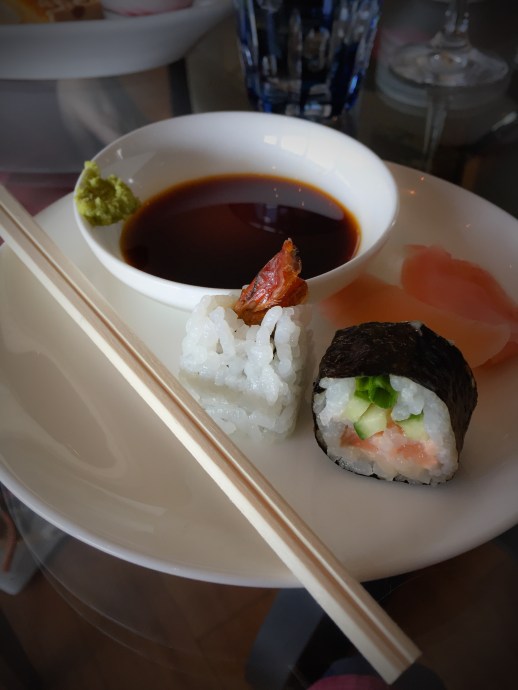
I was out for lunch with friends when I saw sushi for the first time without through a camera lens. In a large platter were tiny, delicate, rice rolls, wrapped in a black parchment paper-like, yet edible, material. Some of the rolls had the wrapper, some didn’t. Some had mild pink salmon peeking out, some had cucumber slices while some others had the tail of a fried shrimp jutting out of the top. My eyes popped at the shrimp tail and I reached out for one (okay, five). The waiters had left tongs nearby so we could serve ourselves and save ourselves an embarrassing encounter with chopsticks.

However, I had to take a pair of chopsticks back to the table with me because it would be silly to eat sushi with my hands or—the horror—a spoon. Along with the sushi rolls, the waiters also put a tiny bowl of soy sauce and a plate with green paste and picked ginger, all the while staring in apprehension at this weird woman who preferred to eat sushi without knowing how.

Back at the table, I eyed my sushi rolls wondering if they would fill me up. Five seemed too few. I spilt my chopsticks and one of my friends adept with the tool taught me how to hold it. I had thought rolling up rice between my fingers was funny enough, but chopsticks took it to a whole new level. When I managed to grip the chopsticks and grab a roll, I felt like a champion. The Japanese have a divine approach to food—healthy, colourful, and so damn hard to get hold of.

I picked up a non-wrapped, cucumber-peeping roll, and before it could fall off my chopsticks, I put it in my mouth. A burst of flavour met my unsuspecting tongue. Soy sauce and wasabi were a weird combination. I love spice so the wasabi wasn’t too spicy—but its flavour surprised me nonetheless. It was hard to imagine something so green, so pleasing to the eye, could be ruthless to some palates. And then there was the ginger, pickled ginger that stung my tastebuds making me reach out for more even without me realising it. Every bite I took unravelled the packed rice and the cucumber within, while the flavours of the soy sauce, wasabi, and the pickled ginger seeped through exploding in a nonsensical, yet wonderful, sensation in my mouth. I kept chewing, trying to get through to all the different tastes that the tiny sushi roll had dropped in my mouth.

I next went for a shrimp roll. It was the same thing all over again, but with the crunch of a shattering shrimp tail and chewiness of salty sea weed.

Despite its tininess, I couldn’t eat more than three because the rolls had a handsome portion of rice with a lot packed within.

At the end of the day, though, I had developed a new kind of love for rice—rice to me is no longer just boiled grains soaked in steaming, tangy, gravy as I had eaten all my life, but rice is also a delicacy and a supple bundle of surprise that’s small on the outside and big on the inside.

Get a life!

I had just begun to read One Hundred Years of Solitude. I had left the book on my table while I rummaged in my bag for something when my colleague (a senior) cast me a look as if I were crazy to read such big a book. (It wasn’t that big, still—)

“Why are you reading stuff like this?” He raised his eyebrows in a scorn, then shook his head continuing, “Read about marketing, about selling, business, and technology. Those are the stuff that’s going to help you in future. These are just useless.” He cast a dirty look at the book I had wrapped in a polyethylene cover to protect its beautiful art.

He wasn’t the only one. About three years later, I had a similar conversation with another senior colleague. This time, it was poetry. I had mentioned reading some new poems when he suggested I read about the latest mobile technology instead. Sure, I laughed, I’ll subscribe to all tech magazines and read them, but poetry is for my personal time. And he smiled in a crude way shrugging, “Well, read this during your personal time.”

To which I replied, “I need a life.”

He just laughed it off, but I felt proud of myself. The first time, I was new at the job and worried about being rude to an experienced person at work. The second time, I was more concerned about myself. I had grown up.

But the fact remains: a lot of my colleagues, friends—even my parents—feel that work has become such a large part of our lives that we have no time for anything else. My married colleagues complain how they can’t bond with their in-laws. Some others worry each day that they leave home for work even before their children wake up. Even the typical 9–5 corporate world now has employees clocking in from 8 to 8 or 8 to 12. And it’s not just for a day, it’s for days together.

In a flurry of product launches and a rush of marketing campaigns, we often forget that home is a place away from office. We spend so much time at work, and all of the little time at home thinking about work. The balance goes to the noose.

It’s sad but it’s reality. We’ve lost so much of our life to work that we seldom realise what we’ve lost. We spend all our days toiling to ensure someone else’s luxury while we skip lunches for meetings, put off a family reunion for an official trip, and stay a little longer than midnight to finish testing the code. And the purpose of it all—an extra shift, a higher bonus.

However, at the end of the day, lying in bed, thinking about the tasks for the following day, we fail to feel the warmth of the blankets, hear the soft—yet evident—creak of the fan or the wind tapping against the windows, and notice the curtains swaying in the breeze. Somehow, while we were busy living to work, we lost the will to live at all.

My colleagues are (un)living examples, and I’m walking on the tightrope. It’s time for a change.

Time to manage

She walked to work feeling excited. She had woken up ten minutes earlier than usual and, to her surprise, didn’t feel tired at all. It’s going to be a good Thursday, she thought walking through the glass doors at her workplace. And if turns out lousy, the weekend’s not far away, her mind assured her.

Taking her place, she looked at the empty seats around her. It was 9 in the morning. She had about an hour before people trudged in.

Taking a deep breath, she fired Safari up. It opened all the tabs she had been working on before shutting down the previous evening. And the first one that looked back at her: Facebook. Instagram was just nearby.

She glanced at her phone. It was 9.05 am. Perfect. She had plenty of time to get some work done early—before the distractions walked in. Perhaps she could leave office early, too, and read that book she had been putting off for more than a while now.

Excited, she was about to turn back to her laptop when she noticed that the wallpaper on her phone seemed boring. Of course, she hadn’t changed it in over a two months. Well, how long could it take?

She flipped through the photos on her phone, and finding nothing worthy of a wallpaper, turned back to her laptop and opened a new tab: mobile wallpapers.

It took a while but she managed to find a perfect fit. Having set the new wallpaper, she was ready to go back to her work email. Facebook was still open, and so was Instagram. She flipped through her feed in record speed, just to catch the latest news from friends. Masha was getting married, Dave Jones had a baby boy (“Name him Davey!”), Trisha was pregnant again, and Joanna had got a new job in Paris. Wow, she wondered scrolling down. It was nice to see the gang succeed.

She kept scrolling until a video made her stop. “How to make the world’s best chocolate chip cookies—as told by Monica.” She smiled to herself. That’s a clever headline, her marketing brain whispered. Good tactic, recalling the beloved Friends character. The title worked on her too; she watched the ten-minute video even though she doesn’t bake. Sighing and craving chocolate, she scrolled further before pausing again. A social-worker friend had posted a video of a non-profit organisation that trained speech-impaired children. Feeling like she owed it to the kids, she played the video. It was short—just a minute and a half. At the end of it, she wanted to bake chocolate chip cookies and share with those kids.

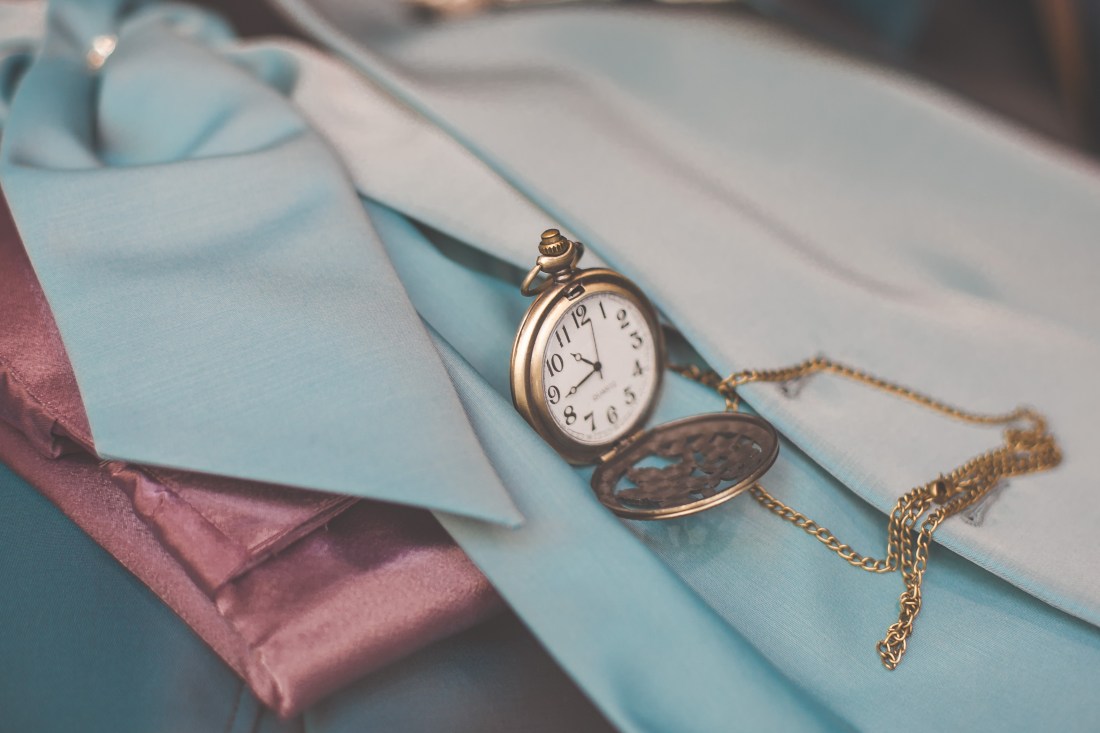
She looked at the phone again. The wallpaper was fine, but would become dull in a month. Perhaps she should try themed wallpapers each month, something fun, she thought—it was 9.45 am.

Now she panicked. The stragglers straggled in one by one. “Hey Bob,” she waved as he passed. “Morning,” she nodded at Priya. And seeing the boss right behind Priya, she looked down in a hurry. She didn’t want him to see her cheery face, for he’d call attention to it at the end-of-quarter meeting later in the day.

She sighed (9.49 am). It was almost time to prepare herself for the tasks of the day. But she didn’t want to. Looking back at the browser, she saw her Instagram full of notifications. Then she remembered she had posted a photo the previous night, and hadn’t seen the responses yet. It was 9.51 am but she still had time. She clicked on the heart.

“Hey. What’s up?”

Her teammate stood behind her cradling a cup in his hand. It was 10.33 am—his coffee time. “Hey,” she replied, her eyes drooping. “I was just reading this article—about successful time management.”