Striving for Simplicity

Heard of the phrase, “Easy reading is damn hard writing”? It’s too familiar to miss. But here’s something (and different altogether) that you may have missed: Simple living is expensive.

Before you think Gandhi, think of the last time you browsed online for a pair of flip-flops. I last did it last night. A solid black rubber flip-flop costs INR 700 ($10) while a fancy, multicoloured, studded pair of women’s footwear costs INR 300 ($4).

True story.

Maybe it’s just footwear I thought, moving onto tee shirts. Again, the plain ones cost more than the printed, designed, and layered ones.

I didn’t understand the difference in pricing. But it’s a fact: Being simple is expensive. And the weird thing is, it shouldn’t be this expensive at all. Look at Gandhi, for instance. That man symbolised simplicity, and it doesn’t look like it cost him much. Except, perhaps, the initial cost of the spinning wheel. Nevertheless, he taught the world that minimalism is simplicity and less is more. And yet, despite all the history and the lessons, it still costs me double to buy simple clothes than it does to buy flashy clothes— or even footwear. Less is more, except in pricing.

I blame Gandhi. He made simplicity the new cool. It’s the trend, the hip, the new classy. Nowadays more and more people prefer classy over glossy. Everyone wants to look minimal. Everyone runs towards a “simpler lifestyle.” And to wear something flashy in the presence of the “minimalists” is uncool and unacceptable. And if the cost of being accepted is a few extra notes, people will pay.

So because the modern lifestyle is the simple lifestyle, brands seize their opportunity. They make simple-looking products, give it a clean finish, and put a hefty price on it. And because simplicity is now synonymous with classy, and classy is synonymous with expensive, anything flashy becomes trashy and cheap. And all this I realised when I saw that cheap-looking footwear had a pricier tag than sleek-looking footwear.

As for Gandhi’s simplicity, it’s a goner, just like the advocate. Simple, now, means expensive brands, single-coloured clothing, and fancy converse. The more expensive your attire, the more casual you appear, and the more casual you look, the classier you feel. Actual casual is now a casualty.
What’s the Point of Small Talk?

No matter where we go and who we meet, there’s always an icebreaker. It’s meant to dissolve inhibitions, help understand others’ likes and dislikes, and even know if they eat pizza with a fork or hands. Sometimes it goes as far as potential philosophy and Zen practices that could save the world. We use small talk to ease people into a situation and make them feel comfortable. Except, small talk doesn’t work.Small talk is often a way to kill time while we’re waiting for someone else.

We don’t care much about other people. When someone asks in a group, “So where are you from, how are you, how’s work, how’s the wife?” We smile and nod along as if it’s interesting, even though we’re far from interested.

It’s common sense. I don’t care how my colleague spent his weekend. I don’t care that my classmate’s mother made her mittens, or that her pet cat laid six kittens. It doesn’t matter to me that the new kid in school had a meltdown or that the principal fired five maintenance staff because the school had too many.

It’s ok not to care. And it’s ok to accept that. The only reason my colleague is listening to me ramble on about my Irritable Bowel Syndrome is because they’re too polite to ask me to shut up. Or too sleepy to get to work. And it’s understandable, too. It’s not their bowels, so why would they even bother?

We’re a clever species. We read articles every day about why small talk isn’t helping us in the long run or how much time we’re wasting at work chattering at the water cooler. And I’ve seen colleagues get irritable when another person strikes small conversations, whiling away time. Yet, despite knowing how futile small talk is, we still indulge in it.

Sometimes, we don’t even realise we’re doing it. When I was new in town, my cousin took me to a party because she said it’d be a great place to meet people. And I met a couple of girls. After asking their names and where they studied, I stopped talking. They were younger than I and not my type. So I didn’t force conversation. But they determined to help me get around and make more friends because my cousin had asked them to.

And so the session began. They asked me where I studied. Why I chose literature when engineering was the more sensible option, why I didn’t answer when my mother called a minute ago, where I’d love to live, what I’d do if money weren’t an object, etcetera, etcetera. I got bored after the first question, but I answered anyway — in not more than two or three sentences. However, besides my obvious resentment, they kept at it until I left without telling anyone.

And that’s what small talk does. It ruins relationships even before they begin. Sure, some people claim that it diffuses tension and helps people find common ground. But if someone forced me to talk, I’d only get bored. I’d lose respect for them because they waste my time. I’d avoid them in future because small talk makes me disconnect.

Corporate Culture

My cousin rolled her eyes at me over her cup of cold coffee. When she lowered her glass, I saw she had developed a chocolate-cream-covered mustache.

I had just asked her how she liked her new job in the big city. In her first week, she had sent me about a hundred messages, all photos of her new workplace, the free meals, and unlimited candy, and the dorm rooms with their cozy bedspreads. The company even gave away free gadgets to employees.

Yet here she was three months later, the life drained from her eyes. I’d expected her to be more excited to talk about the new startup in the block.

She explained. And when corporate employees confess, it’s not pretty.

She got free food three times a day. And unlimited coffee, snacks, and chocolate (dark, too) anytime she wanted. And if she wanted to blow steam off, she could go next door to the playing area to shoot darts or pocket some carrom coins.

She spent over ten hours at work. She didn’t while away or go for tea breaks across the street. She could have anything she wanted from the pantry. And she could bring it back to her desk, working between bites.

She didn’t have a proper mentor either because most startups don’t believe in micromanagers and hierarchy. And with flexible office timings and unrestricted internet access, the only thing that stopped employees from watching porn all day was the creepy open-office setting. But no one felt bad about scrolling through Facebook because that was a part of a healthy productive day.

At first, she loved her job. With no boss to boss her around, it seemed like paradise. However, a few weeks later, she realised she was going nowhere. The company was doing alright; they had received foreign investments and decided to upgrade the playing area with a badminton court. But despite the fresh startup fever, work had become rather dry.

She thought about work while eating, she talked about work while playing, and worked while she travelled, too, (on the company’s free shuttle services) to and from work. Her colleagues stayed over at the office because they’d work all night, and the office beds seemed more comfortable than the one at home.

But they had the weekends off. So they could feel like they had a life. She knew she had none, though.

Just three months into a job, she wanted out. She couldn’t imagine giving up the benefits, but she knew she wasn’t growing where she was. However, if she made the move, her family wouldn’t understand and pressure her to go back in. She felt stuck, wishing they’d fire her.

As she paused to take another swig of coffee, I smiled at her. The lure of corporate culture. Fancy on the outside, finicky on the inside. I’ve seen a few of them myself.

A Good Morning

I woke up today to raindrops pattering on my window, an experience I hadn’t had since last June. Plastering a smile on my lips, I got up ready to get ready for work. And even as I brushed my teeth, the rain waned into a drizzle, and the drizzle then became an occasional droplet. Then, silence — all in a span of five minutes.

Finishing my daily chores, I peeked through the window again. An early bird chirped from its nestled castle in a tree nearby, the sole creature bold enough to break the silence. Sipping my cup of tea, I stared at my cup of tea: the sky lightened and the dark clouds of last night whitened.

I took a deep breath for it felt like a good day.

I left home and locked the door behind me, hoping for a productive day at work. And as I stepped out of the house, the sun peeked out from the horizon, braving the vagaries of the early morning’s slight storm, and sending a shot of warmth through me.

I flashed a smile at the soldier and headed out the street. A good day to take a walk.

On my way, I saw the age-old banyan tree swaying like a wise old woman nodding her white head at me, while a pale orange leaf disengaged itself from its kin to fall onto my path. And along with it, I got the scent of dug up earth and the sight of earthworms wiggling their way back into the soothing heat of the soil.

To cap my walk, came a gentle breeze blowing my already-messy hair into a disarray, and bringing in its wake, a single drop of rain.

Looking up, I saw the white clouds darkening again and the sun retreating. I could feel the breeze getting colder and damper. As that single droplet expanded into a mild drizzle, I stepped up my pace — I had just a few more feet to go.

The drizzle, however, had coated my glasses while I rushed into the shelter of my office. Walking into the towering glass structure, behind me, I heard the whizzing wind gushing through the gap in the door.

Worrying about the clothes I had put to dry on the terrace, I took the elevator up to the 12th floor, coming to a halt by the window. I looked down at the street. The roads were wet, but the drizzle had moved on. The wind had died down, and the sun seemed ready to show her face again.

Shaking my head, I turned around with my arms outstretched announcing to the floor at large, “Monsoon’s here, people.” Lucky for me, the place was deserted. I am the early bird at work.

The Kindling

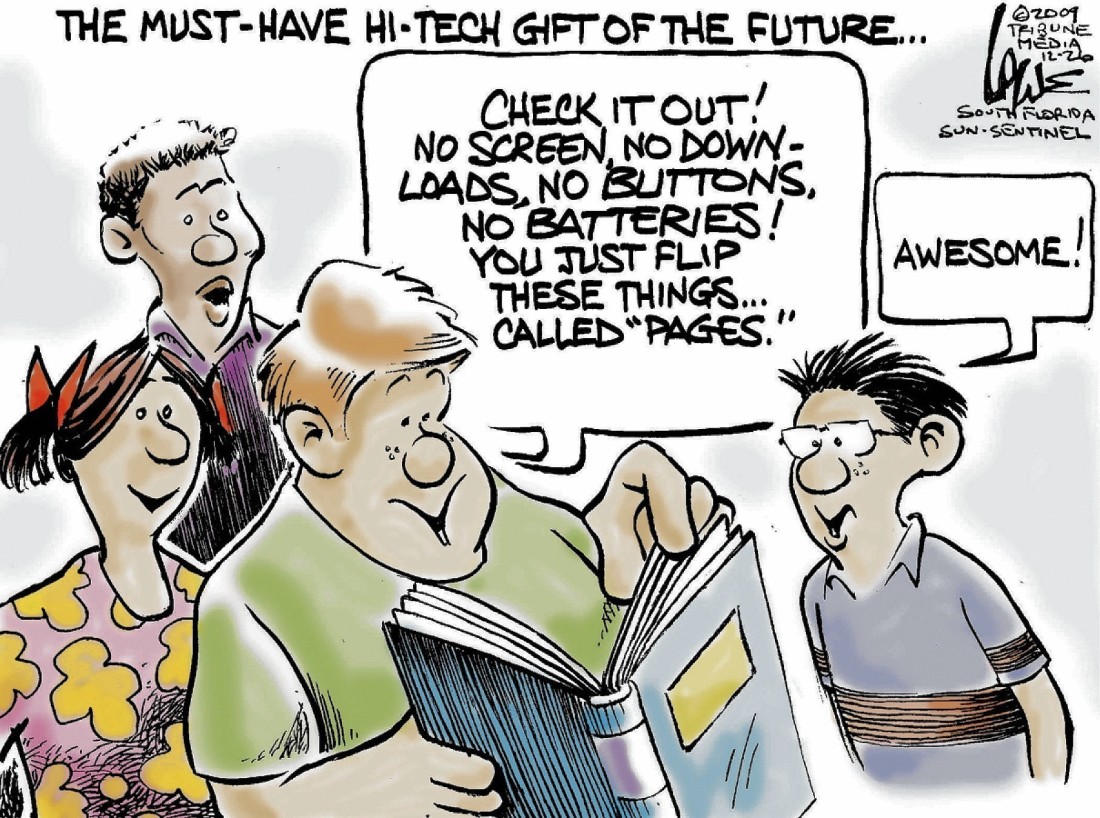
kindle-vs-books

“Get real,” she said. “No one’s going to spend time reading bulky books in future. Why would they, when we already have audio books and kindle?”

My friend and I were having coffee at a famous fast food chain. We had left the office for lunch but decided to grab a muffin and an espresso instead.

When someone said such a thing, I’d flare back at them without a second thought. But now I held my tongue. My friend made sense, and I hated myself for admitting it. I said nothing, however. My coffee lingered under my tongue sending shots of bitterness through my system.

I love reading physical books. And I’ve admitted more times than I know, that despite the Kindle app’s animation to turn pages, an ebook just doesn’t feel the same way. But I’m reading four or five books now, and all of them are on my mobile. It’s easy because I never know when I’d get the time to read a page or two, and my phone’s just lying there in my pocket.

But I’m also against the digital revolution that’s almost killed paperbacks. It saddens me that leather bounds are now classed as exclusive collector’s items.

Books are books. They’re made up of words that can twist and tug at the deepest of heartstrings, and not antiques held together with age-old rust and dust.

Books are books. They’re living things filled with opinions and teachings. They can weigh in when you’re down, though sometimes even weigh too much when you’re carrying a burden.

Books are books. They are a mark of history written. They’re proof that people lived through them; they behold fingerprints and memories of thousands of enlightened minds who’ve cherished every page, every word, and every curve of the “g”s in them.

Whereas Kindle is cold. It’s a case that displays what it contains, and it contains a new thing every day.

Kindle is just a Kindle. It’s sleek to the touch, fits into your arms, and easy to carry.

Kindle is just a Kindle. It’s got hundreds of voices screaming for your attention, and if you’re ever appalled by the violence in one page, you can always find some zen in another.

The Kindle is just a Kindle. It’s versatile with multiple stories and multiple stands. It will neither weigh in for you nor weigh you down.

Kindle is kindling in the name only. It kindles not one but many emotions, which is good for some but too many for most. Bulky books rekindle spirits. There’s no escape from the secrets within a bound book. You either take all it in or give it all up. There’s no intervention, and there’s no mid-ground.

But even as all these thoughts rushed through my head, I still kept my mouth shut. As much as I hated it, ebooks and Kindles are the new way of reading.

With the rise of 140 characters, facebook-like attention spans, and books you can listen to while watching silent movies, many people think hot chocolate and the sofa near the foggy window is more suitable for the family kitten. My friend was right. In future, not many people would read heavy books. We’d intake lines and lines of words like we inhale air. And like air, most of it wouldn’t even reach our brains. It’s the age of the Kindle and unkindled souls.