What’s the Point of Fireworks?

For once, I’m glad the weekend’s over. For two whole days, fireworks have been cracking and popping outside my window and all I could think of was what’s the point of it all?

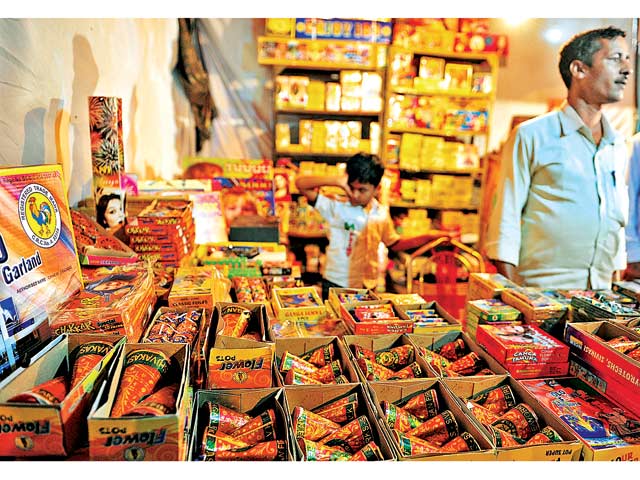
It’s funny that people work hard all year and throw away all their bonus cash on rolled up gunpowder that could blow up a finger. It happens too, at least five times every year. And most of the time, it’s more than a finger. Sometimes even entire houses near a fireworks shop go up in flames just because some random guy lit a cigarette. Fireworks are unstable, risky, and they turn cash into ash right in front of your eyes.

As if wasting money weren’t enough, there’s the nuisance of noise and smoke. I kept jumping every now and again — and not because of the plot twist in the book I was reading. One kid’s thrill for roaring rockets and blasted bombs made the two-month-old next door wail all night which in turn kept me up all night. The noise even drowned out the environmentalists who orated ozone overtures on television. Not even an hour of silence.

But there’s another side to fireworks. A side that’s as pathetic as the aftermath that garbage collectors have to deal with.

About three months before the festival season begins, Sivakasi and the rest of fireworks-producing areas rejoices. Fireworks are their livelihood. They’d lock themselves up in a dingy room, stuffing charcoal into sulfur and sickness into children. And with every pack of fireworks they sold, the lights in their houses would burn brighter and their kids would get a better chance at primary education. The lighter our purses become, the heavier their stomachs become. These people feed on fireworks while people in white coats argue for boycotting the poisonous epidemic.

Nevertheless, fireworks aren’t military. There’s no point in pretending they are a necessary evil. We know the destruction fireworks cause, but we also know the families that hinge on them. And that’s the saddest stature of Indian society. A large portion of our people would die if the larger portion doesn’t kill the environment (in a way).

Unless we take a stand. Unless primary school textbooks refine their definition of Sivakasi being synonymous with fireworks. Unless we do more than boycotting fireworks. Unless we find alternative employment opportunities for those who survive in charcoal, we won’t rid ourselves of pointless fires.

Productive Mondays

Hello there, Kevin! Sorry, my headphones drowned you out. Good morning to you too.

Or, good afternoon more like. It’s almost 11.30. Yeah, I came in at my usual time, 8.30. Nope, it’s no big deal. You just don’t get drunk the previous night and you won’t be hungover in the morning. It’s that simple. I know, I know, you broke up with your girlfriend. Who told us? Well, you, of course. Remember, when you drunk-texted the whole team last night with your “my endless love” lyrics? I have to say, though, the boss called me up later asking me if you’d gone crazy or something.

But that’s ok. You were upset, it’s understandable. No no, you didn’t disturb us. It’s not like I had planned for a quiet dinner with a special friend or anything.

Anyway, I should get back to work, the boss would be furious if I don’t hand over that report today. Yes, catch you later.

Sigh.

Woah, Tracy you scared me! When did you come? I was just talking to Kevin about the mishap yesterday. Ah no, I wasn’t fumbling with my headphones because I saw you coming in through the corner of my eye. No, I was trying to finish a report. Need focus, you see.

Oh, your sister got engaged last night? Wonderful, thanks for the cake. Now if you’ll excuse me —

Hey Kevin. You again. What’s up? Oh, you came over for the cake, right. Er, no. I’m not getting married, Tracy’s sister is. Oh, well, I’m not thinking about marriage now. No, I’m not in a relationship either. I’d rather not talk about it, ok?

Oh, you think a little chit chat would be alright on a Monday morning? Well, if you won’t leave my place there’s not much I can do. Well, I could punch you. But you have a nice face, and I hate to bloody it. Oh, here she is. Hey Trace, Kevin likes your cake. So much so that he doesn’t want to leave.

Wow, that’s some deep conversation you’re having fellas. And don’t bother taking it elsewhere. I’m jobless anyway, and Kevin, I’m dying to know what happened between you and your girlfriend. Well, that report can wait, I guess. You know, Tracy’s always told me (she somehow gets through my headphones) you and your girlfriend weren’t at all a match. Notice her eyes pitying you? And then maybe notice mine too, because they’re hurling fireballs at you.

Ok guys, sorry to break you up. The boss just walked in gestured to me that and he wants a chat with you, Kevin. Maybe you should go, and see what he wants? Oh, don’t worry. It’ll be fine. And we’ll be right here when you get back, we want to hear more about your breakup.

Trace, I’m off to a meeting. No, not a team meeting, it’s — it’s an impromptu meeting. With a friend — from the 3rd floor — it’s personal, ok? Yeah, I’m taking my laptop too. Anyway, see you.

A Festival of Darkness

I’m home alone, marvelling Pirates of the Caribbean for the uncountable time. My room mates have left for their hometowns and so have my colleagues and friends.

Today is Diwali or Deepawali, a special Indian holiday. People working away from their hometowns throng home to spend the day with family. Most religions celebrate this day as the day good destroyed the evil in the world.

diwali-fiewworks
Not real bombs. Just fireworks.

Yet it’s ironic that we celebrate the end of all evil by spreading more evil.

We all love spending time with our families, sharing a meal, and smiling at the kids who run around the neighbourhood fighting over candy while parents share a drink. That’s how foreigners see Diwali. It’s a day of joy and sweets and all things nice. There’s no evil in that.

So it would seem.

Diwali is the festival of lights. And the reason: We celebrate the day lighting firecrackers and scaring the crap out of our domestic animals. It’s common for people to have cows and buffalos as pets, along with dogs, cats, and fish. And while I enjoy Jack Sparrow’s adventures in my room, I hear these bigger animals wailing in fear as the fireworks go up a little too close to their feet.

As I shake my head disgusted at parents who let their kids torment animals, my phone lights up with flash news: “Fire in Gujarat’s fireworks shop, over 10 people dead.” Every year, Diwali brings a handful of fire accidents in fireworks shops. And every year people debate whether we should continue selling and manufacturing fireworks because of all the death and destruction. And yet, year after year, people light up their stash of smoky hell, laughing at lights and lolling like maniacs.

fireworks-shop
Fireworks. A livelihood.

There’s more to Diwali than killing lives and scaring animals, though. Fireworks are expensive. And every household with children or light-liking adults spends about $30 in fireworks. Not to mention other expenses like buying sweets and savouries and new clothes for the entire family. These don’t come cheap. Tis the season where employers give employees a Diwali bonus, too.

On the day of Diwali, people wake up early, clean up real good, wear new clothes, have breakfast, and go outdoors to light up fireworks. An hour or two later they’d break for coffee and snacks. Then again, they go back for more fireworks. and in between the festivities, comes other traditions like visiting neighbours and friends to give away snacks, and all-day feasting in cholesterol-full foods. The whole day wanes, and we call this the single biggest festival of the year.

However, like all things Indian, there’s also a counter-culture to this Diwali madness. There are some who don’t throw money away on fireworks or shopping. They don’t spend all day indulging guilt-free on guilt foods, laugh at animals cowering in fear, or trigger heart attacks in patients in a nearby hospital.

These are the ones who see festivals as a chance reconnect with their family without tearing other families apart. We are the misfits, the tradition-less, and the unholy. We call Diwali the festival of darkness because we are the ones who care for the greater good.

Mom, I Need Space

mom-i-need-space

Sometimes being an average Indian means that you don’t tell your parents about what you want. What if they couldn’t afford that toy motorcycle, and by asking you’d only make them guilty?

It happened to me. Growing up, I never had the courage to tell my mother I needed my own space. We lived in a two-bedroom apartment and I had to sleep with my parents since my older brother, who had a lot of studying to do, needed the other room for himself. And the worst part of it was my parents thinking it was alright for a twelve-year-old girl not to have her own room.

But it felt weird to me. I was a loner, and I liked spending the day lying on my stomach with my face glued to the Chronicles of Narnia. I’d stay up all night, leaning on a wall beside my bed, inhaling page after page of Harry Potter. And when I wanted the lights on, my parents wanted the lights out.

Sure, I could’ve sat in the living room with my book. But it wasn’t the same as snuggling in a smaller room that I could call my own. It bothered me that I never had a little special place I could crawl into when Hedwig died and the world paused for a moment. It made me crave privacy like it was a heard-to-find gem.

But then I grew up and things seemed to brighten up. I got a job in a bigger city so I had to move out of my parents’ house. And because I was going away to an unknown city, my parents suggested moving into a hostel where I would have some company to understand the pulse of the bustling city that was so much unlike our modest one. I couldn’t afford to get a place of my own, anyway. So I agreed and stayed in a hostel room with three others.

And just as I had imagined, I had the company. But I soon realised that hostel was worse than sharing a room with my parents. Perhaps it’s just me, but after a long day at work, I’d like to come home and crawl into my bed with warm cocoa, soulful music, and a racy book. And instead, I’d come walk into a room full of chattering people trying to drown the television that screened the vanity in reality shows. Privacy still eluded me.

After much self-contemplation, I decided to move out of the hostel and even congratulated myself for being such a grown up and making my life decisions myself. And so I told my parents I considered getting a place of my own. I knew it would cost me a little more than sharing a room with three others. But at least it would be mine. My parents disagreed.

And they had their reasons, too: It’s unsafe for a twenty-one-year-old to live alone in a city she’s lived for three years already. That’s when I understood. According to them, I hadn’t moved out of their house at all. I had only moved away from home. My hostel life had been a temporary arrangement because I worked in a different city from my parents’. They even volunteered to move into the city to live with me. That way, the whole family could be in one place, they calculated.

I heard my clarion there.

I loved them, yes. But I had already spent a childhood living under my parents’ shadow, and I wasn’t going to spend my adulthood doing the same. So I tried explaining. But I had never told my parents what I wanted before, and it wasn’t easy to start doing it. I appealed to them that I needed my alone time. And they responded with rolling eyes and a statement: “Girls your age shouldn’t live alone.” So I decided to give up explaining.

It was time to take a more radical approach. I told them I’m moving out from the hostel. But I also decided they meant well worrying about my safety. So I made a compromise; I’d rent a two-bedroom apartment and share it with two of my colleagues. This time, however, my colleagues would share one room and I’d get a room of my own.

Telling my parents what I wanted was hard. But it was easier once I had reached my tipping point. And that point came when I read a chapter from Virginia Woolf’s A Room of One’s Own. What a woman.

What’s the Point of a Wedding?

I was at work trying to write a blog convincing business owners to buy our software. And as I sat staring at my blank screen, my mobile screen lit up. It was a message from my classmate. I picked my phone amazed because she hadn’t spoken to me since our reunion at school two years ago. I opened the message and there it was, in shiny font and bold letters, an invitation to her wedding the next day. Come to think of it, almost all of my classmates are either married or engaged to be married. Some have kids, even. It seemed like I am the only one writing about marriage and not, in fact, marrying.

It’s not as if weddings are easy. Apart from having to find the perfect match for your life, weddings are also weird in a way. In the way that they’re the epitome at displaying wealth. And I was lucky (or not) enough to see a few weddings myself.

I’ve sat listening to grooms ramble about the all-important wedding outfit. The bride’s saree had cost him five months’ worth of salary. Plus five additional sarees that the bride should wear on the same day — one for each wedding ritual. I listen because the funniest part comes at the end of that story: the bride wouldn’t wear those sarees ever again — they’re too heavy and uncomfortable for everyday use.

Then come the miscellaneous expenses like makeup and hairstyle, hall and stage decoration, food and lodging for the guests, train or air tickets to and from the wedding location, snacks during the commute, tea, coffee — with Boost or Bournvita for those who drink neither. And the booze. By the end of that list, the couple would have lost two years of their savings preparing for one day of supposed-celebration.

And if that wouldn’t turn them off, the in-laws have their own demands — not actual demands, but more of obvious stuff the couple would need to move into their new home. Some call these “gifts” while some say dowry. “Gifts” include furniture, jewellery and investments, air conditioner and washing machine, and the essentials like carpets, curtains, and pillow cases.

And then comes the big day, the wedding day. The bride and groom wake up from yet another night of beauty sleeplessness to pressure. While the heater gets ready, a final checklist would come to light.

Shopping-done. Extra gold coins, done. A variety of lip-smacking food, done. And after a shower is the “getting dressed for the wedding” part. That’s when they’ll realise: No matter how much they pressed on the buttons on the air conditioner’s remote, they’re still burning up from the heat and beads of condensation sliding from their temples.

A tiny makeup glitch, safety pins that have gone a wandering, borrowed bangles that shrunk overnight, anything could make them cry. And with five pounds of heirloom jewellery, two and a half pounds of designer saree, and the curious case of the missing bobby pins—tensions are high. And when they think it couldn’t get any worse, the bride’s father would walk up to the groom and voice his displeasure about the drunken best man.

If they’d thought weddings are fun and full of life, they’d soon wish to just get it over with.

That’s the problem with a big fat wedding; on the day of it, the bride and groom are no longer love birds. They’re not the passionate pair, but just tired folks who want to sleep.
Weddings are meant to help them start their life anew. It’s a day to celebrate two souls that agree to sacrifice their tastes and the preferences for the greater good. Marriage is a promise they make to themselves to approach one person’s problem as it’s the other’s and drive through it as one.

As for weddings, they’re just a day to deck up in jewellery and spend the day gossiping. There’s no point in them and I’d rather not go to such a wedding, even though I got my invitation on WhatsApp the previous day.