I can’t breathe

Imagine your child saying that. Or your mother. Or the sibling you used to hate every day of your childhood. Imagine… that loved one, the one you care most about, the one who cares about you even more than their declining health, the one that stood beside you during the toughest of times, holding your hand. Imagine watching them struggle to breathe.

It’s torture, even to imagine it.

And yet, again and again, our world watches on, blind to everything but their own matters, as so many loved ones fight to breathe. 

Police kills black man, the news reads. Instantly, a nation rises, machetes and sign boards in hand, taking to the streets, furious yet cautious—standing a feet from each other with masks intact, their voices loud nevertheless. America is used to black protestors, and the rest of the world is used to dropping jaws as the massive nation that parades itself as great and democratic, brings to its knees, any violence not instigated from within its safe harbour of authority.

This week, once again, we witness the nation that can’t stop talking about itself, the nation that forever holds the top spot in global news, grapple with the hard reality of its citizens chocking in its own hypocrisy. And once again, we slap our hands on our foreheads, shaking heads, covering our mouths in horror as we watch cars running people over, rubber bullets piercing eyeballs, and Starbucks outlets swallowing flames. 

Despite all of this, though, somehow, we know that this isn’t the first or last time we’ll see devastation at such a large scale. Everywhere on this great floating earth is the same challenge as in America. In different levels under different names, yes, but there’s almost no one country that’s treating its diversity with the respect it deserves. 

After all, if there’s one thing that all of humankind does best, it’s to pretend that colonisation never happened. I mean, it’s not just the people who can’t breathe—it’s also our earth and the hundreds of species on the brink of extinction.
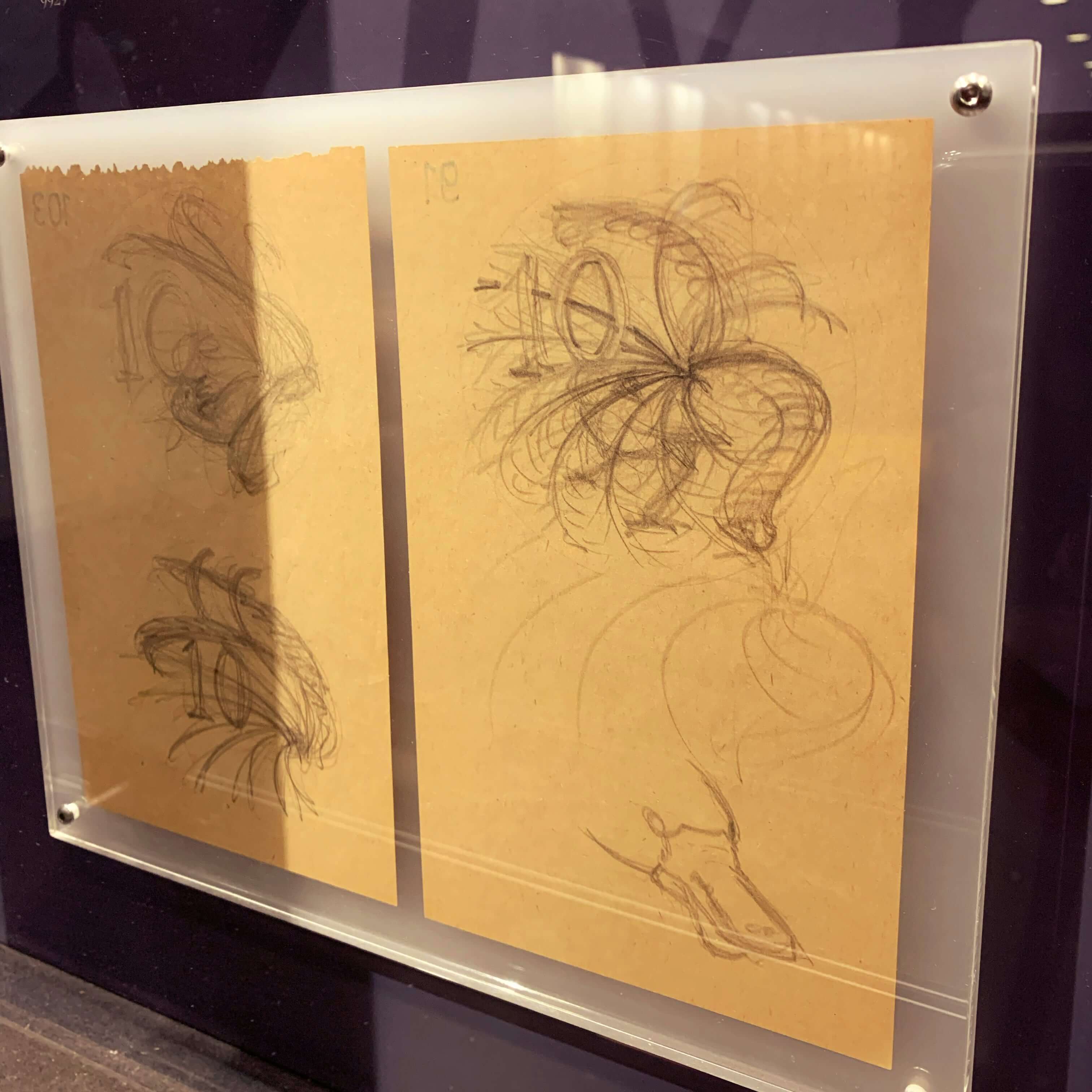
Scratch that!

Initial sketches of the Australian 10 cent coin
Initial sketches of the Australian $0.10 coin
Royal Australian Mint

Rethink every thought—
quite crappy the world will be,
if first drafts were last.

As we go on and on in isolation

Highway plants shake their proverbial middle fingers at our shameless faces as we struggle to stay in homes we so painstakingly designed—

from those salmon (not pink!) curtains to the perfectly fluffy cushions; from the IKEA dinner table with matching cutlery and crockery to the “essential” side stool even though no one’s used it since we’d bum-tested it at the store—the store that sells so much crap that’d become food for our oceans’ fish anyway—

hoping… 

to spend more time in light airy rooms, reading a book, perhaps, or knitting that scarf we’d promised grandma two Christmases ago; 

to cook more healthy meals using the all-new, matte-finished stovetop, complete with touch-sense technology and auto-off functionality ideal for forgetful and amateur cooks; 

to share a drink with our spouse in the middle of the day, with feet propped up on the luscious leather couch we spent an extra couple hundred to customise with flowers to complement the wall colour, discussing finances and school shopping, and having healthy arguments about whether to buy local, organic produce or help international trade and developing nations by sourcing from less-fortunate economies; 

to relax, after hassling all day at work, on the bright yellow bathtub we’d installed, trying out a new herbal bath salt our slightly whimsical friend had told us about; 

to fishing out the almost-dried out fabric paint from the shed and finish painting the cushion covers we’d meant, engaging the kids, as a nice family activity; 

to fix up the wheel-less mountain bike our old housemate had abandoned in their moving rush;

to finally doing all the things we’d always dreamt of doing if only we had the time.

Well, now we do.

And we can let the world heal.

The art of food

Growing up in an Indian household, grains, wheat, and meat were staples. Split red lentil soup with rice or bread was dinner on most days. I thrived in that environment.

I used to wake up to tea—strong leaf tea infused with full-fat cow’s milk—that’s what I survived on. And I always told myself the uncomfortable gassiness, bloating, and smelly farts were normal.

Until I grew up. For one health reason, I decided to go vegan about three-four years ago. And since, for many socio-economic reasons, I’ve continued a vegan lifestyle.

Not long after my transition, I realised that there was another sect of people reacting to gluten the same was as I did to dairy.

Now, I have friends who can’t eat gluten. I’ve cooked for them, and shared meal with them. And so, I’ve become more attuned to the amount of wheat and gluten I consume.

That’s why I like challenging myself to make gluten-free meals. After all, I cook for myself. How bad could it be?

So a couple of days ago, I tried to make gluten-free pasta. I aimed for a simple rice-flour-based spaghetti-like noodle. I realised soon enough that the flour wasn’t as pliable as wheat. Of course, it had no gluten—what was I expecting?

However, after some rigorous kneading, rolling, and scrunching it all up into a ball, I chose the easy way out. Surely, little blobs of dough would still make bite-worthy pasta? I ended up making gnocchi, without a single traditional gnocchi ingredient.

I used a vegetable and tomato curry as a sauce, and to my surprise, it came out well. I was even proud of how quickly everything came together—it was faster than any basic baking endeavour that requires proofing and waiting overnight.

Mix, roll, cut, and shape. Why, it was easier than deciding what sauce to make for the pasta!
Today, at the supermarket, as I looked at the price of gluten-free pastas, I couldn’t help but laugh in my head. Now that I’d done it once, I knew I could make much more for much less.

Food shouldn’t be about convenience. That’s the unhealthy mentality that leads to food-related issues. Instead, when you pursue it with precise care, food becomes art, and that art can sustain us.

Let's just get out of the way

At least ninety percent of the people I interact with daily involve themselves—and boast about it—in some sort of activism against governments’ inaction on climate change. Until as recently as a couple of months ago, people rallied in closed spaces, furiously discussing the endless possibilities of rallying outdoors, with cheeky signboards and stern yells at authority. It feeds their ego—makes them feel like angry mothers, with a hand on the hip, waving a finger at their uncontrollable toddler.

Now though, with the world gradually going into an impending lockdown, I haven’t seen any of these cluster bombs around me. 

Instead of halting traffic and playing their own part in increasing the excess gas pumped into the air as drivers clutched their gears, revving engines, instead of yelling at the top of their voices, as if that’d make global leaders care more, and introducing unnecessary noise pollution in otherwise, quiet streets, instead of wasting everyone’s time just to make themselves feel better as if they’ve achieved something, these non-violent protestors are now in their homes.

Socially distancing themselves from each other, but still unsure what that means, some gather in smaller groups, in each others’ living rooms, to chat about the world and despair at having to cancel protests.

In the meantime, though, the earth has just woken up. 

Remember, the first time you let an ant crawl on your hand, how mesmerised you were at its tinyness? How you allowed it to wander up and down from your elbow and knuckles, smiling at its worthless, feeble life at how easily you could crush it? It’s a wonderful experience—to watch an ant strut. Until—it starts to tingle your arm hair, and you feel the ant moving, you sense it more acutely, and soon, you can’t help yourself but smack it or slash it away. The fascinating creature becomes a pest, and like a dog ridding itself of a flea around its ear, you shake it off. 

We’re the earth’s ants. We’ve scratched her too long—and now she’s shaking us away.

As we crouch away from all contact, hide in the confines of our own couches, life as we’ve never known it, is returning to its original state. Look at Italy, for instance. 

Venice, a travel destination for many, was always too small to treat all the greedy tourists of the world. As a result, it’s faltered under the weight of human pollution. With the country in lockdown, however, because of you-know-what, the waters of Venice are clearer than ever before. Without any humans around, swans and fish rejoice because they can finally breathe the oxygen in those waters.

How sad is that?

The planet’s fine, mate. It’s the people who’re fucked.