
We often see only what’s in front of us, and not the big picture. In front of me was a stack of hats.
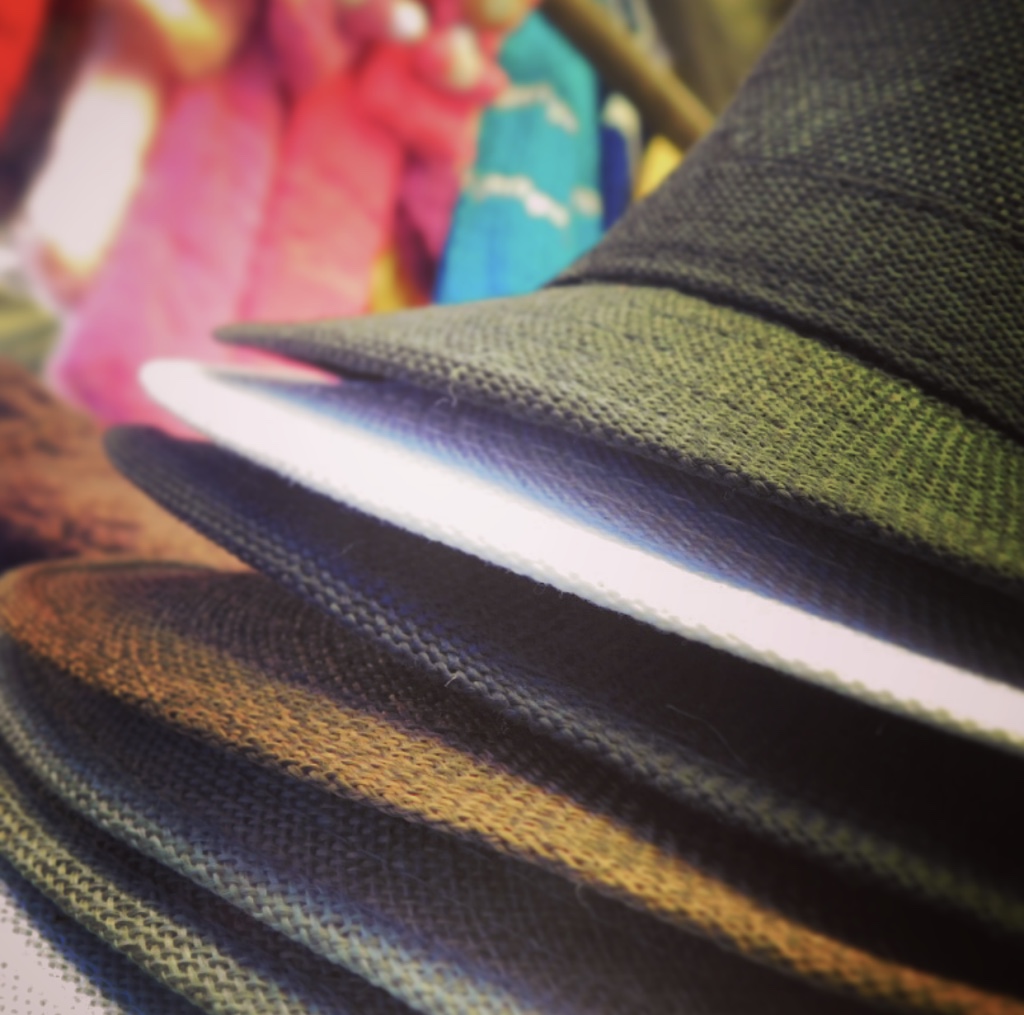
And the big picture?
A buzz of tourists making their way through scores of street shops, picking souvenirs from the beautiful arsenal of treasure.
We often see only what’s in front of us, and not the big picture. In front of me was a stack of hats.
And the big picture?
A buzz of tourists making their way through scores of street shops, picking souvenirs from the beautiful arsenal of treasure.
“Oh, rope car. Would’ve been a great experience, huh?”
When I heard we’d be riding on a rope car, my imagination went wild. For about five seconds, every thriller and every adventure movie I had ever sat through flashed in front of my eyes. I thought of heroes hanging on a rope so weak that it would give away at any moment. And that image disappeared to be replaced with famous love scenes set in a fancy snow-capped mountain with the heroine banging her fists against the car’s glass while her evil father’s hunch men tortured her lover down below. I could even see her tears freezing in the icy cold.
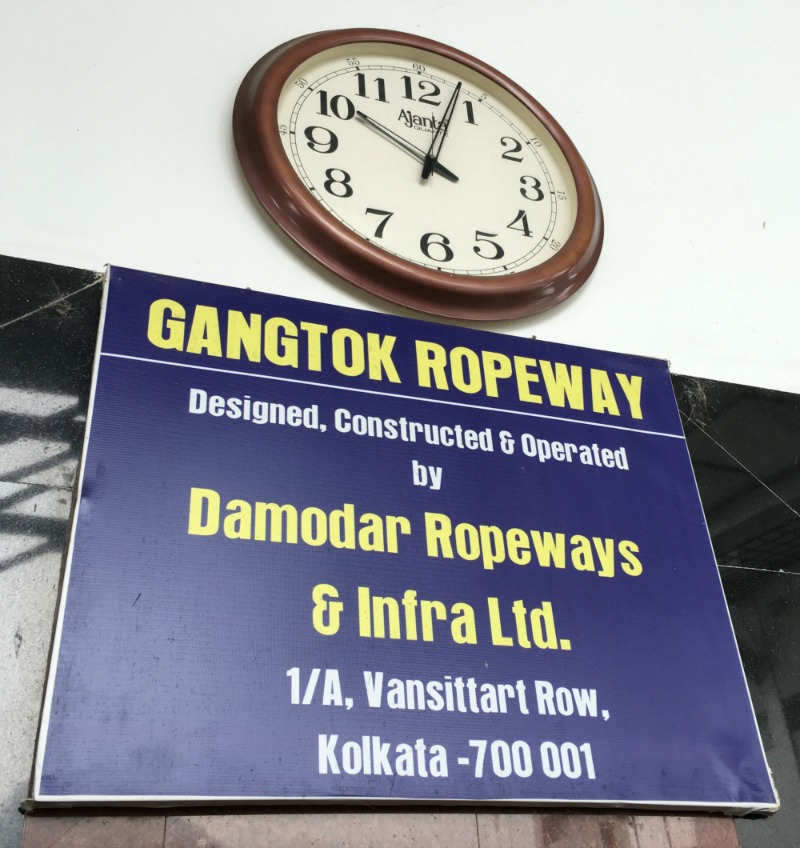
So when they told us to get on board, I shivered a little. From uncontrollable thrill. But as we approached the car, I saw that it showed no signs whatsoever of having carried a distressed Juliet pining for her Romeo. Why, it was just a hallow red box with glass panes for windows!
We climbed in and the guard locked the door shut. I looked around, it wasn’t what you’d call an average car. It was more like a small railway compartment. Only a little cleaner. Otherwise, it had similar flooring, the unmistakable “No Smoking” sign, and the — all-too-familiar — congestion.
They allowed about 20 people into one car. We all had some standing space and had to make some more to reach out for groupfies. I turned my focus to what mattered more: The experience of riding a rope car.
The noise gave it away. We were about to soar.
The me within me — the one who isn’t embarrassed to squeal in excitement or applaud in enthusiasm when in public — stood on the tip of her toes. This was bound to be a treat.
My friends had been shifting about talking in such excited tones that we didn’t realise when the car began moving. When we did, however, it was like someone had grabbed my treat away. We felt close to nothing. We were so-called soaring slower than my slowest walking pace.
But, I stuck to my corner, hoping to look down at the beautiful world below. I felt like the all-seeing, as if I couldn’t even miss that little girl in her school uniform being mean to a squirrel.
But I couldn’t see all.
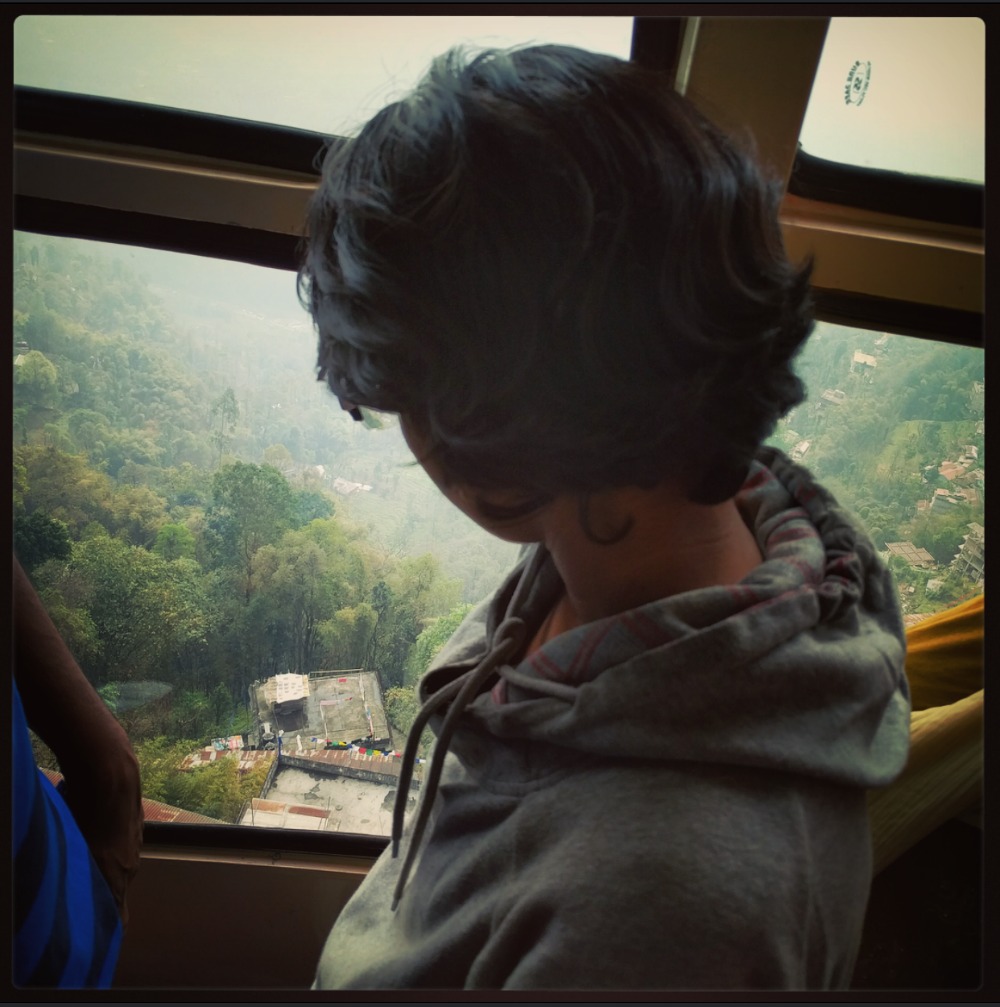
All I could see was asbestos roofings and garbage strewn all over the land. It wasn’t worth standing by the window. There were no flowers and no lush greenery. The movies had misguided me. Again.
It was painful to look at the harsh reality of that corner of the city. It was all the more difficult to digest the sight because I know Gangtok is a tourist destination.
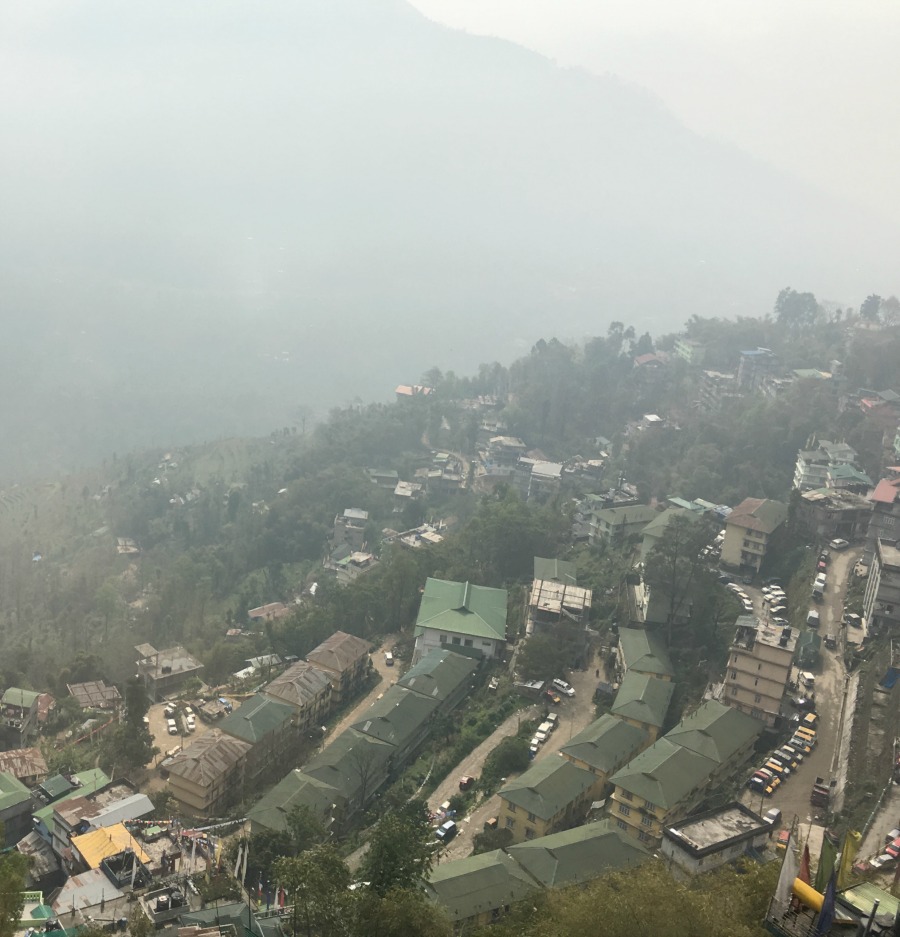
But it is a city like any other. And where there are people, there’s bound to be a face you don’t see in brochures. Because that’s inevitable. People being people isn’t a pretty sight.
Having replayed that entire day in my mind, I turned to my father, and his question.
His eyes had lit up in awe. He looked thrilled at the idea of skirting through the sky, defying all known laws of gravity and Earth-binding responsibilities.
I looked into those ageing, black holes and replied, “Hell, yes!”
During my recent trip to Darjeeling, I had the chance to visit the Padmaja Naidu Himalayan Zoological Park. And within it, a museum.
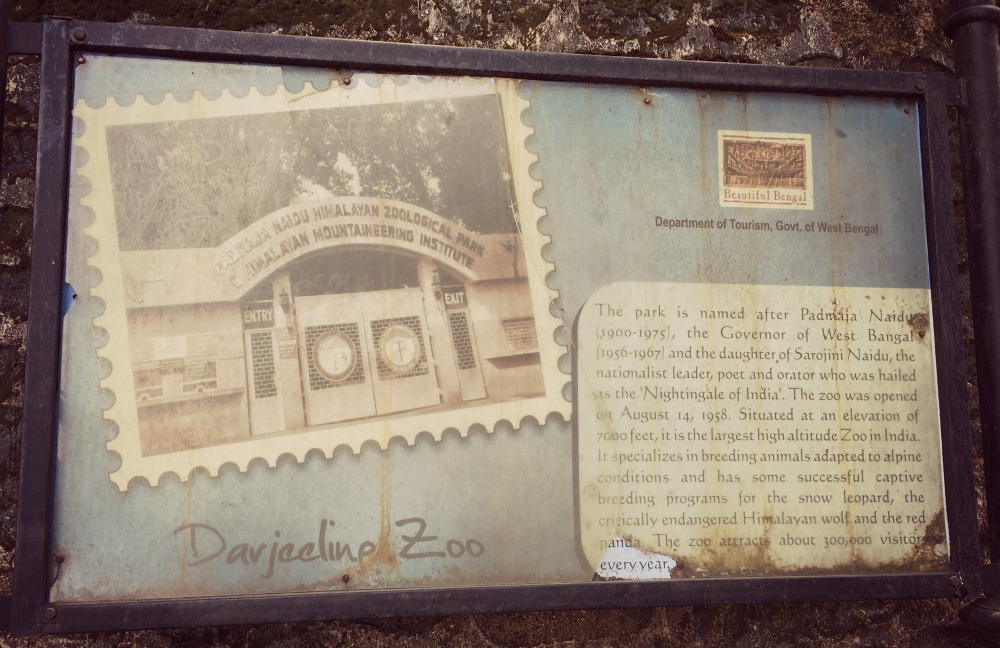
The zoo was wonderful, of course. With so many different animals basking within their “open cages,” monkeys chattering with each other from their enclosures, and parakeets of hundreds of kinds chirping notes too varied to comprehend.
Th kids in our group enjoyed every inch of that vast expanse of animal reserve, but to me, it was just a bigger cage than the usual ones. And yes, photography enthusiasts had a field day with all kinds of experiments. From point and shoot, the lighting, the macros, and zoom ins, to the last resort, auto focus — because all experiments headed downhill.
I always prefer odd-shaped rocks over humans, and flowers over wilder animals. But most other tourists preferred to point their cameras and thoughts at the big blue sheep. Which isn’t a bad way to spend a vacation. The animals were mesmerising, of course. I had never known that so many animals existed among the lesser ones.
I tried my hand at it photography too. I should have looked like a weird lunatic to all those pointing their cameras in the opposite direction — at a majestic tigress.
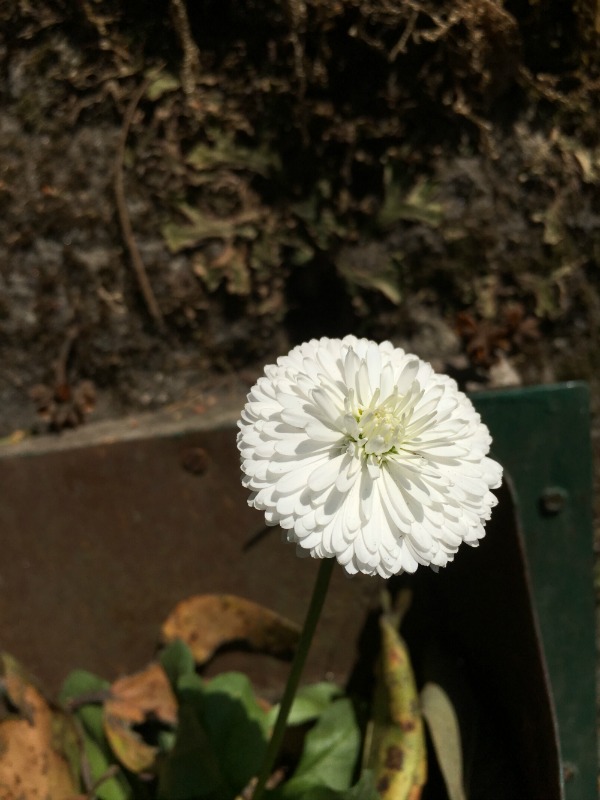
I was more keen on the little things that grew unknown, and uncared for. There’s so much beauty in crisp white petals striking through the dusty, brown leaves on the ground. So is the plump red fruit handing from what appeared to be a dying tree. The mysteries within those round and thin skins, the tiny, almost invisible, seeds, and the plush flesh of the fruit. Whatever is that fruit called? What if it just appeared irresistible, but would resist blood to your veins once you eat them? After all, poisonous berries do co-exist with the sweet ones. Not unlike us human folk.
One good thing about the park visit: It tempted my muse.
When I walked into the Himalayan Mountaineering Institute and museum in Darjeeling, I didn’t know what I was hoping to see. In hindsight, it seemed obvious that they’d display the tools, the gear, and even the remains of some of the Himalayan creatures.

But it wasn’t so obvious then, and it was all the more disappointing when they had a clear sign prohibiting all forms of photography. We walked through dozens of glass boxes that rose to the ceiling, encasing mementos from mountaineers who had conquered Himalayas. From little chisels, stoves, and crockery, to even the tents they slept in during their expeditions. They were all in there. And for a moment, I couldn’t grasp the magnitude of what I faced.
The Himalayas wasn’t just something we heard about in the media anymore. It wasn’t just the highest mountain range, with a cold index that no one should underestimate. Standing there, looking at the plate a mountaineer had eaten out of when he was camping in the Himalayas made me realise how big the whole thing was. From being a natural phenomenon that mankind could never conquer, to watching photographs, and clay sculptures of the mountain itself, of the climbers picking their way through the snow caps — it all became too real too soon.
I marvelled at the fact that people just like you an I have managed such a huge feat. They weren’t some weirdos or a mysterious elite. They could have been as ordinary as our noisy neighbours. And yet, somehow, extraordinary. Looking at their possessions, I wondered, that particular mountaineer must’ve have liked his tea like I did mine: A mugful.
And that realisation brought me closer to humans than anything else had ever done.
I didn’t realise for a long time how much we, as an Indian community, use Gandhi’s name on everything. It’s become so common that from being a credibility-booster, it’s become a marketing ploy. Like some low ball technique we use to get our way in the world. Or as an excuse to take pride in our stupidities.
“In the land of Gandhi!” they say. Or proclaim, in fact. In the land of Gandhi, we did this, and that, and all other things we didn’t do.
Which is fine with me, except that we’ve exhausted the name now. In futile attempts to show how much we adore the man, we even named streets after him. And in more cases than one, M.G.Road is a city’s official shopping zone.
There was one in Darjeeling too.
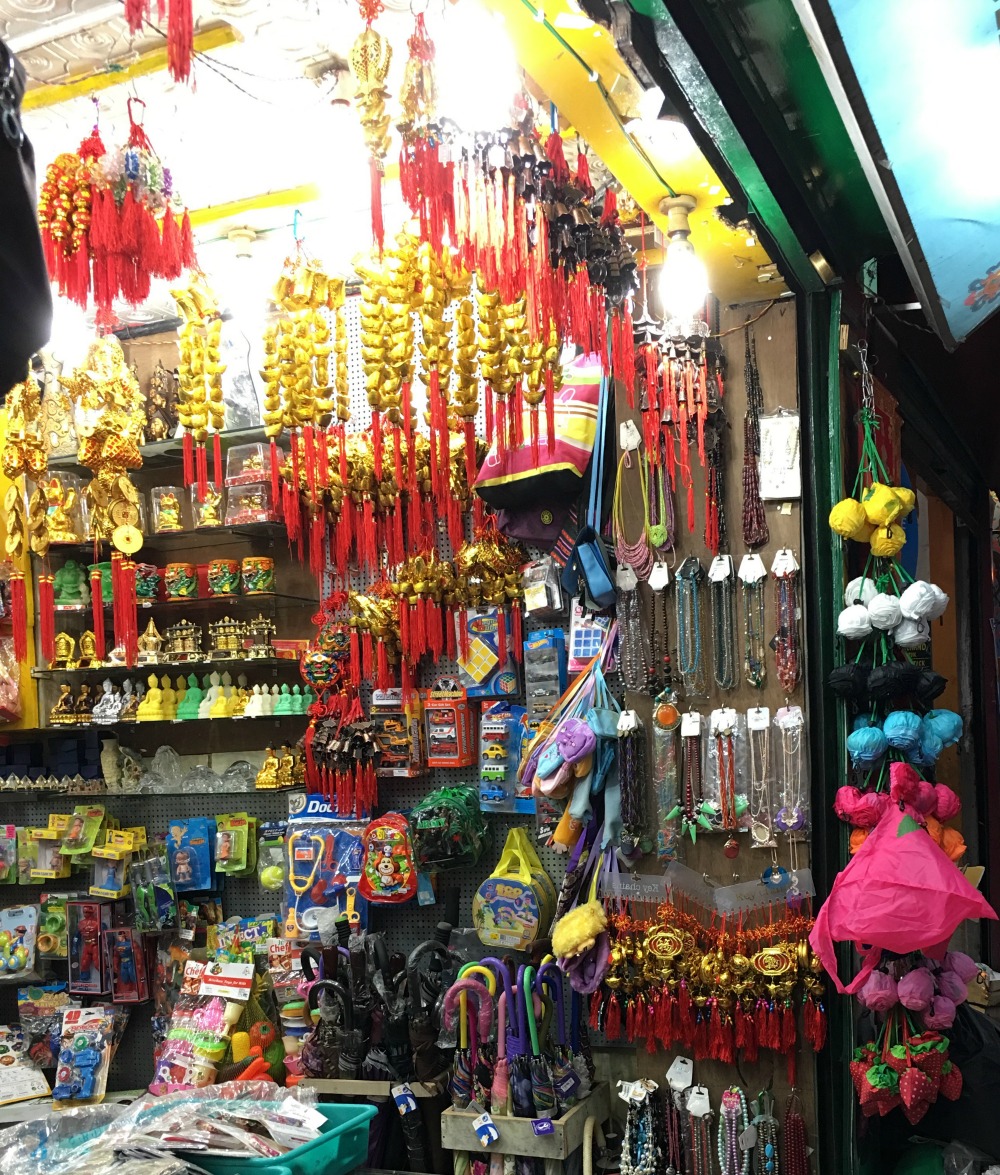
It’s amazing how the name “Mahatma Gandhi Road” is a shoppers’ stop when the man himself advocated ultimate simplicity. Guess it’s just another of our inherent paradoxes.
As I walked along M.G.Road, I saw all the things Gandhi stood against, while he himself stood next to a fountain, as erect as a guard.
Watching him watch the tourists, I remembered studying in an old school book that he preached simple attire. Whereas in M.G.Road, people ogled at woollen sweaters, silken scarves, and sleeveless dresses studded with little stones that mirrored the chandeliers.
There were bakeries stuffed with all things self-raising, and salty, buttery goodness. And sweet shops showcasing the pride of West Bengal. While stacks of shops sold home-made foods, there were cafes and snack stalls too. Some places sold tea, some coffee, and some places just disgraced the emotions of tea and coffee.

And of course, countless liquor stores luring in the fancy folk who preferred things stronger than a simple cuppa. Oh, and tobacco too.
In the middle of all these, stood Gandhi’s figure, deep in observation. Not that he could do anything, of course.
And then — the flowers. So may flowers. So many colours, so many shades, so many tiny petals bearing tiny leftover droplets from the rain of just moments before.
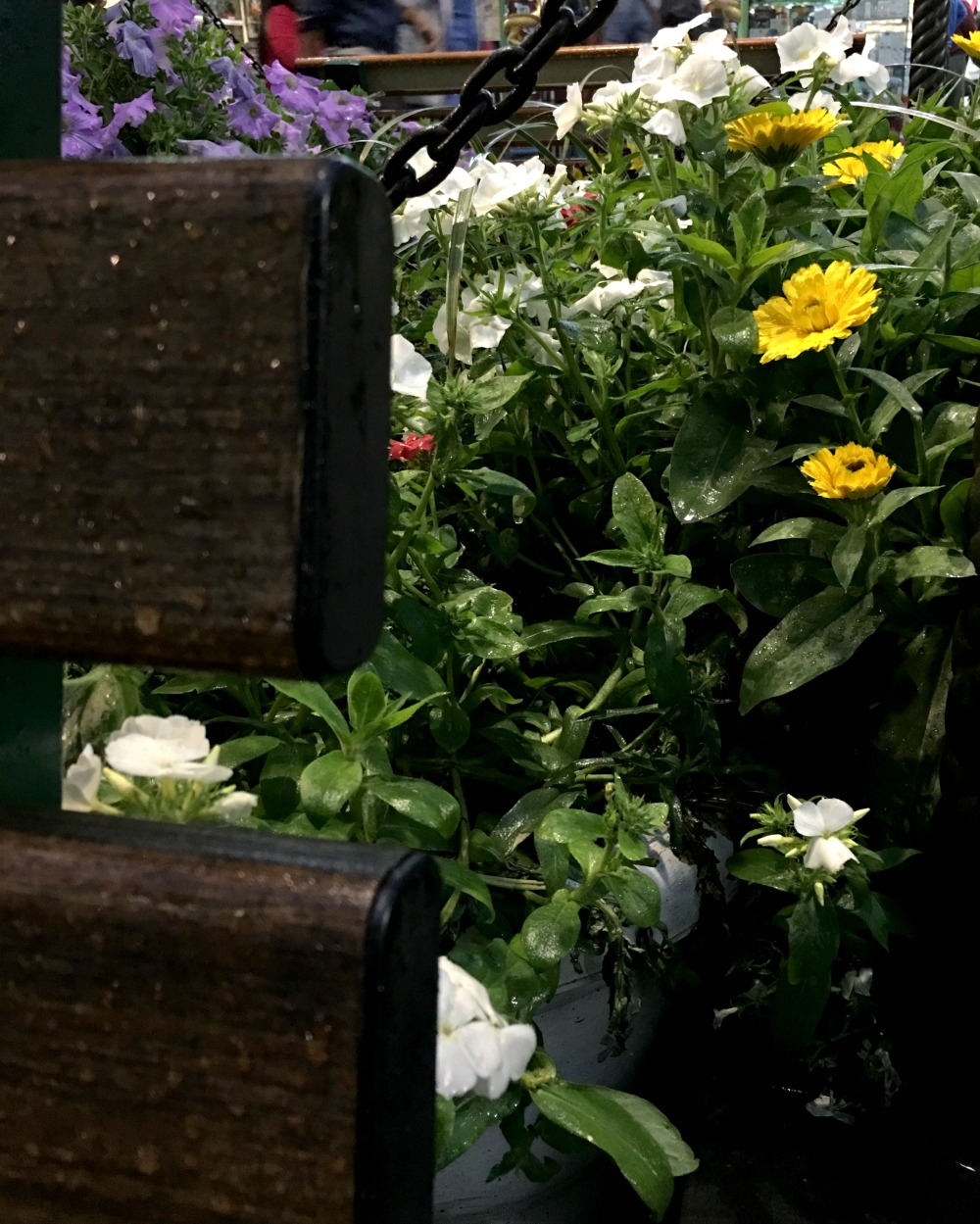
It was a magnificent sight. Even for me who hated shopping in every sense of the traditional word. I loved walking through that street. And the best part of it all: The street is always closed to vehicles from late in the day to later on in the evening. That made it all the more welcoming. With the rain adding a dash of chilliness to the cold breeze, the smell of someone’s strong cigar wafting through the air, the steaming cup of tea in my hands, and the bunch of friends ready to laugh at a good joke — what more could I have asked for?

