Going on holiday

I booked my tickets two weeks in advance and my accommodation just a handful of days before the big day. 

No one in Australia does that. For instance, my friend booked a week’s stay in a cabin far, far away—five months in advance. That’s normal.

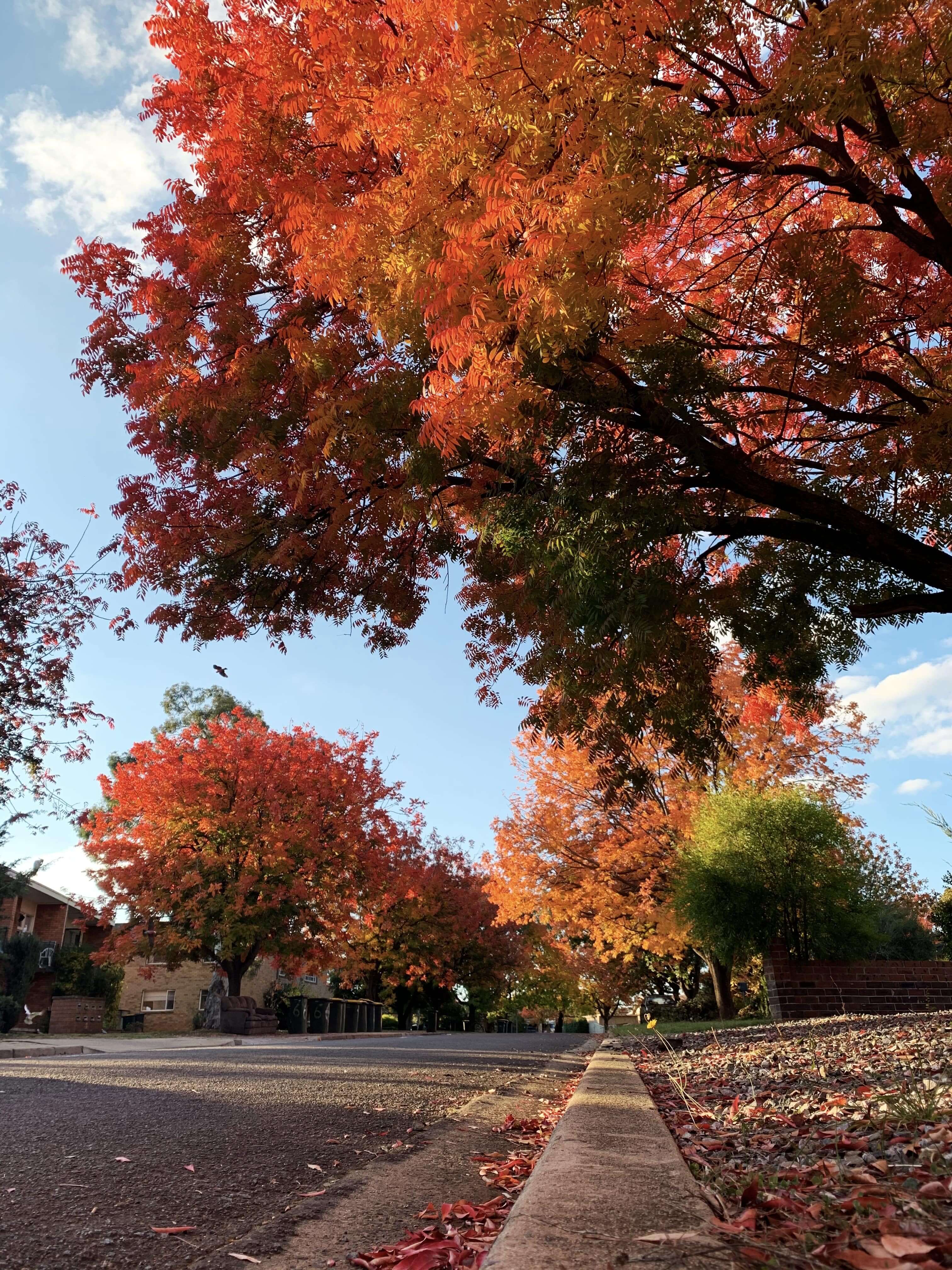
And here I was booking flight tickets to Tasmania, about to spend ten days in a city I knew nothing about. In hindsight, I’m proud of myself for choosing Launceston—it’s a delightful place to visit. But even until the last moment, the day of my journey, as I sat in the back seat of the cab, looking out at Canberra’s iconic welcome to Autumn, I wasn’t excited. Even as I went through security check, I was more alarmed that we no longer have to take out our electronics for screening than I was excited about my upcoming trip.

photo of the ocean as seen throug the flight windor

Sitting in the plane, watching the ground become bigger and bigger as we soared into the sky, I felt nothing. My glasses fogged from me breathing through my face mask, but I had the best seat in the house—the window. Still, my insides felt like a balloon that failed to balloon.

It didn’t feel like I was going away on holiday.

I landed and walked into the biosecurity area of the Launceston arrivals zone. And I texted my trusty friend and brother: Launceston Airport is a massive tent.

We queued up in what looked like a huge white canopy with three podiums with officers checking everyone’s border permit and asking each person individually if they’ve travelled to any hotspots or have any symptoms. It’s incredible how much we humans function on trust systems. Once I’d shaken my head no to all his standard questions, my officer—a stubby man wearing a polo t-shirt and pants—gadded me a card that had some contact information in case I developed any symptoms. I thanked him and walked out—and into the actual airport. It was smaller than the Canberra airport—just two conveyor belts for baggage. Brilliant and easy to find. A good five minutes later, my yellow backpack waded its way to me, and I hoisted it up on my shoulder and turned to face the exit.

Those glass doors didn’t open automatically.

No worries. I’m used to motion sensors not sensing me. I went closer only to realise that the double door had a big circular sticker on either side of the partition with text that read, “Touch to open door”. Amused and highly sceptical, I touched and viola! I was out in the chilly breeze and the sunny outskirts of Launceston.

Following the sign, I turned left, looking for a bus. The airport shuttle was supposed to be waiting for passengers who wanted to go into the city. Instead, there was a van—an approximately 15-seater vehicle with a chubby bald and smiling man waiting outside. On the van, clearly visible, was a sticker that read, The Airport Shuttle. I had to ask. “Is this the airport shuttle?”

He didn’t sneer. He wasn’t sarcastic when he replied, “It is! Where do you need to go?”

“The city, please.” As if that was a destination by itself.

“Do you have a specific place in the city?”

“Ah, yes. The Backpackers Hostel.”

“Sure thing. I can drop you off right at the door. How long are you in town for?”

I told him, and he suggested I go to the visitors’ centre and get myself a walking map. He helpfully added that it’s inside the post office, which I knew was built in the early 19th century and was still functioning handsomely.

photo of the old clock tower, Launceston
Post office, Launceston

I thanked him, paid him, and took my seat. And at long last, I removed my mask and did a full mouth rotation to make sure my facial muscles were still operating. 20 minutes later, I stood outside the hundred-year-old building—just another old building, I realised as I later wandered around town—that was the hostel I’d be staying at.

And then it hit me. 

I had ten glorious days to do anything but the things that defined my life.

photo of the suburbs of Launceston as seen from across the Tamar river
Welcome to Launceston

To be continued…

The natural way of things

The Natural Way of Things is a contemporary novel by Australian author Charlotte Wood.

It came heavily recommended. My friend, who’s incidentally an English teacher—no not the teacher of the language but a woman of the language itself—wrote a lengthy Facebook post (we’re millennials, we’re embracing technology) about how much she enjoyed this book.

Enjoyed in the sense that she was gripped by the crude reality that this story portrays. As a woman, a feminist, and as someone with a lot of female (and male) friends, she couldn’t believe how easily women can turn against each other. Or rather, she knew it was all possible, but was still shocked to physically hold a book that reflects, in a most provocative manner, that exact fear. It was strange for my friend to read through a life story of a character (albeit imaginary) who experienced the nastiness of fellow humans—both female and male.

It’s not the nastiness that gives this book its bitter aftertaste. Lots of books are nasty. It’s the level of nastiness.

For me, this book was a bit dull for a long time before it got interesting. It got interesting when the characters in the book—all women, all of who were kidnapped, bound in chains, and made to slave away without even knowing why or by whom—realised that the food was running out. That likely says a lot more about me than in does about the book itself, but the moral of the story is that when times become hard and everything seems bleak, when women become desperate for freedom (in a manner of speaking), they’ll betray anyone. Even those they considered friends, sisters, and fellow sufferers.

That’s it. That’s what the story says. In a fast-paced, realistic, Australian narrative, we follow the lives of a handful of women who under intense stress, display what it means to be human.

So many people who’ve read this book call it horrible and evil and other adjectives that mean the same. But it’s none of that. It’s chillingly real. If it were all men instead of women, the outcome probably would’ve been similar. However, because this book spotlights human weakness in a way that most of us know but can’t come to terms with, it’s sparked a lot of debate.

For instance, one of the most common responses to this book is whether women could ever be such bitches to each other. In this modern world where women are collectively braving the trials of male chauvinism and patriarchy, will women turn against each other when provoked?

The answer is a responding yes. And that’s hard to deal with. But deal with it we should because that behaviour has nothing to do with them being women—it’s human nature. Hence the title.

Is this the greatest book I’ve ever read? No.

Has this book changed the way I see the world? Probably not. (But that’s also because I’ve always believed humans will be the downfall of humans. I’m not exactly a ray of sunshine.)

But is this book even worth reading? Hell yes.

Because it forces us to look at reality and accept it. To understand that in our weakest moments, we may lose everything we’re made of. And that’s ok, because humans aren’t perfect. We will all break at some point and being aware of it might help us stay intact for just a little longer.