Understanding  Metamorphosis

I’m not sure what brought it up, but a colleague mentioned Franz Kafka wrote the saddest stories ever. A pathos fan myself, my interest was piqued. My colleague recommended and lent me the ebook version of Metamorphosis, a supposed stunner.

It was a small book, and I managed to tolerate reading it on a screen. I finished it last night and gave it a two-star rating on Goodreads. And then I scrolled through reviews to see what other readers had said thought about the book. I was stunned; a lot of people had given four or five stars, and words like “wonderful,” “amazing,” “deep,” and “emotional” jumped out at me.

I scratched my head. Huh?

Jack

It was as if they had read a different book altogether. I wondered if my copy had been just the preface, and if there was more to the tale than I had read.

I had expected dramatic change, something that would topple the lives of all the characters. I know all that did happen, still, it was too matter-of-fact, like.

It’s not that I didn’t like the story, but I didn’t see what the big deal was. It was well written, sure. It had an uncanny plot, yes. And an unconventional ending. But other than that, I didn’t feel the sadness ebbing from the words, I wasn’t moved to tears, my eyes didn’t burn, my nose didn’t stream, and my neck didn’t hurt from crouching.

It was a good story with a beautiful narrative. It wasn’t gripping or as sad as I had hoped. Nevertheless, the comments on Goodreads unsettles me. I feel almost inhuman not seeing what’s so intriguing about the book.

Have you read Metamorphosis? Pray tell, what did I miss?

What’s the Point of Working…*

*…if money were no object?

I don’t think there’s any point in working if money were out of the equation. If we all had abundant food and full-time entertainment, we wouldn’t need anything else. We wouldn’t have to work at all, we could fool around and have a ball, even.

Some say, if money were no object, we’d have a fuller life. That we’d do more of what we loved, of what made us happy. That we’d follow our passions.

But is it so?

There’d be no point in waking up to a blaring alarm, fighting an urge to snooze, or ignoring the top palate while brushing.

There’d be no point in rushing out of the house, or remembering you hadn’t locked the door after you’d walked down two flights of stairs.

There’d be no point in clocking in 2 minutes before the penalty time, or skipping lunch to write a poem, or staying late to discuss the ANUS that had fallen to an all-time low.

If money were not an object, there’d be no point at all in getting out of bed every day. There’d be no traffic, no blaring horns, and no headlights blinding you when you walk home after a long day at the office.

If not for want of money, we’d have no reason to listen to the boss lecturing, or tolerate water cooler gossip. There’d be no dinner dates with attractive sales reps or compulsive flirting with the blond receptionist.

If we didn’t get up, suck up and go to work, we’d be at home on our couch, nibbling on potato chips, thinking about making art, talking about zen, and adding weight to the planet.

No, we wouldn’t follow our dreams, we wouldn’t even dream.

The Chronicles of Reading

chronicles of readingI’ve tried it many times, and I’ve failed every time. I can’t read ebooks. Guess I just have to accept that.
I’ve tried so hard to get excited about the modern revolution and the “all new” kindle that Amazon releases every now and then. But when I try to read a book on my device, I can’t feel anything other than the pressure of finishing a chore.

It’s like dandruff at the back of my head, hiding in plain sight and disrupting my sleep until I’m rid of it. I spend almost 12 hours a day at work going through research papers, Facebook statuses, tech magazines, how-to guides, blogs, forum topics, Twitter updates, technical documents, and even tips for the solo traveler. And at the end of such a day, if I have to stare at more fiction on a screen, I just can’t.

Pity plenty of authors nowadays prefer self-publishing and ebooks. As someone who wants to call herself a writer, it’s ironic that I can’t stand the non-existent smell of a shatter-proof scratch guard, and the heat of the declining battery.

I still want to feel the frayed edges of a book and curse the one who handled it before me. I like my mind nagging me every time I put a book inside my bag; what if the edges get damaged? I still strive to finish reading a book with the spine erect as if it had never been opened.

I enjoy the mild weight of a book nestled between my favourite pyjamas in my backpack while I travel home. I want to feel the thrill of flipping through a page, the dread that comes with pages attached to one another, and the quickening of my pulse when I reach the end of a dangling chapter.

And I still want to be able to shut a book with a snap, look into the wall opposite me and go, “Wow!”

I’m just an old-fashioned reader who wants to (one day) become a published author — the good ol’ fashioned way. I know the word’s moving towards electronic reading. It may not be the best of times for my kind of people, but — though Dickens may protest — it’s not the worst of times either.

Drama Queen

Some say the world will end in fire
some say in ice
some call him a poet,
some call him lunatic
consulting he thinks he does
pissing people off as he goes
he’d seem so stern
and make you yearn
he’d tread smooth as shadow
but looks more like a strut
he’s a bot, a robot, a heartless wretch
just give him his violin to shut him up
he’d pull his collar up sans reason
show off his scarf whatever season
stands straight the slender snowman
scoffs at the opinions of other men
he’d play with criminal minds
break hearts as the game goes
The friend calls him drama queen
it’s Sherlock, obviously, he’s mean.

There’s a Lake in Kodaikkanal

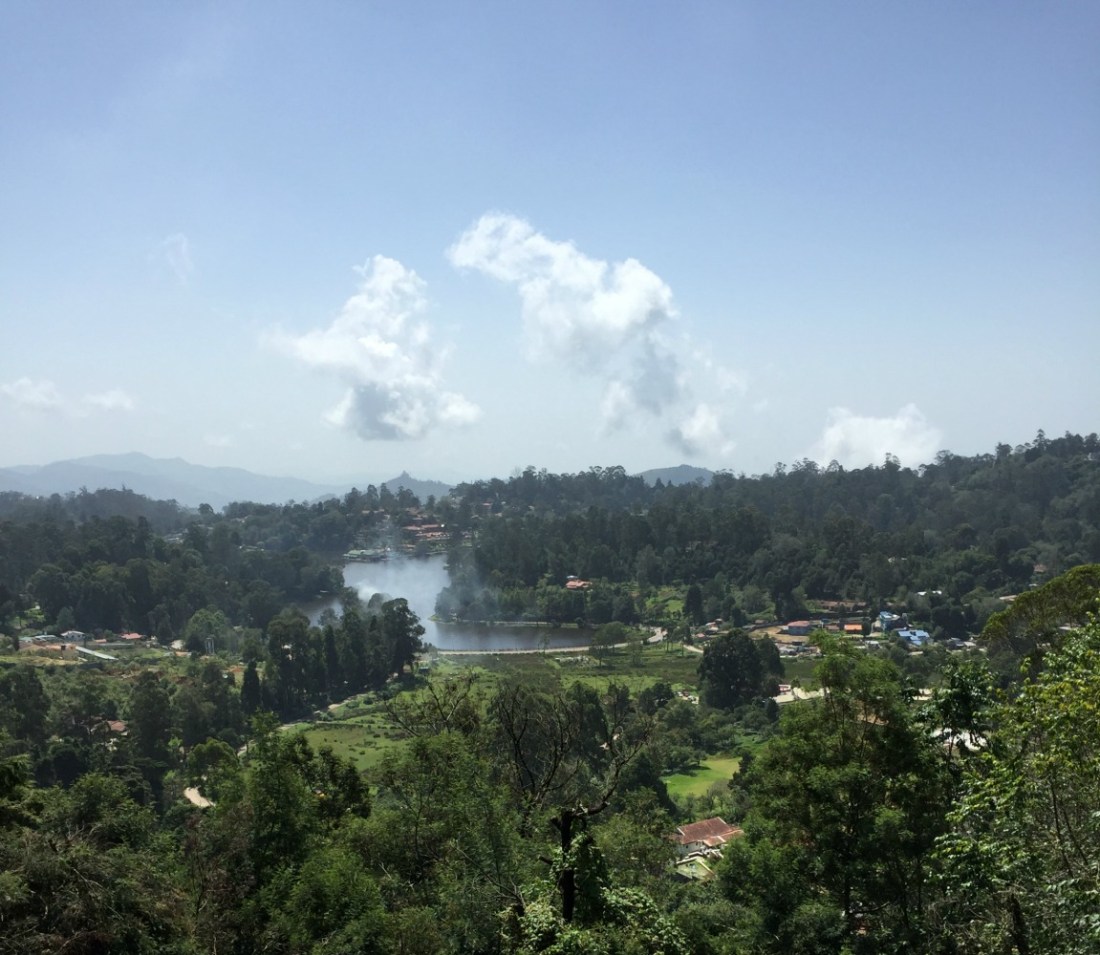
When I sat waiting for my tea in a restaurant by the Kodaikanal lake, I didn’t know the lake staring at me was artificial.

I later learnt that most tourists assumed the lake was a natural phenomenon, when in fact, it was created during the British reign by the Collector of Kodaikkanal, Sir Vere Henry Levinge.

kodaikkanal lake

I’ve seen a lot of lakes since, larger and more natural lakes than that one, but the thought of it still amazes me. It was like Coleridge said,

“Water, water, everywhere and not a drop to drink.”

And just then, it started to rain. It was the monsoon season, and rain would come and go as she pleased. It was cold enough already, and the rain made me turn towards the kitchen to see if my tea was ready yet.

My tea and samosa arrived, and I welcomed the puff of steamy air that blurred my glasses. I sipped my tea and bit into the samosa. And some of the spiciest and heartening mashed potato masala landed in my mouth. I took a second sip of my tea and warmed up me from the inside as it trickled down my throat.

I looked at the lake, watching drops of water scattering ripples through the surface. It wasn’t a heavy rain, and I could see a few boats rippling through the lake.

Kodaikanal is a famous honeymoon spot, and sure enough, there were couples paddling away, while thousands of tiny fish surfaced for seaweed and breadcrumbs.

A few others – the restaurant folks, by the look of them — threw nets into the lake, trying to catch fish. The kitchens seemed to have run out of fish pretty fast.

I finished my snack and we retraced our way to the hotel. We had to drive around the lake for at least half hour. It was a centre hub, around which countless locals went about their chores while tourists shopped for fancy bead chains and souvenirs.

The lake spans 60 acres. As we drove on, we reached a part of the lake that seemed dented in one place. Somehow, the people who created the lake didn’t like flawless ovals.

The entire lake seemed like a giant’s idea of a puddle, and as if someone had made an awful lot of mess in one corner.

By the time I reached the hotel, I had been among such serenity that I felt satiated; eyes, soul, stomach, and all.