More About People

People come in all shapes and sizes. That’s the beauty of life; the variety. There are the good-humoured people who appreciate others’ efforts and views. We don’t find too many such people around here now though.

Then, there is the other kind, who can’t live without disturbing and distracting others, but despite all these kinds of people,variety, to this day, remains to be the spice of life.

This poem – ‘More about people’ by Ogden Nash; I found this in my mother’s treasured ‘Poems for pleasure’, a collection of a few of the best poetry ever found. When I first read this poem, I was amused; how true and how simply said!

Sometimes, when we attempt creative writing, we look to add tough vocabulary because we feel that’s creativity; using words no one else is familiar with. But many a time, the most creative of works consist of simple words. The simplicity of the thought and the usage of words themselves are rejuvenating. We fail to realize this at times.

This is yet another amazing lesson poetry has taught me. They say brevity is the soul of wit, but this poem plainly states that unpolished and naked words can be witty as well.

Coming back to the poem, what a complete picture it gives! And all it says is, more about people.

The best thing about the poem is that it’s undeniable. It is simply and truly said. See for yourself.

More about people

                                     ~Ogden Nash

When people aren’t asking questions 
They’re making suggestions 
And when they’re not doing one of those 
They’re either looking over your shoulder or stepping on your toes 
And then as if that weren’t enough to annoy you 
They employ you. 
Anybody at leisure 
Incurs everybody’s displeasure. 
It seems to be very irking 
To people at work to see other people not working, 
So they tell you that work is wonderful medicine, 
Just look at Firestone and Ford and Edison, 
And they lecture you till they’re out of breath or something 
And then if you don’t succumb they starve you to death or something. 
All of which results in a nasty quirk: 
That if you don’t want to work you have to work to earn enough money so that you won’t have to work.

O Alquimista

“When you want something, all the universe conspires in helping you to achieve it.” 

~The Alchemist~

Well, that’s the subject matter of  ‘The Alchemist’. It’s a story, simply portrayed; a story that conveys a not-so-simple message in a way that anyone can understand.

This is the tale of a young shepherd by the name of Santiago, who follows his recurring dreams all the way to Egypt and back again. His encounters with an old king, love, fears, an  alchemist and others carry the story.

We all have or would have had deep desires and ambitions. We abandon our desires for the fear of not being able to achieve it and then regret our decisions throughout our existence. Santiago was different. He gave up his comfortable life and became a shepherd for his love of travelling.

The best part of the story, in my opinion, is the fact that it gives a great piece of advice to all aspirants: “Listen to your heart.” It’s simple, yet powerful. The heart, like the brain, ‘is a many layered thing’ and has the ability to lead the body in the right path. (That is, if your heart is in the right place!)

It really is a book that should be read, enjoyed and passed on.

I’m just plainly glad that I read this story (even if it were only an abridged edition). It changed my life for the better. I have a feeling that, had I read the story earlier in my life, it would have had a better impact on me, but it’s never too late to read.

Passion and reality in conflict

You know that feeling you get when you look at a picture of a beautiful place; that blissful feeling you have when you realize you want to be there? What happens after that?

You come to reality.

You know you can’t be there, it’s way too much for your purse to handle, or it takes too much off your scheduled office time. What crap!

When I got to know about the Green Lake in Austria, I felt a sudden rush of liking to be there and to enjoy it. I don’t want to come back to reality; I’m not going to convince myself that I can’t do something I haven’t even tried. I like it and I want to see it. Nothing wrong with doing what I like, right? It might sound far-fetched, but it is still a nice feeling to know that you are at least trying to do what you love.

OK, let’s just forget about the whole ‘Green Lake’ thing; that’s my problem. What I’m trying to say is that, most of the time, the heart yearns for something blissful but the problem is, our mind tells us that it’s impossible. That’s where the conflict begins. Why does it have to be that it is always the mind and heart that disagree the most? The real challenge is to balance between the two and figure out which is dominant. That’s where we fail most of the time; that’s where I’ve failed.

Why is it so though? The heart always speaks for passion while the brain seeks reality. Why is it so difficult for us to win over the brain? The answer, as far as I know, is because we surround ourselves with people who have succumbed to the brain’s wish and have convinced themselves that their passion was beyond ‘reality’.

Now comes the biggest doubt: what is reality? Reality differs from person to person, right? It depends on our own lives. How then, can anyone say my passion cannot be reality? Of course, it can’t be his reality, but, it just could be mine!

Second Time Around

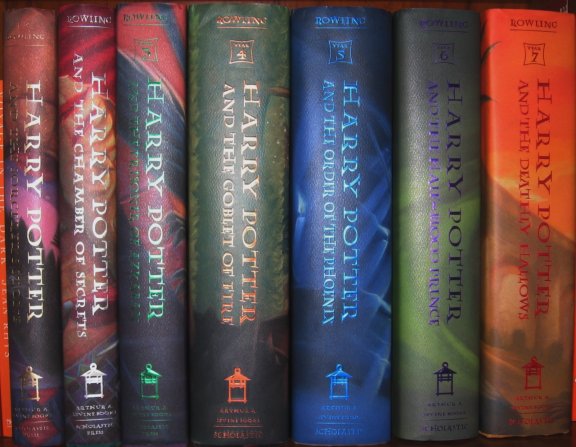
Which book would I want to re-read for the second time? That was the prompt a few months back. Re-reading? I can name a few. I read books but I don’t own much, and of the few that I have at my disposal, the book that I’ve read on multiple occasions is ‘Harry Potter and the Philosopher’s Stone’.

Harry Potter:

I got ‘Harry Potter and the Philosopher’s stone’ from a cousin and I have read that book almost twelve times now. Though I don’t have the others of the series, I’ve read them more than once too. The series actually made me recommend it to some of my other friends, who thoroughly enjoyed it. I read somewhere from a HP fan that Harry Potter has lessons for generations. A lot of fans say that, and people might think that Harry Potter is a school text-book. I see the books as an account of the lives of a few teenagers and the transition they undergo over the years and how events mould their characters effectively.

Wikipedia says that according to Rowling, ‘death’ is the underlined theme of the series, but one can quite easily identify other dominant themes like, adolescence, friendship, power-hunger, confronting fears, making choices, obsession. It’s the presence of these wide topics that make the series an interesting read, and in the words of most fans, a lifetime’s lesson.

Throughout each chapter of every book of the series, JKR’s mystical storytelling tactics are prevalent and urge the reader to have the pleasure of a second-time read.

Even now, after many years of having read the books, whenever I feel like I’m having a bad day, Harry Potter helps. Sometimes people around us – Harry Potter haters – seem to think that Harry Potter is only for children; they are of the opinion that it’s just a fantasy tale of a few troublesome teens. Yes, they are not perfect; there are a few flaws in the books, I don’t deny it; but I have to add that it introduced me to the pleasure of reading and writing.

Though a whole lot of people enjoyed HP, similarly, a large people criticized it as even foolish and unnatural. I just have this to say: Harry Potter is a novel that could be enjoyed only by those who would allow themselves to be lost in a powerful den of words. Only those who are willing to convince themselves to believe wholeheartedly in the impossible and to find solace in it, will enjoy the series. Those who seriously want to dwell only on reality; those who deny to let in the subtle and fantasy-like emotions, are never going to enjoy a book such as this. Also, in my opinion, the reader has to place himself in between the characters to appreciate JKR’s words.

Something I really enjoyed about the books is that they were not too descriptive. There were a lot of vivid descriptions, yes, but the thing was  that some parts and scenes of the story were left to the readers’ imagination.  I like the kind of stories that respect the readers’ imagination. I’m not sure if that was the reason for my liking the series, but it certainly was one of the reasons.

Reading Harry Potter is like dwelling in a completely different world; a world that you wouldn’t want to come out of. A world where an entirely different lifestyle exists. Once in, I wouldn’t want to come back to reality that has, nowadays, become more far-fetched than Harry Potter‘s world of magic itself.

My love of war

I just don’t know why, but ‘war’ has always been a topic of great interest to me. Particularly war poetry. Soul sucking words detailing gut wrenching moments – I could dwell all day in it.

Here in this blog, I’ve already registered my thoughts about the futility of war as told in one of my favourite war poems “Dulce et decorum est” by Wilfred Owen.

When I wonder why I enjoy war poetry so much, I can only draw the conclusion that I adore warriors. I have always thought of the idea of fighting for one’s country as an honour and pleasure. I guess these poems are repeatedly proving me false. Maybe that’s why I like them so; because they have opened my eyes to reality. ‘Opened my eyes’ in the sense, not in a gentle way as teaching an over-excited toddler, but ruthlessly bringing out how much of wrong doing the process of war includes.

I still remember those days when I was just another girl, stuffed with glorious fancies about soldiers and the concept of war. I looked up to it as a holy sacrifice; something soldiers take up on themselves and still not brag about it. I held that sacrifice as holiness, because that’s how movies portrayed it. We are bound only to pity soldiers and not to stand up to the injustice they’ve been thrust into. I realized, in the hard way, that it’s nothing more than a mass suicidal charge.

One of the first war poems that affected me greatly was “Charge of the Light Brigade”; thoughts of Lord Tennyson. It was the truth and the matter-of-fact tone that got to me. It hit me hard on the head saying, “Here’s the truth, fool!”. It gave me a whole new perspective. Indeed truth it was, I learnt later from Wilfred Owen’s “Anthem for Doomed Youth”.

Knowing all these, have changed my conventional view of Army and soldiers. I still respect the Armed Forces for all they do and for the courage to wear that uniform despite knowing well that it’s sure and ugly death. But, that I do not approve of war is still intact in my heart growing steadily and it’s largely due to the understanding of the destruction war brings on families of soldiers; understanding gained from a soldier was passionate with words and died in the First World War.