Let’s talk art

Our last weekend in California, my friend and I visited the San Francisco Museum of Modern Art. Our colleagues had recommended SFMOMA so much that we couldn’t pass up the opportunity. We were both glad we didn’t.

Since we’d been to the city a couple of times already, we found our destination without too much delay or confusion. We arrived at the museum at around 10 am and went straight to the top floor. When I stepped into the museum I had no idea what to expect. I hadn’t read about it before or given much thought to it. All I knew was the location and that friends I cherish cherished going there. I went with an open mind and an ignorant innocence.

The top floor—Soundtracks—had all kinds of acoustic exhibits that played with our auditory emotions. The first thing I saw was a collection of wooden instrumental mechanics. There were wheels and copper strings, wheeling about, creating music while they did. One tiny electric motor powered the entire exhibit. As the main wheel spun, copper strips made contact with each other transmitting and emitting sound waves. I can’t work science to save my life, but even I knew it was pretty cool. I stood there watching the tiny mechanism move on its own, mesmerised at what I saw.

It was only the beginning.

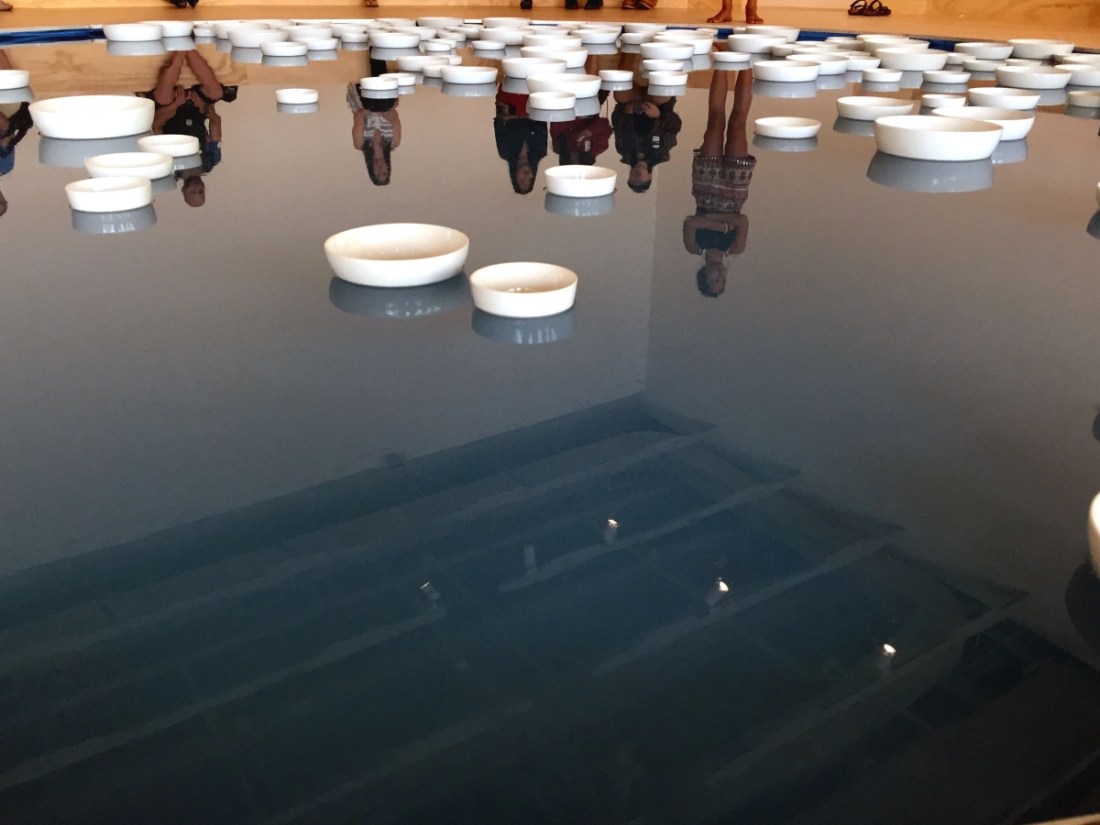
As I moved on to other exhibits, I noticed that most of them were common household items. There was a large pond, for instance, filled with ceramic bowls. The bowls floated on their own, clinking with each other making metallic music as they did so. It wasn’t new—we’ve all seen and heard ceramic vessels knock against each other. But it’s amazing how seldom we notice its musicality.
SFMOMA 1

Another interesting piece of art was glasses stuck to the wall. Visitors (myself included) assumed that the glasses exude sound and tried putting their ears to it. It took the museum supervisor to explain to us that it’s just art and not a sound machine. Even then, I felt a faint echo coming from the glasses. The exhibits on the floor testified that anything and everything could be music that we expected the glasses would be, too. It was as if the exhibit had created an auditory illusion.

SFMOMA 8

I then heard mild singing from one corner of the floor. Following the sound, I walked into a dark room. The first thing I saw on my left was a video of a pianist engrossed in his music. He played his part, and then without a warning, another instrument from elsewhere joined in. And more voices and instruments began to play along. That’s when I looked around. The room consisted of about six or seven walls, and each wall had a video playing on it. All videos illustrated a person or persons wielding a musical instrument. In tandem they played a song, their voices and notes complementing each other. It was one giant performance, scattered amongst ten to twelve people all in different parts of the world. From the basement in Berlin, a studio in London, a bathtub in California—artists from all over came together for music. When I left, something within me radiated with joy. It was a sensation I could neither capture in camera nor can in words.

I spent over 45 minutes on that floor alone. And I felt unapologetic. I knew I had six other floors to visit, but after what I’d experienced already, I was in no hurry. I knew spending the entire day in the museum would be well worth my time.

Every other floor I stopped at had a mix of paintings, sculptures, and photographs. The museum hosts works of artists from the world over, and there are some sections on each floor separated by the nationalities of the artists. German painters had brought to life the Berlin Wall, the massacre of war, and even the aftermath of a shell shock. British sculptors had executed stunning constructions just from sticks and stones. Although I know nothing about contemporary art and the nuances of the industry, I still could appreciate the beauty of everyday objects surrounding us. It wasn’t until I saw the world through these artists’ work that I realised that every thing is art—if you know how to look at it.

I had to look closer to notice the meticulous work. There were life-size paintings drawn only by replicating a single shaded square. One tiny brush stroke or a single perfect shape had morphed into something much larger than life. There were minimal works of art that, at first, were just basic lines. The longer I looked at them, however, the more I gleaned from them. Simple boxes with extra-dark borders represented art. Basic math interpretations and crayon doodles were art.

At a glance, they all seemed too trivial to be art. But true modern art makes you look again. And again. It makes you question what you see, it makes you question your sanity. And when you’ve been questioning long enough, it shows you something that had been there all along—something you’d wish you’d noticed sooner.

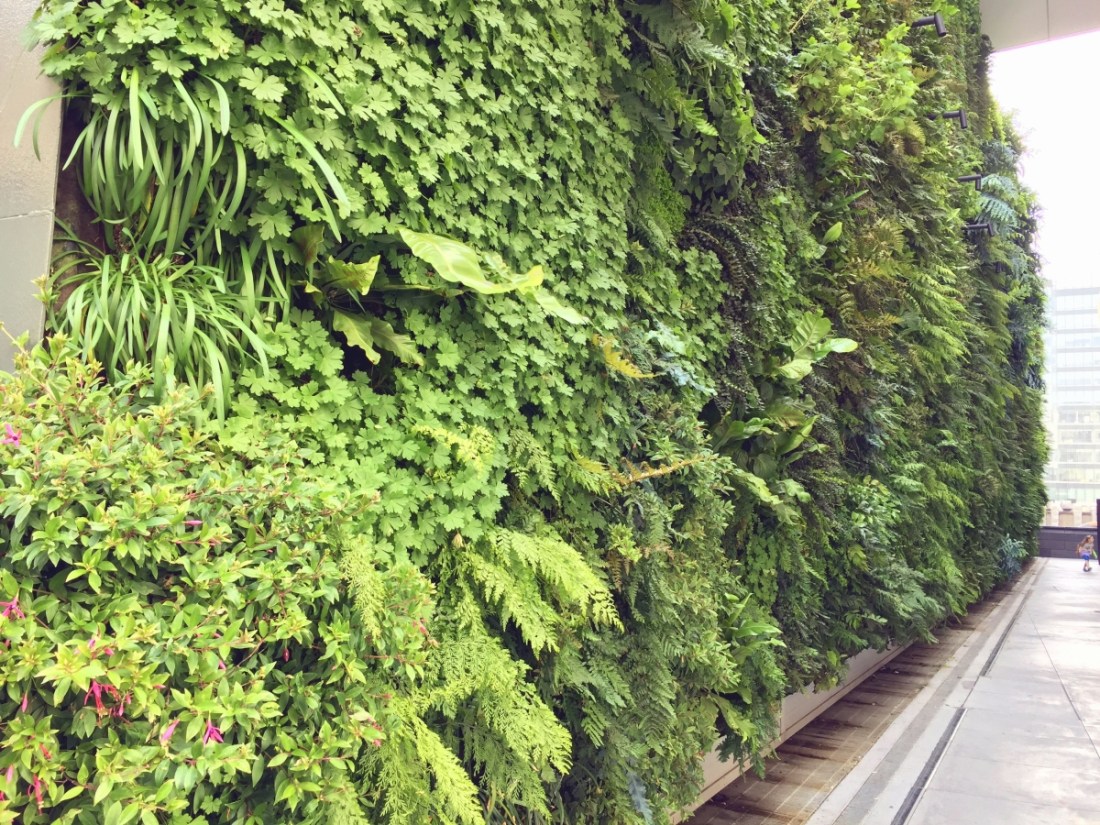
On another floor hung what looked like a wind chime. As I approached it, though, I recognised it was one giant assembly of tiles, balancing from a single string of metal. In another corner, a large wall projected a giant plant. It was The Living Wall, an enormous living collection of 37 plant species, a preserved reminder of the natural beauty that we don’t notice outdoors.
SFMOMA 5

We spent a good four hours in the museum. We walked round and round, almost exhausting ourselves at the exhaustive collection of art. After a while I couldn’t take any more pictures because it seemed useless to even try to capture such art. Some things in life are so fluid that you have to be there to feel it. My experience at the SFMOMA was like that. It was a day of self-reflection. How ironical that we have to visit a museum to observe nature or to discover natural sounds we hear and fail to observe in our lives.
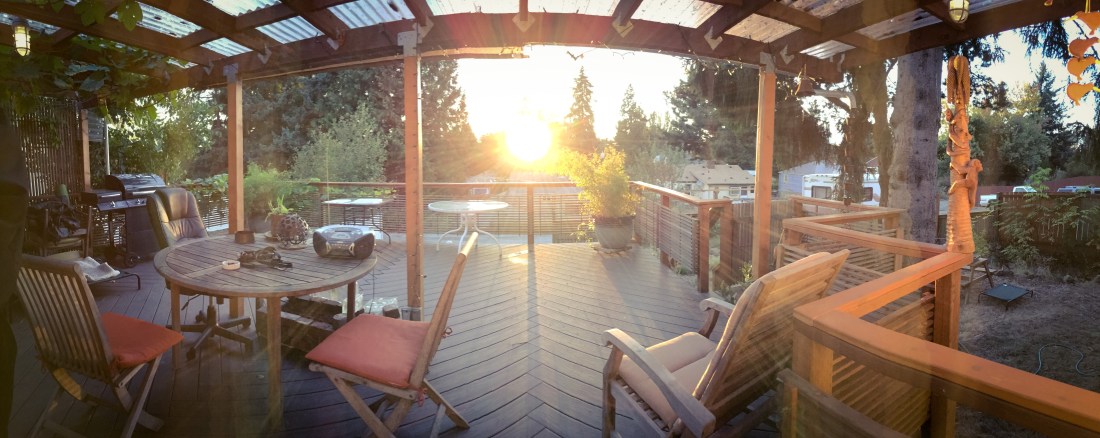
Glorious days

It was almost the end of summer and autumn seemed to be in two minds about showing up. Although the nights started to get chilly the sunsets lingered, too, leaving an unmistakable glow in the front porch. I took this photo at my friend’s house when I visited Seattle. I stayed there for just two days but the glorious views were enough to tease me for a lifetime.

Glow

A taste of commercial winemaking

My first wine tasting was a hit. I enjoyed every moment of it, and grinning from ear to ear as my colleague drove out of the gates. Our next stop was the actual Robert Mondavi Winery.

We’d seen the family and their current estate, Continuum, and now we were about to visit the infamous winery they sold to a multi-national corporation. The buyers retained the name because—well—Robert Mondavi was an established name in the wine market. And so my colleague, the ever-enthusiastic guide, drove us to the one winery that rules them all.

The first thing that threw myself at me was the sheer number of people outside the winery. In stark contrast, Continuum had been empty except for our host. Here, however, I saw hundreds of people; men in shorts and women in tank tops, fanning themselves with brochures, some even clutching their hat in one hand and gesturing to their partners in the other. It was like a carnival where people congregated to stare at inanimate objects on display.

This slideshow requires JavaScript.

At the reception, there were groups of 15 members each, with each group led by a white-clad guide bouncing with excitement as they explained the estate’s massive layout. Tours ran every 15 minutes, and prices started from $45.

We stuck our badges on our clothes and lumbered behind our guide, a young man who spoke of wine and the art of winemaking as it’s been in his bloodline for ages. It was believable, but I wondered if he made it up to keep the engagement alive. He first led us into a room full of maps of Italy, France, and most of California. In fleeting moments, he explained the world’s popular wine regions and the varied temperatures that defined their wines.

We then strolled down paved walkways through the vines. Our willing host answered questions, and explained the role of roses in wine making. Winemakers planted rose bushes amidst vines to help identify illnesses in the grapes. When the roses in infected areas begin to die, winemakers know something’s amiss. It was a hot day, and although most of rest of the tourists “ooh”ed and “aah”ed, I drifted. It was a glorious sight, however, and I wanted to stay there looking around in silence.

But our guide ushered us to our next stop at the winery—the actual wine cellar. He had been building up our excitement, and we were about to get our treat. At Continuum, harvest hadn’t begun yet and so they had no activity in the cellars. At the Robert Mondavi Estate, though, machines were grinding, grapes were drying, and people were chatting away in every corner. A hum of enthusiastic activity clung to the air, and blended with the waft of fresh whole grapes and fermenting crushed ones, like an additional slice of pie over a thanksgiving dinner.

This slideshow requires JavaScript.

Further down the cellars, we walked through rows of red wine barrels with stained markers and white wine barrels with peachy tones. Telling us how each barrel comes from artisan manufacturers and remains untouched throughout the storing process, our host injected an air of grandeur that was only too obvious. At such a large scale, I knew, the Robert Mondavi Winery was a commercial producer.

We saw barrels upon barrels ready to unwrap, stock, and store for another 18 months. The difference between Continuum and Robert Mondavi was striking. While this estate had cellars capable of storing over a thousand barrels, Continuum paid more meticulous attention to the few hundreds they produce.

While I’d been musing, our guide showed us into another room. A long table stood in the middle with 15 places and three glasses in each spot. It was time to taste some of the Robert Mondavi makes. We each had a booklet in front of us with details of the wines we’d taste and the recipe for the cookie we’d nibble on. Along was a membership opportunity with pricing details and benefits—a classic sales move for any corporate, I remembered.

The tasting experience was noisier this time. Some of my fellow tourists gulped their wine and looked around for the next, while some followed each rule in the book; looking, smelling, swirling, smelling again, sipping, lip smacking, and so on.

The first was a white, and as I let it trickle down my throat I realised for the first time that I liked the flavour of the wine. It came as a surprise because I hadn’t expected to like white wines so much. Curious, I drank some more, and I enjoyed it even more. Smiling to myself, I awaited my next sample. Perhaps this tasting wouldn’t be such a dousing experience.

The second—a red—was less satisfying, but a third red made up for it. At the end of it all, though, the white still seemed the winner. Surprising us all, our host announced a bonus tasting of a Moscato. He told us to either drink up or pour down the rest of our white wine (I drank, of course), and then started filling each person’s glass with Moscato.

I hadn’t expected that.

Later, I questioned the guide if reusing the same glass for another wine would affect the taste of the second wine. To me it seemed like it would. To my my utter amazement, the guide shook his head. He claimed that using one glass to drink two wines would be the same as drinking each wine in separate glasses—and here I was thinking I should rinse my mouth in between changing wines! Although doubtful of his expertise, I decided to let it go. The day was warm and the wine was fine, and I figured I shouldn’t complain.

Our final stop—as in any commercial museum or exhibition—was the gift shop, where we could get stamped reminders of our visit to the winery. Taking only photographic memories, we drove away from the once-glorious, now-still-glorious-but-more-salesy, Robert Mondavi Winery—also known as RMW for easy corporate brand recall.

A tasting I went

When someone says California, the first thing that pops into my head is “Wine Country”. And accompanied by the phrase is the image of sun-kissed grapes, maturing with time, ripening with patience. As I breathe in the smell of those grapes my mind wanders to pulpy glasses half-filled with blood-red liquid and tiny bubbles along the edges. I imagine the light refracting through the liquid, the redness reflecting on a white table-cloth. And I heave a sigh, coming back to reality.

For a long time, I only fantasised about wines and wineries. And then I travelled to San Francisco for work. As soon as I knew the news, I asked my colleague about wine tasting tours. Lucky for me, my colleague had a friend whose family owned the renowned Robert Mondavi winery—before it was sold to a multinational beverage corporation. After the sale, however, the Robert Mondavi family bought another estate and now run it by the name of Continuum. My colleague arranged a tasting and a tour for my friend and me. Swelling with joy, I realised my fantasies could perhaps become reality.

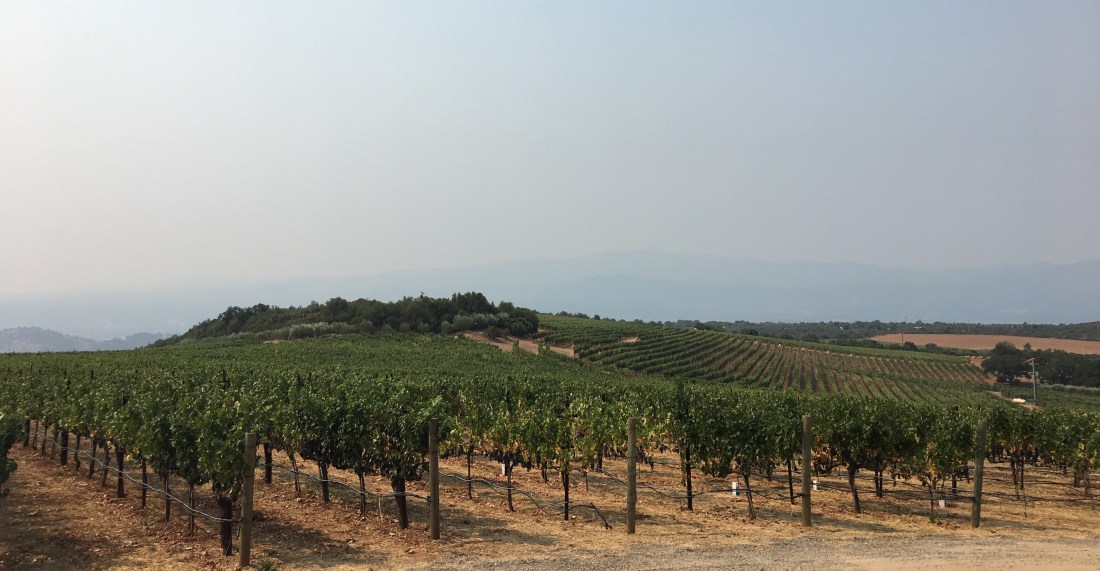
Continuum 1One not-so-fine Saturday, we drove down to see the romance that’s Napa. It was the hottest day of the Californian summer. The government had issued heat wave warnings, and although tropical creatures, my friend and I had to brace ourselves with sunscreen and wet tissues. While my colleague drove, I stared out at the looming wineries, bunches of grapes enticing me all the way.
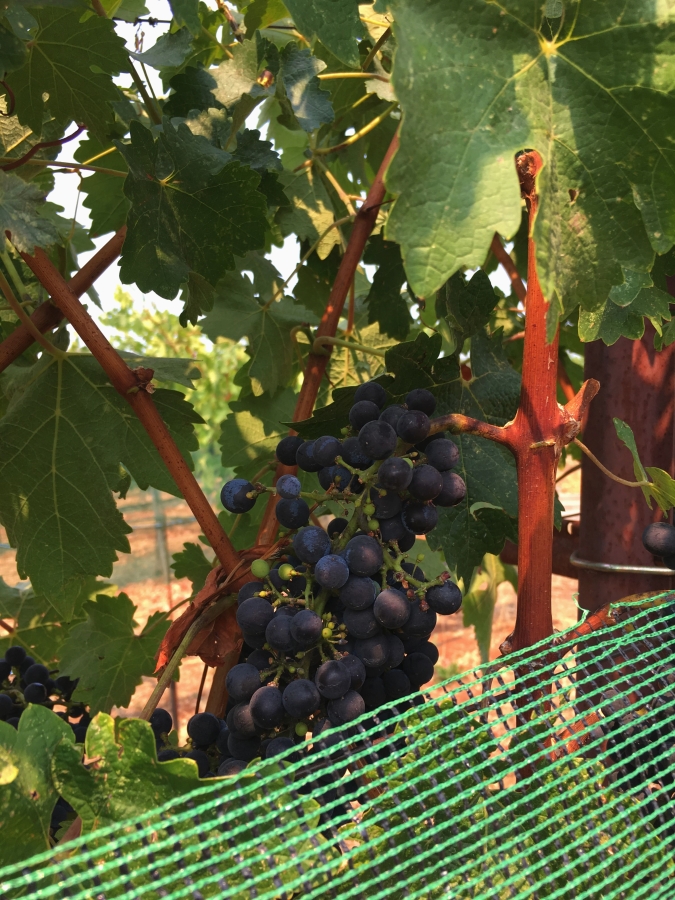
When we came to a halt at the top of a hill, under the scorching sun we saw grape vines extending in every direction. Juicy fruit hung on hinges waiting. Our host welcomed us with open arms—he’d come in to work on a Saturday just so we could get a whiff of their wine. We admired the vines while he explained the expanse of the estate. The Mondavi family owned all the hills our eye could see. That’s where they grew the flagship wine, while a little further down, he explained, is where they grew grapes for the sister wine, Novicium.

Continuum 3

As if the sight wasn’t impressive already, our host made his narrative extra descriptive triggering awe and jealousy at the same time. He drove us through the vines, explaining the different types of grapes that grew on either side. While Cabernet extended on our right, more rare varietals took up the rest of the estate. Here and there amidst grapes we saw spice plants emitting flavours for the grapes to absorb. That’s how, we learnt, that natural spiciness comes into wine. We rode past Franc and Blanc, and far in the distance we caught sight of handsome olives hanging from their branches. Continuum Estate not only produces one of the elitist wines, but they also produce some of the highest quality—and much sought after—olive oil. After the outside tour, we went within the building where the actual magic would happen. We saw massive barrels awaiting harvested grapes.

Continuum 5

Before moving further, our host directed us to the wooden plank that stood bearing a bottle and three glasses. As we approached the plank I saw Novicium, the sister wine. Unlike the flagship wine, this one is made from younger grapes and so bears tender flavours as compared to the bigger bolder one. Our host poured us each a generous amount and explained to us how we should smell, swirl, and sip the wine. A smile spread across my lips and as class creeped through my spine, I swirled and sipped. A mild sweet and peppery flavour touched my tongue and I held it in place trying to discern more. I couldn’t much. Rotating it in my mouth for a while, I let the juice dribble down my throat. The fruitiness with its complementary acidity refreshed me from within, making me feel oh so fancy.

According to our host, harvest this year would begin early thanks to the warm summer and the breeze that blew uphill. Nodding my head as if understood weather and its miracles, I put my head into a barrel and saw an intense hollow with a fan above. There were both oak and metal barrels, gleaming in the glory of newness. All around me were signs of grandeur and selectiveness—Continuum isn’t just any winery. Continuum is a luxury brand that ensures every drop of their wine is deserving of its price. Such was the care, and such was the process every grape went through.

This slideshow requires JavaScript.

“Let’s break bread,” our host announced leading us to a round table set amidst fresh wine barrels. On the polished wooden table were two glasses for each of us, along with a pitcher of cold water. In the centre was a platter of three cheeses, a basket of bread, a bowl of olives, and another of almonds. Right by the bread stood a green-labelled heavy bottle of olive oil.

We set our Novicium samples on the table. When I took my seat, I saw on my plate, a card welcoming me and my friends to the estate. It was a thoughtful gesture by the management to print out our names and the details of our tasting. And knowing that they went to all that trouble on a Saturday made me glow with gratitude. Before my elation could evaporate, our host brought out a bottle of the esteemed Continuum—the fanciest wine I’d ever see or be in the same room as in my lifetime. For the next 20 minutes, we ate and while we ate we drank our wines. I dipped my bread in the freshest of olive oil and sipped my wine with the creamiest of cheeses. It was my first experience with goat cheese which became an instant favourite.

I left the table a satisfied wine enthusiast. I’d realised some of my wildest fantasies in a single day, in a classy way, surrounded by friends I appreciate spending time with. At the end of it all, having thanked our host multiple times for his willingness, we drove downhill.

My heart, however, soared.

The Castro

Having spent a couple of hours in Haight Ashbury, I moved on to the next place on my list: Castro District in San Francisco. Although I had had a peek at Castro during my hop-on-hop-off tour, I hadn’t spent much time there. And so when a colleague suggested I spend some time looking around Castro street, I was happy to oblige.

I grew up amidst people who don’t discuss gender as anything aside male and female. Where I’m from, we have an isolated gay community. Sure, I’ve heard there’s a strong vocal presence and representation for the gays in my country, but I’ve never seen it or heard about it. As a result, I walked into San Francisco’s Castro without any previous interaction with the LGBTQ community.

Castro 3

Although I do have friends from work who identify as LGBTQ in the US, and it was with their guidance that I found out about Castro. To find out more and to experience actual gayness, however, I had to explore the streets on my own.

Oh my, what a day that was.

Castro 1

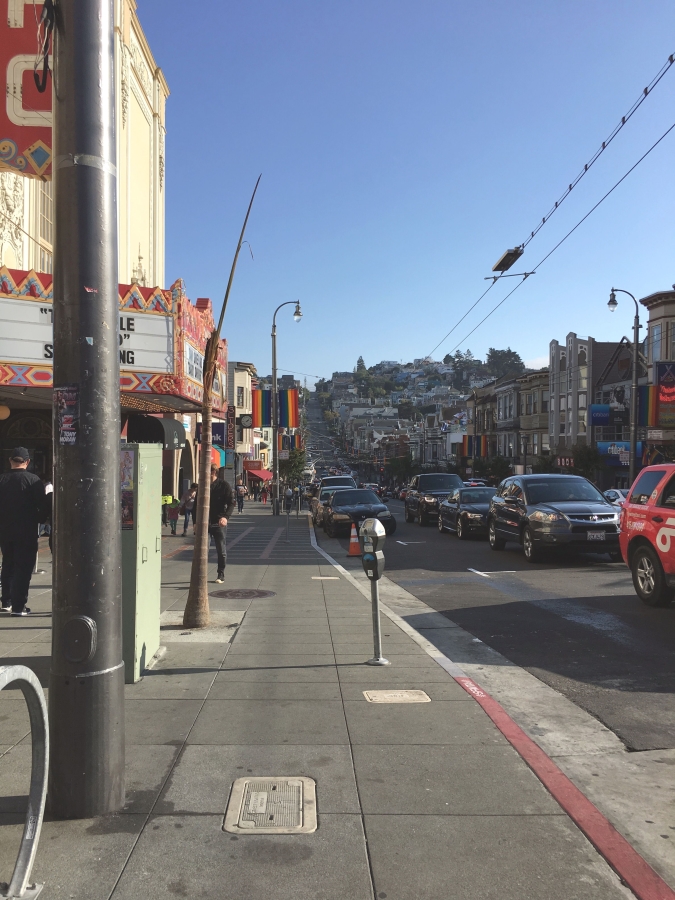
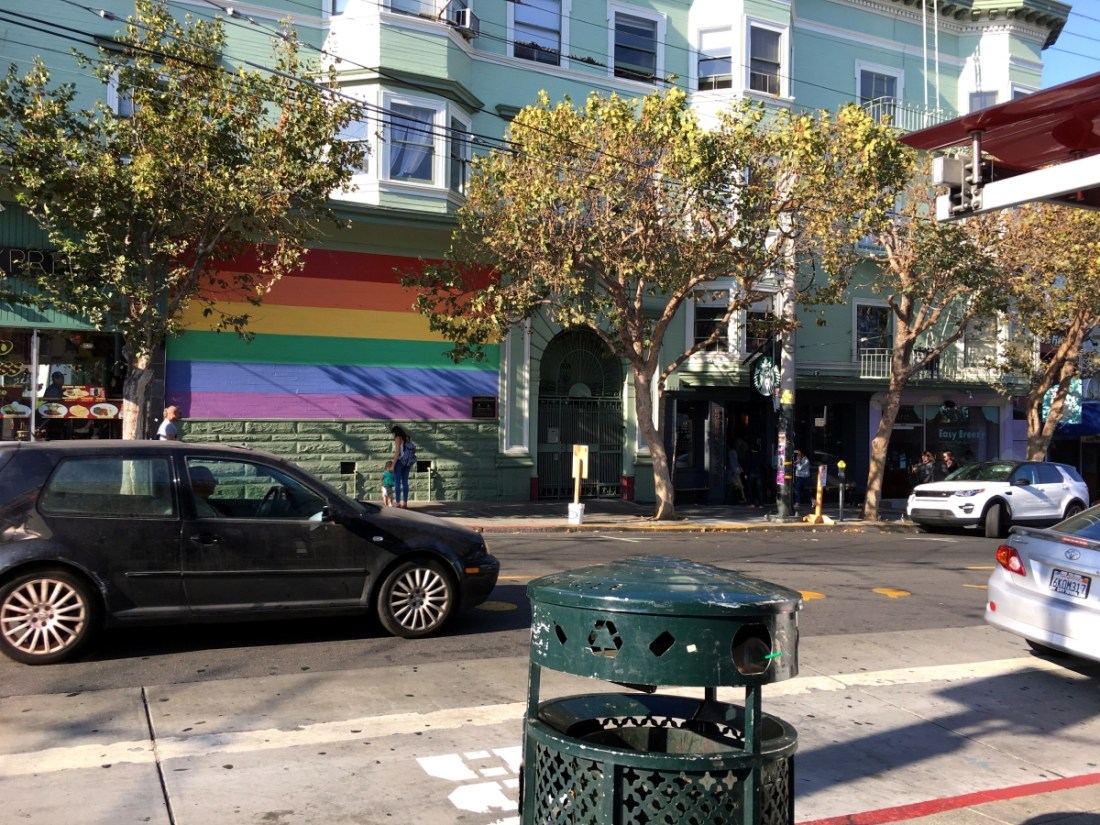
I can’t recall the first thing I noticed. Everything seemed new and grand. Right from the sloping streets to the rising flag poles, everything vivid caught my eye. It was even more exciting to see cable car lines over my head and street car tracks under my feet. I saw the gigantic rainbow flag, fluttering in the warm September afternoon. And I saw plenty of smaller flags swaying along. It meant only one thing to me: declaration. Never before have I seen someone asserting their identity with such pride. It was the ultimate claim of authority, although far from authoritative. It was welcoming. Walking into such a neighbourhood, I felt no discomfort or fear. I saw people being themselves without the fear of judgement. I saw Castro and its people emit a sense of belongingness that anyone could relate to. I didn’t have to dress a certain way or wear make up to be a girl. I could walk around sporting short hair and shorts if I want and people still smiled at me from the bottom of their heats. It was all obvious from the way people walked and conversed.

Dancers in Castro

As I walked further I noticed a group in the middle of the street, dancing. Every street lamp in the area housed a flag. It could because it was pride week, but it could also be Castro’s characteristic. The dancing men spun about as the DJ played in the corner, and older men sat around chatting yet making meaningful conversations. A banner on the DJ table told me it was an organised celebration. Talking to one of the men in the cheering lot, I further learnt that gay organisations in Castro rent out public places and often set up celebrations — just for the hell of it.

I smiled. Then lingered, wanting nothing more than to linger longer. But I continued. There was more of Castro to see.

Trying to balance between the map on my phone and the splendour around me, I found myself standing at a crossing, staring at the crossing. While fellow pedestrians crossed the road onto the other side, I looked with wide eyes at the lines that stretched out from my feet.

Castro 2

And at that moment, I concluded that Castro is one hell of a place to live. It’s not only for the lesbians, gays, the bisexual, transgender, and queer who know how they identify themselves, but even for those confused souls bordering in-between. Who’s to say, perhaps there are more, better, gay villages in other parts of the world, but from my sample of a gay village, I’d say it’s worth cherishing such a vibrant community.

I discovered a marvellous face of San Francisco that day, and it was a discovery I had to make on my own. I already feel like I’ve grown up a little. And that’s always a good sign.