Art finds countless ways to make history. When in Melbourne, attending a work conference, I managed to wander into the Fitzroy Gardens. It’s a massive nature haven with a 150+ year history. What’s more, it’s in the heart of the city, making the city far more prone to desirable infection from beautiful greenery, flora, and thousands of chirping birds.
Part of Melbourne’s charm, aside from its century-old Victorian architecture and artisan coffee, is that everything has a history worth remembering—or trying to remember.
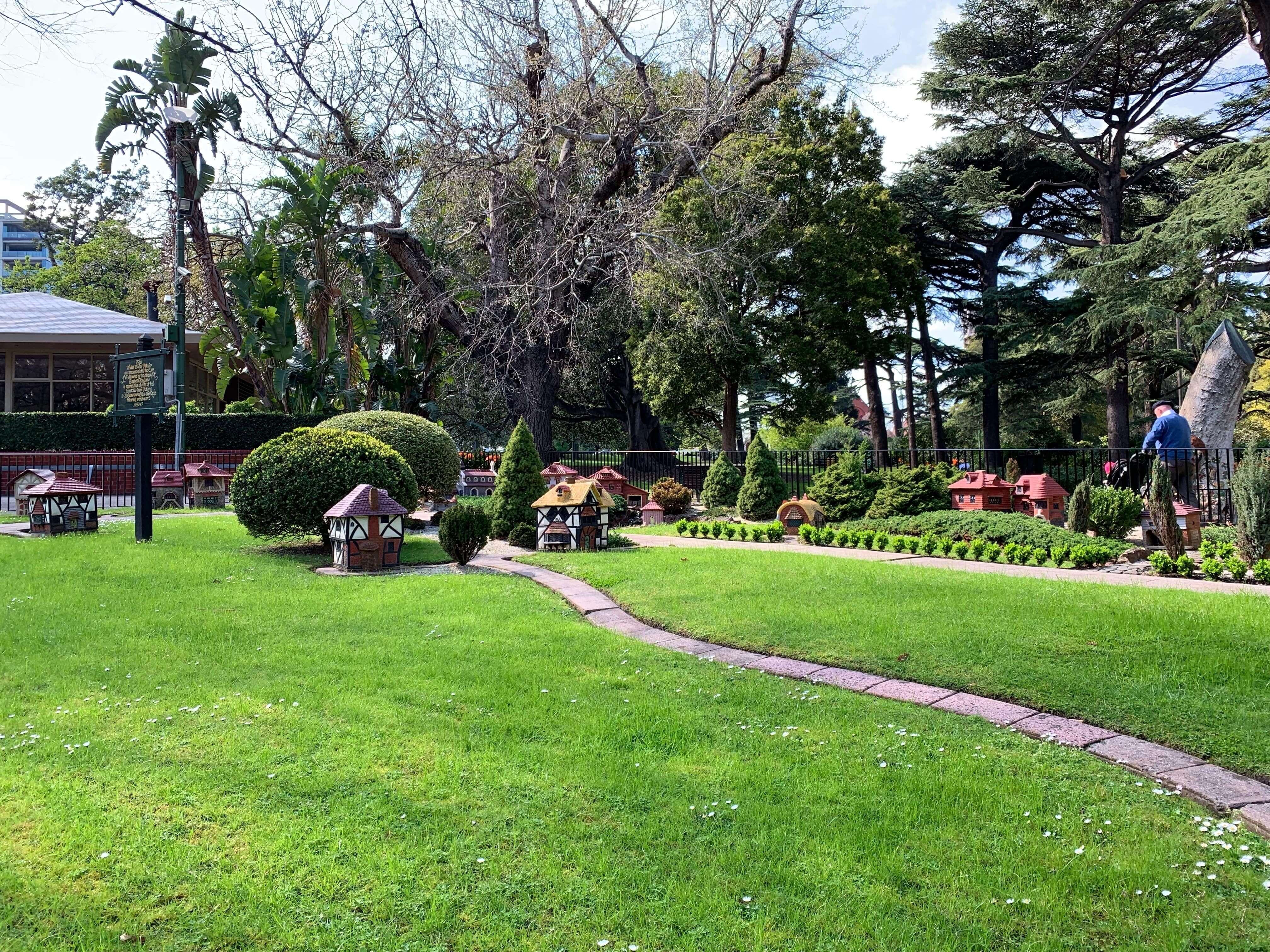
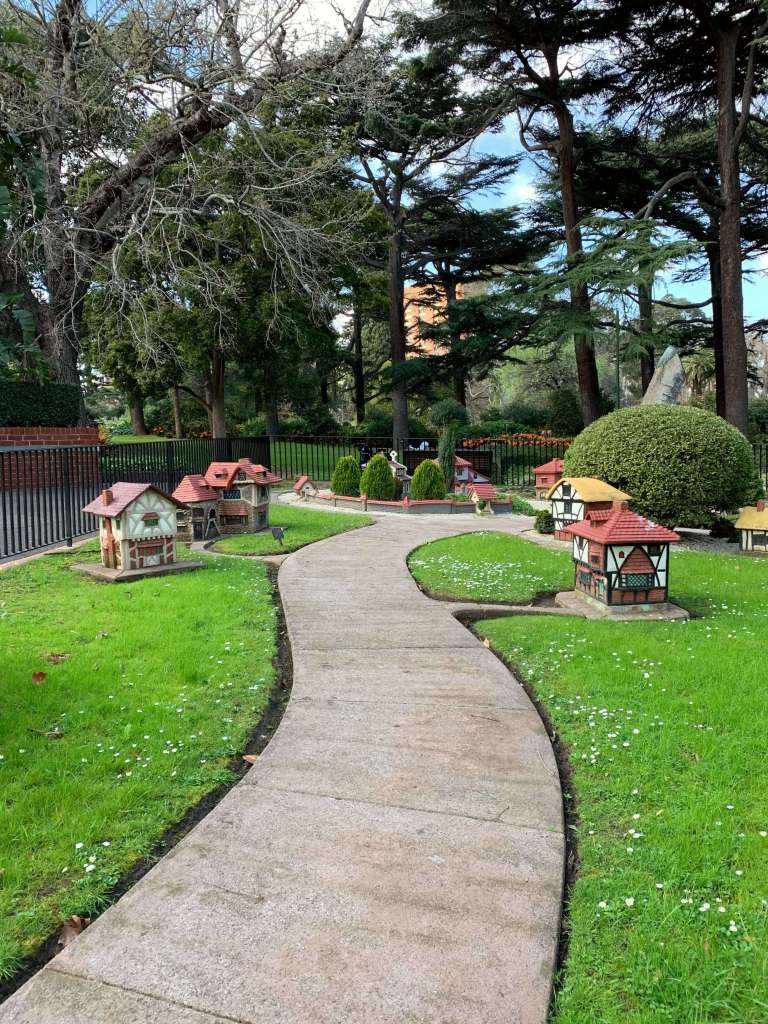
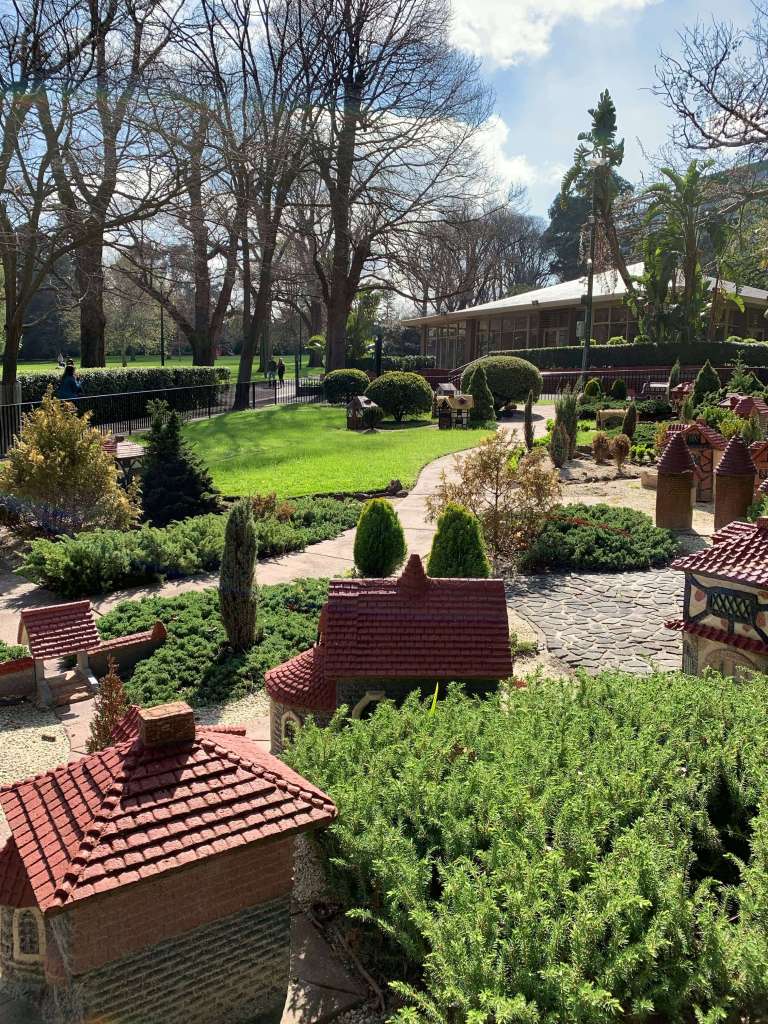
To appreciate how deeply history and art are embedded in Melbourne’s lifestyle, I had to see the Tudor Village.
Among the many historical elements in the Fitzroy Gardens, The Tudor Village is a piece of art and a gift from a British artist. Mr. Edgar Wilson was 77 and lived in Norwood, London when he made villages as a hobby. Modelled in cement, the Tudor Village is one of his three works and is a miniature replica of an English village during the Tudor period.
It took me a while to notice them, but the village comprises of thatched cottages, a church, school, hotel, a barn, and all the public buildings you’d expect in a self-sufficient small town. Even the architectural elements were precise to that period.
The Tudor Village, however, isn’t just any gift. It was a symbol of gratitude to the city of Melbourne for sending food to Britain during the Second World War.
It’s such a great icon in the gardens. There I was in Victorian Melbourne, dropping my jaw at an ancient Tudor-period village.
If you visit Melbourne, stop by the gardens. There’s plenty more to see as well.
Art is seeing things no one else does. From nothingness comes beauty and a stream of endless creativity.
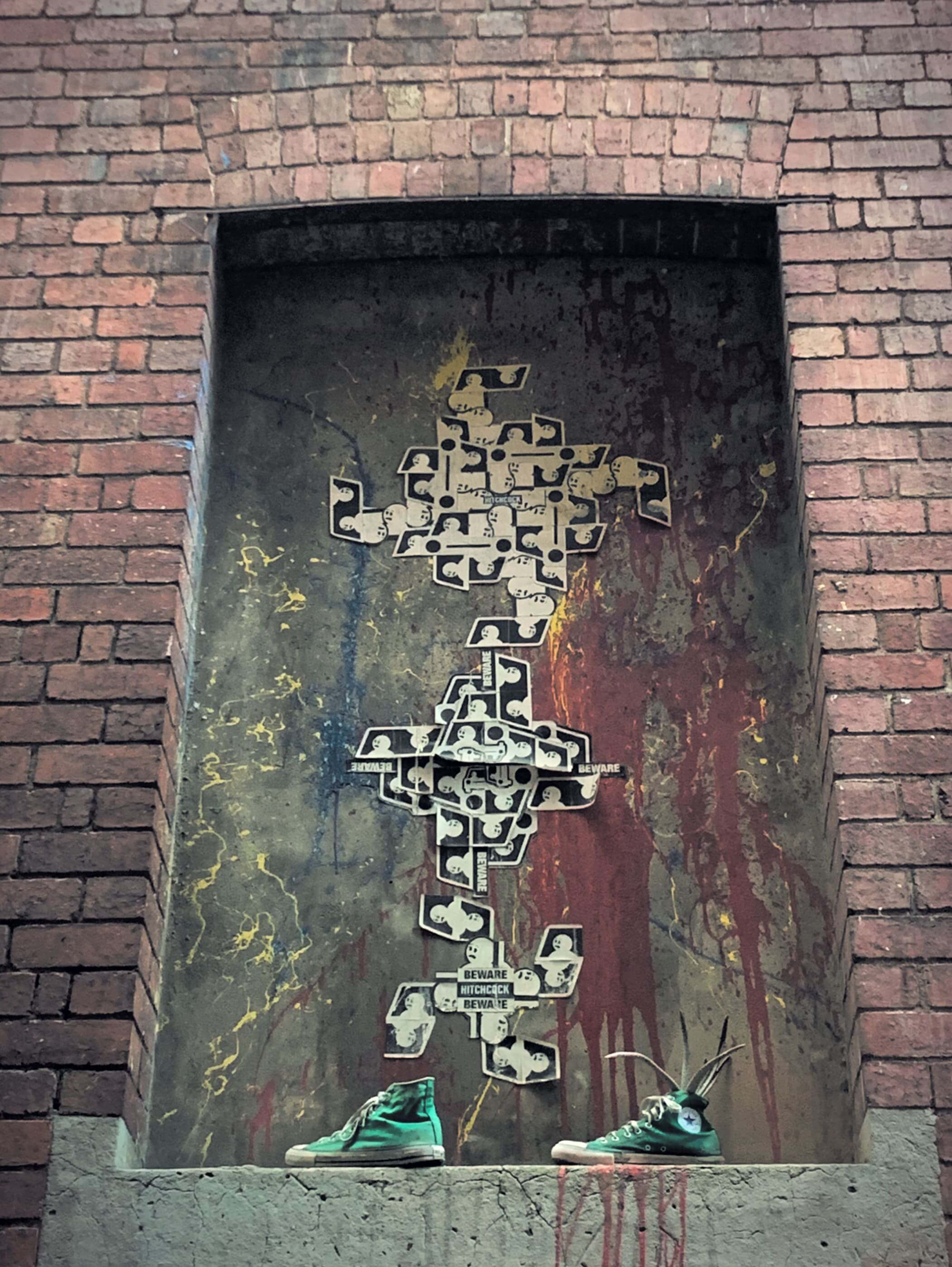
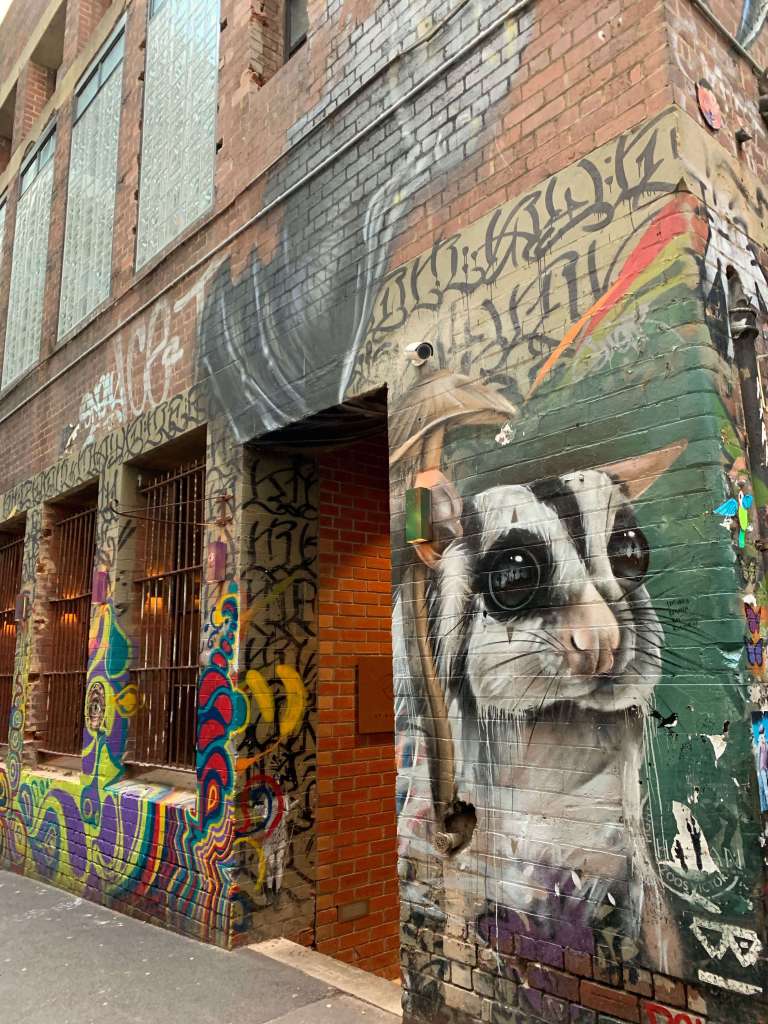
I came across this piece of work in one of the many alleyways in Melbourne. Like most of the graffiti there, it was insightful and stunningly beautiful. But it was more than just eye candy. It made me stop and stare. Even after browsing through countless alleys and numerous shades of black and brown and everything else in between, after taking photos from all angles that my camera could twist into without losing its stamina, this art stopped me in my tracks.
It was powerful because, unlike most art you see on a daily basis, it stood out in a different way. It requires the viewer to look at it from a certain point of view. From close by, the art is nothing but a bunch of oddly stuck pieces of paper with strange ink marks. From close by, it’s easy to assume it a worthless waste of space. You have to be far enough looking into the art to see it for what it is. You have to have a mind and eye open enough to entertain the possibility of blending a physical product with a patchwork figurine.
And that’s what good art does to you. It makes you consider aspects you’ve never considered before, see visions you’ve never envisioned before, and feel emotions you’ve never thought you were possible of feeling.
Art forces you to become aware of what’s around you, in such a way that you start sensing the wetness of the dense air that hangs right above your shoulders, like a ghost’s arm, invisible but so clearly present.
I’ve always thought poetry was self-expression. And so for a long time, whenever I sat down to write, I let my emotions reverberate through my bones, ebb into my fingers, and onto the screen.
It seemed like the natural thing to do, and any alliteration, assonance, or metre that came with it was an added advantage—a happy co-incidence. Certainly not a concentrated, contrived effort on my part.
Then I learnt my idea of poetry was total bonkers.
Sure, I still write when the muse takes over my mind and I don’t have to work as hard to string words into meaning. However, I also met people, actual poets, who’ve published in many esteemed places, talk about the process of writing poetry.
There’s a process?
Indeed, there is. From a couple of panel discussions at the Poetry on the Move festival, and from many observations that dawned on me during the weekend, I’ve realised that poetry doesn’t just hit you like a flash of lightening in a storm-studded sky.
Instead, it’s a conscious effort to twist memory and wring out emotions within, to recollect and relive life instances, of the time we knocked into a tree, too busy looking at the phone, and of the next time we attempted to consciously sidestep the tree only to realise that was gone—sacrificed, cut down for construction.
A poet I heard recently said she needs at least three hours to write one poem.
That’s when it hit me. Art, regardless of form, isn’t subconscious. It’s meticulous and deliberately delicate.
The moment I disembarked from the plane, I knew this was going to be an experience I’d never have imagined. As I walked into the chilly Melbourne streets shrouded by patches of dark and light clouds, melding into one, meandering through the skies, I fell in love.
It wasn’t the first time that I’d taken such a string liking to a city. Melbourne is home to millions of heart beats, yet it thrives with a unique pulse that matches none other’s. Every iconic city is iconic for a reason, and I was about to discover Melbourne’s.
Sure enough, when I left my hotel ten minutes after checking in, it was still mid afternoon on a Saturday, and the central business district (or CBD) bustled with wanderers—tourists and locals alike—coffee or iced tea in hand, exploring the various nooks and crannies of the painted city. The first noticeable thing about Melbourne is the immensity of people. Though not as dense as Chennai, where I lived for six years, it’s still a haven for lots of shuffling bodies.
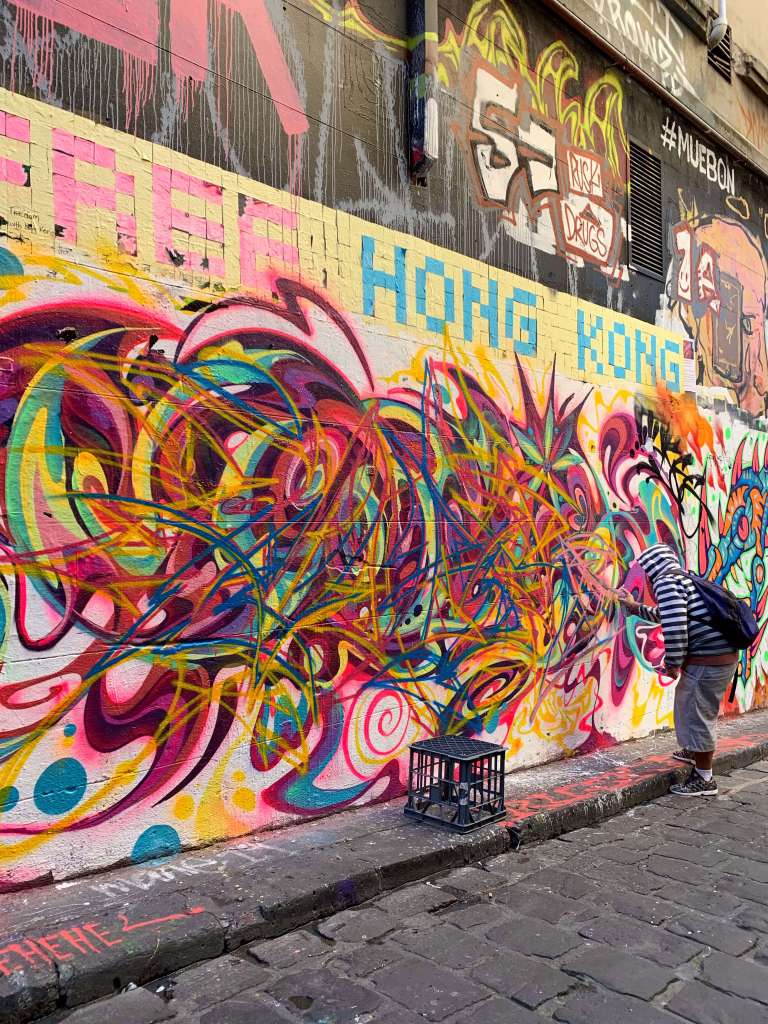
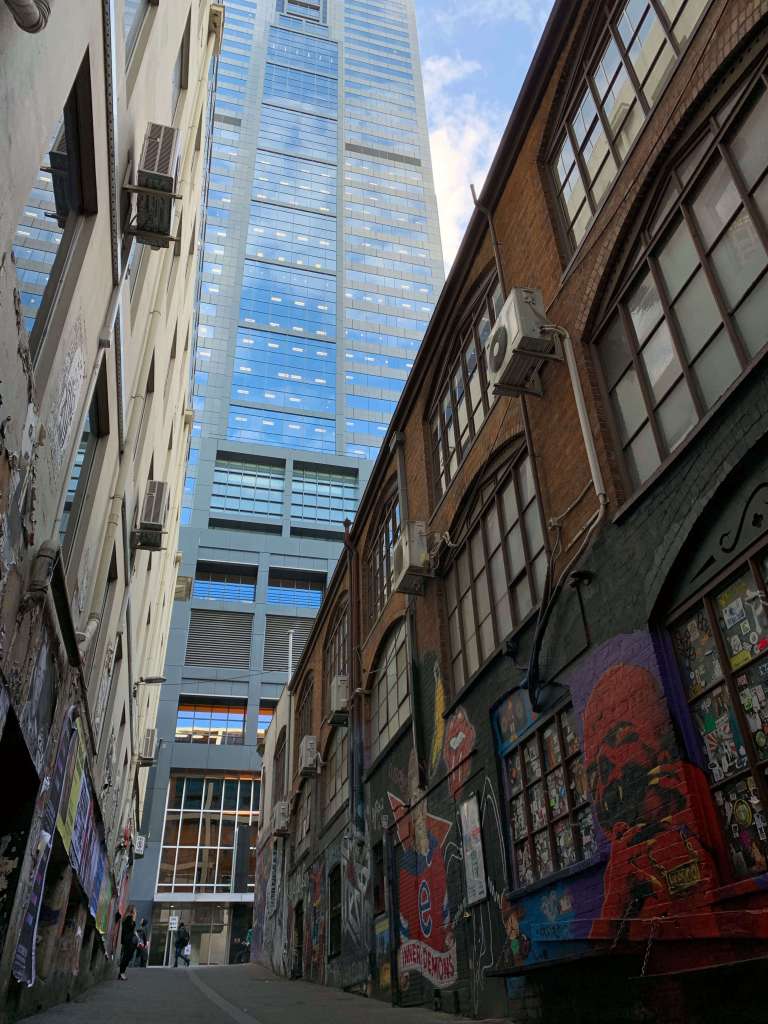
Stumbling into people from all over the world, I followed the directions on my map to an alleyway. Melbourne is the only place where alleyways are so versatile that they’re tourist attractions, shelters for the homeless, getaways for smokers, canvases for artists overflowing with talent—all in one.
One side of the city boasts vintage Victorian architecture, every brick instilled within screaming grandeur, while on the other side are rows upon rows of these oiled up walls carved with emotions, philosophy, and outcomes of deep-rooted fear of (and for) society. It was as if the artists of the city exclaimed, “Look, wall!” and went crazy all over it.
Nodding to a tune in my head and smiling at the tens of unrecognisable languages that floated through the air into my ear, I realised Melbourne is far more multicultural than any other city I’ve been to. And I’ve been to San Francisco, Los Angeles, and New York. Although, in many aspects, Melbourne resembled New York to me. The city’s weirdness reminded me of the vagueness and unpredictability that hung around me in NYC.
My gut feeling only solidified as the day wore off and darkness blanketed over the neighbourhood. All of a sudden, musicians popped up in street corners, strumming their creativity through empty glass bottles, metal serving plates, and brass cymbals.
Unsurprisingly, onlookers gathered, dropping jaws, filming videos, cheering on, laughing and dancing to the tunes. It was a carnival on the street, where everyone forgot their problems—overdue bills, medical appointments, insurance claims, tax returns—for a few minutes and surrendered themselves to the moment.
It was past 10 pm—bright, noisy, teeming with life. Wonderful.
The next day when I stepped out of my hotel, a pop-up coffee vendor greeted me with a wide smile and a “Hiya, mate!” I didn’t think—my mouth split wide in joy and I reciprocated with all the enthusiasm I could muster. His hello kept the spring in my step throughout the day and I felt myself bouncing on my toes as I walked down street after street, marvelling one moment at the brilliant architecture and then at the lack of creativity in naming roads—Little Burke Street came after Burke Street. Then came Collins and Little Collins—I felt amused, but also thankful for it was easy to remember.
While the CBD sported such names, a little further away, outside of the heart of all the bustle, weirder and quirkier names popped out at me. Hosier Lane was home to some of the greatest graffiti I’ve seen. Literature Lane, appropriately named, was rather glum and ignored. Chopper Lane sported a dog that watched a fish swim away, and AC/DC Lane celebrated the height of rock music that once moved the world. Colours bright and dark mapped faces, caricatures, buildings, and stories, narratives that’ve survived years of camera flashes, oohs, and ahhs, and pointing of fingers.
Melbourne turned out to be so much more than I imagined. It was bright and airy and cheery, but also dark, dreary, and gothic. I loved every bit of it.
I couldn’t take my eyes off him his long and slender back was tilted supported by the knees slightly bent jawbones showing, brows narrowing he stood looking at the girl in front who didn’t care, glanced elsewhere unwavering he glared, his round pupils measuring her tiny frame, flashy hair unmoving he observed, taking in her being and her every movement his soul concentrated at his object betraying not an emotion in his face shifting only his wrists, the master outlined her outline, his spine still for hours he watched her, and I him filling up my heart with so much joy and his canvas with all that grace I missed the sunset over my head but he saw colour fade from the girl and moved with alarming swiftness he clapped. Packed. And strode off ciao, street painter. Until tomorrow.






 The Chaos Within