What Westlife is Doing to Your Beliefs

I didn’t realize this at first, but Westlife is more than just entertaining me.

Westlife was a popular Irish boy band who disbanded in 2012 after 14 years of music. And most of their great songs are love stories.

That is the problem. I love Westlife. But I can’t help but wonder what their music is doing to me.

I have my own ideas about love and relationships. And Westlife is changing my perception. When it comes to love, a lot of musicians sing of perfect, flawless love. I picked Westlife because their words are so simple.

There’s an angel standing next to me, reaching for my heart

Ah! Young love! Nothing like that, huh? See what I mean? Westlife makes you yearn, they make your heart ache and change your beliefs.

What happens when someone who doesn’t believe in love, perfect or not, listens to these songs? Imagine the conflict!

We know perfection isn’t true. No one loves as truly as these songs claim. Perhaps a few exceptions, but in the real world, we know it’s all fiction.

But you can’t help fantasizing. Because? It makes you feel good. And we humans do have this annoying tendency to gravitate towards what makes us miserable. That’s the way we work. It’s what makes us tick.

Not to mention all the wasted time. And the worst thing is, you can’t just forget these songs. “I don’t wanna forget you, I don’t even wanna try” They are too good.

That’s what I mean.

There’s no one like you, to speak to my heart

Now you see.

#CLT “Us against the world.” What can you say? I can’t help it.

A Day of Duties

duties

We all live in a world where we have tasks to complete and responsibilities to uphold. At home, at work, in the street, in public places — everywhere we go, we have to abide to certain rules and regulations. We call it law and order, control and regulations. We call ourselves civilized because we follow rules we set upon ourselves.

And it so happens that these rules and regulations are aplenty, and as a consequence we get to prioritize our needs, our tasks based on the rules that we insist on. For instance, I have a task to complete by the end of the day. It’s office work, urgent and my job depends on it. On the other hand, my wife is pregnant and we’re expecting the baby any day now. To cap the situation, my boss is out of town, and wouldn’t know even if I put off the task ’til tomorrow. I just pinged my boss, affirming that I’d finish the job when my phone rings — it’s my wife.

According to the “rules” I should stick to morals, which is to finish the job. Because a) my wife didn’t sound distressed. Yet. And b) my mom’s at home taking care of my wife. It’s understandable if I go home a little late.

But when I weigh my priorities, my wife and child are my life. My job just feeds my stomach, but my family feeds my soul.

In that moment of urge, I drop my work — no one would know anyway — and head home. The baby doesn’t come for another 36 hours. But I was there, with my family, supporting my wife. And that meant the whole world to me.

Which is all nice and emotional.

Now what happens to my boss? He was expecting a reply tonight, and I wasn’t there. He called me, and I didn’t pick up. I knew he would be furious with me. He must’ve tried to contact me online, offline and through my colleagues. And all he would’ve got was an ignoring bastard.

Did I have a choice? Could I have told him how important it was for me to be with my family? Sure I could have, but he wouldn’t have understood. Because his children are grown ups, he was a widower, and had nothing to home to.

His work was his life. And he wouldn’t understand when someone else insisted that their work wasn’t their life.

And so, I ignored him. But I couldn’t ignore my job; I checked in on work from my mobile phone from the hospital cafeteria. My boss had left messages and mails. All he wanted was a response. And all I wanted was my wife to remain strong.

I spoke to a few of my colleagues, asked them to cover for me. They said they would, but I know they wouldn’t hold under pressure — they have families too.

The truth is, my job is vital. I’ll lose everything if I lose my job. I am well aware of it. I have no back up plans. But my family was important too. I was torn between the two, until I decided to choose my family. And now to defend my choice, I have to run away from the truth that keeps threatening my next rise and paycheck.

Don’t we all do that sometimes? Run away from the truth hoping that ignoring it might somehow make it go away?

*Fiction. Really. Replace the ‘family’ with movie marathon, and that sounds more like me.

Reworking

reworking

We think much and scrutinize on details. We’re always poring over our work with such intense repetition, until we often get lost in it.

It’s satisfying – to turn over and look at your own work, with pride swelling within your chest. It’s gratifying — to know that your work is worthy of recognition.

But to get there, we need to peer at our work. Sometimes we ask others to look into it, all the while pondering on that word choice or the particular shade of blue. Something stronger? Bold, perhaps?

It’s natural. We’re engineered that way — to rework and to reconsider. To recycle, rewrite, to recommission. And recommend.

But that thirst for precision, that repetitive craving to improve could also become our downfall. Because the longer we work on something, the more accustomed to it we get. Repetition breeds expertise. At the expense of a mundane life.

Remember the thrill of learning crocheting? The details! The scrutiny, the absolution at every twist of the fingers — everything about it filled you with excitement and anticipation. It was the perfect summer course.

But then, imagine having to do that everyday for the rest of your life.

We’d still be looking for that precision, but now it’ll be pronounced. We’d be so used to redoing that we’d be redoing just for the sake of redoing and not for the thrill that it once was.

And therein lies the risk of repetition.

Crafting A Dream City

Cristian

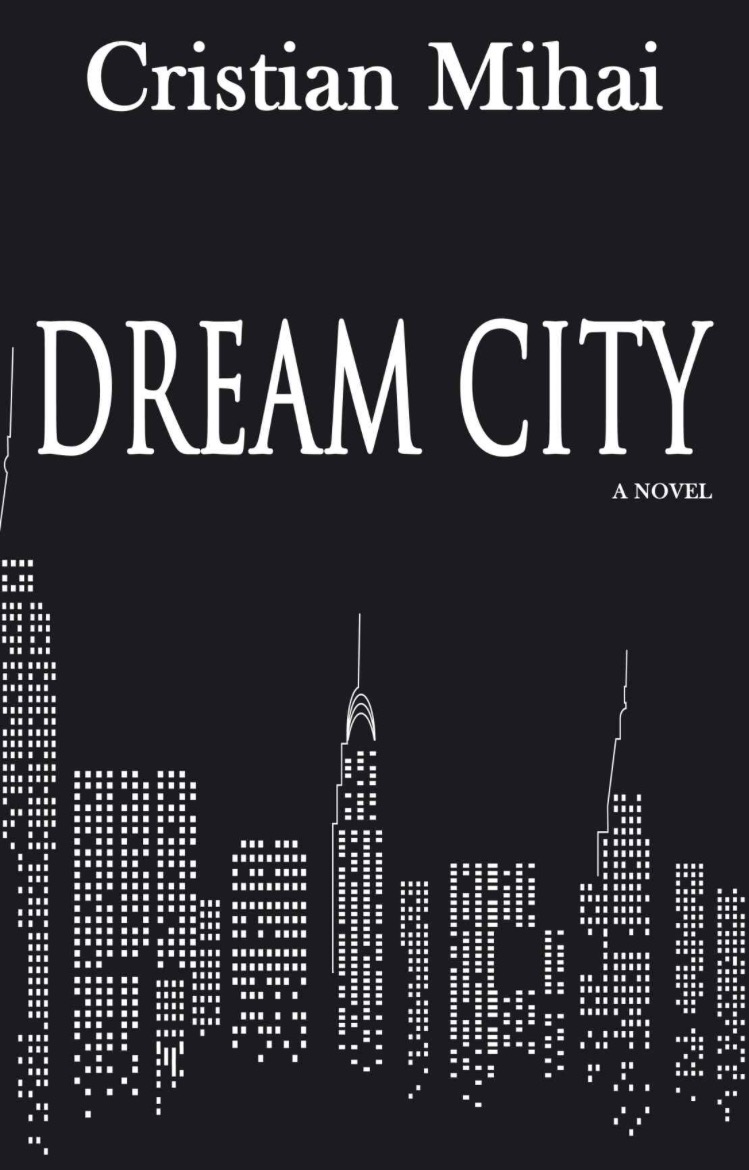
I’ve been following Cristian’s blog for a while and I feel guilty each time I read one of his posts. Because though I’ve had his book on my kindle for a long time, I’ve never read it.

I should have read it sooner.

The one constant in the story is Cristian’s voice. He kept seeping through the words. There were either sentences he often uses in his posts or thoughts that every writer could relate to. The story itself is about artists, art and the consequences of choosing art.

I loved the story. And the main reason: simple words ringing hard in your ears. This book lingers.

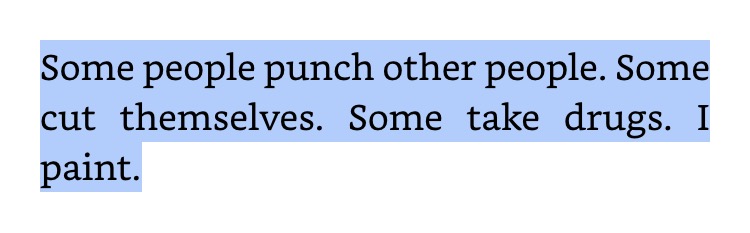
“But the truth is, what doesn’t kill you makes you wish it did.” – Cristian Mihai, Dream City

This is Cristian. Every syllable of that line screams Cristian. And it’s more; it’s every artist. And it was gripping that in many places, I felt the protagonist and Cristian interchange. Not just him, I felt myself intermingle with the protagonist too. Because the characters speak to you, and you suddenly realize their life is your life.

The author knows the pain of being an artist, and he translates the emotion with so much art.

Dream City

That’s it. The essence of everything we do.

When There’s Nothing Else to Do

when there's nothing else

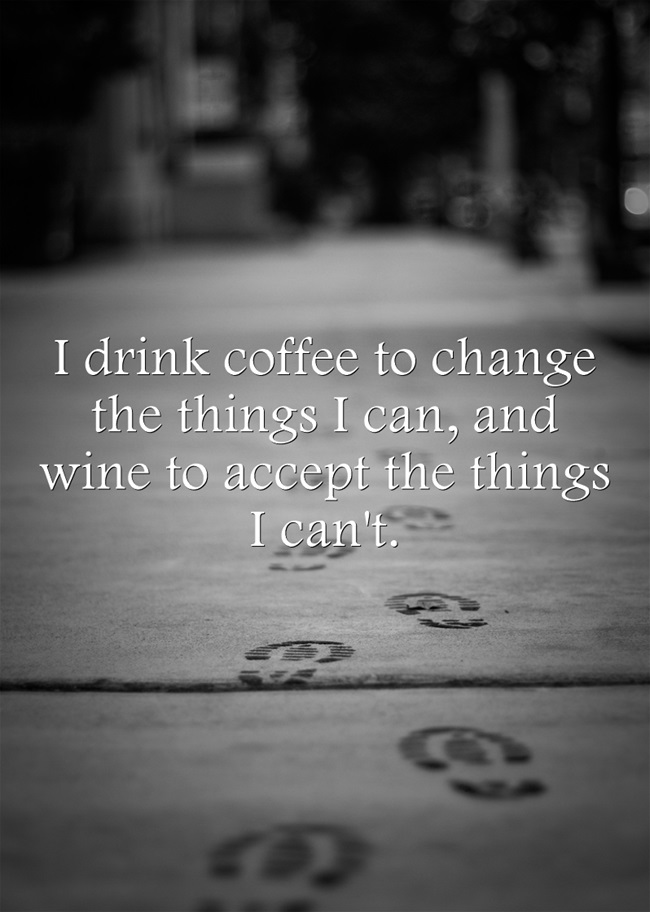
Sometimes, you’ve  got to do what you’ve got to do. And if wine’s the way to go, what’ve you got to do?