The Real World

Over the past few weeks, every colleague stopping by my desk would take a look at the book next to me and remark that it was such a classic story. I smiled when it happened for the first time. I had known that, of course.

And yet, as more people said the same thing over and over again, I began to get annoyed. I felt like an idiot because I hadn’t read the book for so long. It was 1984, after all.

The book, and not the year — in case you were wondering.

Now, however, I’m done. I’ve finished reading the book and I feel like kicking myself for not reading it sooner. Nevertheless, the book left me astounded, wondering if there was anything in my life that I think is true is indeed true.

It left me with a deep sense of insecurity and self-doubt. I do realise that it’s fiction, but it oozes reality in so many levels.

I’m a minimalist, but I would never apply the same minimal logic to words and human expression. When it comes to speaking and voicing thoughts, the more ways to say it, the better it is. But here’s what scared me: I agree that we should get rid of stuff that mean no meaning anymore. In that sense, when the concept of freedom itself is no more, it makes sense, in certain sense, to eliminate the word altogether — or forget that we even had such a word. But even to think, for a moment, that we don’t need freedom is a messed-up way of life.

And that’s what the book did to me. It messed me up. It messed with my head, and my ability to cope with the reality of the world. It’s possible that our world would become the next Oceania. The Party is, of course, just a bunch of power-hungry people craving to keep the masses out of their way and the working class in their wake. It’s the reality of every nation in the world. There’s just a tiny tipping point between a real party and the Party. Every day, we hear news of people gone missing, of people rebelling, of the rebels who died in battle, of torture and murder, even suppressed free thought. It’s all happening, each day all around us, right in front of us.

And yet, we call 1984 a fiction. It’s not. It’s our lives. Only, we love the Party too much to realise the truth and think for ourselves. In a world that still penalises people of other beliefs, advocates singularity, and abhors variety in even skin tones and vocal chords, it’s only a matter of time before two plus two become five.

Read Anew

Reading for pleasure, reading at leisure. Reading for news, tolerating the ads. Reading for exams, scrambling for points. Every day, we read something or the other, for some purpose or other. And our purpose often defines our perspective.

People who read newspapers and online articles do so for information. They don’t care who the writer is, how long it took to write the piece, or how the writer feels about the thing they’re reporting. That’s just news for the sake of news.

Some other people read for pleasure. My friends bury their faces in fiction or non-fiction just to get high in the power of words strung to one another. Reading, for them, is a hobby. It’s an activity that keeps their clocks ticking, at the end of which they have something to talk about, and sometimes even think about. Books for them are havens of stories, packed with adventure and action, letting them peek into a life they wish they’d had. When they read stories, they venture into a new world, a world where everything seems interesting, where everything is likeable. For such people, reading is an escape from a reality they can’t alter.

And then there’s the third kind: The ones who read the writer. I didn’t know this was a thing until I realised I belonged to this category. When I read a book, an article online, or even a magazine advertisement, I don’t just take the words in. I notice. I stop, I reread, I analyse the word choices, and I wonder if I could’ve written it better. I may, at first, shake my head at unnecessary commas, or curl my lips at descriptive repetition, but I also go wow at the imagery at the end of a sentence.

Reading for me has transcended beyond reading for pleasure. It’s now more of understanding the writer, trying to forge a bond with the author. It’s interesting how a writer’s mind works, because when they put words to paper, they don’t just communicate a story they thought we’d like. They, instead, make us realise what they realised. They educate the reader, conveying not just an idea, but a conviction. No writer ever publishes a book that they don’t believe in. Every word, every extra syllable that the reader reads is because the writer wanted them to read it.

But ever too often, we don’t acknowledge the valiant efforts of a writer. We judge a book within the first couple of pages. We verdict books without mercy. We use countless descriptions to condemn a book; too boring, a complex narrative, a stupid plot, emotionless tone, and so much more. And yet, all the while, we forget that the writer did all those with purpose.

A writer doesn’t want to write a boring book. But a boring fictional narrative from the first person point of view is purposeful. It’s a subtle indication from the writer to the reader that the (fictional) narrator had a troubled past that altered her life altogether. Throughout a story, writers drop hints for readers to pick up. And that’s why the same book feels different when we read it a few years later. We see things we haven’t seen before. We realise that the extra comma had some meaning. And so we read with extra care, we hunt for the clues, we wonder why the writer is being repetitive. And when we do that, we become mature. From reading about adventures, we make reading in itself an adventure.


ibmc-9

I’ve signed up for the Incredible Blogger Marathon Challenge. It’s a ten-task-challenge that can span up to fifteen days. This post is my response to the ninth day: Be a baby challenge. The challenge is to give a new perspective to something commonplace.

Making the Meaningful Meaningless

So many of my friends had told me about the wonderfulness that’s 1984. The book, I mean.

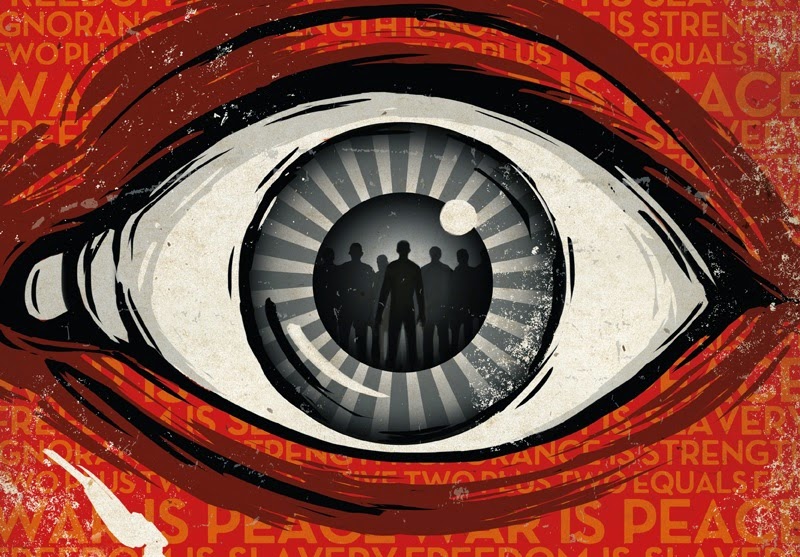
big-brother-1984

I, however, never had the chance to read the book, until now. I started reading it a while ago, and as much as I’d love to get through it in one sitting, reality keeps distracting me. Nevertheless, every chance I get, I try to sneak in a page or two in the least. And with every page I turn, I turn over a new perspective.

I haven’t even crossed a hundred pages yet, and yet every statement hits me hard in the face making me glad I’m not in 1984. To say that Orwell has a way with words is an understatement. He twists and warps simple words to suit his needs and instills fear and aversion in the reader.

As a lover of words myself, when I took in words that claimed it was a beautiful thing to destroy the words themselves, I felt my deepest horrors renewed.

After all, what justification is there for a word which is simply the opposite of some other words?

That’s a way of looking at words, unlike any way I’d come to accept. Words, for me, are not just means of expression but also means of expression in every wild way imaginable. It’s wonderful that we have so many different words describing the same thing; it’s what gives rise to rhyming words and rhythmic prose and just plain readable writing.

In the end the whole notion of goodness and badness will be covered by only six words — in reality, only one word. Don’t you see the beauty of that, Winston?

I don’t. I don’t see the beauty of it, and instead, I see only the barrenness of it. What’s the point of communication if you can’t communicate as you’d like to? If we could strip down the English language to a mere handful, then that would become the end of human interaction. We’d speak to convey messages and not ideas. We’d talk sense but wouldn’t talk from our senses. We’d think we’re free to speak, without realising we’re free from language itself.

The book throws terrifying ideas. It outlines everything that could go wrong with the world, and everything that could happen as a consequence. And shocked though I am, it makes me want to keep reading.

The Tale of a Boy at Sea

Yesterday, I read a unique book that chilled me to the bone. It wasn’t the curious case of an unsolvable mystery, it wasn’t a multi-murder crime thriller, and it wasn’t a sweet romantic proposal story. It was the tale of a young boy stranded at sea for ten days.

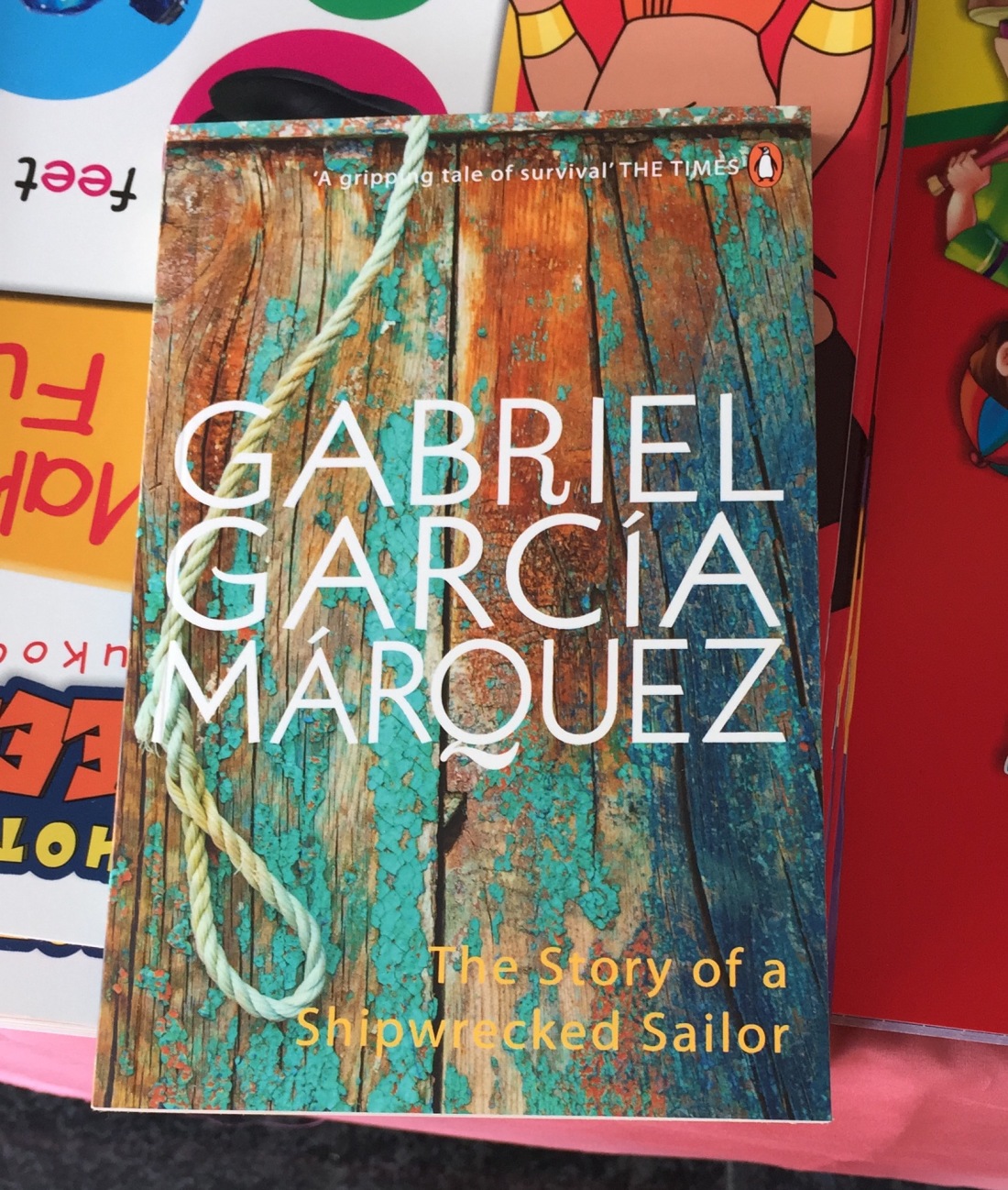
It’s not Life of Pi, but I wouldn’t blame you if you had thought so. That book is ever more popular after its movie counterpart. However, the book I just read is “The Story of a Shipwrecked Sailor,” and the author is Gabriel García Márquez.

the-story-of-a-shipwrecked-sailor-gabriel-garcia-marquez

It surprised me too. I had never heard of Márquez writing such a book. But I was curious. It was a small book, just about 100 pages. And yet as I held the book in my hands contemplating whether to buy it, all my sense of reality told me I should opt for an ebook, instead, because it would take far less physical space. I asked a friend to help me decide, and he warned me that Amazon would have the same book, for a lower price.

And so when I was almost convinced I shouldn’t buy the book, I flipped the book over and read the epilogue. That’s when I realised: this was Márquez’s first book. That piqued my interest. Besides, the cover was gripping, and it even had a review from The Times that called the narrative, “A gripping tale of survival.” And at that moment, I took a chance. I lost all sense of common sense and decided to go for it. After all, I had nothing to lose.

I’m glad I made the decision. I know I shouldn’t have gone by just the cover of the book, but this is one of those times when the gut and the cover got it right. It’s a simple story, in the first person point of view. A boy in a ship leaves for Colombia after being in port for six months. He set out homewards, to his family and soil he could call his own. In the middle of the sea, however, disaster strikes and all of his shipmates go down. He holds on to a raft and survives the sea—amidst sharks, hallucinations, hunger, and thirst—for ten days. He then makes it to land and becomes a national hero.

It’s typical and predictable in all aspects. But the best part of it is that the author narrates all the typicality and the commonness of it in such a matter-of-fact way, that you can’t help but keep turning the pages. You’d want to know what’s coming, even though your sixth sense tells you it’s nothing great for the hero.

The story reeks of emotion. You feel for the hero. When he stretches his neck looking for land, you stretch with him. When he plunges his hand into the sea trying to catch some fish, you gasp knowing that the sharks are waiting around the corner. When he wonders how shoes taste like, you’ll find yourself imagining the taste on your tongue. And as he tries to pry out the soles of his shoes, you wish you could pry it with him.

It’s an ordinary story, but it gives you an extraordinary experience. I now know why Gabriel García Márquez got a Nobel prize for literature.

The Kindling

kindle-vs-books

“Get real,” she said. “No one’s going to spend time reading bulky books in future. Why would they, when we already have audio books and kindle?”

My friend and I were having coffee at a famous fast food chain. We had left the office for lunch but decided to grab a muffin and an espresso instead.

When someone said such a thing, I’d flare back at them without a second thought. But now I held my tongue. My friend made sense, and I hated myself for admitting it. I said nothing, however. My coffee lingered under my tongue sending shots of bitterness through my system.

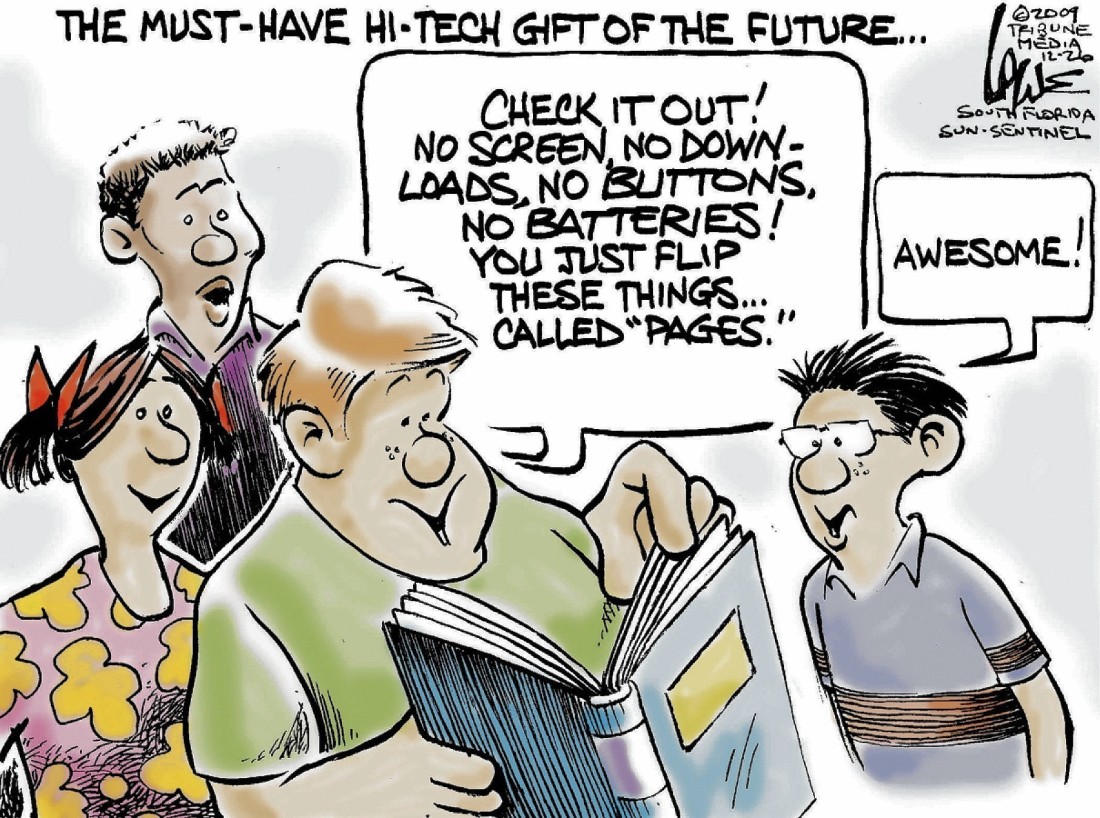
I love reading physical books. And I’ve admitted more times than I know, that despite the Kindle app’s animation to turn pages, an ebook just doesn’t feel the same way. But I’m reading four or five books now, and all of them are on my mobile. It’s easy because I never know when I’d get the time to read a page or two, and my phone’s just lying there in my pocket.

But I’m also against the digital revolution that’s almost killed paperbacks. It saddens me that leather bounds are now classed as exclusive collector’s items.

Books are books. They’re made up of words that can twist and tug at the deepest of heartstrings, and not antiques held together with age-old rust and dust.

Books are books. They’re living things filled with opinions and teachings. They can weigh in when you’re down, though sometimes even weigh too much when you’re carrying a burden.

Books are books. They are a mark of history written. They’re proof that people lived through them; they behold fingerprints and memories of thousands of enlightened minds who’ve cherished every page, every word, and every curve of the “g”s in them.

Whereas Kindle is cold. It’s a case that displays what it contains, and it contains a new thing every day.

Kindle is just a Kindle. It’s sleek to the touch, fits into your arms, and easy to carry.

Kindle is just a Kindle. It’s got hundreds of voices screaming for your attention, and if you’re ever appalled by the violence in one page, you can always find some zen in another.

The Kindle is just a Kindle. It’s versatile with multiple stories and multiple stands. It will neither weigh in for you nor weigh you down.

Kindle is kindling in the name only. It kindles not one but many emotions, which is good for some but too many for most. Bulky books rekindle spirits. There’s no escape from the secrets within a bound book. You either take all it in or give it all up. There’s no intervention, and there’s no mid-ground.

But even as all these thoughts rushed through my head, I still kept my mouth shut. As much as I hated it, ebooks and Kindles are the new way of reading.

With the rise of 140 characters, facebook-like attention spans, and books you can listen to while watching silent movies, many people think hot chocolate and the sofa near the foggy window is more suitable for the family kitten. My friend was right. In future, not many people would read heavy books. We’d intake lines and lines of words like we inhale air. And like air, most of it wouldn’t even reach our brains. It’s the age of the Kindle and unkindled souls.