Defining minimalism

I’m a proud minimalist. My unrealistic dream is to own one pair of shoes that I can wear for everyday commuting, running, hiking, and the occasional work-related public speaking.

When I arrived in Canberra, migrating from India, I had one cabin bag—which contained my laptop, a few snacks, and the essentials for surviving an overnight fight. I had to check in my luggage because it weighed 12 kilos, a little over the 8 kilos of maximum allowance of a cabin bag.

And I’ve often narrated that story without the slightest sense of shame. While most people would identify themselves by the things they own and the value of those items, I lack the lust for materialism.

To put that in a different context, if a bushfire approached my house and I had to leave immediately, I’d have less than half a backpack to carry. Everything I own fits into my yellow rucksack.

However, as I’ve navigated society, I’ve developed many relationships and therefore, interests. As a result, I’ve started accumulating things. Stuff. Possessions I cherish, not because they’re mine but because I have anytime access to them—I now need them. For instance, I need proper running shoes, separate from my everyday sneakers. Of course, I didn’t start running until mid November of last year. And I would’ve have started if it hadn’t been for my friends talking about their running.

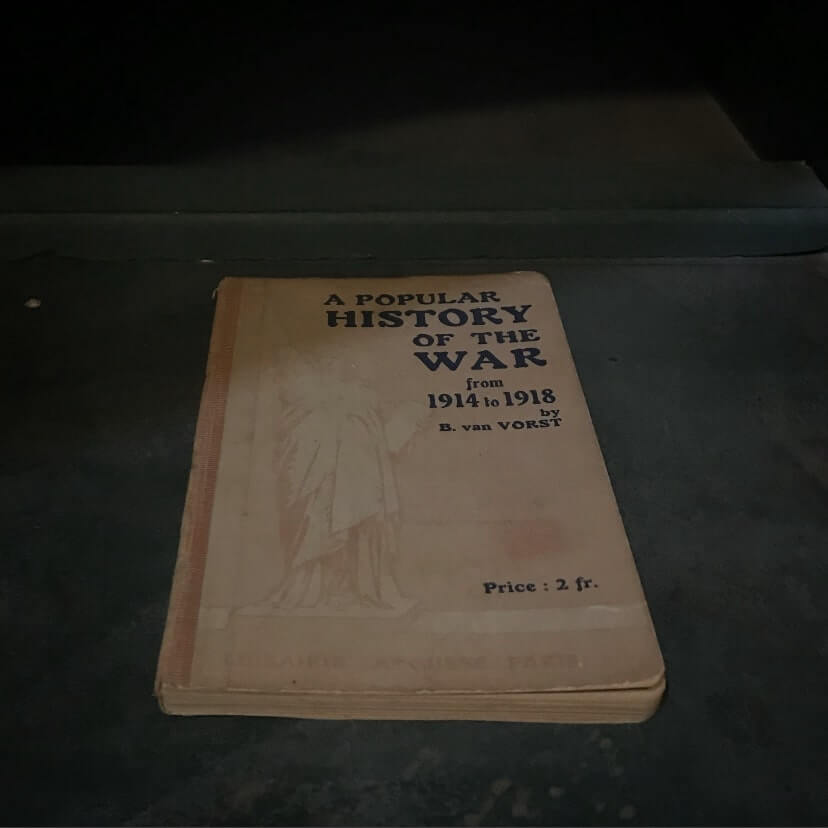
More than everything else, however, I can’t help but acquire books. I’ve always had that problem. Before I moved to Canberra, I gave away so many books because it made no sense to carry them all with me. Books—especially ones you want to re-read and enjoy for a lifetime–are, in bare terms, baggage. If I’m emotionless, I’d say books are an unnecessary burden. Having my teen ages possessed by technology, I’d argue I could get all the books in the world in one ebook reader—for the size and weight of one.

Yet, my social activities and my friend making has altered my view of possessions. I realised this last week when I visited a book fair. Even though I’d been to many such events in India, I’ve never bought anything because my string mind voice opposed to it. This time however, I ended up buying three new books, to add to the rather small pile that I know I’ll hold on to as long as I can. Unless there’s a bushfire and I have to evacuate immediately, I’d take these books with me.

This has made me question my principles.

I still consider myself a minimalist, but with a larger collection of things than I had before. I’ve come to understand that minimalism isn’t about having fewer things, but instead, about knowing the difference between wants and needs. It’s impossible to have one pair of shoes that’s ideal for all activities. And it’s ok to have two or three good pairs of shoes. As for books, I can always donate, and borrow when I want them again. Buying a book introduces me to the title. Once I’m familiar with the title, the author, and the style of writing, I can loan as many as I want.

That was my lightbulb moment. Minimalism isn’t about limiting your experiences, but it’s about expanding them. And you can do that without overloading your backpack.
Of stories

When we read, we lean into a whole new world. A world full of people, things, and situations that intrigue us, entice us, trigger our agitations, and in the end leaves us in a blissful state of wanting more.

Reading is escaping into a realm that we don’t expect for ourselves. It’s a getaway, if you will, from the harsh realities of our everyday lives. Whether it’s from the kids rattling in their rooms, their joyful squeaks echoing through the thin old walls, wooden floorboards creaking even at the weight of the lightest in the house, or from the pending laundry, unattended work emails, or dirty dishes, we all use stories as a way to avoid facing what we eventually must. 

After all, the imaginary world is so much more interesting than our melting, sweltering real world.

As I marvelled this, I realised that not only readers ignore the piling mound of boring routine. Writers do too. Perhaps that’s why they are writers in the first place. Not only is writing a way to avoid the rest of the world, it’s also an intense form of empowerment to create your own.

When I write a story, I often don’t deviate from the way things are around me. I draw inspiration from people I see every day, from paths I wander, from music I listen to, and the conversations I engage in. However, these references don’t always reflect on the story. Instead, I twist it to my fancy. Even something as simple as the shape of a cup could be wildly incorrect—improper. That doesn’t mean a tea cup could be as impractical as a trophy cup, but it’s still the writer’s choice.

When you think o fit that way, the art of reading and writing stories is an act of going against what humankind has made acceptable and natural. 

It’s a way of rebelling, of protesting against normality, against the agreeable. Sometimes it’s as basic as a black man walking down a white neighbourhood, and sometimes it’s more aggressive as big brother watching you.

Stories are more than just stories.

A milestone

When I was about 13, I decided I wanted to write—to be a published novelist.

Then life happened. Luckily, however, I still wanted to write. That’s how this blog came about, and ever since I’ve been writing plenty of self-declared short stories, opinions, random musings, and travel thoughts.

Moving to Canberra took my writing to a whole new level. I joined a writers group, and thanks to being exposed to incredible poetic talent, the embers of my poetry began to flare up. As a result, I’ve been writing and experimenting a lot with free verse poetic forms.

Now I’m super thrilled and proud to say that with the help of my incredible writers group, I’ve managed to get in on an anthology of womxn’s poetry from all over the world.

Published by Animal Heart Press, the book is called From The Ashes. It’s co-edited by Amanda McLeod and Mela Blust.

Preorder the book here

Latest reading

I’ve been trying hard, and failing, to read a book.

It’s not the first time. It doesn’t happen often, and so when it does happen, these books remain in my mind vivid, as the Sydney Opera House in June.

The Girl With the Dragon Tattoo, One Hundred Years of Solitude, and a couple others.

Not that these books were complex in language, but they featured elements and situations that bored me. However, I did finish One Hundred Years of Solitude and mentally kicked myself for putting it off for so long. It took me a good nine months to finish that book because I kept forgetting I was reading it. That’s a great book—I admitted when I did read it.

But the dragon tattoo was too much for me. It went into such gruelling detail about sex that it threw me off. I don’t mind descriptions that add value to a story, but as I was reading it, it felt as if the author could’ve edited away some of the detailing and still achieved a crisp narrative. But that’s just me. Almost everyone I’ve spoken to about the book was surprised that I quit halfway through. I got tired of waiting for the exciting part of the story.

That happened about five years ago. Perhaps I was too young to digest it. Perhaps what was casual description for many was too gory for me. That’s when I realised I could return a book without reading, and not feel guilty about it after.

Except, now, after all these years, I’m reading a book that I don’t feel like finishing. It’s a lighter-hearted than The Girl With the Dragon Tattoo, and it’s non-fiction. But it’s still too much detail. It’s a semi-biography of an American-Australian author. It’s the first full-length comedy book I’m reading, and although I appreciate the author’s ability to laugh at her faults and shenanigans, some of her anecdotes aren’t funny—they’re just silly.

It feels as if I’m too old to laugh at these stories. Some of them are too personal—stuff that I’d take to the grave. Of course, there’re learning opportunities in every embarrassing situation, but sometimes, lessons are personal. Writing about the time you strutted around the school in sex-stained jeans thinking it was cool, isn’t cool. Now imagine an entire book of stories like that. Of course, not every story is about sex, but the embarrassment-level is quite similar.

I’m certain there’re some stories in there about good things that happened to the author—like winning a game or passing a big test.

I’ll know for sure when I get there. If I get there at all.

That’s what I’m struggling with now. I know it’s a popular book. It may even be a good one, according to most readers. But perhaps it’s just not for me.

Ever been there?