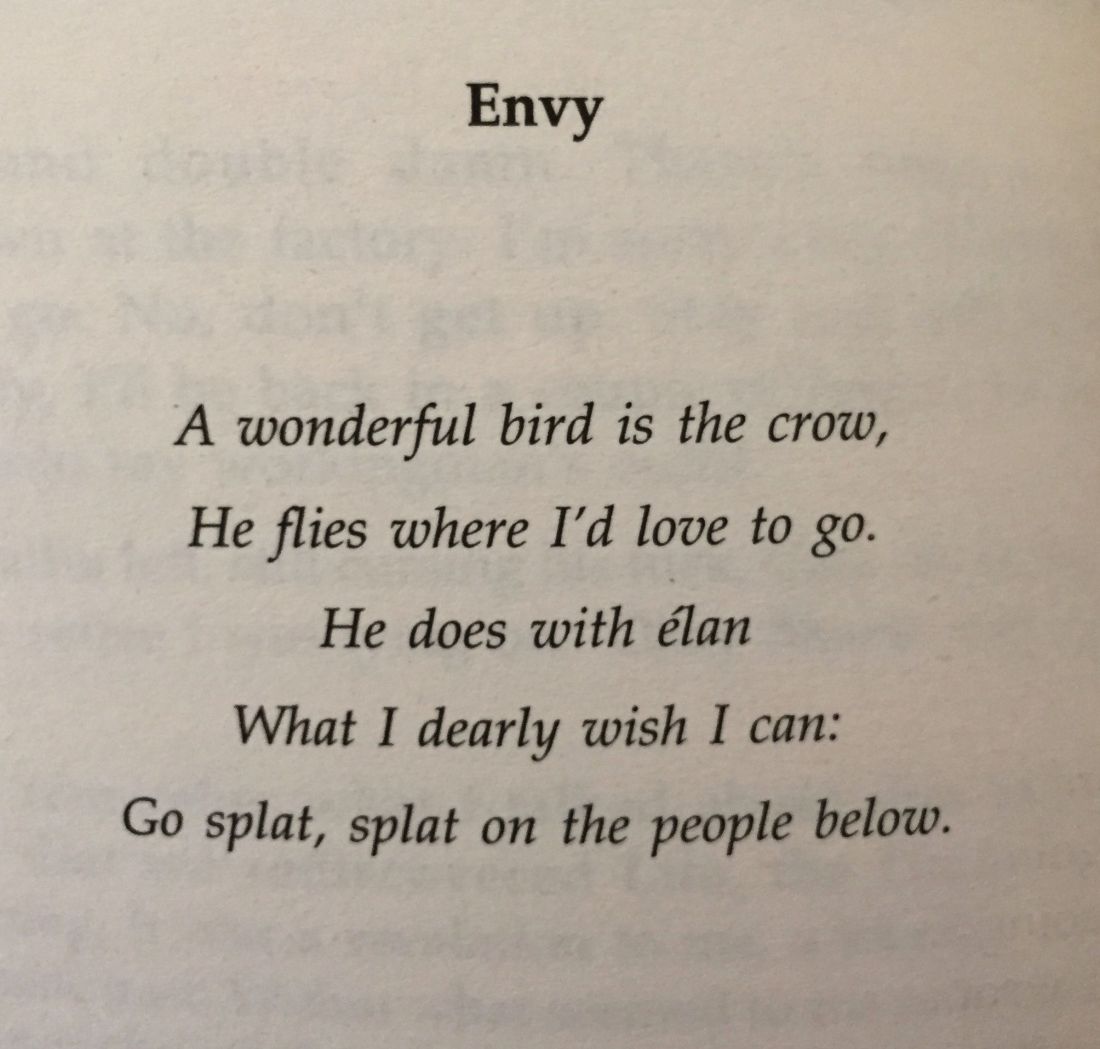
Weekend Plans

“So, what plans for the weekend?”

Don’t tell me you haven’t heard this question pop up in every corner on a Friday afternoon. Because I sure have heard it, and it rekindles my temper.

Why, you ask? It’s a harmless question, you might say. And I’d agree with you, except it’s a useless question too. It’s a conversation starter, yes, but the most I’ve seen people reveal about their weekend plans is their meeting with friends.

No one goes into much detail. Because it’s awkward to tell others you’re planing to hook up with a stranger on the first date, or you’re planning to elope with your high school sweetheart—or worse yet—that you’re planning on introducing “the one” to parents who never approved of your choices.

While the couplings are in trouble, we singulars have problems of our own. Would I be thrilled to tell people I’m planning to hang out in my room alone watching the latest in Blacklist and sleep for hours afterward? Of course, the thought of lounging in my pyjamas all day thrills me beyond words, but to the ones looking so eager and curious to know my weekend plans, I’m just sad and alone. I don’t bother myself with what they think, until they wear that sad expression one uses in the deathbed of an old granny.

Why should anyone have plans for the weekend at all? Why not go home on Friday evening, kick back, relax, and wait for the morning to tell you what to do that day? I’d rather do that than have my entire weekends planned, mapped out, and scheduled. Because, when I do plan to cook up a terrific single-serve meal, I’d just land in a power failure.

So, that’s how my weekend went. What about yours?
Poetry on War

There’s something so disturbing, yet divine about death, devastation, and destruction.

If that makes me an evil an twisted sadist, so be it. I’m addicted to war poetry. And in a world that’s addicted to war itself, that’s saying something.

Anything about young soldiers dying before their time, having their lives sucked out through their rifles, and soul-less bodies strewn across no man’s land, is so powerful that it makes me crave more and more. It’s pain, but it’s gratifying. It’s sorrow, but it’s a lesson. It’s proof of what we, as a breed, are capable of, of what I could do to my neighbour if I wanted to.

It’s scary to read Sassoon, Owen, and Tennyson. It’s scary that mere words on paper can bring to life the worst acts of terror we inflict upon this world.

And it’s amusing how even after pulling so many meaningful lives apart, we’re still willing to walk the same path. Every time we raise a weapon, every time we declare war on war, every day since the first boy was killed in action, we’ve been doing the same, wishing for a different outcome.

And even if we do get a different outcome, does it make a difference to the soldiers dreaming of firelit homes and clean beds?

Alas. Thus is the way of the world.


Dreamers

Soldiers are citizens of death’s grey land,

Drawing no dividend from time’s to-morrows.

In the great hour of destiny they stand,

Each with his feuds, and jealousies, and sorrows.

Soldiers are sworn to action; they must win

Some flaming, fatal climax with their lives.

Soldiers are dreamers; when the guns begin

They think of firelit homes, clean beds and wives.

I see them in foul dug-outs, gnawed by rats,

And in the ruined trenches, lashed with rain,

Dreaming of things they did with balls and bats,

And mocked by hopeless longing to regain

Bank-holidays, and picture shows, and spats,

And going to the office in the train.

— Siegfried Sassoon

Of Poetry

I’ve always enjoyed poetry. But I never understood reason, until now.

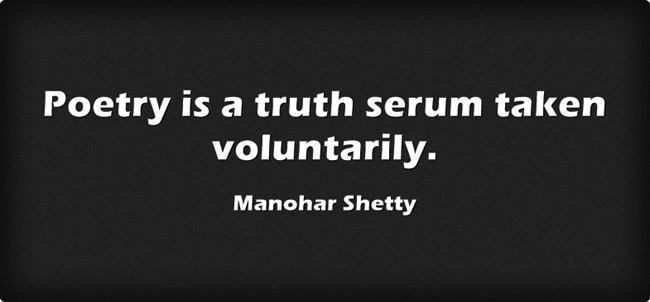
Poetry is

It’s true, people write in poems things they can’t speak of, things that are too personal, things that make us vulnerable, that make us cringe at ourselves, laugh at our stupidity, and scorn at our vanity.

Every poem is a bitter reminder of the truth we’d rather not hear. Every rhythm and every rhyming couplet — from “black wires grow on her head,” to “The old Lie: dulce et decorum est pro patria mori” — every piece of poetry is a whiplash to humanity.

And maybe it’s necessary, to take that serum once in a while, to hit ourselves with a dose of poetry and question everything we ever stand by.

Twice Born

I just read Twice Born, a novel by Vijay Raghavan. After having read three books of Paulo Coelho’s, I needed a break. And so, I turned to some Indian writing.

I hate it that sometimes Indian writers try too hard. They try hard to sound as close as they can to a native English writer. Which is fine, except, none of the British and American writers I read seem to write books with a thesaurus in hand.

And when I read this book, I thought of Joey and big hearts.

Maybe it’s just me, with my measly vocabulary, but to me, if a writer can’t convey her thoughts in a simple way, she can’t convey her thoughts at all.

After all, I heard it was Einstein who preached that if you can’t explain it to a six year-old, you don’t know it yourself.

But I digress.

This is a story of an English professor, also the narrator. One fine day, he realizes he’s schizophrenic, and two characters pop out from his head to help in his “conquest of happiness.” A doctorate in English, he names these characters Dr Heckyll and Mr Jyde. Throughout the rest of the story, these characters talk to him, advise him–even insult him at times–and at last, lead him to answer his own questions.

Even for someone who hates having to open the dictionary every few paragraphs, I enjoyed this story more than I hoped to. Maybe it was the effect of too much Coelho, but the plot of Twice Born ran fast and captivating. It was a peek into the life of a man torn between the Indian and the Western world. The narrative was honest in most places, a little philosophical at times, but overall — detached. I didn’t feel emotions seeping out of any of the characters; they all seemed logical, straightforward and calculative.

Nevertheless, I had my moments with this book. Moments like this.

twice born - excerpt