Two of a Kind

“Feeling the stares of everyone around her, she closed her eyes, took a bite, and imagined she was eating imported chocolate.” — Today’s Author
two of a kind

Knowing what the peanut bar was going to do to her only made it difficult. She felt her eyes well up in fear and in anger.

How dare they make her eat that stuff knowing well that she was allergic?

She chewed slowly, dreading the pain the peanut bar would cause. But there was no way out; her seniors were determined to get to her. They had been ragging juniors the whole day, and the management was purposefully oblivious.

She kept chewing, her tongue unwilling send in the poison. One of the seniors lost her patience.

“Eat up, midget! We haven’t got all day!” The others cheered and egged her.

With nothing else to do, Kate swallowed the lump of peanuts. She could feel it move slowly down her throat, as she took another bite.

Her body felt sore when she woke up in the hospital. Her worst fear had become reality — the peanuts had caused painful boils all over her skin.

She tried to remember.

She had eaten the whole peanut bar, and the seniors had left her, choking, under the tree.

Then how did she get here?

Just then, a skinny boy walked in. He looked pale, but she wasn’t sure whether it was his natural complexion or just looking at her made him uncomfortable.

When he spoke though, he showed no sign of disgust.

“My sister and her friends are always doing stuff like this. I’m really sorry you had to endure this.”

Kate stared at the boy, not knowing how to react. That bully was this boy’s sister?

For some reason, she could empathize with the boy as much as he did with her.

She tried to speak, but could only manage a weak smile. Seeing her smile, the boy’s face lit up.

“I’m William.”

And thus began a new chapter.
Know What You Want

“Perhaps when we find ourselves wanting everything, it is because we are dangerously close to wanting nothing.” — Sylvia Plath.

All or Nothing?

We don’t always know what we want. For all we know, we could be terribly mistaken about our wants, and therefore we might end up making wrong choices. All because we’re unclear of what exactly we want.

When unsure, we tend to experiment. And by experiment, I mean, we try to get a bit of everything. Like taking a bite off every cake so as to pick the perfect one. We may end up tasting all cakes and never find the right one. The result: we’re too full to go any further. And so, we settle for something that’s probably less than the perfect cake.

And it’s just sad; that we have to settle for less than what we deserve. But to get what we deserve, we need to know for sure what it is that we deserve.

Now that’s not too easy. How are we supposed to know the value of ourselves? Do we set boundaries for ourselves? For our wants? For what we deserve? And even if we try to construct boundaries — how are we supposed to know the parameters for the boundaries? What do we base our boundaries on?

The only guide we have is whatever other people tell us. So that would mean, we need to believe — and agree — wholeheartedly that a third person’s feedback about what we deserve is right. That isn’t easy either.

It depends largely on the person whose feedback we ask for. Not only should it be someone whose judgements we value, higher than our own, but that person should also be unbiased and brutally honest.

And then there’s the question of how many people’s feedback we base our boundaries on. Because when we have multiple respondents, we have varying opinions. While a majority will appear, there’s also the matter of the collective minority.

Not unlike our election system. Of A, B and C, 40% would prefer A, whereas a minority of 30% each would prefer B and C. So, who’s the better judge? Those who prefer A — the obvious majority, or those who prefer something other than A — the minority that collectively is the majority?

It’s nearly impossible to figure this out logically.

We’ll have to go with the next best option: the gut. So, if we base our boundaries based on the party that our instinct prefers, then, in a way, we influence our own boundaries. We judge our own worth, and there’s a mild bias. We judge what’s perfect for us, based on our instinct.

So the next time we wonder what we want, we know in a way what we really want — because it’s what we’ve convinced ourselves that we deserve. Therefore, we know exactly what we want — or at least we think we do — and since we’re sure, we won’t find ourselves pondering over everything, and trying to figure out what’s perfect.

But shit just happens. After all, we’re only human.

The Lonely Job

public

They say writing is a lonely job.

Each time I hear someone say that, I feel thrilled. Being a loner by default and a wannabe writer/novelist, it was like having my wildest passions prophesied.

That’s what I like about the writing world; being a writer would mean that you could shun human companionship, and still sound sane to most people. Of course, for some people, writers are lunatics — alone or not. But that’s irrelevant.

My point being, I was excited to constantly hear assurances that the best profession for me would be writing — something I enjoy doing anyway.

And since more and more people understand — or at least try to — the relationship between a writer and solitude, I shifted my daily schedule to include a lot of solitary bliss.

Only it wasn’t all bliss.

I loved being alone. I had a lot of time with my own head, talking to myself, reflecting, wondering, hatching ideas, cooking for myself, and even trying my hand at photography.

But the writing wasn’t coming out as much as I would have hoped. Oh, I was writing all right. I was writing every day — but it was a struggle, I had to wrack my brains for inspiration each day — which became tougher by the day.

Then one day, we planned a movie night. I got to our rendezvous point and suddenly realized that it had been months since I had been outdoors at that time, and among so many people. It wasn’t late; the sun had just set and the winter sky had darkened earlier than usual.

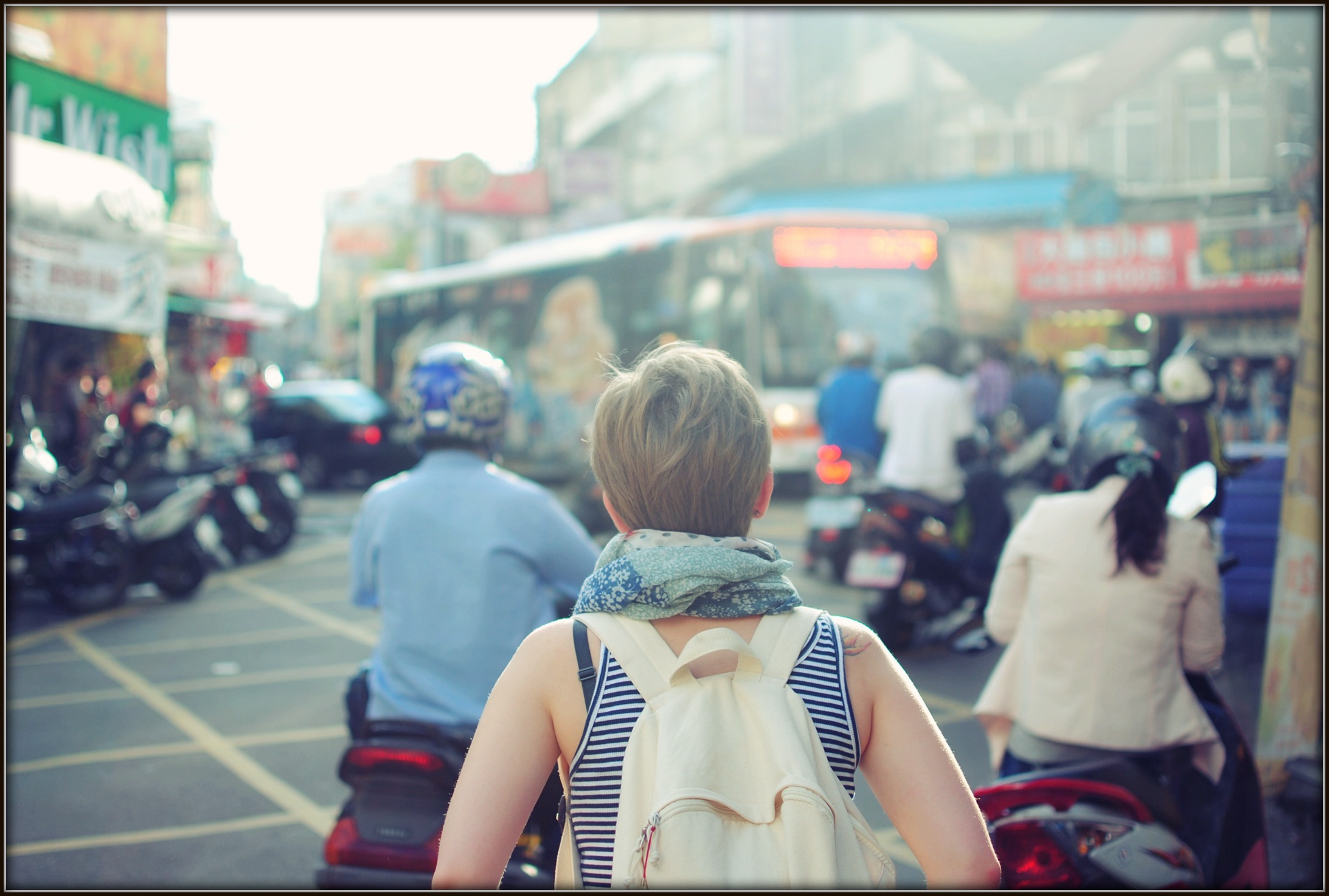
That’s where I saw — people. Oh, and lots of them too. It was the local bus stop and with people thronging around — it was so surprising. Sure, I see people when I walk home after work, but that’s a limited view of mostly quiet residential areas. I would actually see as many street dogs as people.

Seriously.

But that night, I could see what I had been missing all along. Just by observing people’s faces, I could see thousands of stories, waiting to be penned. They all had lives and incidents happening — how inspiring would it be to observe people’s behaviour in a public place, and weave a fictitious tale out of it?

It was an eye-opener. Though I’m not a fan of crowded spaces and heaving faces, I’ve realised that people are my highest motivators. I glean my creativity from the varying expressions of everyday life.

And I need more of that.

Where do you guys draw inspiration?

Rekindling Thoughts

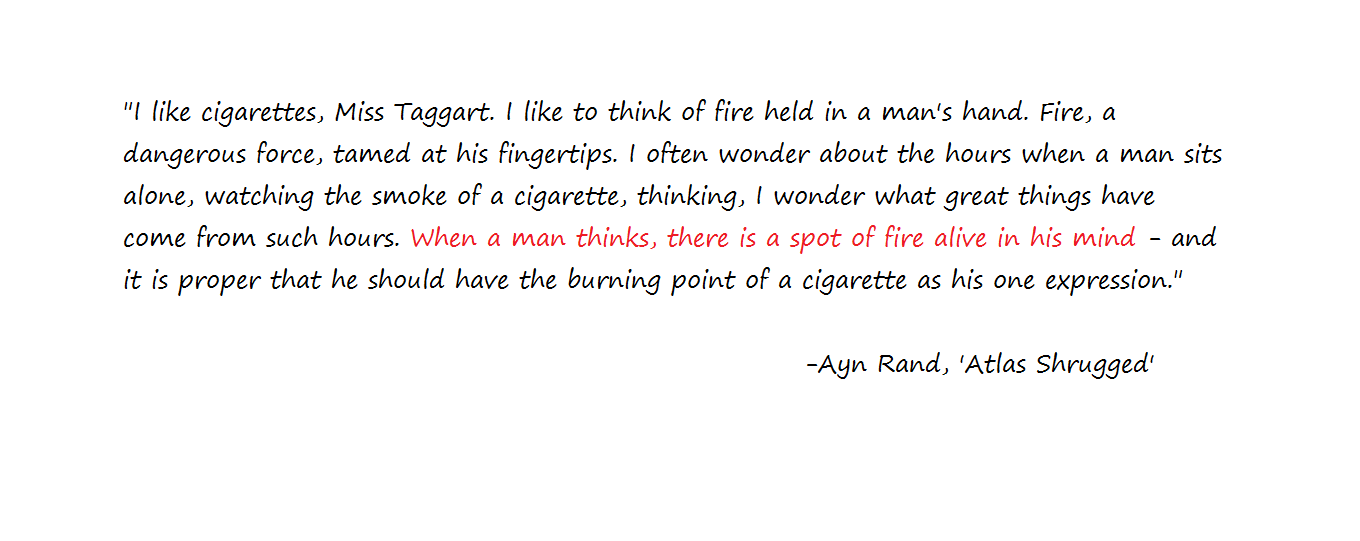
Cigarette - Ayn Rand

I’m not a fan of smoking, but when I came across this piece by Ayn Rand, I couldn’t help but agree completely.

I’ve never realized what powerful species we are. Not only did we discover fire, but also mastered the art of taming it at the tip of two fingers – one of them which is the middle one. How simple it is for us to tame such a strong destroyer – we are not only powerful but also a threat, to ourselves and the rest of the world. Some day, we could end up stripping the universe of its essentials. “A spot of fire” – incredible how it can breed chaos and great thoughts.

Merry Time

merry time

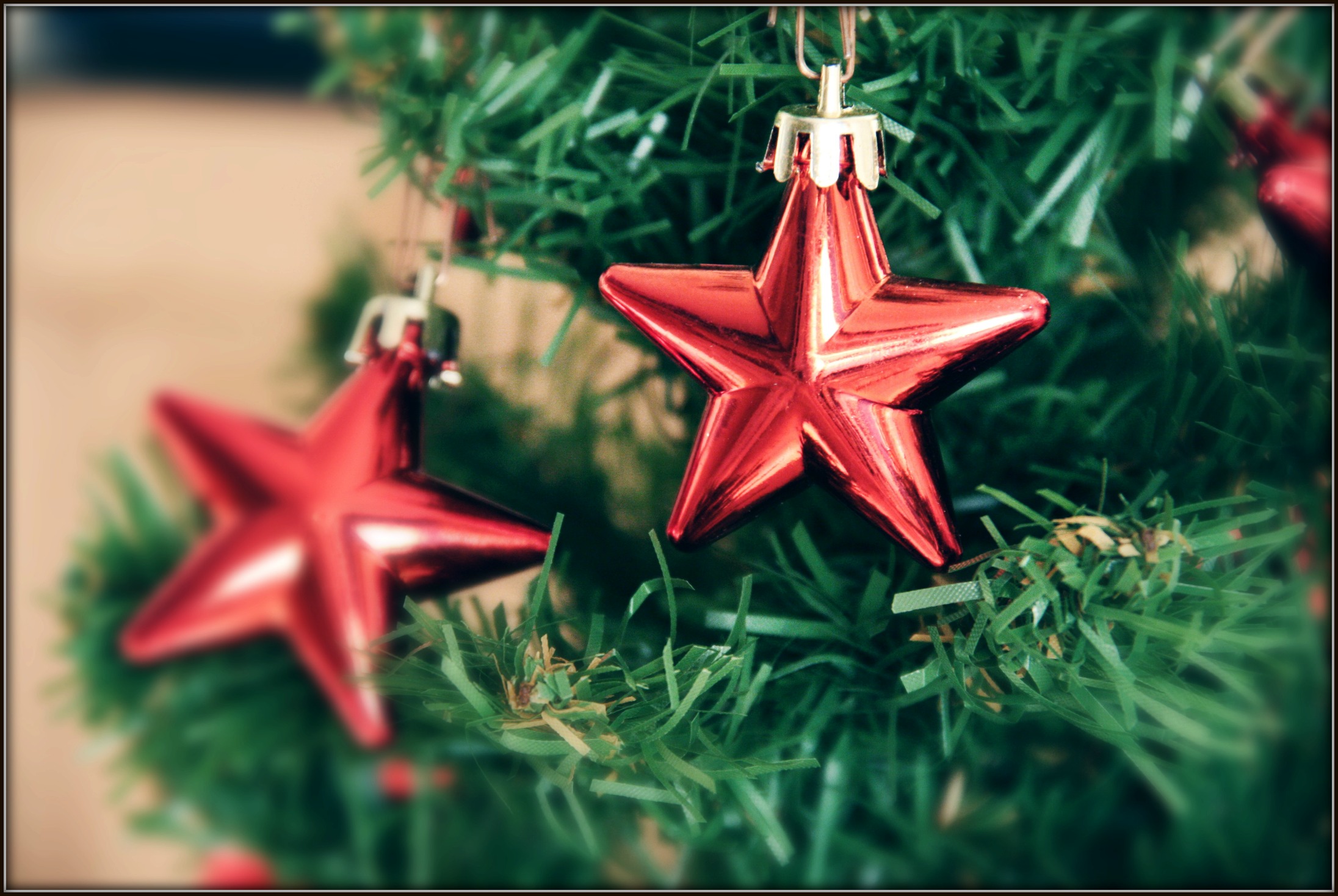
Trees aglow, shining bright —

Children’s plays, snowball fights —

Wreaths and creamy donuts —

Hot cocoa and wrapped gifts —

‘Tis the season.

Oh, the Humbug!


December has just begun, but the seasonal spirit is everywhere. So I’m joining in with a skeptical Christmas poem. What do you think?