
Sacrifice —
Sleep.
Desire.
Grandeur.
And glamour.
Palate.
Privilege.
Longing.
And craving.
For —
Moments.
Meltdowns.
And marvels.
Sacrifice —
Sleep.
Desire.
Grandeur.
And glamour.
Palate.
Privilege.
Longing.
And craving.
For —
Moments.
Meltdowns.
And marvels.

We are naught without our beliefs,
they said
We have to defend our rights,
they said
We should show them who we are
they said
“Forward! Charge for the guns,”
they said —
based behind ballistic glass.
Sometimes you need to get lost to find yourself. That’s how I felt walking through the pine forest in Kodaikkanal.
It’s a wonder why people don’t recommend it as a tourist attraction. Because it should be. Anyone who’d like to explore the depths of trees without worrying about meeting a bear should visit this forest.
There too many tourists pointing cameras at random angles. Because there wasn’t much novelty in every turn. Nevertheless, it’s a beautiful place for photographs.
When you’re standing there surrounded by perfect imperfection, you can’t help but drop your jaw at nature’s wonder. Yes, they’re just trees. But they are more than that.
The smell of the pines, the barks standing so tall and uniform — it was so inviting. They emit a kind of glow that spreads throughout your body and warms you from within. And trust me, it was chilly, and we needed that.
And if you listen close enough, you’d hear the trees calling out, as if they wanted to you go in deeper and deeper.
And it wasn’t a walk in the park either, the forest lay on top of a mountain and going in deeper would mean walking down the hill. It wasn’t scary though. On the contrary, I enjoyed it.
The roots of pines look like they’re engraved in a canvas of hard brown soil. It’s so beautiful, it feels almost artificial. You can’t help but smile at the sight of it. And you’d do a lot of that in the forest too. The trees are not too dense, and the dim light that seeps through them creates a perfect atmosphere for reminiscing.
Watching the trees, just being, defying gravity, ignoring all the world — yet making it a better place — it’s surprising that no one wants to just stand there and look.
The mark of husbandry.
He raised the dogs,
and praised the cats.
Tended to fish too
and abandoned mom.
I peeked through the window at the winding hairpins they called a road. We didn’t get a moment of rest. Every second of the journey felt like treading on a giant sand paper. It was bumpy, curvy, and clammy — yet it was the best trip I had had in a long time.
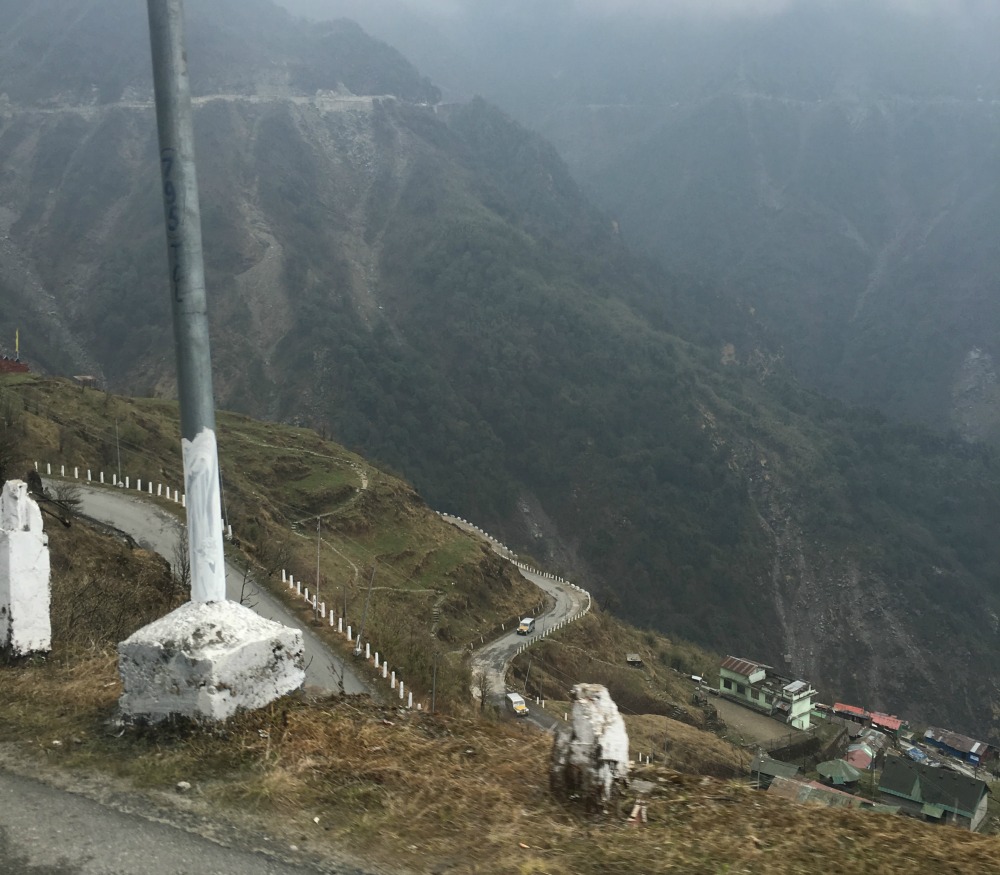
Everything about the road was dangerous. And that only made it more exciting. At least for us inside the car. Visibility was a thing of the plains, not the mountains. The mist — or fog, I never know the difference — hung in front of us, obscuring our path for hours together.
Our driver wasn’t keen on headlights. He’d realised they were useless anyway, and decided, instead, to rely on his instincts, hoping no vehicles would come at us from the opposite direction. Despite it being a national roadway, with over thousands of vehicles passing by every day, the road isn’t safe for two vehicles at the same time.
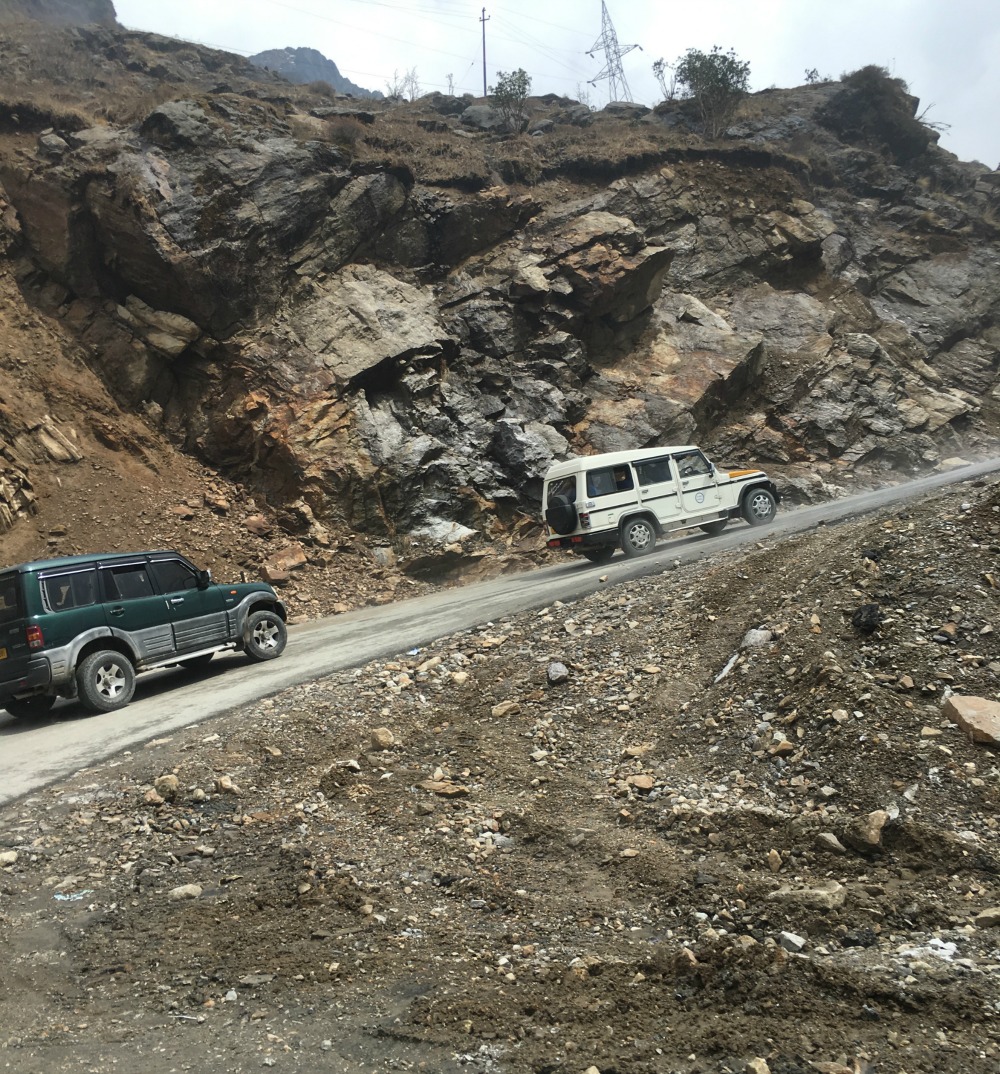
Just as I had made peace with myself that the ride wouldn’t kill us, we made a swerve so sharp that I bumped into my neighbour, almost pushing her off her seat. Grinning and wishing we hadn’t made each other too awkward, we both turned to look outside.
On the right I saw cliffs steeping all the way down to the oblivion. When I hugged the glass to get a better glance, I saw turquoise splashes of unspoilt water, flowing through rocks as shaven as a bald man.
On my left rose the biggest mountain I had ever seen. It felt more like a massive rock spotted with natural beauty chasms. I hadn’t expected mountains so huge, so dented, and so beautiful — all at the same time.
Looking down from the airplane, I had seen an expanse of parched land, bearing more sand than I could capture in one photo. But as I passed through the same mountains in a much smaller vehicle, they seemed as alive as the giant beanstalk itself. With tiny people, in their efforts to conquer everything they chance upon, picking their way through the solidity.
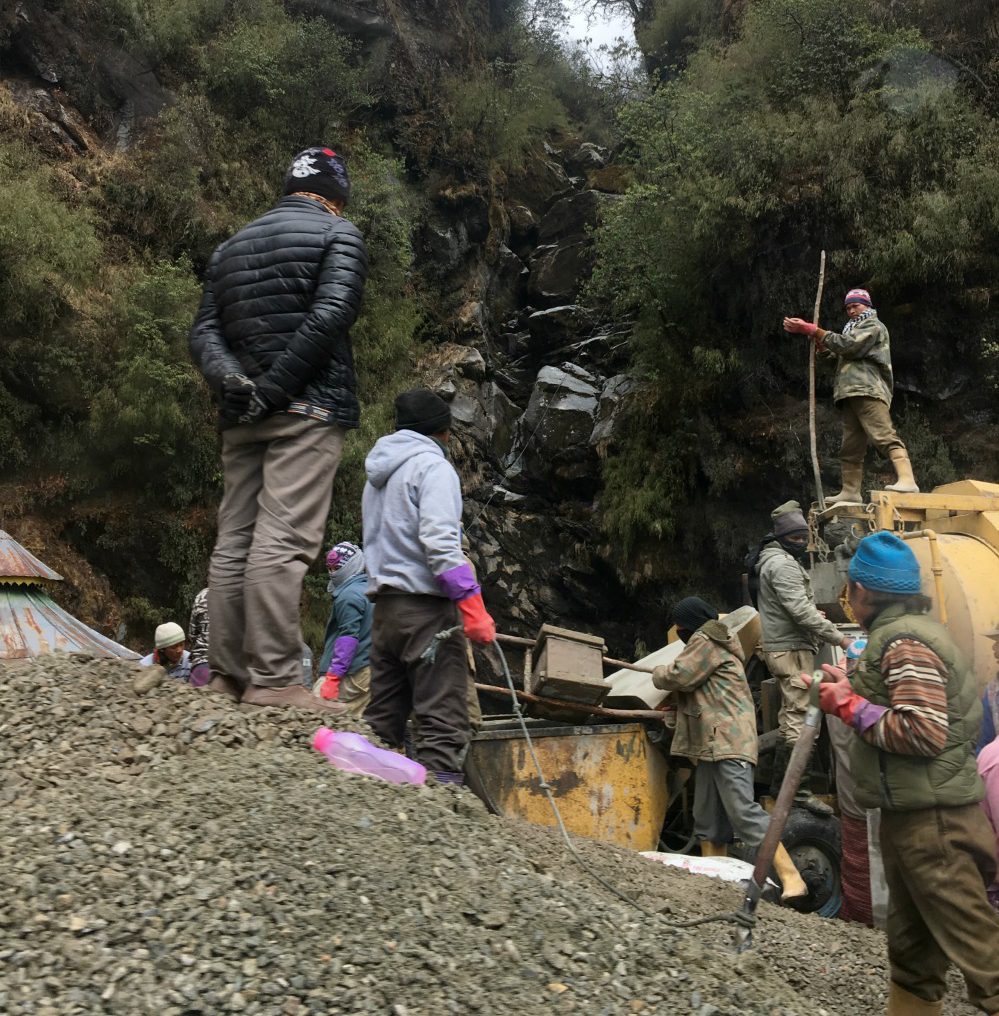
Throughout the day, they seemed at work, reconstructing, drilling, and planning. They went about unperturbed by the endless stream of vehicles. It was just another day for them. Countless passers by, random people getting sick, people staring, provoking, feeding the monkeys, and some others hoping to become the next great photographer.
We didn’t seem to bother the natives at all. But nature was less forgiving. From woollen gloves that betrayed me, and mountains that loomed so high that they made me trivial, to the trees that swayed their disapproving heads as I pulled a sweater over my head.
Nevertheless, it all was worth it.
 The Chaos Within