Nicely saying

Nicely Said

When you’re a copywriter at a corporate, some things you pick up overtime. But even after being on the job for four years, there are still some things that you’d pick up only from far more experienced teachers. This I realised halfway through reading Nicely Said: Writing for the Web with Style and Purpose by Nicole Fenton and Kate Kiefer Lee.

It’s unlike me to read a book titled as such, because I’ve always nurtured a distrust in “how-to” books. This one, however, was a present. It was a present from a few writer friends I hold in high regard. So I decided to keep my mind open and delve into what Nicole and Kate have to say.

“Whether you’re new to web writing or you’re a professional writer looking to deepen your skills, this book is for you.”

That was the blurb of the book, a simple, typical one-line description for so many guide books that often fall short of their expectations. It seemed far-fetched, as if anyone could tell anyone else how best to write copy for the web when no one—including the web readers—knows what works and what doesn’t.

There’s no one way to write. There’s no right way, perfect way, or a way that makes the most impact. Writing is a variable in every sense. The audience varies, the style does, and so does the purpose. How then, could anyone pinpoint one perfect method?

Many books assert that they’ve figured out the one greatest way of writing. This book doesn’t.

The book doesn’t say what to write, but it says how to go abut thinking about what to write. And that’s where this book stands apart from the rest of the sheep. The authors illustrate the process of writing for the web, using an example throughout the book so that’s easier to follow.

They ask some important questions. Who would write for the web? Possible answers include, bloggers trying to hone their writing, freelancers selling their services, and copywriters employed in business. Though they all have different targets of varying complexity, all categories have one thing in common: the medium they choose to write in. When writing for the web, clarity matters, because no matter who the audience is, they’re always on the verge of closing a tab, impatient to move on to the next tab.
In such a situation, Nicole and Kate say how a writer should focus on delivering their message.

As a copywriter in business, I’ve always followed a similar principle: tell readers who we are, what we do, and how we could help them. Then add a section explaining why they (as buyers) should choose us over our competition. That’s the template—a fool-proof guide to writing About pages and sometimes even landing pages.

But this book made me think further: we tell readers who we are, but we also need to tell them who we are not. That doesn’t come from words, but from tone. For example, we’re professional, but we’re not against good puns. We are consistent, but we don’t spam your inbox with ten emails a day. We’re serious, but we don’t hate contractions. All these come from the way we write our copy, not from what we write in our copy.

Those are the kind of lessons that Nicely Said outlines. The book doesn’t come right out of the dark to illuminate magical truths and best practices, but it narrates the minute things that we often miss when writing for the web. The little things that matter, the finer aspects of helping the reader understand our message a couple of seconds faster, of respecting the reader’s time, of being a good host to website visitors—these are a few of the things that make a good copywriter. And the advice this book contains suits anyone, even those who only write Facebook statuses.

Give this book a shot. Chances are, you’ll cherish it as much as you’d a dictionary. I do.
When arts and science collide

As an arts student in school, I had a hard time mingling with the science kids. For them, I was the one who read literature, making fiction the reality of my life. Whereas they micro-examined every organism, demystifying the nature of life. For them, I was nothing but a flimsy girl who walked around with her head in the clouds. My, they were so arrogant at times.

Most science students had the same egotistic attitude, and I so I began hating the elite that was science. Pity, since I enjoyed drawing sketching the heart, naming its parts, and narrating the story of how during inhalation, oxygenated blood runs through the veins, reaching every organ while deoxygenated blood travels through in the opposite direction. It was fun to create poetry about the body—for which I had to know about both. It wasn’t meant to be, though, because I didn’t want to become a bully as they.

I held on to literature, letting science off.

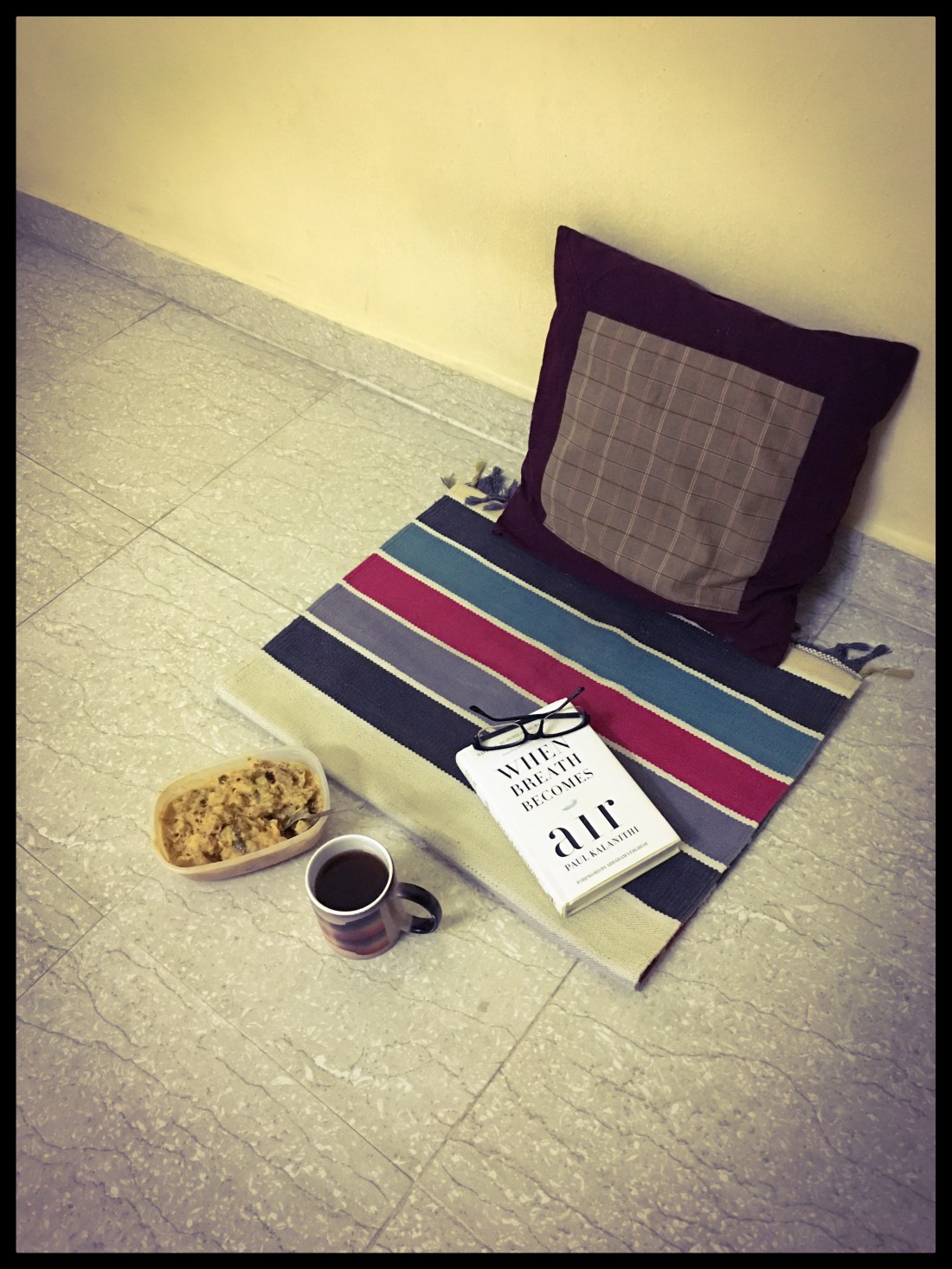
When Breath Becoms Air

And so when a friend recommended a book written by a doctor battling lung cancer, I hesitated. Did I want to read a fantastic, ego-filled book about how medical practice taught this doctor the fleeting nature of life?

My friend insisted, and I decided to give Paul Kalanithi’s When Breath Becomes Air, a try.

Just a few pages into the book, I realised I had been wrong about the author. He wasn’t just a doctor, but a literature major before he ventured into medicine. It was the first time I had heard of a doctor being sympathetic to those dabbling in the fictitious world of literature trying to reveal to the rest of the world that books speak reality, even though they guise as fiction. Paul not only studied literature, but used it as a coping mecanism during his treatment. He was a man of science and facts, but even he needed poetry and prose to survive.

According to the book, Paul loved writing, and reading the book, it’s evident that he did. I breezed through the book taking in all the emotions of a dying man speaking about death and disparity with indifference. In the first half of the book, Kalanithi talks about his journey from a literature student to a medical resident. He narrates his days and nights at the hospital tending to sick, even delusional patients. He writes about his fascination, how he approached anatomy classes, how the blade sliced through the belly of a pregnant woman as his attending doctor performed a C-section, he describes the pounding of a patient’s heart when they had cut through him to operate on the lung, he reminisces an incident when an annoying patient—who had to be conscious while Paul removed a tumor from his brain—swore at the doctors throughout the process urging them to get the stupid thing out of his head. As a reader, I felt myself crooning for most of Paul’s patients, and wishing that last one had died. Paul narrates such powerful stories, that you can’t help but emote along with him.

As a neurosurgeon, Paul speaks of the subtleties of the brain and the care that goes into each surgery. He speaks of the process in such a delicate manner that you, as a reader, can feel the sensitivities involved. As a writer, Paul employs the simplest of language, basic sentence structures, easy vocabulary—all of which makes for a needle sharp impact. The writing is straightforward and factual, the matter he writes about is moving and stiking. As a combination, the book is a joy to the beholder.

The second half of the book is more about Paul himself, about how his life, as a surgeon and as a husband, changed after his diagnosis. He speaks of his waking days and wakeful nights. He speaks of chemo and the pain that pricks at his spine, he speaks of discussing symptoms with fellow doctors, he speaks of his tears, of his fears, of his marriage, and the birth of his daughter.

I’m glad I read this book. It wasn’t life changing, it wasn’t a pool of advice, it wasn’t dramatic, mystic, or any of those things. Instead, it was simple, it was honest, and most of all, humble. And that makes When Breath Becomes Air a worthy read.

An uncanny realisation

an uncanny realisation

A few weeks ago I met with an old school friend. We had a lot to discuss about the last six years that had elapsed since we last saw each other. But of all things we spoke of, one stood out to me, nagging me from within.

She mentioned our school principal, Mrs. D. She also taught English Literature for senior classes during our time, and I had the opportunity to sit through her classes for a short 2 months before changing schools. The last thing I had heard of Mrs. D was that she had retired. I had no idea of her current whereabouts until my friend revealed it to me.

Mrs. D now taught English for adults from the comfort of her home. “Oh, nice!” I exclaimed when I heard that. I knew my teacher could never stop teaching, but I hadn’t thought of her moving on from enlightening school students to adults. Nevertheless, I was happy to hear that she had moved on and enjoyed retirement.

My friend continued her story. Everyone in school knew how much Mrs. D appreciated good music. She’d nod her head, smiling, whenever a student played the grand piano in the auditorium. And then she’d voice her admiration to the entire school during assembly. She was also a great pianist herself.

And so when my friend told me that Mrs. D still played the piano whenever she had time, I took a hike down my mind to those days when we’d file into the auditorium every morning, beating our feet to crescendos and staccatos. But the fleeting image burst like a gum bubble when I heard Mrs. D couldn’t play as often as she’d liked to because she had wrist pains and nerve issues. “Old age, you know.” My friend commented, offhand. It was just a matter of fact. At that moment, my reality stood still.

I hadn’t thought of my teachers getting old. I had been so busy focussing on my life and the changes I underwent that I didn’t even pause to think that my teacher had a life of her own—a life that went by just as mine did. My memory of Mrs. D was frozen in the classroom, and that I could walk into class tomorrow, flip the page of my text-book, and continue reading between the lines of Iago’s speech.

I hadn’t, even for a moment, considered that my teacher’s life no longer involved striding into class in a smart sari and not-so-heeled shoes. I hadn’t thought of her slumping on the couch in a sweatshirt, or watching television after 10 pm. Somehow, it never struck me that teachers are normal people, too, and that as they grew older, they’d also grow weak in the knees, stutter in their speech, and caress wrinkled skins.

It made me feel old to hear the reality of my teacher. She wasn’t as old as dying a natural death, but she was older than my image of her, and for a while, I couldn’t accept that. Here we were, standing at the airport, chatting away like a couple of adults discussing serious economic issues, when in truth neither of us felt adult-like at all. We had, of course, walked out formal education and into employment, but our memories still lived in the same school uniforms that we clad six years ago.

Oh, how much we hated Mrs. D’s rules. She made us all wear ribbons on our hair and would ensure our skirts reached well below our knees—the punishment for improper length being teachers undoing the hemming our skirts to make them longer.

Yet now, life had turned the tables on us and we just stared in longing into the mirror of our memories, that shadowed fondest part of our lives.

The Catcher in the Rye

It’s not often that you’d read a book that changes the way you look at the world and at the way you look at writing as an art. The Catcher in the Rye by JD Salinger did that for me.

Five chapters into the book and I tweeted for the first time a long time illustrating my confusion. I hated the narrative. The writing tired me and slang threw me off. As I read through the first few chapters, I began to wonder what the writer—and the protagonist—of the story tried to tell me. (I later realised it, and even wrote about it, if you’re interested.) The purpose, the intent wasn’t clear. And as someone who enjoys well-crafted sentences and artful wordplay, I found the curt and bland sentences unimpressive. The lack of coherence, lack of respect for grammar, and the obvious disregard for the reader’s patience, all made me way to cast the book aside.

But the cover held me back. Something about the cover told me not to give up just yet. It only had the title and the author’s name. But the font and the background came together in a beautiful union, making me wonder in awe at how great a book should be within. Not every book gets the privilege of being so simple on the outside and still sell like crazy. And so, I wanted to know what was so great about it.

I read on.

One by one, as the chapters progressed I realised what the narrator was saying. The narrator, a 16 year-old boy named Holden, had flunked school and was about to go home for good. He had nothing to look forward to except the disappointment in his mother’s eyes and annoyance in his father’s. Such a boy, a whiner in a sense, lists out all the things that he hates about the world. He hates the two-faced people around him, the “phonies” who say something and do something else altogether.

As I read, I could feel Holden’s emotions; I had been there myself. His anger at people seemed valid in many instances. I was the same when I was 16, but then I grew up up understand the world better, to understand the realities of surviving in a society that’s convoluted and twisted, and always looking to “help” you in ways you don’t want them to.

That way, the book was relatable and close to my heart. It spoke to me unlike other social satires. This wasn’t an obvious satire in itself, but it did point out the evils of our society in a crude manner, through the eyes of a youngster in the brink of adolescence.

Having said all that though, I couldn’t help but realise what a disturbed soul Holden is. Looking at his life and his characteristics from an outside, much older person’s perspective, I think he needs psychological help. When his teacher stokes his head, he panics, anticipating sexual motives. That’s where I felt Holden as a character needs honing. Sure, he says he’s had many people doing weird stuff around him, but we don’t know that. As readers, we don’t hear anything that says he’s had a troubled childhood, no indication that he was abused in the past that justifies his running away from his otherwise most-accommodating teacher. When he notices swear words etched in his old school’s wall, despite wanting to, he’s too scared to erase it worried that someone might think he’d written them. Holden is immature and he’s insecure, but these qualities are also what make him more human and more close to the reader.

That way, Catcher in the Rye is a good read for sure.

Don’t study English literature

Quora has become a place where you can ask weird questions without worrying about sounding foolish. For instance, I was surprised when I saw that someone had asked why they should study English literature at all.

Having just completed my bachelor’s degree in English literature, I almost laughed out loud. When it comes to studying literature, there are more reasons to avoid it than there are reasons to embrace it.

Literature, like medicine and engineering, isn’t for everyone. When you study literature, you become the dorkiest person in your social group. Friends and family make all sorts of assumptions. Your friends think you’re scared of sharp tools, bad with numbers, and worried about sun exposure. They judge you as introverted and that you’re lazy to leave the couch. Oh, and you’d love your coffee black and might be a good chef, too.

You didn’t get enough marks to enrol in engineering. You can’t get an equation to equate. You’re just a smart mouth who plays with words and thinks they’re cool. You’re too dumb to memorise clinical terms or understand chemical reactions.

You like the smell of old books, instead.

Lots of graduates nowadays don’t get jobs, but as a literature grad, you won’t even find a job description that matches your expertise. No employer thinks that someone who’s spent years poring over Shakespeare and Coleridge and Yeats could offer anything valuable at brainstorming sessions inside corporate cubicle farms. Good luck finding a job and keeping it for more than a week. And retirement is a luxury you can’t afford.

That’s how most of society sees us literature majors — that we’re too weak to live in the real world because they dabble in the glories of the past.

Humanity hates us Humanities folks because we look back and ponder on the evils we’ve etched in history. Nothing much has changed since the Victorian Era. If you’ve studied the Humanities, you should know that in the real world humanity crushes humanity.
That’s why you shouldn’t study literature. You have nothing to gain from it. You get a zero return on investment, unless you count the glasses you’d be wearing by the time you graduate and the social awkwardness that clambers onto your back every time you leave home.

To everyone wondering aloud why they should study literature, I’d say don’t. If you must have a solid reason, reasoned out, mapped out, and planned out, you shouldn’t be studying literature anyway. Because no one should study literature unless it calls out to them. Remember, literature chooses the student.