Why I Didn’t Read the Millennium Series

millenium

I started reading The Girl with the Dragon Tattoo, but I couldn’t even get past half of the book.

But the funny thing is that I hadn’t accepted it, until now. I tried giving it another try, again, and again. And again, and again I failed.

I just couldn’t get through it.

Perhaps it’s just me, I thought. But now, I’ve learnt to forgive myself; it’s the book. I just don’t like books like The Girl with the Dragon Tattoo.

I only tried it because of two reasons: One, my book-freak cousin recommended it. Every time she spoke about the book, her eyes would sparkle with dream-like awe. She had warned be about the dull start, but she also told me how awesome it would get after that.

I never got to the interesting part. I couldn’t tolerate it that long.

Second reason: The title. I do this a lot. I judge a book by the cover, but more so by the title. And ever so often, I’ve been wrong. But I still stick to my instincts.

It was an attractive title. A story about a girl with a dragon tattoo. I like dragons, tattoos, and girls who get tattoos. I drooled at the title.

For all the drooling I did, the book disappointed me. With my cousin’s word, I had expected too much of the book. Perhaps it was my fault to set unrealistic expectations. Still, the fact is, I don’t like topics that the book addresses.

Of course, I enjoyed Lisbeth Salander’s attitude and arrogance. Sure, I could relate to Blomkvist’s thirst for recognition, but I did not enjoy the plot moving all over the place.

I’m uncomfortable with simultaneous subplots and empty scenes. A lot of slow-moving incidents threw me off the main plot, and I couldn’t find my way back with the same enthusiasm as before.

And so, I stopped reading The Girl with the Dragon Tattoo. I wanted to like the book. Just like so many others. People kept saying how great the book was, tying it with the author’s sinister death.

I couldn’t see it, though. I couldn’t understand why it’s such a big deal. I tried, and I failed. And disappointed. I didn’t want to hate the book.

But shit happens.
Let’s Talk Education

Or to be more exact, let’s talk studies and literature.

Some say those two words should never be in the same sentence. And if that’s the case, my whole life is a question mark. Because I study literature. But I don’t have a degree in English literature. I don’t see the point of it.

Too much of conflict in one paragraph?

I’m a literature enthusiast, but I don’t have a paper from a university to certify my interest. I study literature by studying the literature itself. Not the textbooks that other people (who think they have conquered the subject) wrote. Because when it comes to the written word, there’s no one way to understand it. There’s no right or wrong in interpretation.

Our system of education, however, forces students to read, understand, and memorise other people’s ideas. This may seem sensible for science or mathematics. Because those subjects rely on facts, and facts are facts no matter who writes them where.

But literature has more do with individuals. I don’t see the world the same way my mother sees it — even though she showed me the world. When no two people comprehend the same scene in the same way, how sensible is it to thrust one person’s perspective on a larger crowd?

But I love studying literature.

The best think about literature is that the student makes the decision. If you think it’s right, it is. If you think Shakespeare predicted British colonisation in his Tempest, then so be it. You are entitled to your opinion. The literature never tells you what to think. But a degree in literature not only tells you what to think, it also forces you to agree with textbook writers.

And that’s why I see no point in a degree in literature.


Cross-posting from my Medium blog.

Advice for the Modern Age

hamlet

Body shaming is a thing now. Having experienced it a few times myself, I can say it’s not new. For a long time now, the world has been mocking those who don’t have pear-shaped bodies.

One man has the best advice for those who shame other people. He lived well ahead of his time, hinging on the period he was born into, yet thriving even four hundred years later.

And how does he give us a his piece of mind? He shames his lover for a start.

“If hairs be wires, then black hairs grow on her head.”

That was, of course, in a time when blond curls ruled the day and any woman with straight hair was un-ladylike. Things have changed since, I know. Nowadays, people pay fortunes just to get their curly hair straightened. Nevertheless, body shaming hasn’t changed at all.

And then there’s this image of rosy cheeks and powder puff.

When I face my mirror, I know I have no rosy cheeks. There’s no chubbiness that every man’s supposed to like, there’s no colour, or flush, or blush. When I see myself in the mirror, I only see what shamers told me: A dull face, and cheeks too thin to be beautiful.

Shakespeare said it too:

“But no such roses see I in her cheeks.”

But here’s the question. Why would anyone expect a woman to look more like the sun and less like a woman? Why would anyone want a woman who resembles a child’s doll, when she’s stronger than that in real life?

Again, Shakespeare has the answer. And his answer — four centuries old though it is — is unmatched even in this age.

“And yet, by heaven, I think my love as rare

As any she belied with false compare.”

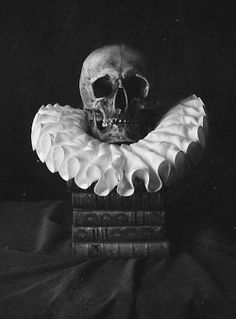
To be or not to be a body shamer. That’s not the question anymore. No matter how much we compare a person, woman or man, to an image of perfection, it would be just that — an image. Pretty face and fair skinned, or spotted and dark skinned, there’s just a skull underneath.

Writing. Grammar VS Feelings

grammar vs feelings

I like to think I know my grammar. But I can’t write grammar.

For me, it’s always about writing feelings. I don’t think about grammar rules when I write. As for the conscious rules that prevent me from typing “there” for “they’re” or “by” for “bye” are just — subconscious.

But beyond that, I don’t think of balancing my words with semicolons instead of a period, or adding extra emphasis within a parenthesis. Because, when you fixate on trivialities like spelling errors — blunders, in fact — you often forget what want to say. I often forget what I want to say.

Because writing, for me, is being in the moment. It’s a calling: Just write.

But a good piece of writing is slower than spontaneous. It’s a beautiful paradox of words: writing is re-writing, whereas first drafts are just drafts.

I don’t let my mind get in the way of my writing. Everything I know about grammar and spelling just sits in my head, waiting for me spill my thoughts on to the screen.

Because only once the thought is out there, can you go about making it make sense. And that’s editing.

If I’m to edit as I write, I’ll never get through the writing phase to say whatever I meant to.

I don’t write the best gramma(r)tical sentence; I re-write it.

Twice Born

I just read Twice Born, a novel by Vijay Raghavan. After having read three books of Paulo Coelho’s, I needed a break. And so, I turned to some Indian writing.

I hate it that sometimes Indian writers try too hard. They try hard to sound as close as they can to a native English writer. Which is fine, except, none of the British and American writers I read seem to write books with a thesaurus in hand.

And when I read this book, I thought of Joey and big hearts.

Maybe it’s just me, with my measly vocabulary, but to me, if a writer can’t convey her thoughts in a simple way, she can’t convey her thoughts at all.

After all, I heard it was Einstein who preached that if you can’t explain it to a six year-old, you don’t know it yourself.

But I digress.

This is a story of an English professor, also the narrator. One fine day, he realizes he’s schizophrenic, and two characters pop out from his head to help in his “conquest of happiness.” A doctorate in English, he names these characters Dr Heckyll and Mr Jyde. Throughout the rest of the story, these characters talk to him, advise him–even insult him at times–and at last, lead him to answer his own questions.

Even for someone who hates having to open the dictionary every few paragraphs, I enjoyed this story more than I hoped to. Maybe it was the effect of too much Coelho, but the plot of Twice Born ran fast and captivating. It was a peek into the life of a man torn between the Indian and the Western world. The narrative was honest in most places, a little philosophical at times, but overall — detached. I didn’t feel emotions seeping out of any of the characters; they all seemed logical, straightforward and calculative.

Nevertheless, I had my moments with this book. Moments like this.

twice born - excerpt