
Precise catering
from one heart to another
the love for caffeine
Daily fix

Precise catering
from one heart to another
the love for caffeine
She slaps me in the face,
full and forceful.
I don’t turn away.
For the first time in a long time,
I don’t cower
like a homeless house rat
at the hunger of a cat.
My fingers don’t fumble
no shiver down my spine,
like a book lover
caressing a binder.
Instead, I smile.
My hair leaps from its pedestal,
tickling my nose.
I sniff as it goes.
For every slap in the face,
I shower back smiles.
Warm spring breeze.

I haven’t met a Shakespeare fan I didn’t like.
Dreamy fierceness oozes from his words like a tube of toothpaste, and make readers stick like mosquitoes on an oil plate.
And when two mosquitoes meet on oil plate, what else would they share than their love for wit that landed them there in the first place?
It was with that curiosity that I picked up Set me Free by Salvatore Striano. The title itself wasn’t any different from the thousands that line the library aisle. It was the sub headline of the book that forced my feet to retreat and my hand to reach out: The story of how Shakespeare saved a life.
At that moment, I knew I had to read it.
Life got in the way, many times, slowing down my progress. And yet, I persisted—the deadline loomed and I didn’t want to be that person who extends a library book because they were too busy not reading.
I read in the bus, I read walking around the lake, I read in bed at night sipping black coffee.
This tale come from behind bars. It’s the story of a high-security, long-sentence serving prisoner in Italy. The narrator, Sasà—the prisoner himself—tells how he’s been a frequent visitor to jails since he was seven, walking us through various parts of his life leading up to the present. And all the while, he explains the realities of prison life, the solitude and hopelessness that hugs the air, and the spite that separates groups.
What’s Shakespeare doing in a place like this?
Saving souls, of course.
The narrator goes on to illustrate how one accidental play they put on opened the vault to an under-appreciated realm of sonnets and theatre. He reads Shakespeare, and with every play he finishes, Sasà feels himself glow and grow as a person. And in the end, the book closes with a hint of how even inside prison, lessons from good literature change and free people of their darkest despairs.
It’s a well-told short book.
However, at many instances while reading this book, I felt a tinge of irritation scratch the surface of my patience. For there are pages in the book that function, not as part of the story, but as the author’s opinion and observation of The Tempest. I scoffed, remembering CliffNotes. The narrator does this a lot—there’re chunks of references, poetic verses, and lengthy explanations of how and why Prospero forgives his enemies in the end. Sasà even argues with a fellow prisoner, who plays Prospero, for doing the character injustice.
As I read on, though, my annoyance melted. I grew intrigued at the narrator. For he’d internalised Shakespearean characters so much that he began identifying their real-world counterparts.
As readers, we see the plays help him discover his feelings towards the people in his life. His wife was like Miranda—loyal and pure. An older cellmate, a mentor and guide was Prospero—a father-like figure in jail. And he, the narrator, himself was Ariel. It becomes more than a role in a play, and we see how Sasà lets Ariel and other Shakespearean characters influence his own behaviour. Like an earthworm tossing out the dirt to let a breath of fresh air down the ground, these fictional men wade in and out of Sasà’s consciousness, picking out hatred and sadness, and replacing them with gardening, writing, and composure.
This is a small book. With a big takeaway.
The more I recall incidents in the book, the more I understand the impact of these plays on the narrator. From being a thief, drugger, and gangster, he emerges as a poet, and a rather philosophical actor.
This is a good book. Give it a read.
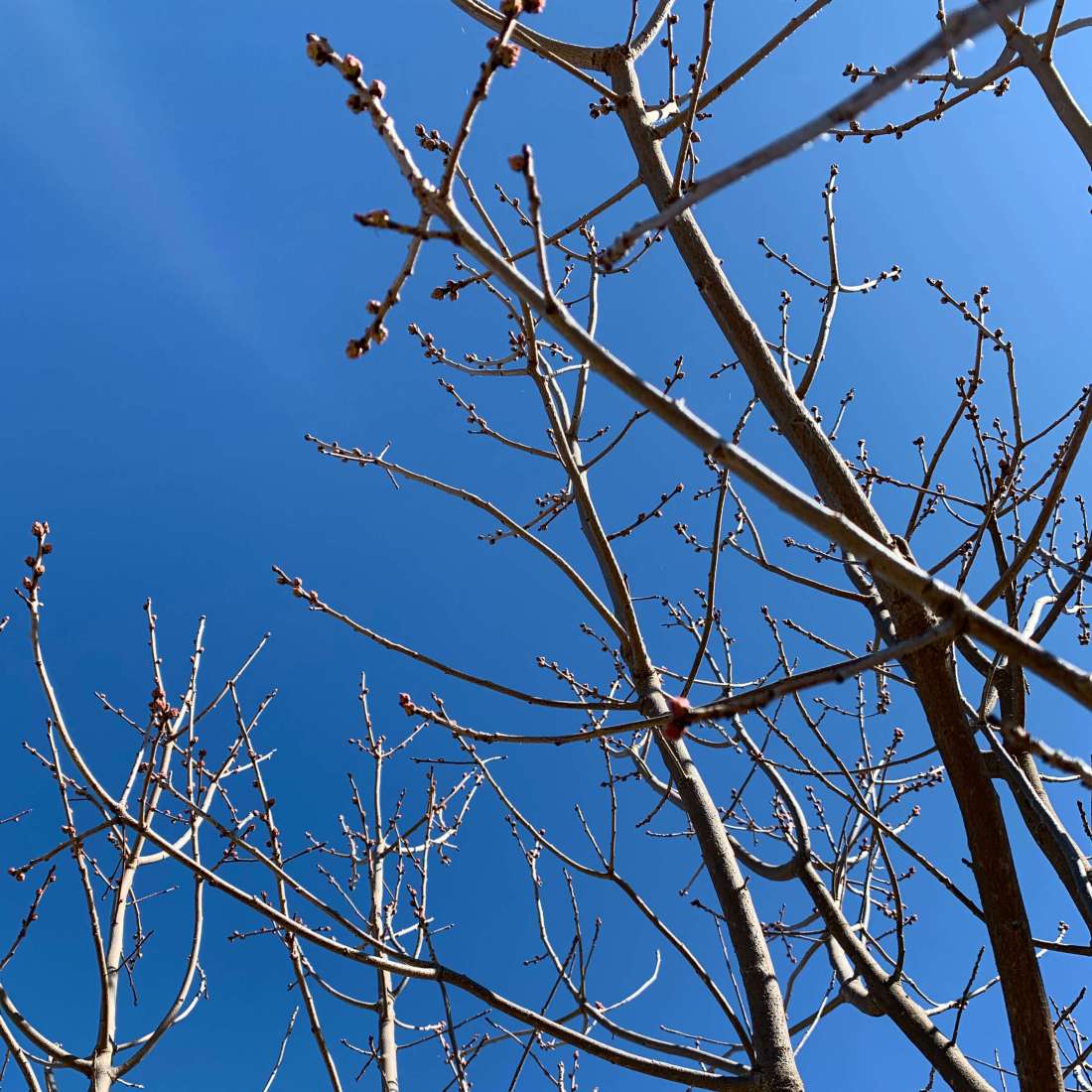
While skies siphon blues
springing up in September
suckling buds of May
Ever since I moved to Canberra, I’ve spent every day cherishing my reality. I enjoy every aspect of this weird town that’s big enough to have everything you imagine you’ll need, but is still small enough so you run into the same person twice or thrice a week.
It’s a satisfactory blend of big and small. When, on a Sunday afternoon, I walk down the city paths, I’m amazed at the lack of people running into each other. It feels as if the city’s almost too big for the people it houses. Then as soon as I enter the shopping mall, I’m washed over by excited wailing children, babbling adults, and snippets of he-said-she-said gossips.
Afterwards, I walk around the lake or along a park, and I’m mesmerised by the vast greenness that spreads before my eyes. Of course, there’re grasslands that’ve seen better days, now dry and parched without much fodder for the grazing cows. But I’m sure, as spring rolls over, rains will pour down and lusciousness will tumble on.
Every aspect of Canberra makes me hopeful. I can’t imagine anyone feeling depressed to live here.
But—
I’ve heard friends moan at the very thought. It’s home, but it’s still alien to them. For quite a while, I couldn’t comprehend why such a beautiful valley of a town was so disturbing for a lot of people.
Today I learnt why. A friend explained: growing up in this small town meant that every street corner has a memory. Each time they walk past the fountain in the city or step over the fence in a park, it triggers past experiences—both good and bad.
That’s when I realised: no two people ever see the same thing. As a recent migrant, I can’t fathom what a local sees when they look at a building. I see architecture and unknown history, and they see experiences, losses, and lessons.
That got me thinking. It’s not just about Canberra. It’s the same with every place.
My distaste for the city I lived in for six years stems from the bad times I had there. When it comes up in a conversation, I tend to focus on the negatives because they’re predominant in my mind. And that blinds me to the good side of the city. Clouded in my opinions, every suggestion I offer to a third person is marred and false even.
Even though we don’t often recognise it, our minds are always biased. It prevents us from weighing options with a level head, to accept even the possibility of a reality we’re unaccustomed to. We’re so entrenched in our own thoughts that we’re oblivious to the external perspective.
But that’s human nature. We can shrug it off and move on, or we can understand that we all come from a personal point of view—an understanding that’s crucial for us to grow as emotionally intelligent people.
*muse over*
 The Chaos Within