I wandered

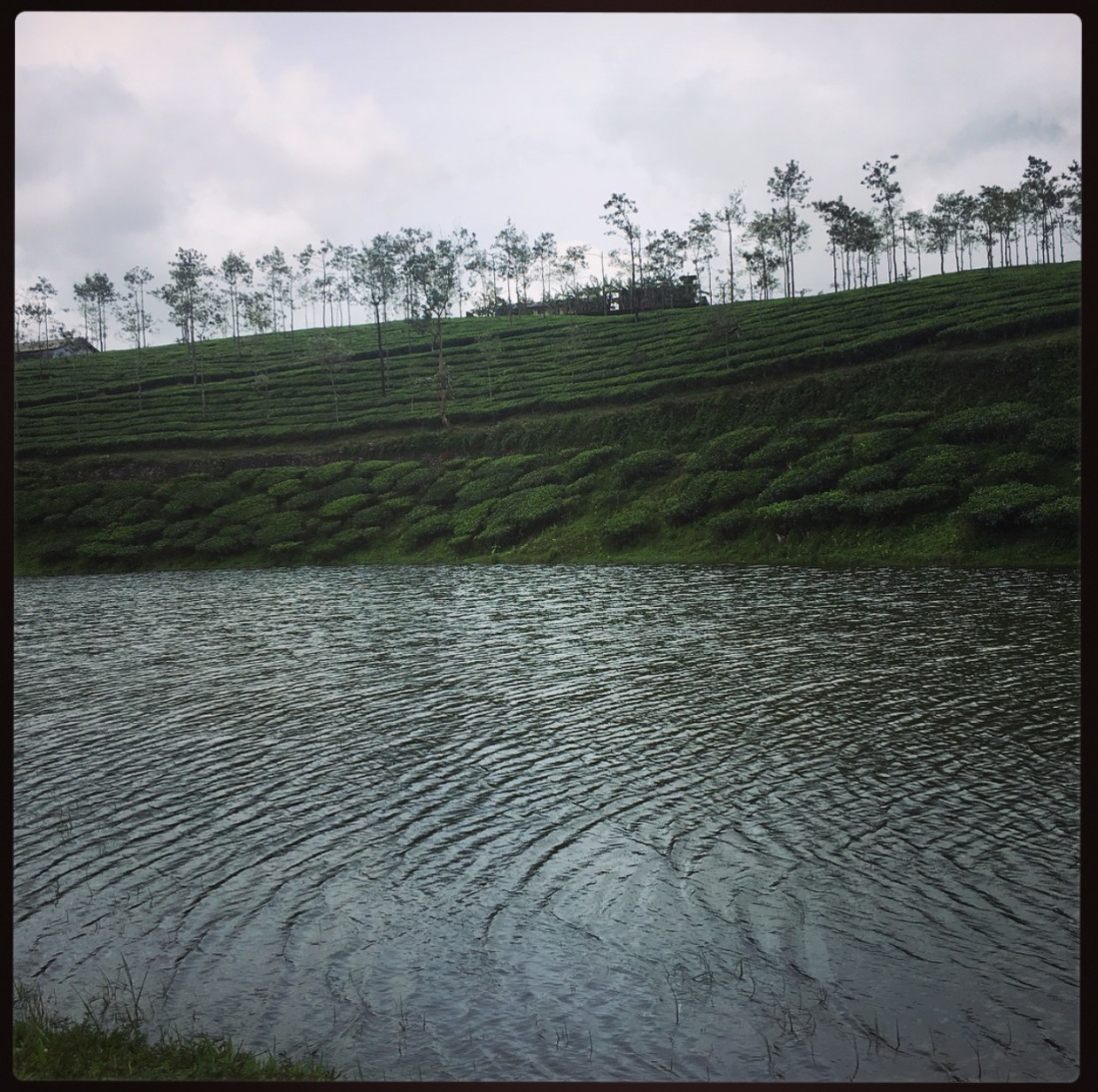
Sometimes in life you don’t realise how much you love doing something unless you’ve stopped doing it altogether. For instance, I didn’t know how much I enjoyed travelling until I found myself sitting alone in a large room sorrounded by too much space yet too little fresh air, reminiscing the good old days. This particular photo happened in Thekkady, Kerala.

wander

The Catcher in the Rye

It’s not often that you’d read a book that changes the way you look at the world and at the way you look at writing as an art. The Catcher in the Rye by JD Salinger did that for me.

Five chapters into the book and I tweeted for the first time a long time illustrating my confusion. I hated the narrative. The writing tired me and slang threw me off. As I read through the first few chapters, I began to wonder what the writer—and the protagonist—of the story tried to tell me. (I later realised it, and even wrote about it, if you’re interested.) The purpose, the intent wasn’t clear. And as someone who enjoys well-crafted sentences and artful wordplay, I found the curt and bland sentences unimpressive. The lack of coherence, lack of respect for grammar, and the obvious disregard for the reader’s patience, all made me way to cast the book aside.

But the cover held me back. Something about the cover told me not to give up just yet. It only had the title and the author’s name. But the font and the background came together in a beautiful union, making me wonder in awe at how great a book should be within. Not every book gets the privilege of being so simple on the outside and still sell like crazy. And so, I wanted to know what was so great about it.

I read on.

One by one, as the chapters progressed I realised what the narrator was saying. The narrator, a 16 year-old boy named Holden, had flunked school and was about to go home for good. He had nothing to look forward to except the disappointment in his mother’s eyes and annoyance in his father’s. Such a boy, a whiner in a sense, lists out all the things that he hates about the world. He hates the two-faced people around him, the “phonies” who say something and do something else altogether.

As I read, I could feel Holden’s emotions; I had been there myself. His anger at people seemed valid in many instances. I was the same when I was 16, but then I grew up up understand the world better, to understand the realities of surviving in a society that’s convoluted and twisted, and always looking to “help” you in ways you don’t want them to.

That way, the book was relatable and close to my heart. It spoke to me unlike other social satires. This wasn’t an obvious satire in itself, but it did point out the evils of our society in a crude manner, through the eyes of a youngster in the brink of adolescence.

Having said all that though, I couldn’t help but realise what a disturbed soul Holden is. Looking at his life and his characteristics from an outside, much older person’s perspective, I think he needs psychological help. When his teacher stokes his head, he panics, anticipating sexual motives. That’s where I felt Holden as a character needs honing. Sure, he says he’s had many people doing weird stuff around him, but we don’t know that. As readers, we don’t hear anything that says he’s had a troubled childhood, no indication that he was abused in the past that justifies his running away from his otherwise most-accommodating teacher. When he notices swear words etched in his old school’s wall, despite wanting to, he’s too scared to erase it worried that someone might think he’d written them. Holden is immature and he’s insecure, but these qualities are also what make him more human and more close to the reader.

That way, Catcher in the Rye is a good read for sure.

Don’t study English literature

Quora has become a place where you can ask weird questions without worrying about sounding foolish. For instance, I was surprised when I saw that someone had asked why they should study English literature at all.

Having just completed my bachelor’s degree in English literature, I almost laughed out loud. When it comes to studying literature, there are more reasons to avoid it than there are reasons to embrace it.

Literature, like medicine and engineering, isn’t for everyone. When you study literature, you become the dorkiest person in your social group. Friends and family make all sorts of assumptions. Your friends think you’re scared of sharp tools, bad with numbers, and worried about sun exposure. They judge you as introverted and that you’re lazy to leave the couch. Oh, and you’d love your coffee black and might be a good chef, too.

You didn’t get enough marks to enrol in engineering. You can’t get an equation to equate. You’re just a smart mouth who plays with words and thinks they’re cool. You’re too dumb to memorise clinical terms or understand chemical reactions.

You like the smell of old books, instead.

Lots of graduates nowadays don’t get jobs, but as a literature grad, you won’t even find a job description that matches your expertise. No employer thinks that someone who’s spent years poring over Shakespeare and Coleridge and Yeats could offer anything valuable at brainstorming sessions inside corporate cubicle farms. Good luck finding a job and keeping it for more than a week. And retirement is a luxury you can’t afford.

That’s how most of society sees us literature majors — that we’re too weak to live in the real world because they dabble in the glories of the past.

Humanity hates us Humanities folks because we look back and ponder on the evils we’ve etched in history. Nothing much has changed since the Victorian Era. If you’ve studied the Humanities, you should know that in the real world humanity crushes humanity.
That’s why you shouldn’t study literature. You have nothing to gain from it. You get a zero return on investment, unless you count the glasses you’d be wearing by the time you graduate and the social awkwardness that clambers onto your back every time you leave home.

To everyone wondering aloud why they should study literature, I’d say don’t. If you must have a solid reason, reasoned out, mapped out, and planned out, you shouldn’t be studying literature anyway. Because no one should study literature unless it calls out to them. Remember, literature chooses the student.

Talk about style

A while ago, I complained that an instruction book I was reading then had no creativity in its narrative. That was a pretty big accusation, considering the author of that book is Seth Godin and it was—needless to say—a bestseller. Although the book had wonderful advice, a pleasing layout with big headings and small, bite-sized paragraphs, even a bunch of clever wordplay strewn across multiple pages, the fact remains that “Tribes, We Need You to Lead Us” was a dull read for me.

I had then dismissed most guide books as dull as Seth Godin’s. I knew they were helpful and worthy in their advice, but I also realised that those aren’t books I’d read for pleasure. They were more like necessary evils you’d have to tolerate because they, in their own weird way, improve your life. And that’s how I had concluded my experience with instructional books that had blurbs saying, “Must read for every marketer” or “best financial advice for the average tax payer.”

It was with almost the same mentality and expectation that I picked up “Style — Ten Lessons in Clarity and Grace” by Joseph M. Williams. It was a part of my reading library at work and I picked that particular book because it had big fonts and reasonable spacing in the margins. Oh, and also because it was nice to caress the thick, white paper between my fingers. Aside from its aesthetic appeal, I expected nothing. That’s why the book caught me unawares spreading within me inexplicable joy, leaving me flicking through the pages to read more.

For the first time in a long time, a how-to-like textbook gripped my interest. It was about writing, and the author explains, with examples, why and how some sentences work and some don’t. Throughout the book, the author speaks of clarity and good sentence structure, which is all classroom stuff; to take it a notch further, however, he also speaks about the ethics of writing and how sometimes, you have to sacrifice clarity and concision because there’s more at stake.

Every teacher teaching writing would say clarity and brevity is the soul of a good piece. It’s important to empathise with the reader, giving them what they need to know, being mindful of their time. Williams agrees, and explains how to write for the reader, but in 10 lessons, 2 two epilogues, an appendix, and a glossary, he also admits that he can’t say how to identify the best way to write. There are no absolute rules to writing because it depends on the purpose, on the audience, on the writer themselves. And unlike so many books and articles that advise on writing, this book addresses that reality of writing.

In addition to the juicy meat of the book, Williams introduces quotations throughout. Every lesson, every chapter, begins with at least three famous sayings relating to the subject he’s about to discuss. To my surprise, some of those words were so witty I laughed out loud. I couldn’t remember the last time I had done that reading a how-to book.

All these were great things about the book. But the greatest thing was the writing itself. It’s not easy to write about writing in a way that readers, who are writers themselves, understand the writer’s intent—a feat that Williams has managed to achieve in an almost effortless way. That’s the actual lure of the book. Anyone who’s written anything knows that easy reading is damn hard writing, and the fact that this book is super easy to read says a lot about Williams as a writer, his process, and his dedication to revise and rethink every first instinct. For me, perhaps that’s the success this book has garnered.

It’s a glorious read for anyone interested in writing. However, for random readers looking to increase their “read” library in Goodreads, it’s just another instructional book.