A Closer Look

details

I had read fiction where the hero would lie on soft green moss after a long tired day of battle. I had even seen a lot of moss, sure. But I never thought them beautiful. How could something that grew in dark and damp clusters look nice?

But then I went to Thekkady, Kerala. I was roaming around in the Periyar Tiger Reserve when I saw the true beauty in moss. It was the first time I had seen a sheen of green I couldn’t look away from. I had to get a closer look. And a photo. Because I do that now.

Understanding Zen

I just finished reading, Zen and the Art of Motorcycle Maintenance. It’s an achievement, believe me. It took me almost 9 months to finish that book.

zen

And it wasn’t because I read many other books at the same time. No, while I read this book, I read no other. And it still took me 9 months. I should say, though, I was also studying for my exams and, for about three to four months, I didn’t even touch Zen.

Still, it’s a long time to read a five hundred+ page book. An international best seller, at that.

I read slow, but even I’m not that slow. After all, Harry Potter, the Inheritance series, and Chronicles of Narnia are all about the same size and I’ve sat through all night glued to those books. Why then did this book take so long?

It’s the writing for the most part. It was complex, it was all over the place, with two different narratives that just kept throwing me off the original message.

But there were so many good parts in the book that just jumped out at me. The best thing that came out of spending 9 months on one book is that it seemed like a lifetime. And the book is about a man’s discoveries over a lifetime. In hindsight, it feels like I’ve learnt so many different things, at different stages of my own life.

The book transcends from Pirsig’s life, into my own; my learnings, and my own understanding of how the world works.

Disclaimer, though: I don’t mean to sound all enlightened and zen-like. There are so many parts of the book that I read without taking in a thing.

But these blank parts of the book that I read three months ago, make sense to me now. What I though I understood while reading a paragraph is so different from when I understand after finishing the book.

And I’m counting on the same thing happening with other complex topics in the book.

And I’m sure when I read it the second time, I’ll see more things I didn’t see this time. Or, maybe, when I’m in the shower worrying about my hair fall, I’ll realise I should let the future be.

future

A Hunting I Will Go

It’s wrong, I know.

I shouldn’t be so addicted to one food in particular.

I mean momos.

I’ve been a fan ever since a friend shared her homemade momos with me. She’s from Tibet, the home of the momo. And she mentioned once that that was her favourite dish.

What’s so great about that, I had asked. My friend must’ve noticed my dismissive tone, for a few days later, she came back with fresh, crunchy-on-the-outside-soft-on-the-inside momos. In three varieties: beef, chicken, and vegetable.

After that day, everywhere I went, I began to hunt for momos. We went on a trip to Sikkim, where I found steamed momos. And unlike the fried ones my friend gave me, these had patterns in them. Frail and smooth curves hemmed the dumpling, sealing it to keep the stuffing stuffed.

View this post on Instagram

Loading up on local #momos. #traveldiaries

A post shared by Narmadhaa (@narmadhaa_s) on

They looked and squished like a familiar South Indian sweet, but inside the mouth, if felt nothing like that. It was soft, springy, and doughy. Something Joey would love.

I bit into a momo, and steam smacked my lips as sautéed onions and vegetables filled into my mouth.

I was hooked.

Even after I returned, I longed to hold another momo between my fingers. Lucky for me, I live near a big university, home to plenty of north Indian students. And it was easy to find hundreds of little authentic food shops in the area. I’ve made it a mission to find the best momo shop I could find.

One shop I went to with my team had a different pattern in their momos. These flaunted a less curvy sealing, but the taste lived up to my expectation. And when I bit into one of these momos, fresh chicken and cabbage surprised me.
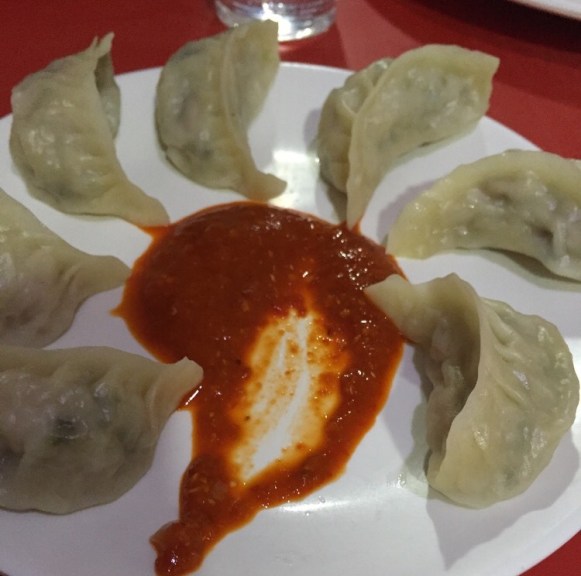
chicken momos

As for the vegetarian momos, they had a different shape altogether. These were like little fish, with a more fold-like hemming than curves; they were smaller than the non-veg ones too.

A street vendor once gave me “twisted” momos. It seemed like he had shaped the dough around a stick to form its circular shape. But the onions and vegetables were the same, and as good as ever.
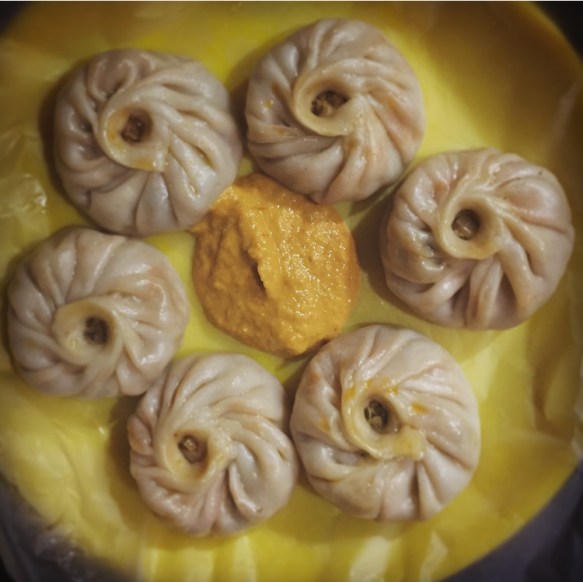
vegetable momos 2

After looking at so many varieties, I’m confused as to what’s the right way to shape a momo. Or if there’s even one right way to do it.

I guess the only way to find out is to eat them all. One thing I know for sure, though, is that no matter the size or the shape, nothing beats momos.

And no, that’s not addiction. Momos are too beautiful to resist. Call it appreciation, instead.


our-growing-edge-badge


I’m sharing this post on Our Growing Edge, a blogging event that connects food bloggers and inspires us to try new things. This month’s host is Sophie from Cooking TripsThanks for the invite, Genie.


One Morning at the Beach

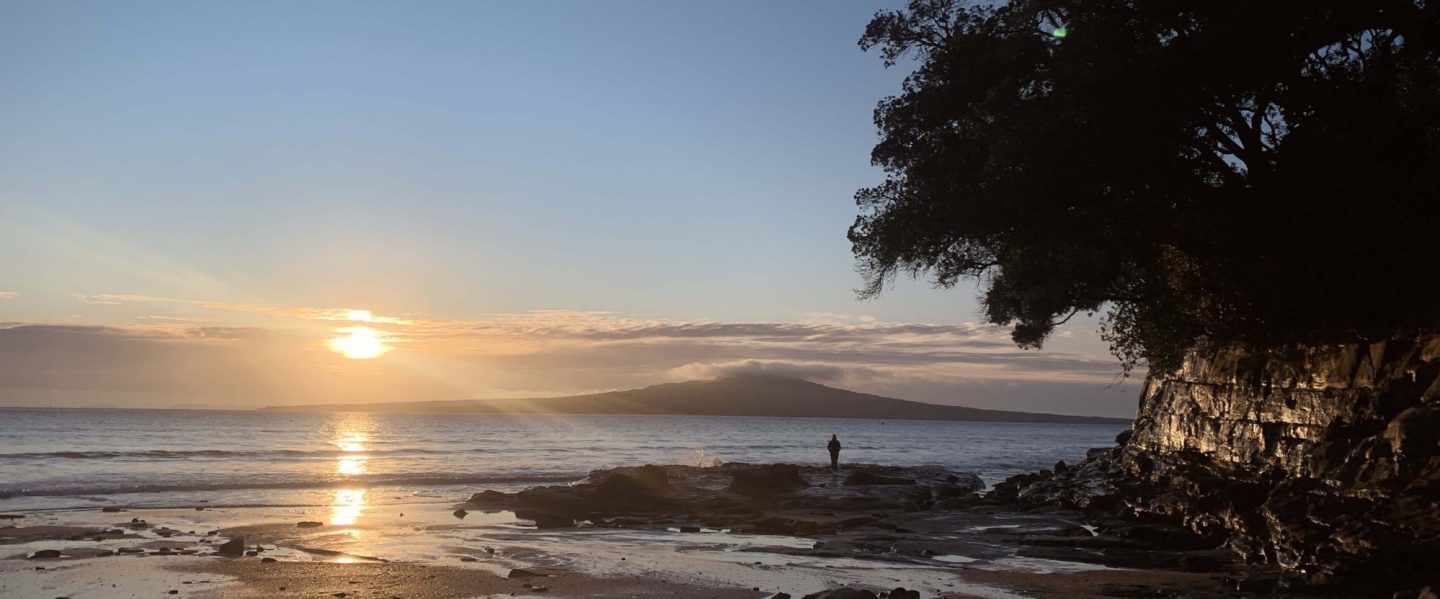
I’ve said it way too many times already: I can’t resist the sunrise.

So much so that I left my hotel room at 6 am to watch the sun rise into the sky.

This happened in Pondicherry, the go-to city for cheap alcohol. The city’s got that vibe — like Vegas. You go there  just to get wasted.

I went looking for the high too.

Except, my definition of “high,” is different. My high is in nature, and the most I have to do to get it is either wake up early or stay up all night.

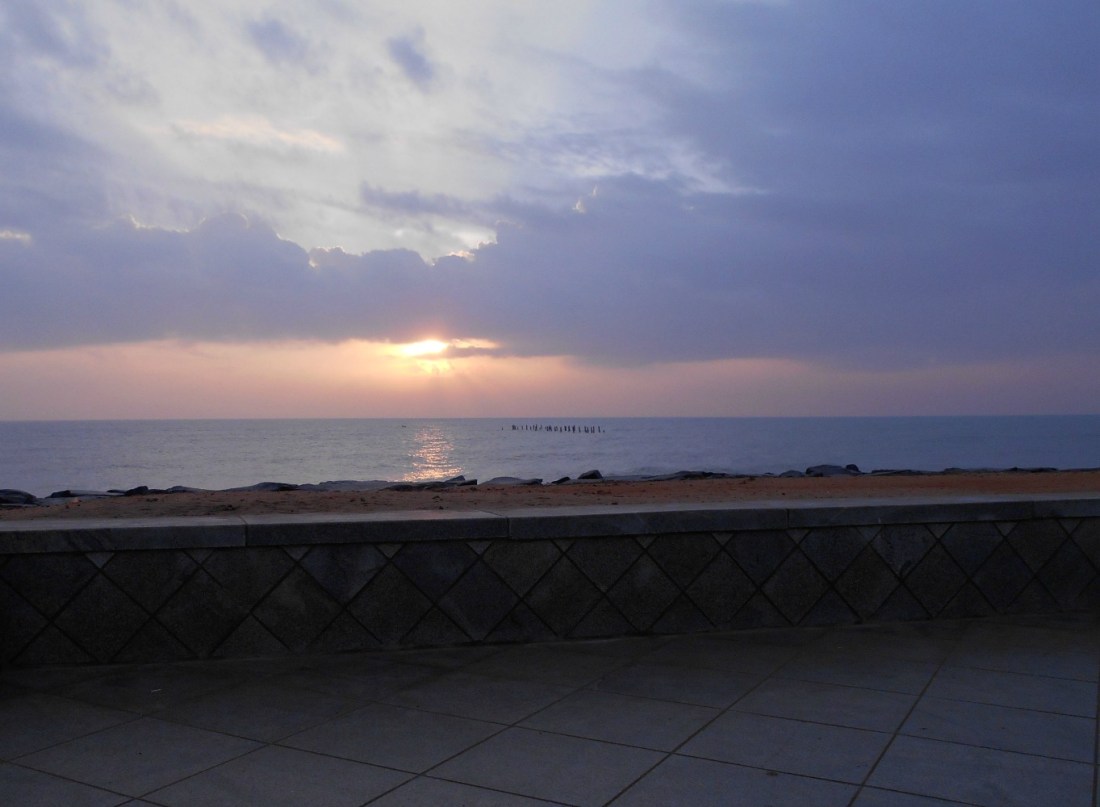
So I strolled down Beach Road. The government of Pondicherry bans all motor vehicles into the road from 5 pm to 7 am. It was the safest place for an over-enthusiastic nature lover and amateur photographer.

Sunrise at the Pondicherry beach

I stepped on to the road, and a chilly, salty breeze brushed my hair on to my face. I started walking and went right past the Gandhi statue. Because  a few more yards away was the only thing I cared for: The Le Cafe.

It’s the most beautiful and well-maintained 24-hour, governmnet-run cafe. The staff welcomed me with warm smiles, and smiled wider when I told them I was just looking for photos. They saved the bitterness for the coffee. (We went for the coffee afterward.)

le cafe

When I left the cafe, the sun had risen, but without heart. It was still half into the clouds when I pointed my camera at it, and it remained so for about an hour. I did too. And all the while, my hair danced in tune to the waves, and sea spray clouded my glasses.

Unlike the city I’m used to, there  were too many people out basking in the sunrise. They were tourists staying in hotels nearby. And they went about their routine of morning yoga, slow walking, some of them jogging, and even a few kids on a sprint.

Despite the crowd, it didn’t feel crowded at all. In fact, it didn’t even seem like an Indian city to me. Everything was so alien, so neat, and so peaceful. No one bothered about what the others were up to. No one gawked at each other, making judgements. For once, everyone minded their business.

It was one of my most productive mornings.

Monsoon Marvel

Where I live, July means monsoons. It’s the second-best part of the year, the first being airy June.

And this time of year, we’re always looking out for impromptu showers or disappointing thunder clouds. So we knew what to expect when we planned our trip to Thekkady. Plus, we had heard Kerala had had her monsoons earlier than the rest of India, and we were ready.

I left my not-so-new converse at home and wobbled on a pair of bathroom slippers that was too big for me, my brother rolled up his cargo pants, my father bought an extra umbrella, and my mother packed in more tissues than we would need to wipe a cereal-eating toddler.

We were all set.

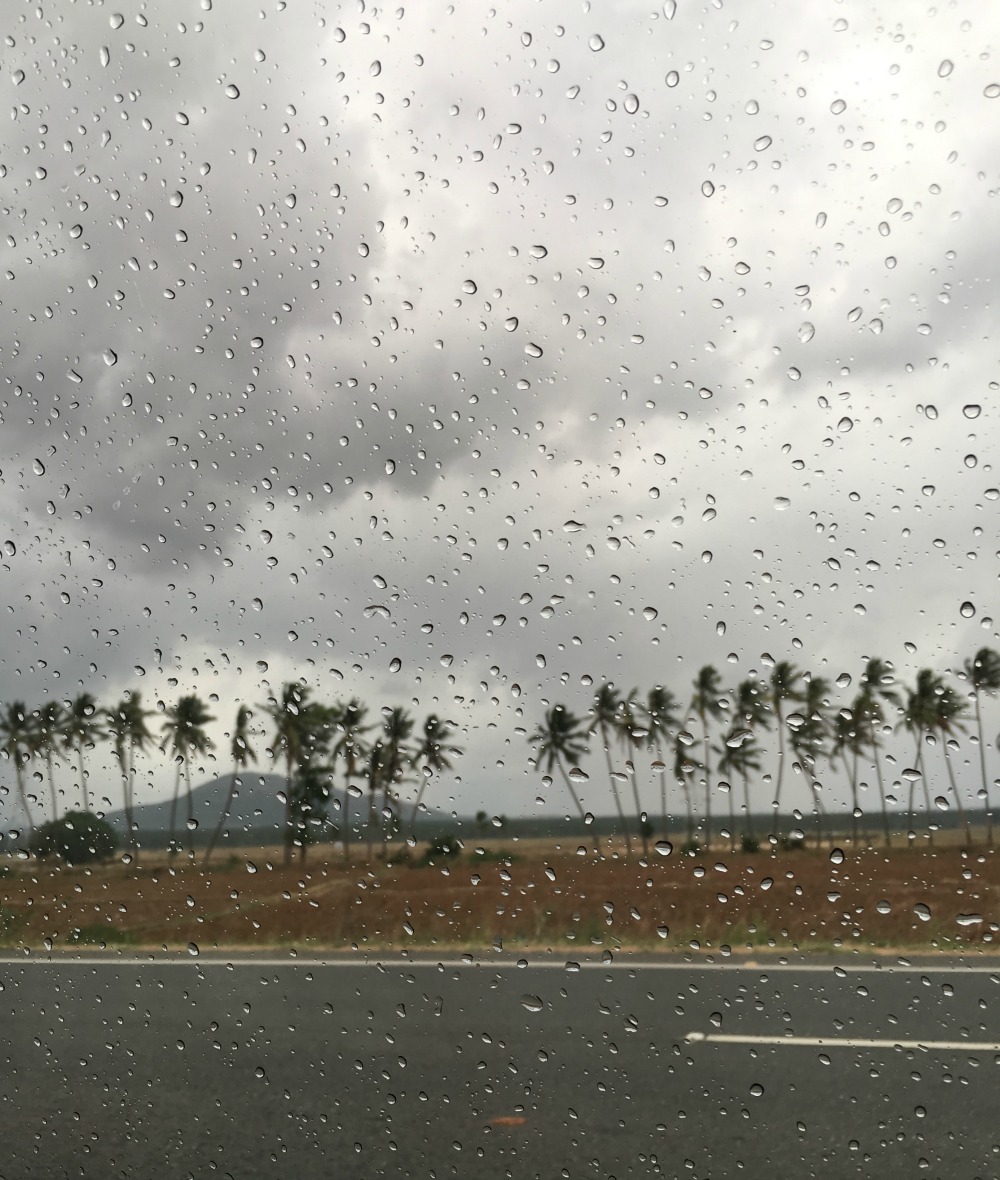
When we started from home, the temperature was far from comforting. However, after we had driven for about three hours, the climate became more welcoming. The heat disappeared, dark clouds circled over coconut trees swaying along the highway, and once or twice we even heard a faint rumble.

rainWe sped on and two more hours later, we slowed down into the town of Thekkady. It was past the typical lunch time, but we did find a restaurant.
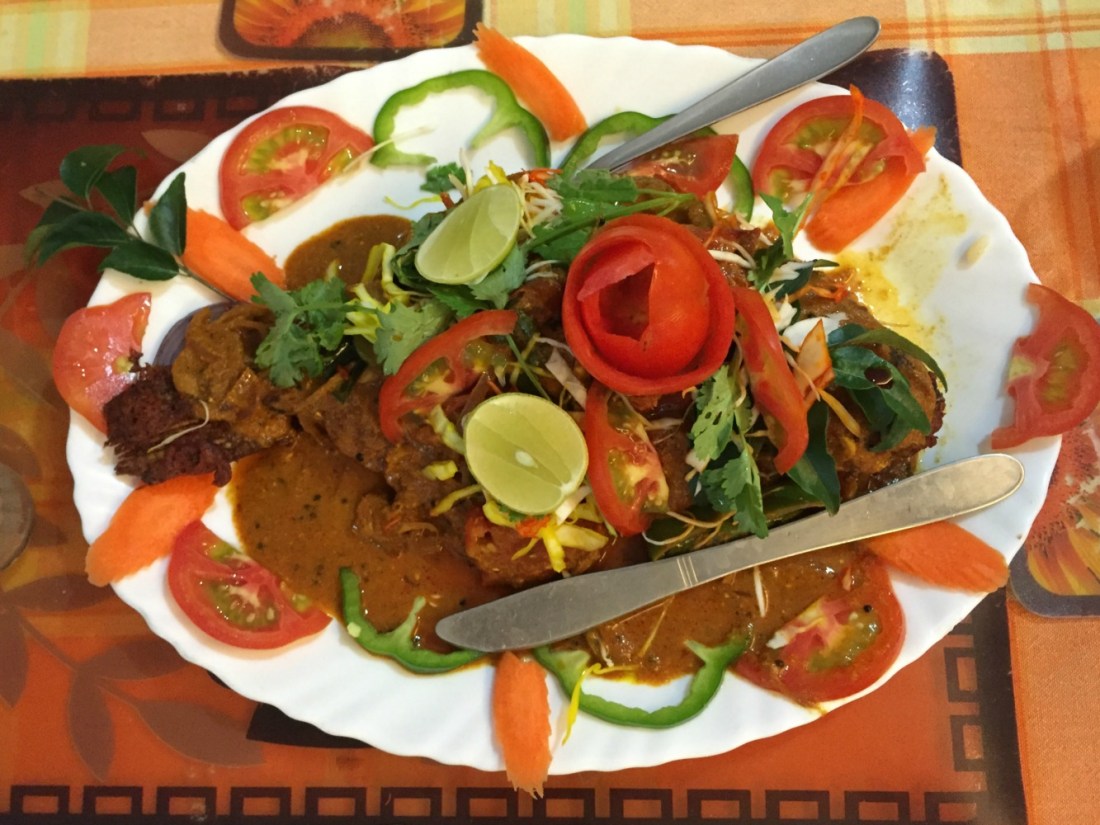
When we ordered our food, the weather was perfect; it was cloudy with a cold breeze playing across the greenery on the sidewalk.

By the time our fish arrived, decked with slices of onions and tomatoes, a dash of cilantro, and a whiff of lemon juice, it had started to rain. Steady drops fell straight and heavy. And all of a sudden, the sky had darkened, the breeze was gone, and the streets calm.

fish platterBut even as we ate, we glanced out through the glass windows only to see the rain receding. And about five minutes later, the sky had cleared, the clouds departed, and the sun made yet another brave attempt to shine. People pushed back the hoods of their jackets and some walked out from the small shops around.

When we left the restaurant, all that was left of the rain was the shiny gloss on the street.

And I understood the real meaning of monsoon in Kerala. It rains and it rains and it rains. And then, it stops—without a trace.

It rains when you want it, it rains when you don’t want it. And all you can do is sip spiced tea and enjoy the raindrops on roses.