I Fell in Love with Writing. Again.

I love my life. Because I write for a living, and writing is my passion. Sometimes I write good stuff, and sometimes crap I’m not proud of.
I fell in love with writing.jpg

Whatever I write though, I edit. People say crisp sentences are strong, and have a stronger impact in the reader. And that’s why I taught myself to “kill my darlings.”

And during one of my self-editing sessions, I fell in love with the language all over again. Because I learnt an important lesson: Longer sentences can be strong too.

I had this sentence.

Writing is one thing technology can’t conquer, because writing is human.

My internal editor went berserk, and we ended up with this.

Writing is human, and technology can never conquer it.

At first, both sentences made perfect sense to me. And then I read and re-read them aloud. And that’s when it hit me.

Everything about these statements was different.

Writing is one thing technology can’t conquer, because writing is human.

The sentence starts with “writing”. That says writing is important. And then it says why writing is important. Because it’s the ‘one thing technology can’t conquer.’

It’s ‘the one thing.’ That’s to say, writing is beyond all things technology can conquer. We acknowledge the power of technology, but declare writing is more powerful. And why is writing so powerful? Because, ‘writing is human’.

When you connect writing with being human, it’s clear that technology isn’t. It’s emphasising the obvious. But at the end, writing seems in the better light, because we can relate to it as human — that it’s the one thing unhuman technology will never conquer.

There’s emotion in this sentence. There’s human.

And then there’s this.

Writing is human, and technology can never conquer it.

The sentence, again, starts with writing. But, instead of a period there’s a comma — a pause as if we’re waiting for something important — and then comes the phrase, ‘and technology can never conquer it.’

I read this line, and realised: I had combined writing and human in one phrase, and added technology in the immediate next. It had deteriorated the power of writing which was evident in the previous version. The emphasis, now, had shifted to the word “technology.” But as a reader, I’d be reading out ‘technology can never conquer it,’ in just one breath — not a breath-taking line.

I had confined the most important part of the sentence to the first line, and made it sound bland. With the comma, I had brushed aside the human element in writing, and focussed on technology instead. And that had made the whole sentence more of an observation than an emotion.

Sometimes, we say things in an impulse, in an emotion. And sometimes, this spontaneity needs much editing before anyone sees it. But in some odd cases, we just over-edit. That’s what happened to me.

I wrote, I rewrote, I read, and re-read my words. And when I saw the difference, I felt a rushing love towards the English language. How can a language be so beautiful, and so complicated at the same time?
The Animal Kingdom

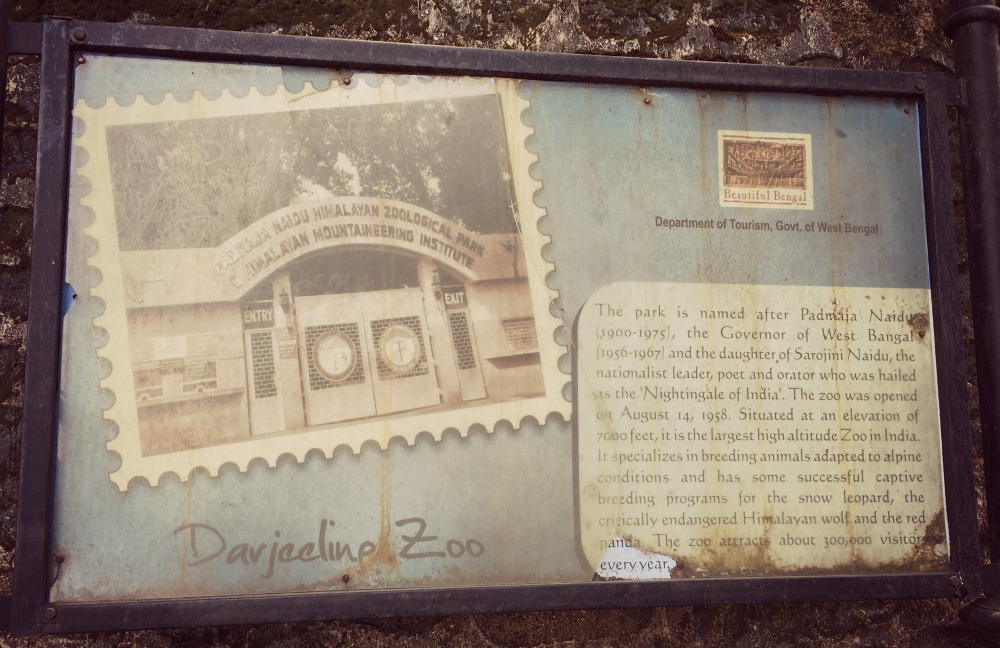
During my recent trip to Darjeeling, I had the chance to visit the Padmaja Naidu Himalayan Zoological Park. And within it, a museum.

zoo 1

The zoo was wonderful, of course. With so many different animals basking within their “open cages,” monkeys chattering with each other from their enclosures, and parakeets of hundreds of kinds chirping notes too varied to comprehend.

Th kids in our group enjoyed every inch of that vast expanse of animal reserve, but to me, it was just a bigger cage than the usual ones. And yes, photography enthusiasts had a field day with all kinds of experiments. From point and shoot, the lighting, the macros, and zoom ins, to the last resort, auto focus — because all experiments headed downhill.

I always prefer odd-shaped rocks over humans, and flowers over wilder animals. But most other tourists preferred to point their cameras and thoughts at the big blue sheep. Which isn’t a bad way to spend a vacation. The animals were mesmerising, of course. I had never known that so many animals existed among the lesser ones.

I tried my hand at it photography too. I should have looked like a weird lunatic to all those pointing their cameras in the opposite direction — at a majestic tigress.

zoo

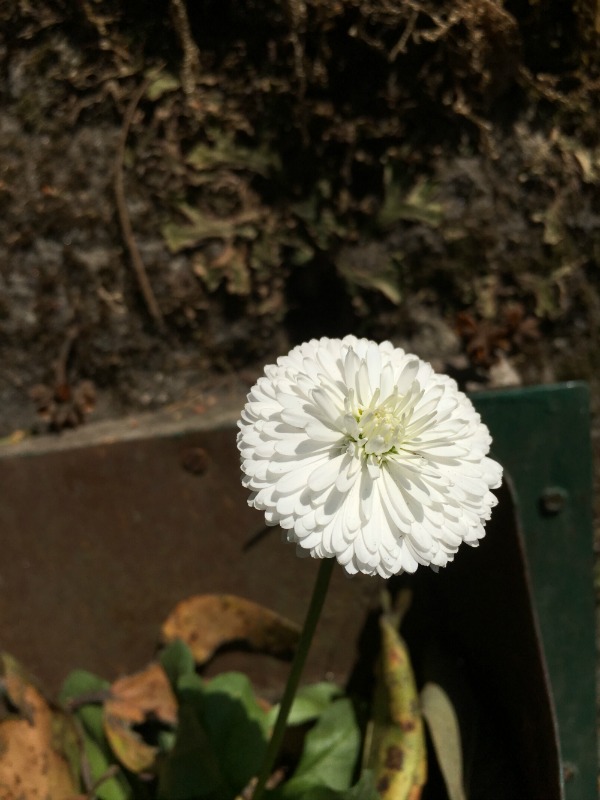
I was more keen on the little things that grew unknown, and uncared for. There’s so much beauty in crisp white petals striking through the dusty, brown leaves on the ground. So is the plump red fruit handing from what appeared to be a dying tree. The mysteries within those round and thin skins, the tiny, almost invisible, seeds, and the plush flesh of the fruit. Whatever is that fruit called? What if it just appeared irresistible, but would resist blood to your veins once you eat them? After all, poisonous berries do co-exist with the sweet ones. Not unlike us human folk.

One good thing about the park visit: It tempted my muse.

Advice for the Modern Age

hamlet

Body shaming is a thing now. Having experienced it a few times myself, I can say it’s not new. For a long time now, the world has been mocking those who don’t have pear-shaped bodies.

One man has the best advice for those who shame other people. He lived well ahead of his time, hinging on the period he was born into, yet thriving even four hundred years later.

And how does he give us a his piece of mind? He shames his lover for a start.

“If hairs be wires, then black hairs grow on her head.”

That was, of course, in a time when blond curls ruled the day and any woman with straight hair was un-ladylike. Things have changed since, I know. Nowadays, people pay fortunes just to get their curly hair straightened. Nevertheless, body shaming hasn’t changed at all.

And then there’s this image of rosy cheeks and powder puff.

When I face my mirror, I know I have no rosy cheeks. There’s no chubbiness that every man’s supposed to like, there’s no colour, or flush, or blush. When I see myself in the mirror, I only see what shamers told me: A dull face, and cheeks too thin to be beautiful.

Shakespeare said it too:

“But no such roses see I in her cheeks.”

But here’s the question. Why would anyone expect a woman to look more like the sun and less like a woman? Why would anyone want a woman who resembles a child’s doll, when she’s stronger than that in real life?

Again, Shakespeare has the answer. And his answer — four centuries old though it is — is unmatched even in this age.

“And yet, by heaven, I think my love as rare

As any she belied with false compare.”

To be or not to be a body shamer. That’s not the question anymore. No matter how much we compare a person, woman or man, to an image of perfection, it would be just that — an image. Pretty face and fair skinned, or spotted and dark skinned, there’s just a skull underneath.

Tea Talk

Sometimes, to understand some things, you have to be there. That’s how Darjeeling is. I had to be there to realize what the most talked-about tea was all about.

It’s just tea. But the mystic romanticism involved with Darjeeling tea is enough to make any dog out peep through the window.

That’s why I had to know what the ruckus was about. From my research, I learnt that locals add unsalted butter to their tea. Well, with plummeting temperatures, they need to be bulletproof of course.

We never got to try it though. It could be because we were just a fancy group of people walking around with flashy phones and discount DSLRs, pretending to be professionals. Typical tourists tend to put the locals off.

Nevertheless, there was tea. There’s always tea.

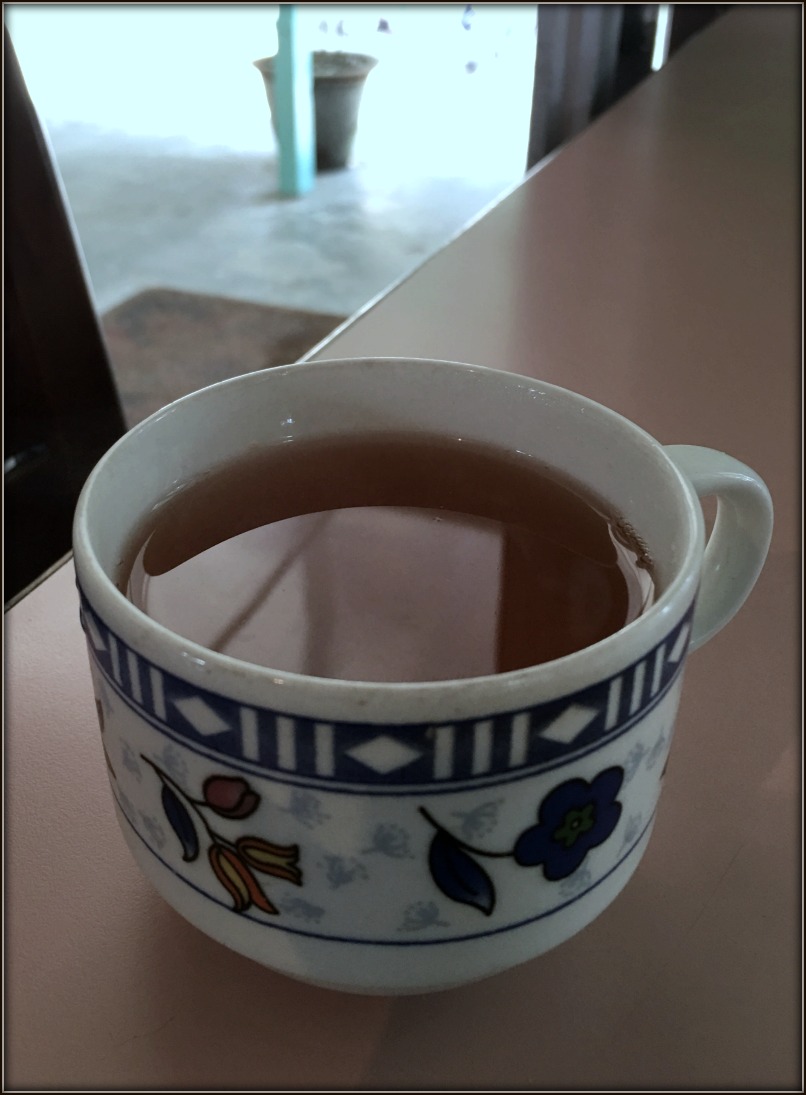
cups

But it was commercialised tea. Good, yes, but some shops denied justice to the perfect combination of milk and water. Because milk does’t suit Darjeeling. We shouldn’t have expected a perfect cup of tea with full cream milk and two spoons of sugar.

When in Darjeeling, you should drink tea without milk. As for the sugar, maybe a little. That’s the essence of tea in that hill.

I love tea in all forms. I adore the strong smell wafting through my nostrils, invigorating the brain all the way to the last bone. And the earthy flavour that lingers in my throat, even hours afterward.

Milk just ruins the whole experience. At least in Darjeeling.

As an avid tea-fanatic, I can vouch that colour is most important while drinking tea. And if you like your milk strong, you can’t have your tea as strong. Darjeeling is famous for leaf-based tea, and not the dust that’s common throughout the rest of India. That’s what makes Darjeeling tea unique: It’s all leaf and no powder. And that’s why it needs to brew, not cook.

Tea making is an art. Making Darjeeling tea is another one altogether. It’s a process: You put the pot to boil, and wait for the bubbles to pop up, threatening to evaporate all your water. You switch off the stove, and let it sit for a few seconds while you measure out a few leaves. Sniff in the scent of fresh toxic before throwing them into the pot and closing the lid.

And then you wait.

For a minute or two. For the leaves to seep through the heat, to distil the purest of flavours, and transform plain water into a royal drink. Then strain and enjoy. It’s worth the whole 2 minutes you’d have spent standing by the pot.

tea

But making Darjeeling tea isn’t as easy as four steps. Let it seep for an extra few minutes, and you’d end up with some bitter tea that’ll make you feel like a dethroned royal.

Despite that, I bought back five packets of Darjeeling tea. I know, some days would be bad tea days. But every day, I’d be royal.

If We Were Having Coffee…

If we were having coffee…
I’d tell you how much I love coffee
though it keeps me up at night
when I just want to sleep

If we were having coffee…
I’d tell you how much I tried to quit
that I almost succeeded,
but always lost the will.

If we were having coffee…
I’d tell you it’s not an addiction
that it’s good for your health,
promotes metabolism and weight loss

If we were having coffee…
I’d tell you I drink to stay in shape
but more so to stay sane.
Also to you, and your health.

If we were having coffee…
I’d tell you I can quit anytime
Can, though I’d rather not.
And smile at your raised eyebrows.

If we were having coffee…
I’d tell you how much I love coffee
And warn you to “drink up,”
Or pass the cup.