Beauty in yellow

She cruised along the highway, a yellow streak shining through the chilly wintry mist. As I waited at the curb for a cab, she soared, teasing my emotions. A mild breeze swept up in her wake, caressing my cheek as I gaped after her. I watched transfixed as she turned, and past me in one swift motion. I yearned to face her. I pined for her to halt so I could examine her. I craved to stroke her hood, to run my fingers along her curves, to sing her elegance.

Speeding up, the yellow beetle vanished out of sight. Pity.

The director

“Why can’t you ever get my words right?”

Jonathon’s director, Mark, was yelled again. Jonathon had wanted to write his own dialogues — he always does, and directors often appreciate it. Mark, however, didn’t.

Mark was a good director but a terrible writer. Although he’d written an impeccable screenplay, he’d fluffed the dialogues. As Jonathon read his script, he felt repeating himself senseless. Mark was adamant.

By show day, Jonathon had decided he’d never work with Mark again. When curtains rose, he just did his job. He cut the fluff out, and performed what became the best play of Mark’s career.

Of Murder in Non-Fiction

There are two types of readers of murder: one who read fiction and non-fiction and know what they’re reading. The other is those who read non-fiction and complain it’s not as good as fiction.

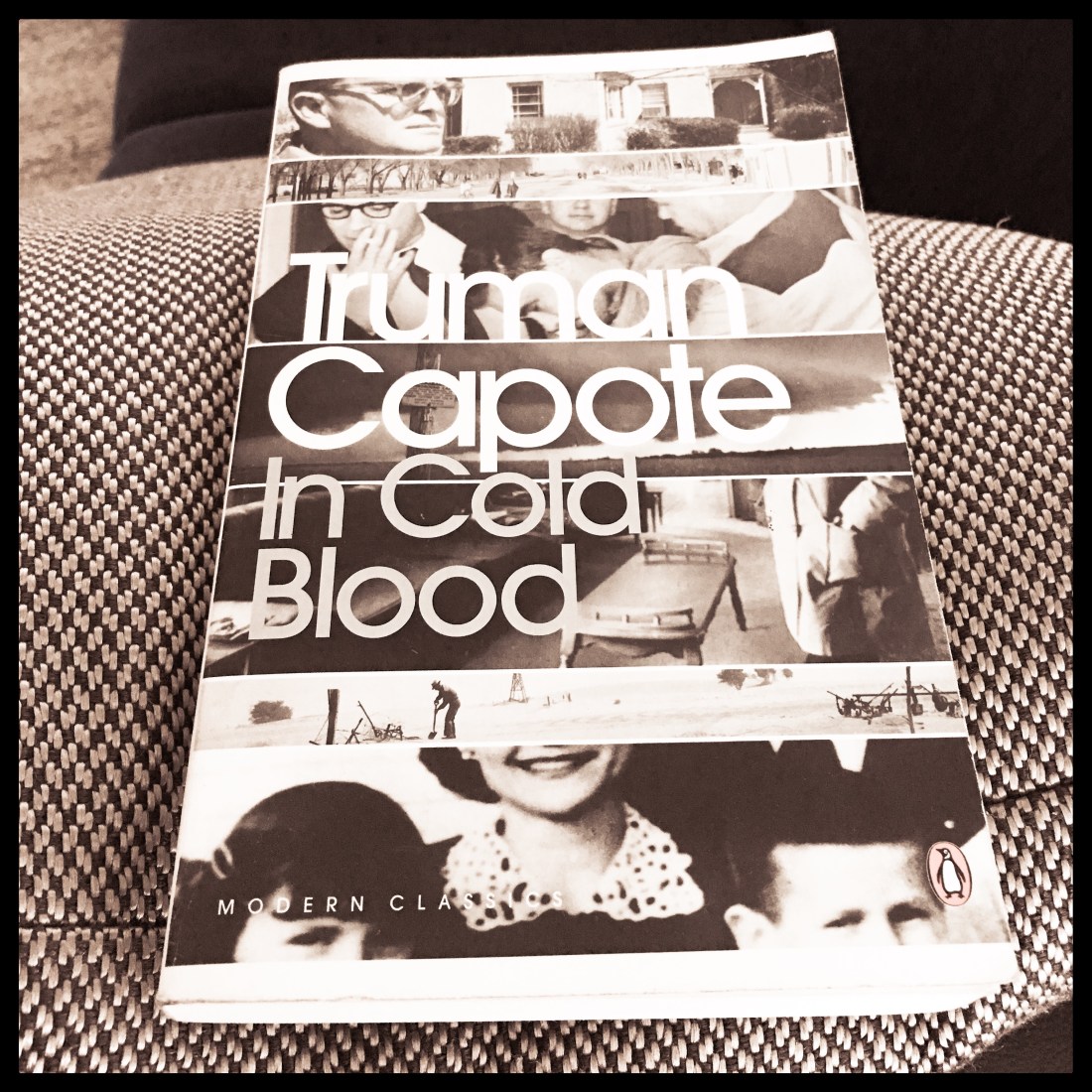
I don’t care about the latter, but I don’t see how they don’t see the difference between the two genres. For instance, In Cold Blood by Truman Capote is non-fiction, and it doesn’t read like fiction. For the adrenaline junkie, it’s no page-turner. For readers who expect an Agatha-Christie like unravelling, non-fiction murders are a bore.

In Cold Blood by Truman Capote

Just a few weeks ago, a close friend recommended In Cold Blood to me. She enjoyed it said I too would. Well, since she knows me and my preferences, I decided to heed her suggestion. However, when I asked around to borrow the book, one voracious reader told me not to waste my time over In Cold Blood. It’s a slow and dull read, she offered.

I was surprised to hear such conflicting views from two well-read people. I read the book nevertheless. That’s when I realised the true difference between murder-fiction and murder-non-fiction.

For one, the intended audience in non-fiction is not the same as in fiction. While almost any reader can appreciate the thrill of chasing an evasive fictitious serial killer, not everyone can understand the subtleties of outlining an actual murderer’s mind. Truman Capote, in the book, isn’t addressing the impatient ones who want to finish the book and lable it “Read” on Goodreads. He, instead, addresses those curious to know the way the mind works. The author speaks of Dick and Perry’s childhood, of Perry’s troubled family and abusive upbringing, of his dreaming of a giant bird, and of his attitude towards his partner in crime. None of these details matter in fiction because no one would care. In non-fiction, however, knowing Perry’s reluctance to swimming because he’s embarrassed by the way his legs appear, makes him relatable—it makes him human. And that’s the kind of depth that no fiction goes into. For someone looking for short bursts of exciting crime, a non-fiction like In Cold Blood is just plain boring.

This is my first non-fiction murder novel. And so it struck me how different the author’s tone is than in fiction. Capote doesn’t try to lure the reader with mysterious adjectives and goosebumps-inducing alleyways. Instead, he sticks to the facts—the cold facts that chill the bone one page at a time. For instance, there’s no element of surprise in In Cold Blood. I had gone less than fifty pages into the book, and I knew the killers, their appearance, and their uncanny ability to smile as they killed—so to speak. That’s how non-fiction works; the author has little to nothing to fold in a heart-stopping moment into the plot. The whole world knew the victims, the killers, and the history of the investigation—even before Capote began writing the book. It’s no surprise that there’s no surprise in the story. Nevertheless, the book reads like a true work of art. The crime was slick, chilling, and brutal. And Capote does nothing to make it sound any less.

Come to think of it, when reading a non-fiction murder story like In Cold Blood, a reader shouldn’t expect anything. The purpose of non-fiction is in itself different from fiction. While fiction has a perfect beginning, a crescendo, a plot twist, and the climax, non-fiction serves a larger purpose: understanding. Non-fiction readers don’t look for the climax, because the book opens with it. Instead, they look to look into the lives of the murderers, the routines of the victims, what they ate the day they were killed, who Nancy helped bake a cake, which part she played in the school play, how much she loved riding the horse with her friend. The non-fiction reader looks for life in murder. They find reality in hostility, and they seek to read the killers’ intentions. Because non-fiction murder isn’t just revenge, it’s the result of an entire lifetime of bottled emotions—boiling down to a moment of unsteadiness. And that’s what a reader hopes to discover.

It’s not just the reader, though. Even the author of non-fiction murder has a purpose that varies from fiction. Writing about murders takes more than time and patience. It’s takes more than writing itself. Capote would’ve spent a lot of time researching the facts, but he also would’ve spent years trying to uncover the mystery of human psychology. I can imagine how it must be for a writer to flip through gruesome photos and statistics. The purpose, again, isn’t to write the most spine-tingling novel. It’s more than that—it’s to bring to life, and show the world, the soul of a human who happened to take a wrong path.

I enjoyed every bit of In Cold Blood. If you haven’t read it already, you should. Be warned, though: if you’re the fiction lover who is reluctant to spend time (even as long as a month) on a single book, then don’t bother. But this is one wonderful book. Capote’s sharp writing would drive through your chest, and you’ll yearn to know more about the men—who could well be your neighbours—who also murdered a family in cold blood.

Studying Gone Amiss

“You need not answer all the questions! You can just laugh and laugh again.”

David read and read the sentence. When he walked in for the prestigious examination, he hadn’t expected such adverse directions. What do they mean he could laugh and laugh again? Was this some kind of sick game they’re playing on the candidates? His brother had warned him that the exam would hurl unexpectedness at his face, but this was more than what David had expected, even for unexpectedness.

He flipped the page to the first question. It was about fitting quadrangles into triangles. He knew that one, and so he wrote the answer. He moved on to the next: circles and cylinders. Easy. Next: a fraction of Fraction. Next: decoding BODMAS. Next: passive and active voice. Ok, thought David. Weird, but easy. Next: Calculating calculus. Equating differentials. Pi value. And the case of the missing pies.

David closed the question booklet and stared at the board in front of him. What the hell was this? How could such a question paper determine the next generation’s Discipliners?

His brother had written the same test four years ago and was now a qualified Discipliner. He was David’s inspiration. And yet, even his brother had had hard times grasping his job.

His brother’s words rang in his ears: “I am confused at times. Should I sound? Should I echo?” The boss would scream swear words, and he had to react by either repeating or protesting. Being impassive led to the gallows while a wrong reaction resulted in a beating. He told David that he could never understand what he had to do.

Every morning, he’d dress up ready for battle. Some days the Coaches made him rub the floor, and some days they’d hunt aliens. It was a weird job, his brother had said. But it’s worth it; it made their parents proud and the girls all loved a Discipliner.

David was still looking at the empty blackboard facing him. He didn’t know what to do, or how to go on. All of a sudden, a supervisor stood in front of him, blocking out the blackboard. “You done?” He crouched down at David, peering above the horn-rimmed magnifying glasses on his nose.

“I’m just thinking,” David managed a menial reply.

At this, the supervisor threw his head back and laughed long and hard. “Thoughts!” he rumbled so that the whole classroom could hear “— they do what we don’t ask for!” He laughed again, turned around, and swept away to torment a candidate in the next row. David watched as his long robes billowed about his heels.

David looked down at the footer of the question paper: Inter- Intra- Galactic Discipliners — Preliminary Examination. He had thought this would be a tough exam. He had thought the test would test him against aliens, ask about their weaknesses, their strengths, and combat strategies. And instead, the questions were about his high school subjects.

At times, we pretend to think on one and actually think everything else! The voice in his head pointed out like a wise sage. You lied to your parents about studying for your semester exams and binged in Men in Black instead. You pretended to study math but digressed.

David looked down at the footer of the question paper: Mathematic Principles. And then it hit him.

“I knew it!” He whispered to himself, clenching his fists under the table and kicking himself in his mind. “I knew that I didn’t know math!”

And that’s why you should’ve studied, the voice in his head supplied.


incredible-blogger-marathon-challenge-5I’ve signed up for the Incredible Blogger Marathon Challenge. It’s a ten-task-challenge that can span up to fifteen days. This post is my response to the fifth challenge: Not So Quite Quote. The challenge is to write a story including the following quotes:

Quote 1: I am confused at times. Should I sound? Should I echo?

Quote 2: You need not answer all the questions! You can just laugh and laugh again.

Quote 3: Thoughts – they do what we don’t ask for!

Quote 4: I knew it! That I don’t know!

Quote 5: At times, we pretend to think on one and actually think everything else!