Where I live, July means monsoons. It’s the second-best part of the year, the first being airy June.
And this time of year, we’re always looking out for impromptu showers or disappointing thunder clouds. So we knew what to expect when we planned our trip to Thekkady. Plus, we had heard Kerala had had her monsoons earlier than the rest of India, and we were ready.
I left my not-so-new converse at home and wobbled on a pair of bathroom slippers that was too big for me, my brother rolled up his cargo pants, my father bought an extra umbrella, and my mother packed in more tissues than we would need to wipe a cereal-eating toddler.
We were all set.
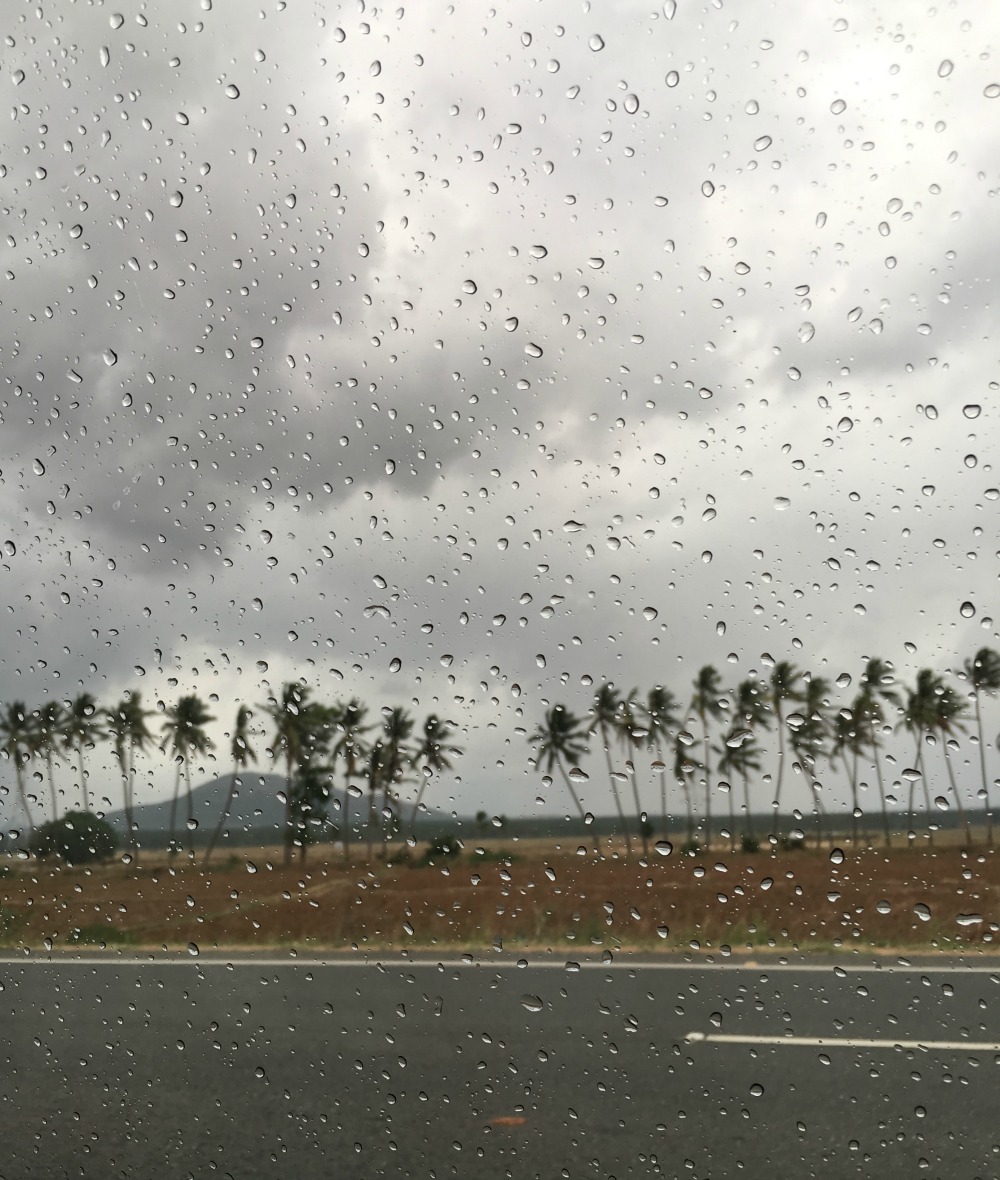
When we started from home, the temperature was far from comforting. However, after we had driven for about three hours, the climate became more welcoming. The heat disappeared, dark clouds circled over coconut trees swaying along the highway, and once or twice we even heard a faint rumble.
We sped on and two more hours later, we slowed down into the town of Thekkady. It was past the typical lunch time, but we did find a restaurant.
When we ordered our food, the weather was perfect; it was cloudy with a cold breeze playing across the greenery on the sidewalk.
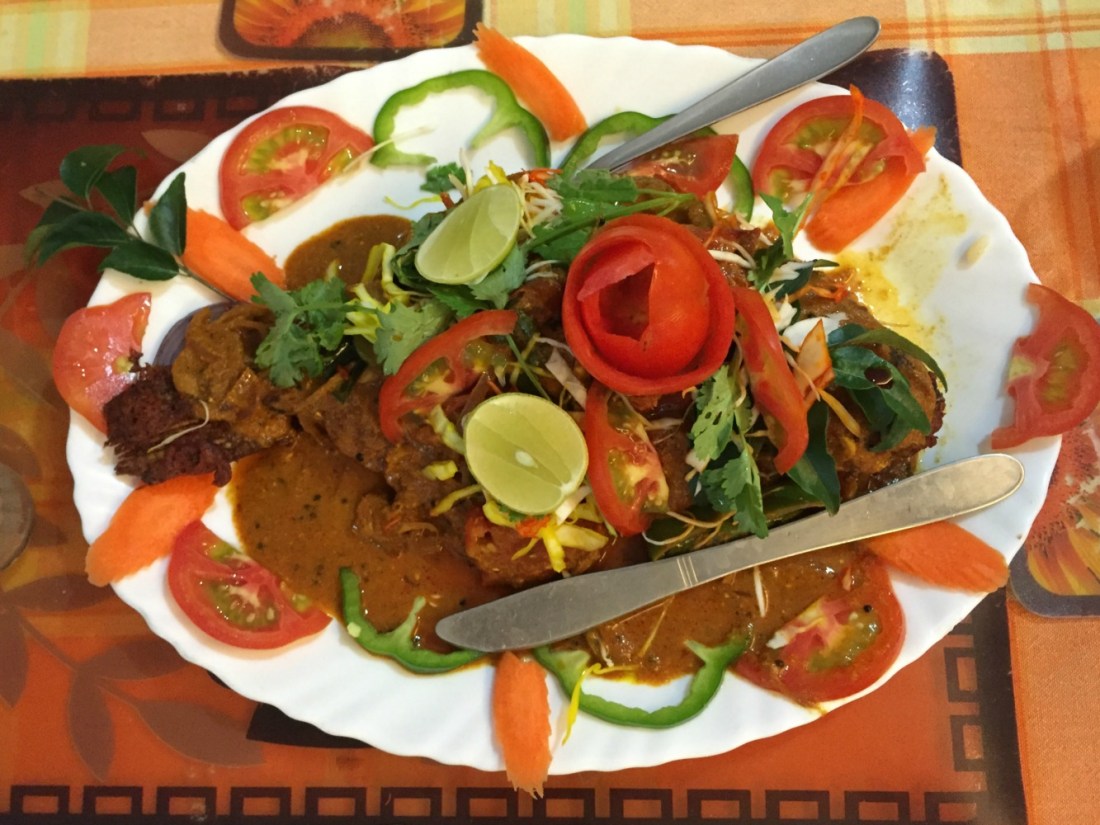
By the time our fish arrived, decked with slices of onions and tomatoes, a dash of cilantro, and a whiff of lemon juice, it had started to rain. Steady drops fell straight and heavy. And all of a sudden, the sky had darkened, the breeze was gone, and the streets calm.
But even as we ate, we glanced out through the glass windows only to see the rain receding. And about five minutes later, the sky had cleared, the clouds departed, and the sun made yet another brave attempt to shine. People pushed back the hoods of their jackets and some walked out from the small shops around.
When we left the restaurant, all that was left of the rain was the shiny gloss on the street.
And I understood the real meaning of monsoon in Kerala. It rains and it rains and it rains. And then, it stops—without a trace.
It rains when you want it, it rains when you don’t want it. And all you can do is sip spiced tea and enjoy the raindrops on roses.
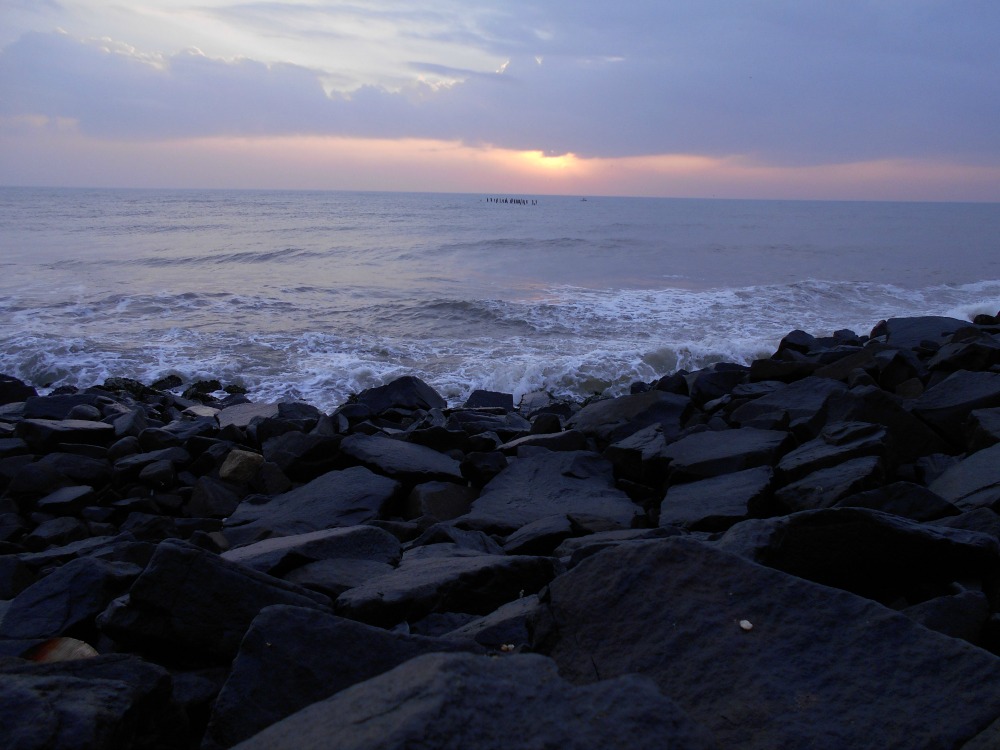
There’s nothing quite like it: Standing on the sandy shores, sipping warm comfort, and staring at foamy waters crashing into rocks.
And that’s how I remember the city of Pondicherry. With her manicured streets, fresh-brewed coffee, and a view that demands attention, the city it still one of my all time favourites.
The beach played a major role, of course, but so did the no-vehicles policy. Every evening, the police ensure that no vehicles enter the beach road. That time’s for the tourists to walk along the beach, get a cup of cocoa, or a bite of corn, and retreat to a fancy restaurant for dinner.
The entire area is built and managed in favour of the visitors. No wonder people love it there. Plus, it helps a lot that Pondicherry is a French colony. The street we stayed in — the Beach road — and a neighbouring streets were all so well furnished.
I stood in the street looking up at the looming concrete. They were unlike any other building I had seen, and it was obvious the government wants to please their tourists.
The infamous Aurobindo ashram is a huge attraction as well. So many Europeans have made the ashram their life, and the city their home. Even the shopping sites in the city seem to favour the their tastes. Wool, cotton, linen, and hand-loomed — it was such a pretty display of material and colours.
Oh, and the food. Since it’s a coastal city, there’s no short of fish, and all things sea food. And, the city’s a bit relaxed in alcohol rules. With the best of both worlds, most restaurants serve alcoholic drinks throughout the day — something the south of India never approves.
Pondicherry welcomes modernity in moderation. From where I come, however, people frown even at the idea of drinking in social conditions. It’s sad that folks sometimes look at the city as a bachelor’s haven, a place of mischief and misconduct.
But when I bit into those fish fingers, the sauce tingling my tongue and the steam seeping through my teeth, I stopped caring about what the world says. Pondicherry is a great place. And I’ll never pass an opportunity to go again.
There comes a time
when you should choose
it may be new, may be raw
you may not like it
oh, but what if you do?
take the plunge
and make a choice
it might look weird,
awkward, and greasy
but who’s to say its not pretty
and a perfect circle?
Beware though: It’s unknown
it could make you regret
and reach for a cigarette
Or just become your favourite.
Either way — choose something
I’m hungry.
No, not the Himalayas. I just wanted to see how it looked in print. I do sound more holy.
Anyway, when I returned from my trip to Sikkim and West Bengal, the weather was only the second thing people asked me about.
“How was the food?” That was the first question. And I had to take a moment to think. In all those five days, I had never thought much about the food. And then I realised, we didn’t eat much at all.
We travelled instead.
We had breakfast and dinner at the hotels we stayed at. But lunch was often a no-affair.
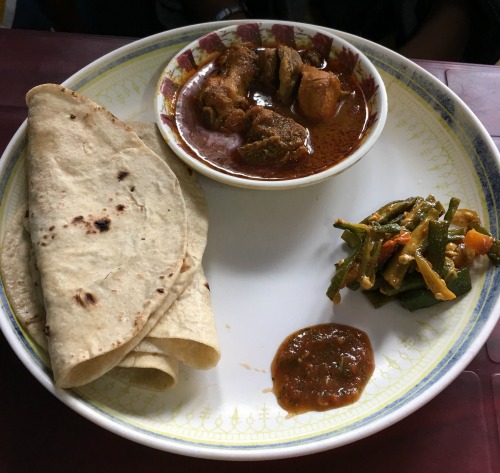
But from what I saw, West Bengal was abundant in chapatis and naans. They are both flatbreads made from whole wheat flour and self-raising flour. As for the sides, all I could see (and care for) was chicken. It’s the most popular dish that warms you up from within. Apart from that, we saw plenty of lentils. Known as dhal, the protein-rich yellow goodness is always a feast — for the eyes as well.
Chapatis with dhal and chicken.
We stayed two nights each in Gangtok and Darjeeling, and both hotels served the normal stuff we eat at home. Though I have to give a special mention to bread, butter, and jam. Oh, and cereal. That was a part of our breakfast on all of the four days we spent there. It’s yet another one of those things that the westerners left us, that we couldn’t outgrow.
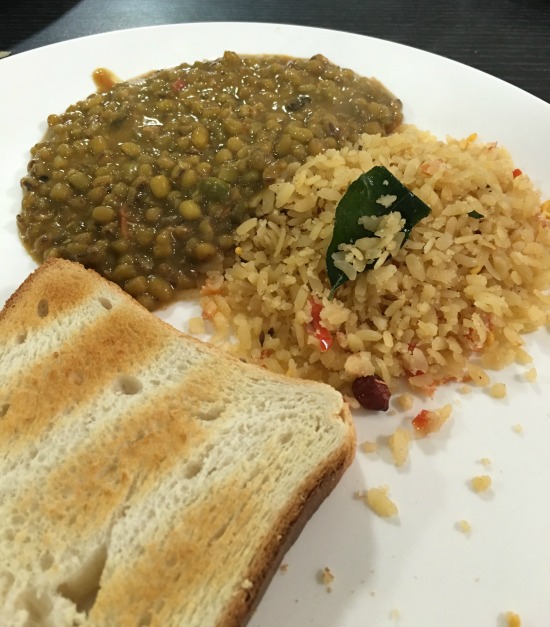
But they also served something to remind us of home. At least until we put it in our mouths. The green gram gravy. One of my favourites. The creamy green grams, mixed with sharp garlic, translucent onions, and indivisible spice — I was all ready devour when my friend exclaimed, “It’s sweet!”
In one heart-stopping moment, the balloon within me deflated. People there add sugar to some of their gravies, and I was unaware.
Bread with green gram gravy. And poha.
And then there was poha. Another familiar item. It’s dried and flattened rice grains, which is soaked in water, drained, and cooked in oil with onions, chilies, curry leaves, and a few spices. It wasn’t sugary, and that was a relief.
A local favourite, I hear, is the ladies finger, also called okra. Locals call it bhindi, and fry it with onions, tomatoes, and spice to make a semi gravy. Bhindi masala, they call the dish.
Chapatis with chicken, bhindi masala, and hot chutney.
And then (trust me I’ve been dying to write about this ever since I started this post), momos.
I have a friend, who’s from Tibet. Who introduced me to momos in the best possible way: She made beef and chicken momos for all our friends. It was the first time I tried the traditional Nepali dumpling.
So when I heard we’d be going to Darjeeling (which is not far from the Tibet and Nepal border areas) I could only think of momos, and my friend. I pledged to myself I’d eat nothing but momos.
But you know how pledges go, I had to settle for sweet buffets instead.
Nevertheless, I tried momos thrice during the trip. The first in a small place called the “Cafe 14 Thousand.” Why the name, I have no idea. We had to climb about 300 meters of a snow-capped hill in Nathu La pass. And this “cafe” sits halfway through the climb. It was more of a shack, and since we were a few of the early climbers, it had plenty of breathing space. They served coffee and momos.
When I saw the little dumplings stuffed in a glass bottle, for an instant, I became the monster staring at the cookie jar. And I’m not ashamed. We bought one plate, which had about seven to ten momos. I took one look at them, and another of my inner balloons deflated. They were so tiny, with far less stuffing than what’s acceptable. My momo-friend would have disapproved — I did.
I had forgotten on important thing: Though momos were a local favourite, Nathu La pass was a tourist destination. Over one thousand vehicles cross the pass every day, including Sundays. Everything there is commercial. My fried made momos because she wanted to show us why she loved them so much. These sellers make momos because it’s their business.
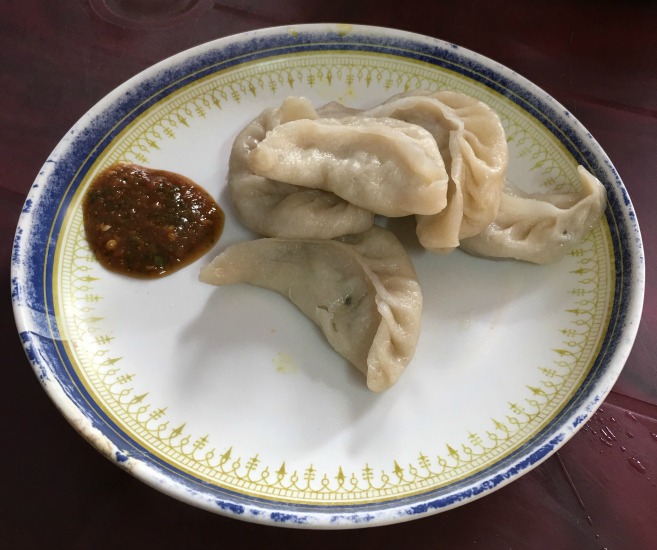
But the chutney, or the sauce, was superb. It was spicy enough to de-numb my teeth and send some electric heat to by fogged brain.
I did another momo-tasting in a small restaurant in Darjeeling. These momos were bigger than the ones in Cafe 14 Thousand. As for the chutney, it was again a spice-fest, so nothing to complain.
Momos with hot chutney.
So about the food in Darjeeling, you get familiar food, in unfamiliar flavours. But it sure is worth a try. After all, what’s life without some variety?
As for the most important thing in all of Darjeeling — the tea — I’ll have to write a separate blog post.

 We sped on and two more hours later, we slowed down into the town of Thekkady. It was past the typical lunch time, but we did find a restaurant.
 But even as we ate, we glanced out through the glass windows only to see the rain receding. And about five minutes later, the sky had cleared, the clouds departed, and the sun made yet another brave attempt to shine. People pushed back the hoods of their jackets and some walked out from the small shops around.
 The entire area is built and managed in favour of the visitors. No wonder people love it there. Plus, it helps a lot that Pondicherry is a French colony. The street we stayed in — the Beach road — and a neighbouring streets were all so well furnished.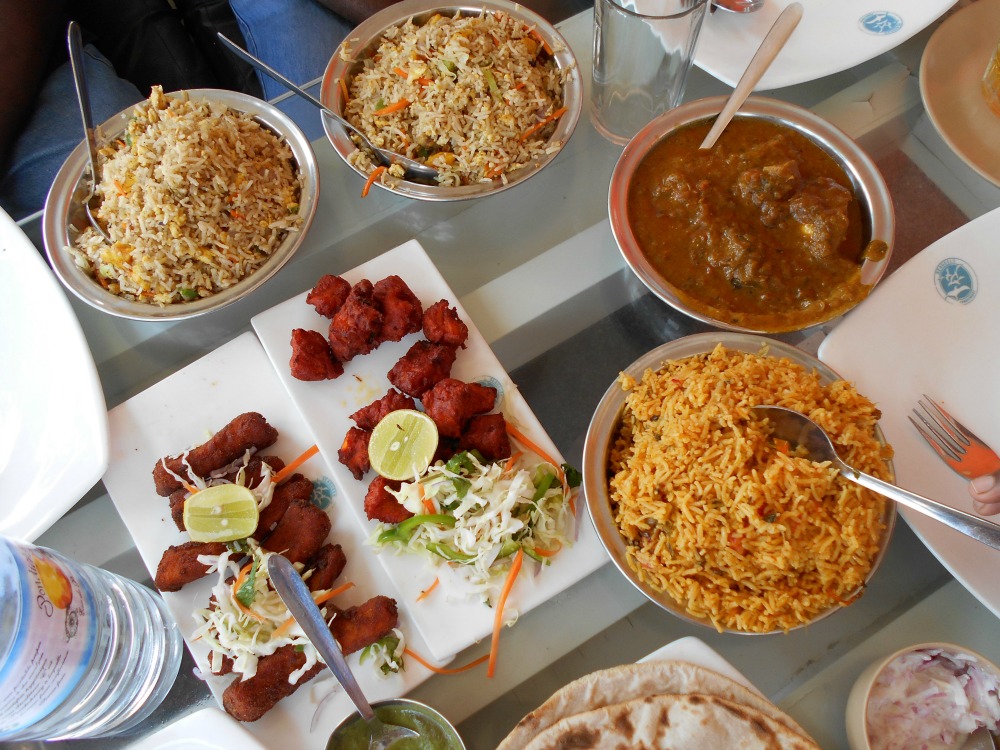


 The Chaos Within