National Multicultural Festival

Volunteering is the best way to experience a new society, right?

So when the Multicultural Festival came around, I signed up as a general volunteerโ€”you know, the ones wearing a red festival t-shirt and a hat, and a lanyard too large for their bodyโ€”wandering around the perimeter smiling at those gorging on meat on a stick, sipping their beer before stepping away so that it doesn’t spill over before they reach their friends. 

The festival started at 4 pm last Friday, with cultural performances and food stalls all the way through 11 pm. When I showed up at 4, a half hour earlier than the start of my shift, the place thronged with a hum of excitement. The sun sprawled on us as volunteers scattered throughout the city circle, taking their positions, armed with brochures, information packs, while the area wardens double-checked their walkie talkies, strapped on and ready to go.
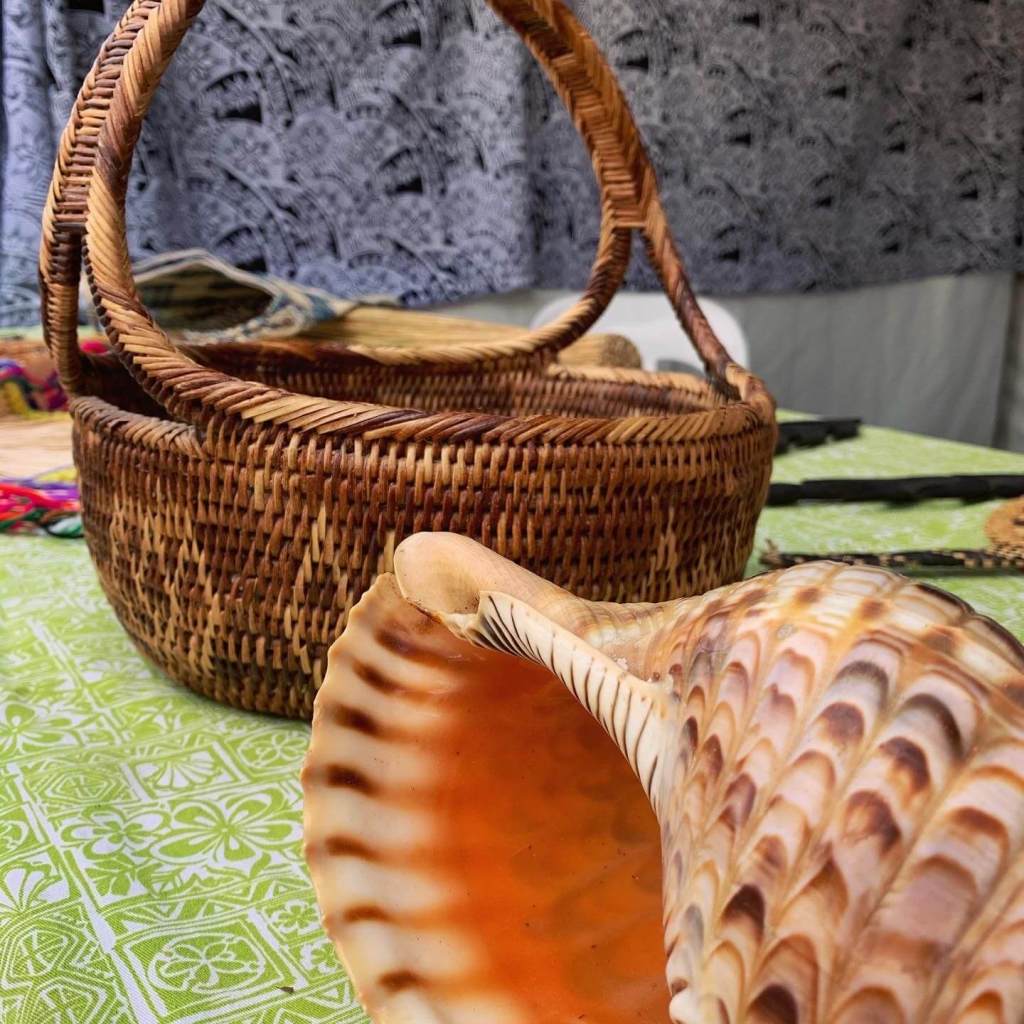
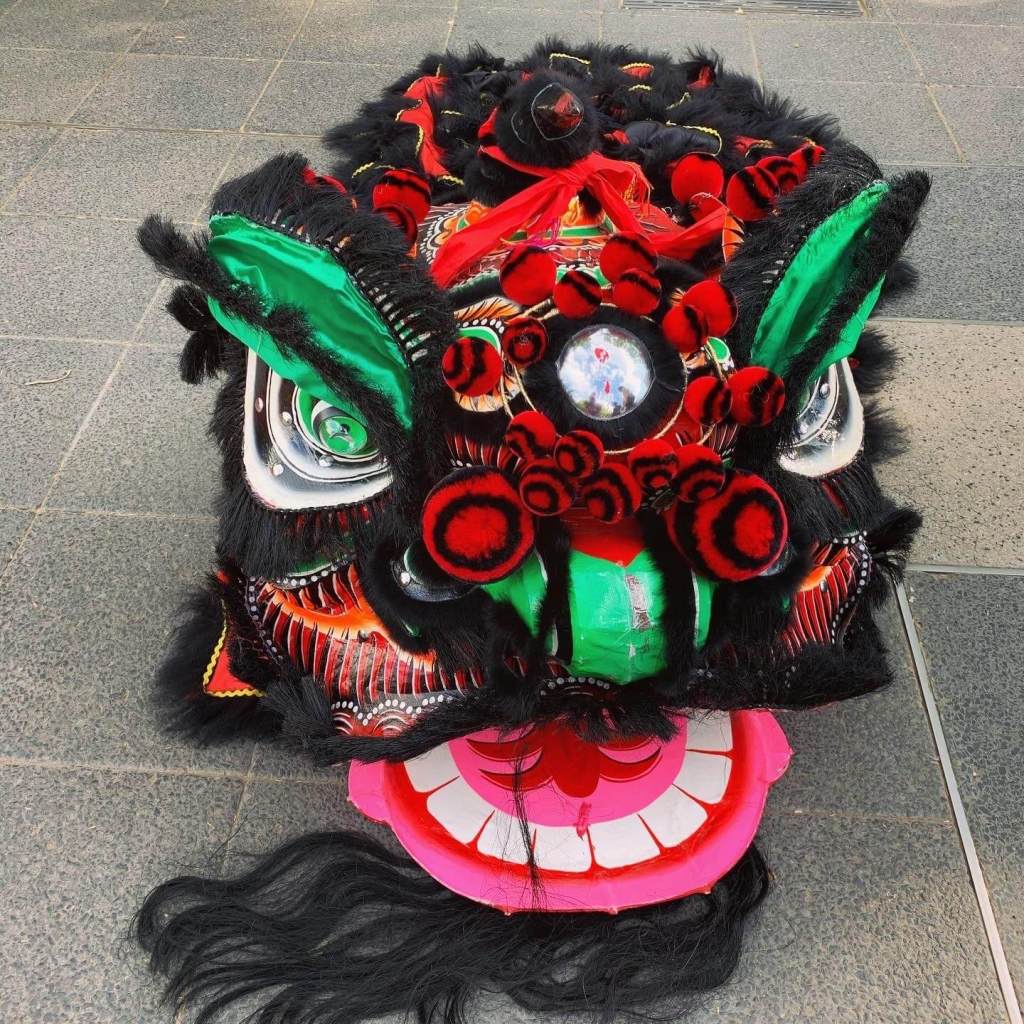
The moment I stepped out into the festival ground, I regretted not carrying my water bottle. The festival organisers had done a tremendous job of setting up water filling stations every few metres, but without my bottle, I didn’t stand a chance. When at last I gave up my ego and picked up a plastic water bottle, drained and desperate, I promised never to do that again. 

It didn’t take me too long to study the festival map. Six stages with three or four tents that accommodated smaller performances, spread across five major streets in the city centre. I’d walked around that part of city enough of times to know what lay where, and after two complete rounds, Iโ€™d memorised the locations of each stage.

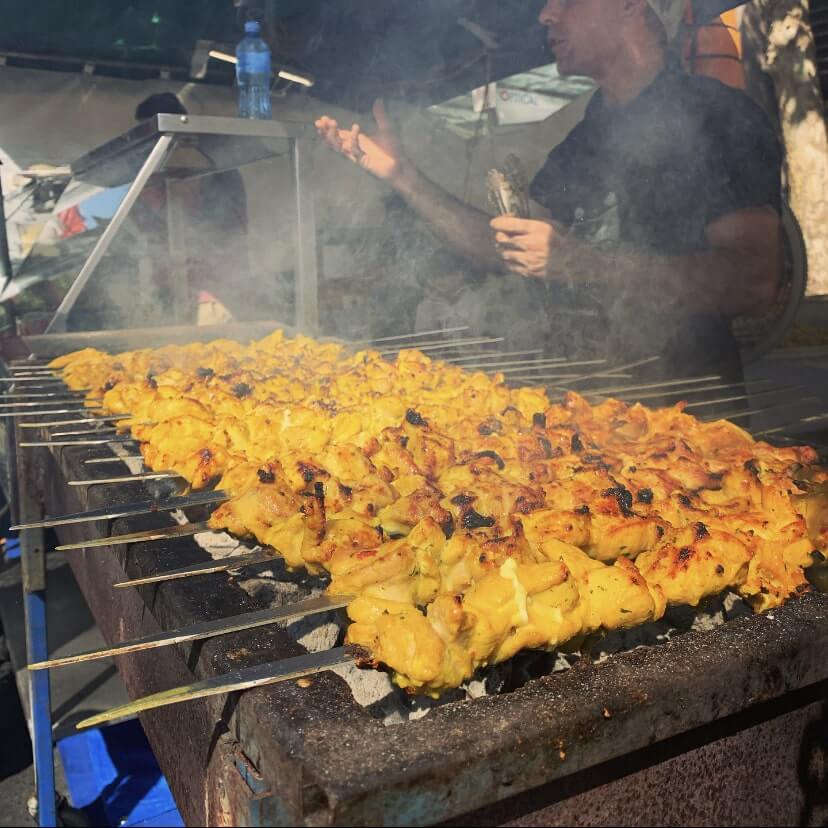
Equipped with so much information, I began wandering. For that was my role as a general volunteer. I was to walk around with a welcoming smile, answering questions, and helping out anyone in distress. It had all seemed easy and fun on paper. And yet as I walked around I felt myself suffocating under the smoke of charred meat, barbecue and grilled citrus waffling throughout the streets, mingled with the joyous cries of lolly-sucking kids and the satisfied lip-smacking of bratwurst-wolfing adults.

On my right, noodles were sizzling, fried with eggs and chicken. From the left came yells advertising crepesโ€”savoury and sweetโ€”French, with gluten-free and vegan options. Baos, or steamed buns, werenโ€™t too far away, sitting right next to the street food extravaganza of masala dosa and curry. A little further were Croatian beers, Sydney ice-cream, Ethiopian lentils and beef stews with flavoured injera.

Row after row showcased food from all over the world, in various shapes and sizesโ€”from pulled pork burgers to the so-called healthy zucchini fritters, from paella to pan-friend momos, from fresh-squeezed orange juice to vodka-infused lemonade.
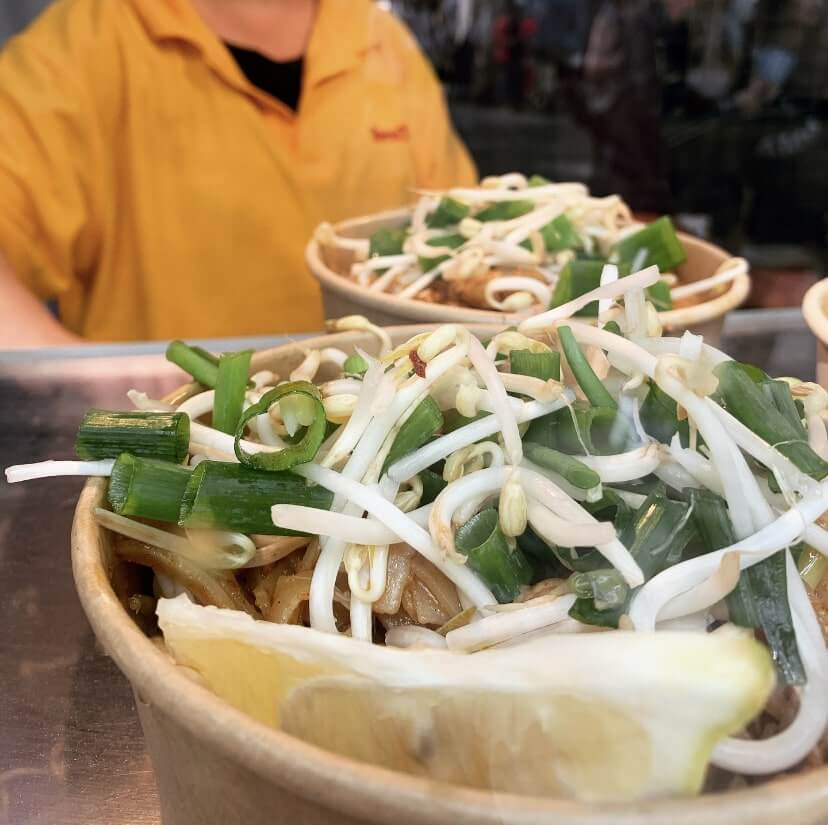
  • Greek coffee at the National Multicultural Festival

Overwhelming is an understatement. For five hours, I let the crowds push me from one place to another, as I tried to find my way through, only wanting to return to my starting point. As I left the festival that eveningโ€”four hours before the performances ended for the dayโ€”I was ready to hit the bed and not return for my shift the next day. I didnโ€™t want to volunteer ever again.

But on Saturday afternoon, I arrived again, signed in to my shift three hours early, and started patrolling the grounds, looking for something more engaging than dead meat. Fortunately, that second day was the best.

In most cultural events that are advertised on Facebook with flyers abound and hashtags galore, people throng in thousands, flashing cameras at dancers as if theyโ€™d never before seen a blend of colours or beaded jewellery. Our impression of culture is often so stereotypical that we can’t imagine anything beyond a stage performance featuring slender female dancers and flavoured meat.

However, this multicultural festival tried to showcase some genuine culture. Not only did it feature music and food from various countries, but it also accommodated embassies of various nations. Why, one of the most popular aspect of the eventโ€”aside from the German beer and sausagesโ€”was the EU village. For an entire day, a large section of the festival hosted embassy stalls where delegates and foreign representatives shared brochures, travel advice, traditional information, and snacks. They even gave away free EU passports at the European Union tentโ€”a fun activity for the young and the older where you could walk your way through all the tents of the EU countries and get your passport stamped at each tent.

  • National Multicultural Festival, Canberra - 2020

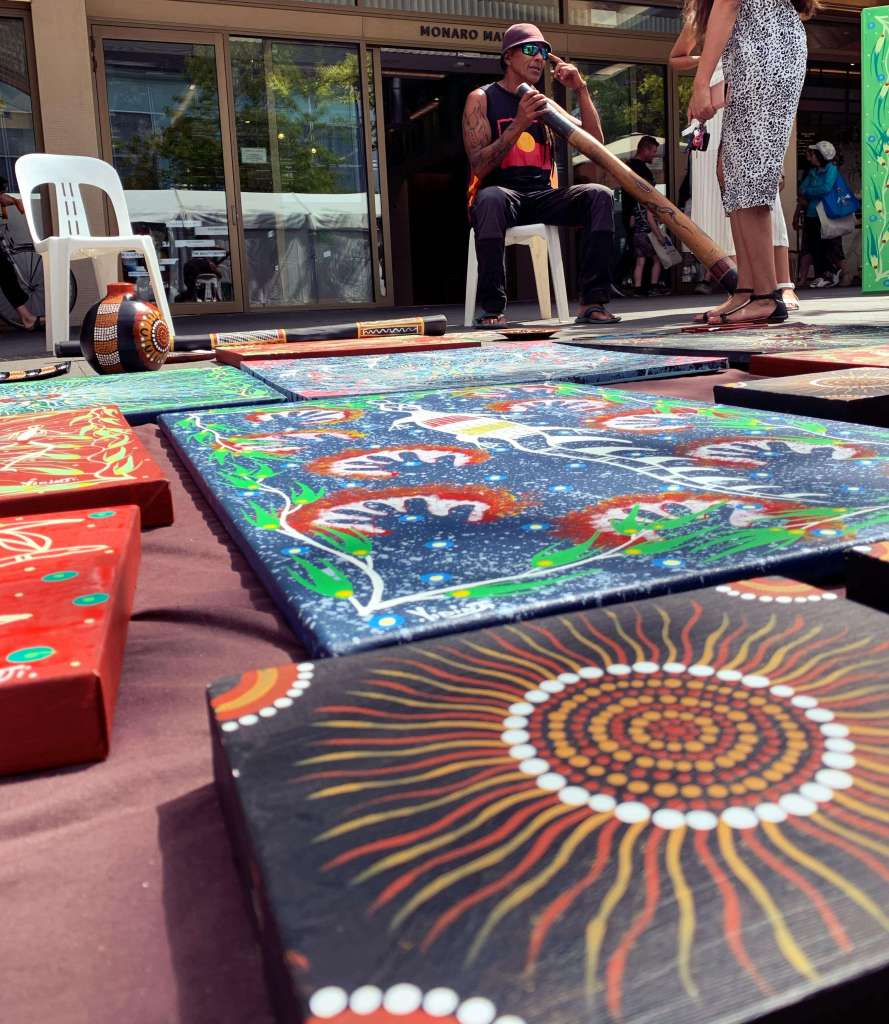
A little later that day came the iconic Multicultural Festival Parade. As the name suggests, itโ€™s a tremendous walking and dancing display of culture by the many countries that call Canberra (and Australia) home. From indigenous musical representatives to Chinese dragon dance, to Korean music, south Indian drumming, Bulgarian dancing, Brasilian samba, belly dancing, and more, the entire parade was a blurry flourish of colour.

Each of the six main stages represented a region. For instance, stage five was for African and Pacific Islander performances, food, and crafts, whereas stage two and its surrounds featured Celtic performances and Scottish traditional foods, information, and dance troupes.

Day two was more satisfying than the first one.

When I woke up on Sunday, hoping to make it on time to hear some multi-lingual poetry at 10 am, I realised Iโ€™d been stressing myself out. I had to lie in bed until I had to leave. My shift was to start at 1pm and I checked in 10 minutes prior.

Having spent two whole days at the festival without staying anywhere long enough to enjoy any performance completely, Iโ€™d decided to let it all go and have fun.

The section I stood at featured the Greek community and culture. From Zorba dance and olive pastries to sipping black traditional Greek coffee, I had a wonderful time, nodding to tunes Iโ€™ll never get out of my head.ย 

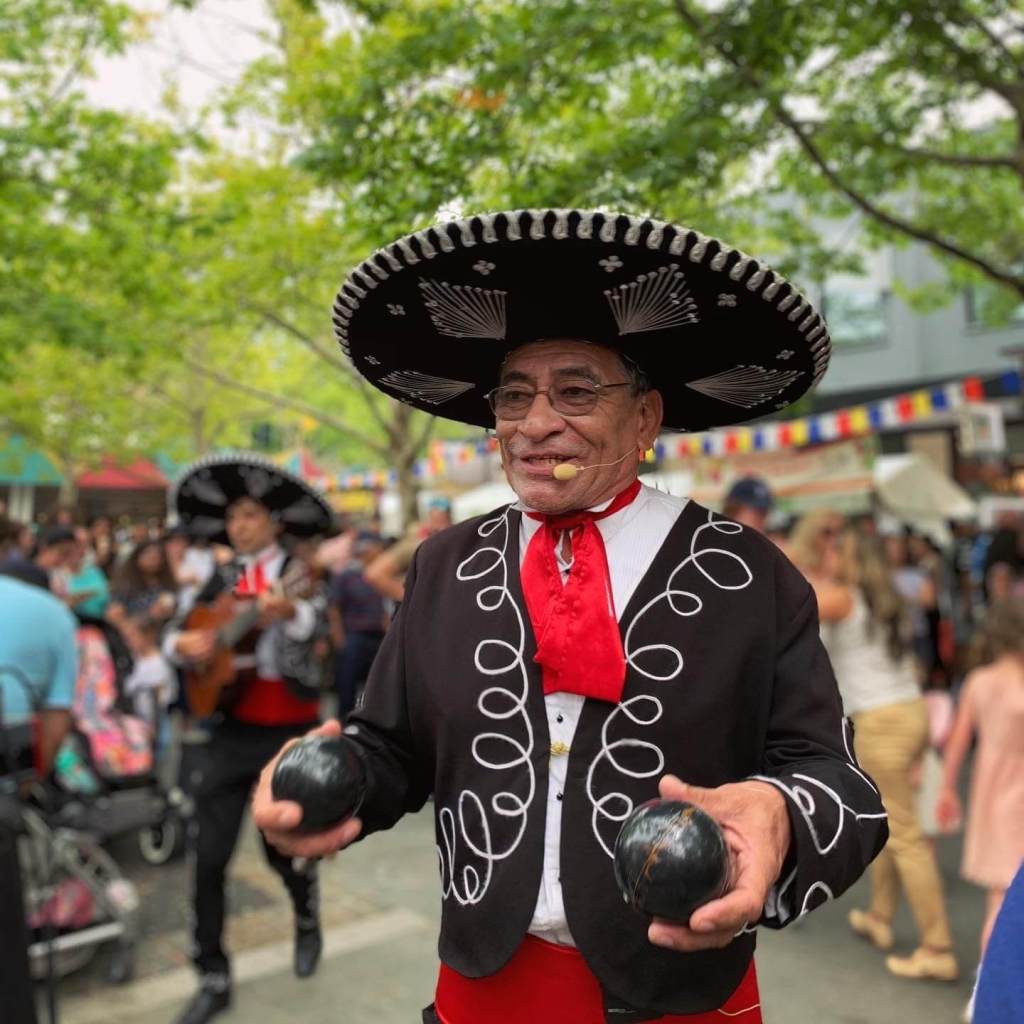
As I waddled over to the Latin American zone, loud maracas and drums invited me with floral t-shirts and unpronounceable words. It was the most warm and welcoming experience Iโ€™ve ever had. Charged by my volunteer status, I walked right to the frontโ€”not because I was being an arsehole, but because being 5 feet and a couple of inches, in a crowd, I canโ€™t see anything other that peopleโ€™s sweaty, muscly, arms. 

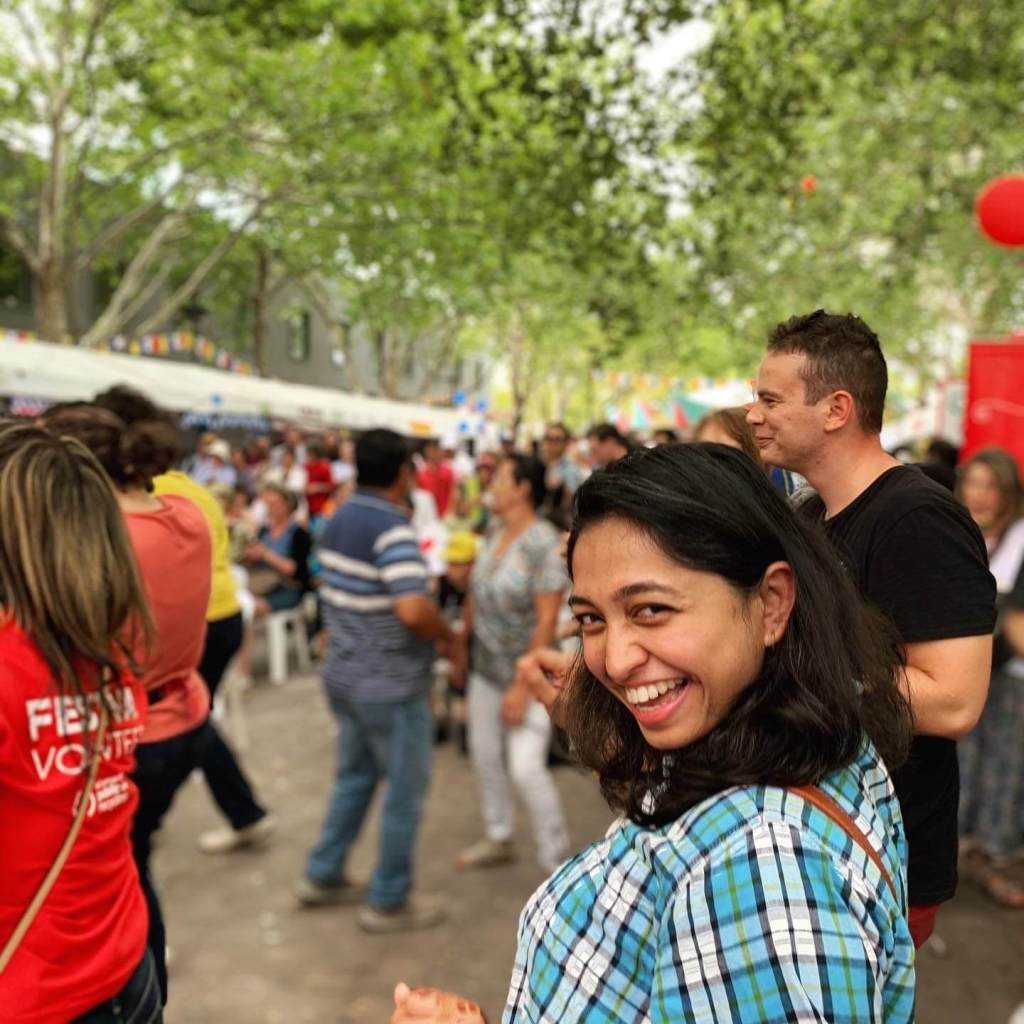
While the groovy Peruvian music troupe sang and danced, the audience had a party of its own. People in all kinds of clothing set their bags on the ground to jump onto the dance floor. It was a perfect amalgamation of traditionsโ€”performers came from various Latin American countries and the audience featured black, white, and all shades of the brown in between.
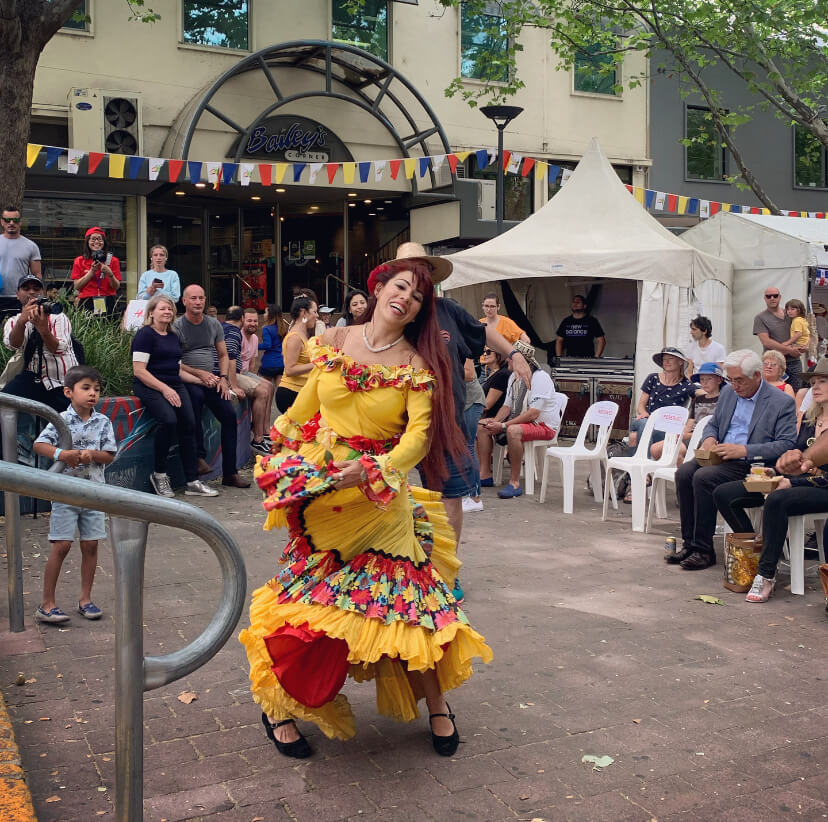
National Multicultural Festival, Canberra 2020

As the festival wound to a close, Iโ€™d changed my mind about volunteering. Iโ€™d so it all again next year, but now that I know the scale of the event, Iโ€™ll be more strategic about channeling my energy and enjoy the event. 

After all, what good is volunteering if we donโ€™t have fun?

Coffee traditions

Over the weekend, I volunteered at the National Multicultural Festival in Canberra. In its 24th year and my first, it was such good experience to be part of the three-day extravaganza.

Of the many highlights, was a small cup of Greek coffee.

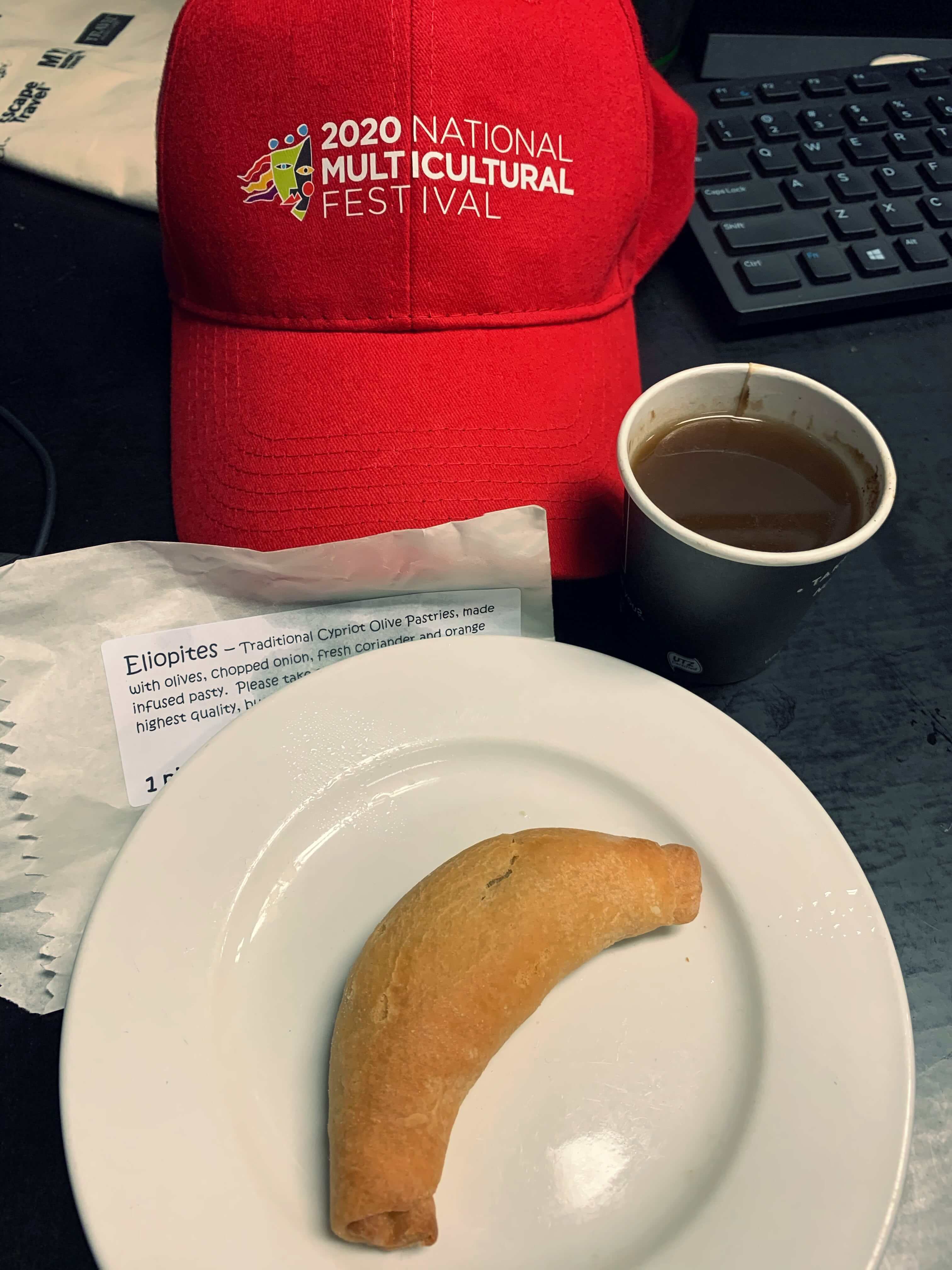
Standing outside the Greek food stall, I stared at the sign that said โ€œTraditional Greek coffee, boiled in a briki.โ€

Italicised and unpronounceable means that itโ€™s traditional, right?

Eliopite, a Crypriot olive pastry and Greek coffee
Eliopite, a Crypriot olive pastry, and Greek coffee

It wasn’t anything groundbreaking thoughโ€”just regular black coffeeโ€”the same thing I drink everyday: fine-ground coffee powder boiled in water, served steaming hot.

Although it was neither authentic nor imported from Greece, it was unlike any Iโ€™ve had. It was stronger, and without the strange sourness of instant black coffee.

The best thing about the festival is that I could watch (gawk at) Greeks doing the Zorba dance (such grace!) and then later talk to a woman about the tradition thatโ€™s Greek coffee.

Much like the Turkish, Serbian, Armenian, Cypriot, and Bosnian coffee, the Greek version is also boiled in a tall metal pot called, thatโ€™s right, a briki. The coffee isnโ€™t filtered and so when I received the cup with gracious thanks, masking my disbelief at the smallness of the serving, the dregs swirled around, rapidly gaining weight, sinking to the depths of the cupโ€™s under world.

Saying that it’d take a while for the grounds to settle, the woman advised me to drink it slow and warned not to drink the โ€œmudโ€.

The reason?

In Greece, once people finish their coffee, they turn the cup over and read dregsโ€”much like tea leaf reading in many real and imagined cultures.

Because itโ€™s so hot, the coffee promotes conversations in social events. Greek coffee is an accompaniment for afternoon(ish) tea gatherings. Not a bad thingโ€”forcing people to talk to each other while waiting for the damn coffee to cool down. That would’ve prevented people from chugging it and rushing away from over inquisitive aunts and uncles.

Clearly, this all before the mobile phone era. Then again, aren’t most traditions?

Cookies!

Iโ€™ve done quite a lot of baking since moving to Australia. But Iโ€™m no baker. Iโ€™ve never made delectable goods people would want to buy. 

I’ve baked vegetables, pumpkin seeds, and oat clusters. I’m a complete novice otherwise.

I volunteer at a co-operative food shop. Yesterday, one of the managers walked up to me as I cleaned the counter and asked me how I felt about baking.ย 

Unprepared. Unconfident.

And then, for the first time, I was asked to bake something. It was to be either banana bread or cookies. Nothing new or unheard ofโ€”we had s pre-designed recipe. I just had to follow instructions. If it said to boil two cups of salt, well… you know.ย 

I wouldnโ€™t boil two cups of salt.

But I was making chocolate chip and tahini cookies. 

This wasnโ€™t my usual marinate-vegetables-and-shove-in-the-oven recipe. It wasnโ€™t anything like the pumpkin and oats mixture I bake all the time. To put it simply, it wasnโ€™t simple.

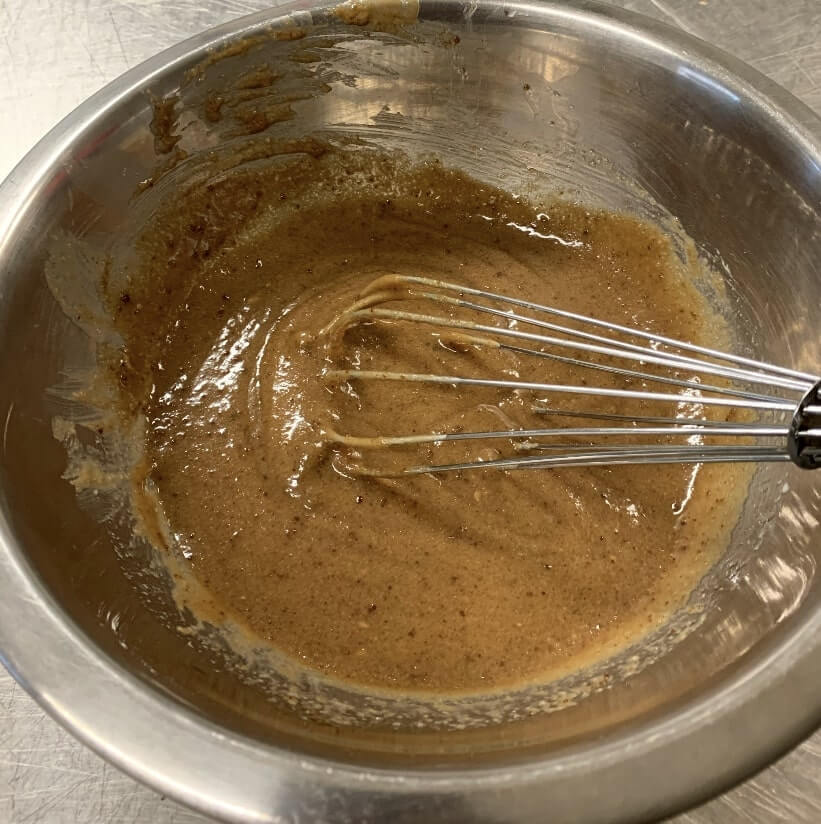
cookies in the making

However, on paper, the recipe was pretty straightforward. It had fewer steps than the banana bread, and even though Iโ€™d have chosen the bread to stuff my face in, the cookies seemed far less intimidating to make.

I read the instructions over and over just to make sure I didnโ€™t forget the salt or the vanilla, the oil, or the milk.ย 

It was a vegan recipe, and only a few days ago, Iโ€™d seen the recipeโ€™s author bake some cookies herself. So I had a reasonable idea of how they were supposed to look. I recalled awe-ing at how flawlessly the cookies had spread and how much people enjoyed chewing them.

It was a lot to live up to. And that terrified me. Even though it was just flour, baking soda, and salt for the dry and oil, tahini, milk, and sugars for the wet, I still felt an enormous pressure over my head as I measured the ingredients, battling with myself over the difference between a heaped and flattened cup.

The recipe suggested 15 cookies. And as I balled up the cookie dough, smiling to myself at how much it resembled the cookie doughs Iโ€™d seen on television, I realised I was making far too manyโ€”Iโ€™d made thirty small balls instead of 15 big ones. Anxious, but still proud of my mixing capabilities, I greased the trays, arranged the balls, and popped them into a waiting oven.ย 

freshly baked cookies

For the next fifteen minutes, I was thankfully too distracted to bite my nails and check in on the cookies every two minutes. When they came out, smaller than I expected, they were more like blobs of chocolate-topped brownish flour than flat disks of chewy goodness. 

My heart sank. Perhaps Iโ€™d sunk the cookies.

The first taste-tester said it was good. But heโ€™s a nice guy. The second affirmed the first guyโ€™s comment, adding that the cookies were crunchy and crumblyโ€”which is good, if you like crumbly cookies.

They were both more than less than helpful. I still couldnโ€™t tell if the cookies were any good. And I didnโ€™t trust myself to eat any.

We sold out of cookies in a day.

Many people appreciated my cookies. And yet, as a novice baker and an incredibly-doubtful person, itโ€™s hard to believe.

Perhaps it wasnโ€™t so bad.

Perhaps Iโ€™m not such a terrible baker, after all.

Perhaps I could do moreโ€ฆ

Taken for granted

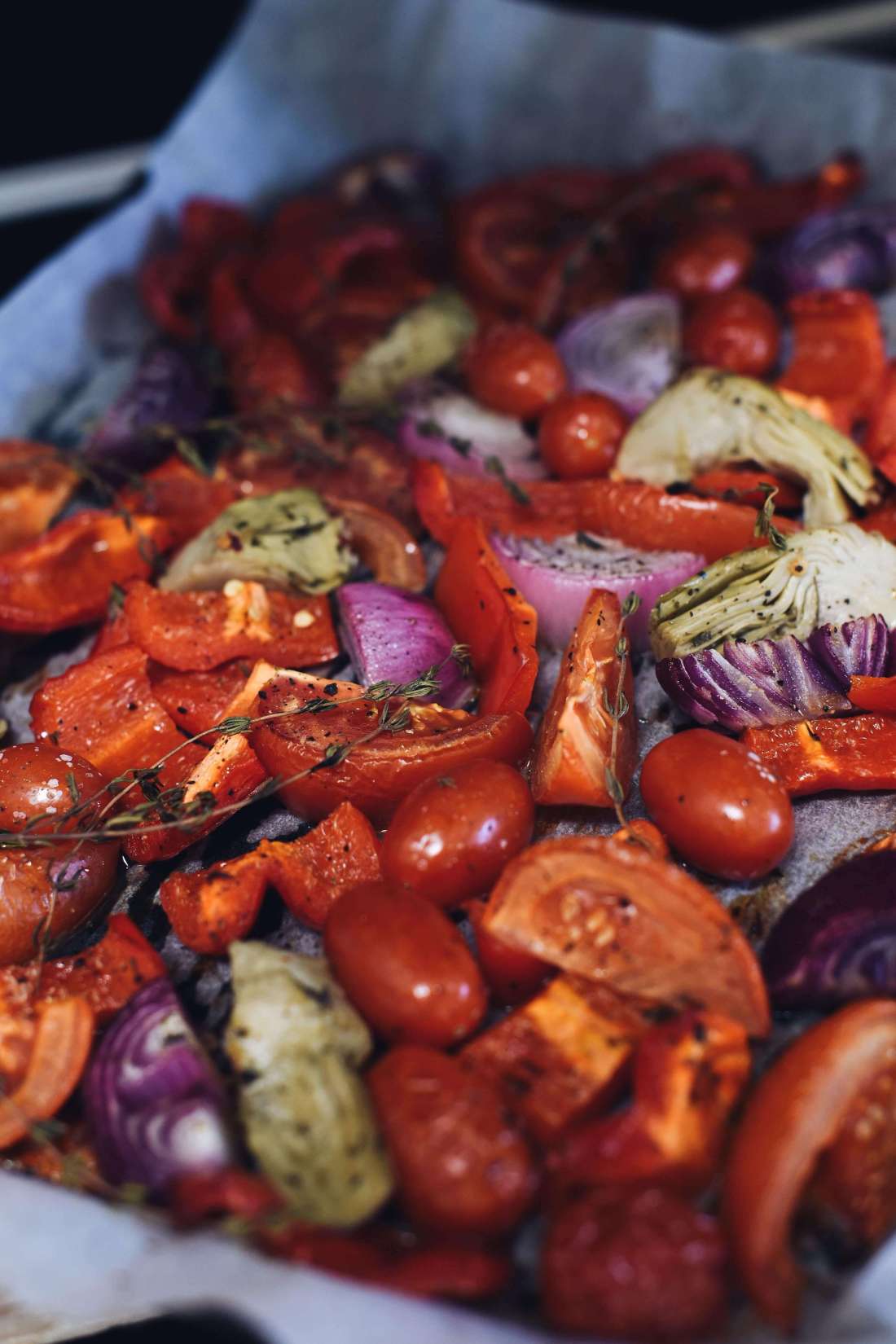
roasted vegetables - Unsplash

Living in South Asia, cooking was one of the biggest concerns for my mother. She’d wake up at 4 am to prepare breakfast from scratch. She’d feed us, and once my brother and I left for school and our father to work, she’d clean up and start making lunch. When we got back home, not only would we have a plate of wholesome rice, vegetables, and the occasional meaty or fishy treat, but we’d also have perfectly-proportioned tea and a snack to get us through our homework. While we gorged on the spring rolls, cutlets, or some other goodness, she’d set up the kitchen for dinner. From kneading the dough to rolling it out and cooking it, my mother would spend at least two to three hours sweating over each meal, painstakingly poring over the rolling pin, making sure each flatbread was even on all sides, not too thick or they wouldn’t cook in the middle, but not too thin either for they’d then become too crispy and brittle-like. All the while, she’d ignore the sweltering heat emitting from the stove as her skin and life burned.

She wouldn’t go to bed until after 11 pm.

In a day, she’d spend at least 6 to 8 hours prepping, cooking, and cleaning up. To say she was tied to the stove is an understatement.

She wasn’t the only one. A lot of Indian families had a similar lifestyle. A lot of Indian mothers never had time for a ladies’ night out or even to go to the bathroom at timesโ€”because their toddler would wail if they leave the room.

I grew up observing my mother. And although I wouldn’t have had the same life as her, I would’ve still spent a lot of my life cooking and scrubbing had I stuck around the same societal mentality.

When I moved to Australia, I couldn’t believe how easy the food was. I’m not referring to the abundant restaurants. Cooking itself is now effortless. I rarely eat outโ€”it’s way too expensive. But I do cook a lot. It’s too easy. Canned pulses, frozen fruit and vegetables, and oven-friendly meals have transformed cooking from a chore to a ritual as simple as pulling on a favourite t-shirt in the morning. I don’t cook three meals a day eitherโ€”I make a pot of beans and use it for three days. People think it gets boring, but it doesn’t. I always have some fruit and vegetable lying around for a quick snack or meal. My meat-eating brother gets chicken wings and shoves them in the oven. It takes less than an hour to prepare a weeks’ worth of meals. It’s fast food without the harmful ingredients and effects you’d associate with fast food. Because everyday meals are so quick and easy, I get a lot of time to work on my hobbies and endeavoursโ€”to experiment with new recipes, to read and write, to prepare an elaborate meal once a while, or just to wander the streets, aimless. It’s such a nice feeling not to be a slave to the kitchen.

It’s all too late for my mother, though. Sadly, she didn’t have the convenience that I now have. 

That’s the problem of modern lifeโ€”we take so many things for granted that we fail to realise that even the seemingly instantaneous chopped tomatoes weren’t always that instant.


Image:ย Melissa Walker Hornย onย Unsplash

Oven and I

Like most teenagers who didnโ€™t have many friends to hang out with after work, I developed an interest in cooking as a way to entertain myself. Almost every recipe I saw (that I liked) involved tools I didnโ€™t have access to, like a grill, a waffle maker, stand mixers, ovenโ€”you get the idea.

Most Asian homes donโ€™t have those appliancesโ€”and more importantly, they have no use for them in their kitchens. Generations of Indians lived full, healthy, and happy lives eating wholesome meals without even setting eyes on a microwave or an oven. Cooking heat came from firewood stoves and kerosene or oil lamp burners, both almost extinct now. Modern homes have induction or gas stoves. As a child I sat beside my mother watching her blow through a kerosene stove awaiting the water to boil.

On a side note, she also had a vintage oven in which she baked bunsโ€”buttered with a sesame-strewn crustโ€”for us each week, but it was still a phenomenon in a society far more accustomed to traditional cooking methods.

By the time I was old enough to understand its functionality, my motherโ€™s oven had fallen prey to rust and disuse. Thatโ€™s why the oven fascinated me so. When I saw a video of bread rising behind the glass, as a flower to the sun, my heart swelled in longing. Buying an oven went right on top my list.

But it was also an investment and my inner miser took long enough to weigh the benefits and the possibilities of me making optimum use of the purchase. After years of being on my need-to-buy list, my inner logic won, pushing the oven to the more idealistic nice-to-have-but-high-maintenance list. And so, despite spending almost four years wishing, I never bought an oven.

Then as planned my move to Australia, I realised an oven was a household staple in the first world. Of course, thatโ€™s why every recipe called for preheating at 400 degrees F or 200 degrees C. My joy knew no bounds. I couldnโ€™t wait to get started, to bake my aches away, to watch bread that I kneaded rise to the occasion.

Except, it took me over two months to pluck the courage to open the oven.

It was the first thing I saw in the kitchen. Unmissable, wide and thick-skinned, with knobs and symbols, and a clock that showed the wrong timeโ€”the oven was too much to take.

The oven, an appliance Iโ€™d imagined to love and cherish, felt alien and condescending. For the love of bread I couldnโ€™t figure out what the symbols meant. How hard was it to add explanatory text in there? And why was the fan so big, staring at me as I peeped in, as though from behind soot-studded bars?

It was scary. I forgot all about the wonderful recipes I’d plannedโ€”choosing instead to cradle the comfort of the pot. Who needs roasted pumpkins when you could boil them instead? After all, the result was the sameโ€”softness, edibility.

And so it was a whole two months before my housemate, trying hard not to snigger at my ancient reluctance to modern equipment, explained the symbols and nudged me to live a little.

And since then Iโ€™ve been roasting chickpeas, baking crackers from intended cookie dough, making crispy onion flowers, and toasting oats with tahini and Vegemite (trust me, itโ€™s good stuff if you like savoury stuff). Iโ€™ve been on an experimental rampage, throwing everything in the oven, testing temperatures, resting my palms in the glass as winter raged outdoors, and appreciating the oven for its might.

Then one day, too confident to wear oven mitts, I used a cloth to pull out the tray, singeing a small part of skin on the tray above it. It wasnโ€™t painful for I’d pulled my hand out instantly. But the scar lingers, as a visual reminder of my adventures with the oven, with the power of heat, a power beyond my control, a power that I took for grantedโ€”that we all often take for granted.

As I look at the scar now, weeks later, I think of my carelessness, but also my growth as an individual. In just a few months, Iโ€™d gone from not knowing what an oven is to being so comfortable that I shrug off a small burn without a flinch.

Not to underestimate the importance of kitchen safety, but I canโ€™t help but amuse myself of how ingrained the ovenโ€™s become in my life. Itโ€™s a reflection of a bigger pictureโ€”a sign of my adapting to a new society, and melding in without much friction.

We seldom realise it in our everyday rush, but when you’ve moved to a new place, things that once overwhelmed you soon become part of you. I paused to realise: thatโ€™s how oven and I are now.