Happy Holidays

hapy-holidays

As he lit the candles, Mr Aarons remembered the pain of his people. Never forget, was his policy. Dr Lawrence, though, was welcoming on the outside. But in the privacy of his living room, he was just another paranoid man; doubting the weird neighbours who had no wreathes.

Holly and Abigail took the same bus, to the same school, and sat in the same classroom. At class, they made holiday cards. When Holly handed hers to her parents, they couldn’t believe their eyes. Neither could the Aarons.

“Merry Christmas” wrote Abigail and “Happy Hanukkah” wished Holly. Kids have bigger minds.

Writer’s Trauma

About three years ago, I was thrilled when I finished writing an entire novel. I had great expectations for it. It didn’t see the darkness of the press or sit in bookstores where fans cradled it and smelled the fresh print, as I had hoped. But it’s on Inkitt.com, and that’s better than it being locked inside my cupboard. A few days ago, I got an email from Inkitt about a new contest called the Teaser Awards. It’s pretty straightforward: I have to write a 200-character teaser for my novel.

Fun, I thought. It would be a great way to persuade people to read my story. I needed more readers because most of my cheerleaders (immediate friends and family) didn’t even get past the first chapter. It’s not because the story was crappy, (I checked), but other pressing stuff came up. And with this teaser assignment, I thought I’d use my creativity to re-ask my friends and family to give my novel a second chance.

I sat down to write.

Three years was a long time ago. Of course, I know every scene almost by heart, but when I had to drill it down to a 200-character teaser, I got stuck. Not that I had so much to say and didn’t know what to pick, but because I had nothing at all to say. All of a sudden, the story I spent hours pondering on and nurturing, didn’t seem interesting enough. I tried digging my memory for something worth talking about, and it was as if my story was worth nothing. I didn’t have adrenaline pumping action, no sword fights, no heated arguments, not even a trace of romance. For fifty chapters, I had rambled on an on about a normal girl going about her normal life. I didn’t know what to say in my teaser.

I panicked. If I couldn’t find excitement in the story, myself, how would anyone else find it? I was so shattered I couldn’t work on my teaser anymore. I gave it a break, a day. Then it hit me: perhaps that’s why my family couldn’t read the story. Because there was nothing interesting about the everyday life of a teenager.

It was a depressing revelation, because when I wrote the story, I thought I’d made it as relatable as possible. A handful of readers told me they got bored after the first few chapters, but again, folks who did manage to read the whole story told me they loved it. (Well, not “I loved it” verbatim, but most of them said things like, “great work.”) And now every time someone tells me I’ve done a decent job, I can’t help my widening lips, my glowing face, and my joyous swelling, heart.

That’s how it is: You’d never know how others would react to your stories. There will always be mixed feelings and varied reviews. Some would like your story, some would hurl at it. Some give you constructive feedback, some would just throw unhelpful opinions. Variety is the essence of life. And it’s also the curse of writing.

I did rework my teaser to this:

What if you don’t know your calling? You’d try to figure it out, making decisions you’d regret – or love. You’d break your heart a few times, too. Until one day, you’ll succeed and all will be well.

If you think it works, you can read the story here. I would appreciate your feedback, whether good and bad.

What’s the Point of Small Talk?

No matter where we go and who we meet, there’s always an icebreaker. It’s meant to dissolve inhibitions, help understand others’ likes and dislikes, and even know if they eat pizza with a fork or hands. Sometimes it goes as far as potential philosophy and Zen practices that could save the world. We use small talk to ease people into a situation and make them feel comfortable. Except, small talk doesn’t work.Small talk is often a way to kill time while we’re waiting for someone else.

We don’t care much about other people. When someone asks in a group, “So where are you from, how are you, how’s work, how’s the wife?” We smile and nod along as if it’s interesting, even though we’re far from interested.

It’s common sense. I don’t care how my colleague spent his weekend. I don’t care that my classmate’s mother made her mittens, or that her pet cat laid six kittens. It doesn’t matter to me that the new kid in school had a meltdown or that the principal fired five maintenance staff because the school had too many.

It’s ok not to care. And it’s ok to accept that. The only reason my colleague is listening to me ramble on about my Irritable Bowel Syndrome is because they’re too polite to ask me to shut up. Or too sleepy to get to work. And it’s understandable, too. It’s not their bowels, so why would they even bother?

We’re a clever species. We read articles every day about why small talk isn’t helping us in the long run or how much time we’re wasting at work chattering at the water cooler. And I’ve seen colleagues get irritable when another person strikes small conversations, whiling away time. Yet, despite knowing how futile small talk is, we still indulge in it.

Sometimes, we don’t even realise we’re doing it. When I was new in town, my cousin took me to a party because she said it’d be a great place to meet people. And I met a couple of girls. After asking their names and where they studied, I stopped talking. They were younger than I and not my type. So I didn’t force conversation. But they determined to help me get around and make more friends because my cousin had asked them to.

And so the session began. They asked me where I studied. Why I chose literature when engineering was the more sensible option, why I didn’t answer when my mother called a minute ago, where I’d love to live, what I’d do if money weren’t an object, etcetera, etcetera. I got bored after the first question, but I answered anyway — in not more than two or three sentences. However, besides my obvious resentment, they kept at it until I left without telling anyone.

And that’s what small talk does. It ruins relationships even before they begin. Sure, some people claim that it diffuses tension and helps people find common ground. But if someone forced me to talk, I’d only get bored. I’d lose respect for them because they waste my time. I’d avoid them in future because small talk makes me disconnect.

The Kindling

kindle-vs-books

“Get real,” she said. “No one’s going to spend time reading bulky books in future. Why would they, when we already have audio books and kindle?”

My friend and I were having coffee at a famous fast food chain. We had left the office for lunch but decided to grab a muffin and an espresso instead.

When someone said such a thing, I’d flare back at them without a second thought. But now I held my tongue. My friend made sense, and I hated myself for admitting it. I said nothing, however. My coffee lingered under my tongue sending shots of bitterness through my system.

I love reading physical books. And I’ve admitted more times than I know, that despite the Kindle app’s animation to turn pages, an ebook just doesn’t feel the same way. But I’m reading four or five books now, and all of them are on my mobile. It’s easy because I never know when I’d get the time to read a page or two, and my phone’s just lying there in my pocket.

But I’m also against the digital revolution that’s almost killed paperbacks. It saddens me that leather bounds are now classed as exclusive collector’s items.

Books are books. They’re made up of words that can twist and tug at the deepest of heartstrings, and not antiques held together with age-old rust and dust.

Books are books. They’re living things filled with opinions and teachings. They can weigh in when you’re down, though sometimes even weigh too much when you’re carrying a burden.

Books are books. They are a mark of history written. They’re proof that people lived through them; they behold fingerprints and memories of thousands of enlightened minds who’ve cherished every page, every word, and every curve of the “g”s in them.

Whereas Kindle is cold. It’s a case that displays what it contains, and it contains a new thing every day.

Kindle is just a Kindle. It’s sleek to the touch, fits into your arms, and easy to carry.

Kindle is just a Kindle. It’s got hundreds of voices screaming for your attention, and if you’re ever appalled by the violence in one page, you can always find some zen in another.

The Kindle is just a Kindle. It’s versatile with multiple stories and multiple stands. It will neither weigh in for you nor weigh you down.

Kindle is kindling in the name only. It kindles not one but many emotions, which is good for some but too many for most. Bulky books rekindle spirits. There’s no escape from the secrets within a bound book. You either take all it in or give it all up. There’s no intervention, and there’s no mid-ground.

But even as all these thoughts rushed through my head, I still kept my mouth shut. As much as I hated it, ebooks and Kindles are the new way of reading.

With the rise of 140 characters, facebook-like attention spans, and books you can listen to while watching silent movies, many people think hot chocolate and the sofa near the foggy window is more suitable for the family kitten. My friend was right. In future, not many people would read heavy books. We’d intake lines and lines of words like we inhale air. And like air, most of it wouldn’t even reach our brains. It’s the age of the Kindle and unkindled souls.

A Festival of Darkness

I’m home alone, marvelling Pirates of the Caribbean for the uncountable time. My room mates have left for their hometowns and so have my colleagues and friends.

Today is Diwali or Deepawali, a special Indian holiday. People working away from their hometowns throng home to spend the day with family. Most religions celebrate this day as the day good destroyed the evil in the world.

diwali-fiewworks
Not real bombs. Just fireworks.

Yet it’s ironic that we celebrate the end of all evil by spreading more evil.

We all love spending time with our families, sharing a meal, and smiling at the kids who run around the neighbourhood fighting over candy while parents share a drink. That’s how foreigners see Diwali. It’s a day of joy and sweets and all things nice. There’s no evil in that.

So it would seem.

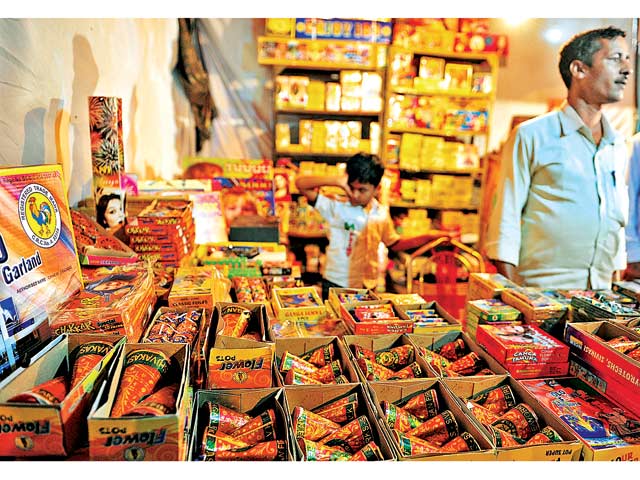
Diwali is the festival of lights. And the reason: We celebrate the day lighting firecrackers and scaring the crap out of our domestic animals. It’s common for people to have cows and buffalos as pets, along with dogs, cats, and fish. And while I enjoy Jack Sparrow’s adventures in my room, I hear these bigger animals wailing in fear as the fireworks go up a little too close to their feet.

As I shake my head disgusted at parents who let their kids torment animals, my phone lights up with flash news: “Fire in Gujarat’s fireworks shop, over 10 people dead.” Every year, Diwali brings a handful of fire accidents in fireworks shops. And every year people debate whether we should continue selling and manufacturing fireworks because of all the death and destruction. And yet, year after year, people light up their stash of smoky hell, laughing at lights and lolling like maniacs.

fireworks-shop
Fireworks. A livelihood.

There’s more to Diwali than killing lives and scaring animals, though. Fireworks are expensive. And every household with children or light-liking adults spends about $30 in fireworks. Not to mention other expenses like buying sweets and savouries and new clothes for the entire family. These don’t come cheap. Tis the season where employers give employees a Diwali bonus, too.

On the day of Diwali, people wake up early, clean up real good, wear new clothes, have breakfast, and go outdoors to light up fireworks. An hour or two later they’d break for coffee and snacks. Then again, they go back for more fireworks. and in between the festivities, comes other traditions like visiting neighbours and friends to give away snacks, and all-day feasting in cholesterol-full foods. The whole day wanes, and we call this the single biggest festival of the year.

However, like all things Indian, there’s also a counter-culture to this Diwali madness. There are some who don’t throw money away on fireworks or shopping. They don’t spend all day indulging guilt-free on guilt foods, laugh at animals cowering in fear, or trigger heart attacks in patients in a nearby hospital.

These are the ones who see festivals as a chance reconnect with their family without tearing other families apart. We are the misfits, the tradition-less, and the unholy. We call Diwali the festival of darkness because we are the ones who care for the greater good.