Book of Colours

Who doesn’t love a determined, self-sufficient heroine? One that doesn’t need saving from her male counterpart. Or even from herself—a common theme in feminist novels nowadays.

Tangent aside, a female lead who knows what she wants, accepts her hurdles, and yet still strategically perseveres towards achieving her passion is someone born for that. We often say talent is inherent. But everyone is talented in some way or the other. What matters is how much they invest in honing that talent. That’s the difference between Van Gogh and Random Dude. I bring this all up now because I’ve just read Book of Colours, an excellent historical fiction that celebrates a woman artist—or in this case, a limner.

Cover of 'Book of Colours' by Robyn Cadwallader

I know how that sounds, but it’s not what you’d expect. It’s not the story of a young girl who finds her passion for art, grows up facing many challenges, and finally gets the recognition she deserves. That’s the equivalent of the ‘damsel in distress saved by the hero’ narrative—the typical, proven theory that satisfies the masses on any given day. Though such a plot has its place in novel writing, this one is way different.

It’s about a woman who’s painted all her life—from childhood, assisting her father, also a limner. Everyone around her knows her capabilities. However, she’s a 14th-century woman in England. Women of that period weren’t even allowed to read, let alone paint. This is the story of Gemma, the brilliant artist, and her husband, who’s also a brilliant artist, except he’s known nationwide for his talent. They receive a project to design and create a Book of Hours (an illustrated book of prayers) for a wealthy landlord far, far away.

But this is not the story of Gemma. The writer never once tells the reader that Gemma is the main character. You either realise it, or you don’t. Either way, you’ll enjoy the book.

As the story begins, we follow Will, a young artist running away from his hometown. He ends up working with the master limner and his wife, Gemma. From there, we watch as Will’s life unfolds—as he works with the couple on their project, how he becomes essential for the book and its owner, and how he blends into the family.

Our introduction to Gemma comes through Will’s eyes. And so we see her as a cold, doubtful woman who clearly hates him from the moment her husband invited him in. He’s shocked when he realises she paints, torn between her knack for translating words into pictures and the unacceptable reality of her being allowed to paint. And yet, between them grows a friendship that’s unlike any other. As highly-gifted artists, they spend a lot of time in each other’s presence, heads bent low, each immersed in their own battle.

Like all good characters, Will also evolves from a typical man who looks down on a woman painter to accepting her skill. But that transition is so artfully done—he doesn’t run into a raging feminist who changes his mind about women doing other than housework. He doesn’t have a flash of understanding about patriarchy that completely changes him overnight. Instead, it’s a gradual change of mind, a progression that’s incomplete even as the story ends. As a skilful limner himself, he admires Gemma’s talent.

For a long time, he believes she’s protected only by his and her husband’s silence. As someone who enjoys realistic characters, it was refreshing to see that Will still had a lot of room to grow. He’s not perfect, and that’s a perfect place to end his story.

Though Gemma herself goes through many changes as the story progresses, her situation largely remains unchanged—quite an unexpected ending for a character of that magnitude. She doesn’t get the recognition she deserves. Only the characters who knew about her passion for the art at the beginning know about it in the end—plus Will, of course. And yet, we see her evolve into a more complete and aware person. She’s another example of a realistic character—no drastic, dramatic incidents to topple her underlying beliefs. Every good change happens gradually. And that’s why this book is such a good read. The author has done one hell of a job, and I’m glad I read it.
A note on bad reviews

I recently attended a panel discussion about going and receiving criticism. The panel consisted of writers, reviewers, and art critics. It was an hour-long showering of insightful opinions and ideas that I had to note down and mull over. As I mulled over, an incredible urge to write them down gnawed my brain.

One of the points that a writer of over 30 books, brought up is that in this age of social media, writing as an art has taken a massive turn. People can now share their opinions with the greater world even as they watch a movie, read a book, or wander through an art exhibition.

And that got me thinking.

From being a slow, iterative process like a stewing stump of steak, creating art has now become quicker, like pre-packaged chicken caesar salad, to offer instant gratification for souls so eager to tweet out their amusing reactions to a book as early as five pages in.

Since writers and other artists are aware of the instantaneous effects that the audience’s opinions will have on their work, they tend to take safer strides in their writing. Afraid of being criticised by people who don’t see what they see, artists adjust their art to satisfy the audience that happens to see their work. As a result, art becomes tailored for a specific audience, instead of reflecting the artist’s being.

Bad reviews and harsh criticism isn’t always about the artwork. In most cases, especially in today’s social media-powered world, adverse reactions come from people who didn’t necessarily enjoy the work. This also means that the art hasn’t reached those who would enjoy and appreciate it. When put that way, any review becomes mildly questionable. Sure, this reader hated the book. But there may well be other readers who’d love the book but haven’t read or reviewed it yet.

That’s a good reason not to rely too much on reviews.

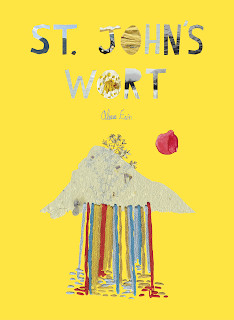
St. John’s Wort, a review

St. John's Wort, a poetry collection written by Alexus Erin. Published by Animal Heart Press.

It’s hard to say what Alexus imagined when she titled this book, St. John’s Wort. It’s the name of a European medicinal shrub known for treating depression. Like most of the world, if you consider the book at face value, you’ll think it’s therapeutic, that it calms and elevates your experiences. 

It does. 

However, as you read through the poems, over and over again, to make sure you don’t miss a beat or the depth of meaning folded neatly in between lines and stanzas, you’ll realise that Mayo Clinic was perhaps right. As one of the top possible side effects of St. John’s wort (the shrub), it lists agitation. Which is what you feel when you’ve read these poems.

Alexus doesn’t look at the world around her and burst into flowery language. Instead, her poems are deliberate. Each line, each syllable rings with meaning, and whether or not you directly relate to it, you feel what she sees, and you see what she feels.

Imagery is for the ear as much as it is for the eye, you learn as she describes in Laughter,

“I know God laughed
when night bathed tabletop-
tabletop cradled the New York Times, a pound cake. I sang carols over the brushed, high-hat hiss of a Vanilla Coke can.”

Alexus’s poetry isn’t simple. Layers upon layers of complexity lie in each poem, and she makes you work to reap the sweet benefits of the sadness lingering in those hard words. 

“When I learned my father had an aneurysm, I thought about the day his brother had the aneurysm.
I thought about Plath, then Hughes
then about how suddenly I needed to buy pudding
from the grocery store.”

When referencing a father dying of aneurysm, not everyone draws a parallel with Sylvia Plath’s “Daddy“, where she confesses struggling to forgive her father’s involvement in the Holocaust and his lack of self-care that resulted in a gradual demise. Alexus cleverly matches the Plath reference with the seemingly related Hughes, while instead, with a subtle streak, alluding to pulmonary artery aneurysms, a rare autoimmune disease first described by British physicians Hughes and Stovin.

Good poetry resounds though your being, leaving blotches of reality, like ink on paper, marking you for life. This collection of poems takes it further—you have to marvel at Alexus’s wordliness, the way she’s melded poetry with dark reality, and the way she’s dejargoned medicine, revealing it in bits, like droplets on whiskey, just enough to hit you with a boldness that momentarily disarms you.

It’s not, however, a book you need to pair with a high-edition dictionary—although a nice Riesling surely complements. Scattered throughout the book, in snippets that speak the truth as it is, are poems so simple and so pristine that you can’t help but pause to inhale the beauty of words.

“What among us won’t, one day,
Be turned inside out?”

She asks in such tepidity that it strikes you, slices through your pretence, as intense as hot knife through cold butter.

Alexus ends that poem, Year of the Rabbit Hole, hinting at self-help, while artfully voiding her voice of the unworthiness that comes with such books.

This collection is a chain, flaunting a range of topics, all bound by the string of tragedy. Every poem is an ode to an incident in life—sometimes personal, often not—leaving you with a shudder, questioning you, and enticing you to question the world you see.


Musings from reading St. John’s Wort, a poetry collection written by Alexus Erin and published by Animal Heart Press.

Latest reading

I’ve been trying hard, and failing, to read a book.

It’s not the first time. It doesn’t happen often, and so when it does happen, these books remain in my mind vivid, as the Sydney Opera House in June.

The Girl With the Dragon Tattoo, One Hundred Years of Solitude, and a couple others.

Not that these books were complex in language, but they featured elements and situations that bored me. However, I did finish One Hundred Years of Solitude and mentally kicked myself for putting it off for so long. It took me a good nine months to finish that book because I kept forgetting I was reading it. That’s a great book—I admitted when I did read it.

But the dragon tattoo was too much for me. It went into such gruelling detail about sex that it threw me off. I don’t mind descriptions that add value to a story, but as I was reading it, it felt as if the author could’ve edited away some of the detailing and still achieved a crisp narrative. But that’s just me. Almost everyone I’ve spoken to about the book was surprised that I quit halfway through. I got tired of waiting for the exciting part of the story.

That happened about five years ago. Perhaps I was too young to digest it. Perhaps what was casual description for many was too gory for me. That’s when I realised I could return a book without reading, and not feel guilty about it after.

Except, now, after all these years, I’m reading a book that I don’t feel like finishing. It’s a lighter-hearted than The Girl With the Dragon Tattoo, and it’s non-fiction. But it’s still too much detail. It’s a semi-biography of an American-Australian author. It’s the first full-length comedy book I’m reading, and although I appreciate the author’s ability to laugh at her faults and shenanigans, some of her anecdotes aren’t funny—they’re just silly.

It feels as if I’m too old to laugh at these stories. Some of them are too personal—stuff that I’d take to the grave. Of course, there’re learning opportunities in every embarrassing situation, but sometimes, lessons are personal. Writing about the time you strutted around the school in sex-stained jeans thinking it was cool, isn’t cool. Now imagine an entire book of stories like that. Of course, not every story is about sex, but the embarrassment-level is quite similar.

I’m certain there’re some stories in there about good things that happened to the author—like winning a game or passing a big test.

I’ll know for sure when I get there. If I get there at all.

That’s what I’m struggling with now. I know it’s a popular book. It may even be a good one, according to most readers. But perhaps it’s just not for me.

Ever been there?

Set me Free

Salvatore Striano quote from Set me Free

I haven’t met a Shakespeare fan I didn’t like. 

Dreamy fierceness oozes from his words like a tube of toothpaste, and make readers stick like mosquitoes on an oil plate.

And when two mosquitoes meet on oil plate, what else would they share than their love for wit that landed them there in the first place? 

It was with that curiosity that I picked up Set me Free by Salvatore Striano. The title itself wasn’t any different from the thousands that line the library aisle. It was the sub headline of the book that forced my feet to retreat and my hand to reach out: The story of how Shakespeare saved a life.

At that moment, I knew I had to read it.

Life got in the way, many times, slowing down my progress. And yet, I persisted—the deadline loomed and I didn’t want to be that person who extends a library book because they were too busy not reading.

I read in the bus, I read walking around the lake, I read in bed at night sipping black coffee.

This tale come from behind bars. It’s the story of a high-security, long-sentence serving prisoner in Italy. The narrator, Sasà—the prisoner himself—tells how he’s been a frequent visitor to jails since he was seven, walking us through various parts of his life leading up to the present. And all the while, he explains the realities of prison life, the solitude and hopelessness that hugs the air, and the spite that separates groups.

What’s Shakespeare doing in a place like this?

Saving souls, of course.

The narrator goes on to illustrate how one accidental play they put on opened the vault to an under-appreciated realm of sonnets and theatre. He reads Shakespeare, and with every play he finishes, Sasà feels himself glow and grow as a person. And in the end, the book closes with a hint of how even inside prison, lessons from good literature change and free people of their darkest despairs.

It’s a well-told short book.

However, at many instances while reading this book, I felt a tinge of irritation scratch the surface of my patience. For there are pages in the book that function, not as part of the story, but as the author’s opinion and observation of The Tempest. I scoffed, remembering CliffNotes. The narrator does this a lot—there’re chunks of references, poetic verses, and lengthy explanations of how and why Prospero forgives his enemies in the end. Sasà even argues with a fellow prisoner, who plays Prospero, for doing the character injustice.

As I read on, though, my annoyance melted. I grew intrigued at the narrator. For he’d internalised Shakespearean characters so much that he began identifying their real-world counterparts.

As readers, we see the plays help him discover his feelings towards the people in his life. His wife was like Miranda—loyal and pure. An older cellmate, a mentor and guide was Prospero—a father-like figure in jail. And he, the narrator, himself was Ariel. It becomes more than a role in a play, and we see how Sasà lets Ariel and other Shakespearean characters influence his own behaviour. Like an earthworm tossing out the dirt to let a breath of fresh air down the ground, these fictional men wade in and out of Sasà’s consciousness, picking out hatred and sadness, and replacing them with gardening, writing, and composure.

This is a small book. With a big takeaway. 

The more I recall incidents in the book, the more I understand the impact of these plays on the narrator. From being a thief, drugger, and gangster, he emerges as a poet, and a rather philosophical actor.

This is a good book. Give it a read.