Of Murder in Non-Fiction

There are two types of readers of murder: one who read fiction and non-fiction and know what they’re reading. The other is those who read non-fiction and complain it’s not as good as fiction.

I don’t care about the latter, but I don’t see how they don’t see the difference between the two genres. For instance, In Cold Blood by Truman Capote is non-fiction, and it doesn’t read like fiction. For the adrenaline junkie, it’s no page-turner. For readers who expect an Agatha-Christie like unravelling, non-fiction murders are a bore.
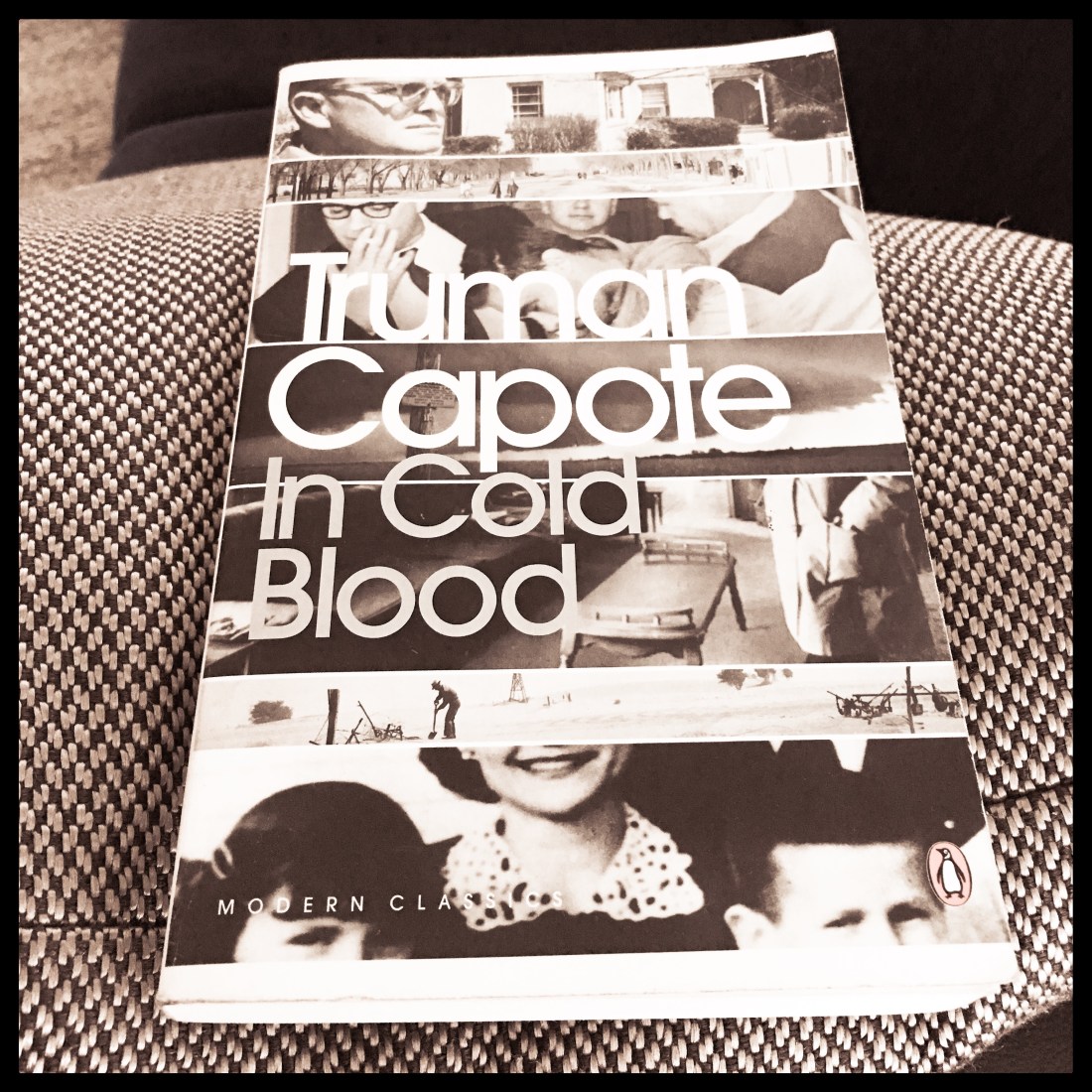
In Cold Blood by Truman Capote

Just a few weeks ago, a close friend recommended In Cold Blood to me. She enjoyed it said I too would. Well, since she knows me and my preferences, I decided to heed her suggestion. However, when I asked around to borrow the book, one voracious reader told me not to waste my time over In Cold Blood. It’s a slow and dull read, she offered.

I was surprised to hear such conflicting views from two well-read people. I read the book nevertheless. That’s when I realised the true difference between murder-fiction and murder-non-fiction.

For one, the intended audience in non-fiction is not the same as in fiction. While almost any reader can appreciate the thrill of chasing an evasive fictitious serial killer, not everyone can understand the subtleties of outlining an actual murderer’s mind. Truman Capote, in the book, isn’t addressing the impatient ones who want to finish the book and lable it “Read” on Goodreads. He, instead, addresses those curious to know the way the mind works. The author speaks of Dick and Perry’s childhood, of Perry’s troubled family and abusive upbringing, of his dreaming of a giant bird, and of his attitude towards his partner in crime. None of these details matter in fiction because no one would care. In non-fiction, however, knowing Perry’s reluctance to swimming because he’s embarrassed by the way his legs appear, makes him relatable—it makes him human. And that’s the kind of depth that no fiction goes into. For someone looking for short bursts of exciting crime, a non-fiction like In Cold Blood is just plain boring.

This is my first non-fiction murder novel. And so it struck me how different the author’s tone is than in fiction. Capote doesn’t try to lure the reader with mysterious adjectives and goosebumps-inducing alleyways. Instead, he sticks to the facts—the cold facts that chill the bone one page at a time. For instance, there’s no element of surprise in In Cold Blood. I had gone less than fifty pages into the book, and I knew the killers, their appearance, and their uncanny ability to smile as they killed—so to speak. That’s how non-fiction works; the author has little to nothing to fold in a heart-stopping moment into the plot. The whole world knew the victims, the killers, and the history of the investigation—even before Capote began writing the book. It’s no surprise that there’s no surprise in the story. Nevertheless, the book reads like a true work of art. The crime was slick, chilling, and brutal. And Capote does nothing to make it sound any less.

Come to think of it, when reading a non-fiction murder story like In Cold Blood, a reader shouldn’t expect anything. The purpose of non-fiction is in itself different from fiction. While fiction has a perfect beginning, a crescendo, a plot twist, and the climax, non-fiction serves a larger purpose: understanding. Non-fiction readers don’t look for the climax, because the book opens with it. Instead, they look to look into the lives of the murderers, the routines of the victims, what they ate the day they were killed, who Nancy helped bake a cake, which part she played in the school play, how much she loved riding the horse with her friend. The non-fiction reader looks for life in murder. They find reality in hostility, and they seek to read the killers’ intentions. Because non-fiction murder isn’t just revenge, it’s the result of an entire lifetime of bottled emotions—boiling down to a moment of unsteadiness. And that’s what a reader hopes to discover.

It’s not just the reader, though. Even the author of non-fiction murder has a purpose that varies from fiction. Writing about murders takes more than time and patience. It’s takes more than writing itself. Capote would’ve spent a lot of time researching the facts, but he also would’ve spent years trying to uncover the mystery of human psychology. I can imagine how it must be for a writer to flip through gruesome photos and statistics. The purpose, again, isn’t to write the most spine-tingling novel. It’s more than that—it’s to bring to life, and show the world, the soul of a human who happened to take a wrong path.

I enjoyed every bit of In Cold Blood. If you haven’t read it already, you should. Be warned, though: if you’re the fiction lover who is reluctant to spend time (even as long as a month) on a single book, then don’t bother. But this is one wonderful book. Capote’s sharp writing would drive through your chest, and you’ll yearn to know more about the men—who could well be your neighbours—who also murdered a family in cold blood.
Tis a Sin

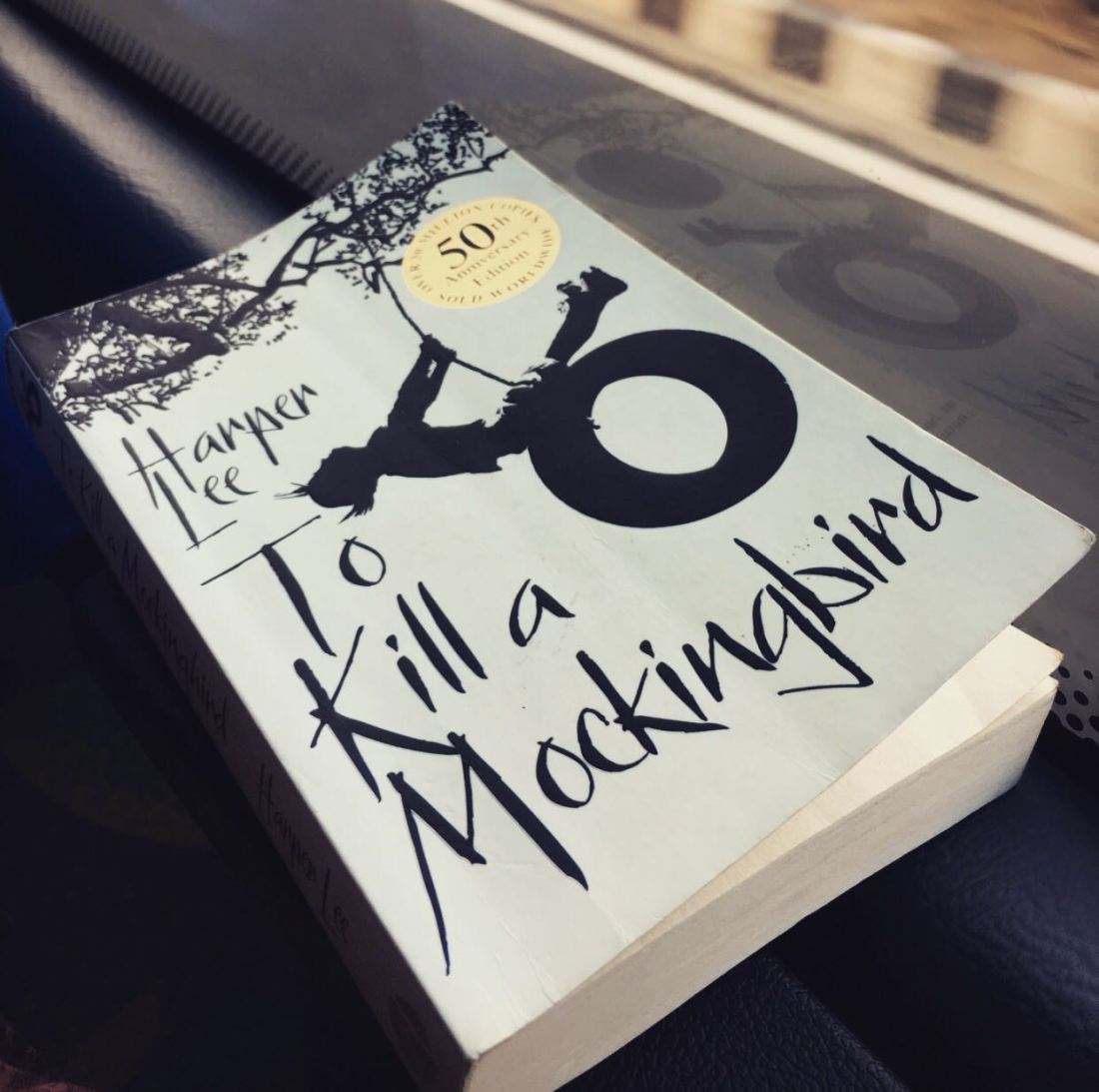
I’ve just finished reading a classic novel that I should’ve read ages ago. However, like so many other books, I took my time to get my hands on To Kill a Mockingbird. Needless to say, I regretted not reading it sooner. But there was also something different about this book than the others I’ve been reading.

To Kill a Mockingbird is a simple story. It has a complex plot that’s worth talking about for years together, but the story line was simple enough. Harper Lee had chosen a not-so-uncommon incident, and worked out a narrative around it. I didn’t realise it until after I finished reading it, but the entire plot wove around a single strand, one strong piece of gossamer that shone bright enough to attract and magnetic enough to keep me attracted through to the last page.

I can’t remember the last time I read a book so captivating, so relatable, and so enchanting. I loved the brother and sister. I loved how the brother would nag the sister saying she was becoming too much like a “girl.” Brothers do that, and not many books illustrate it as well as this one does. Throughout the story, the relationship between the brother and sister blossomed from childhood trebles, evolving into an everlasting bond of friendship and reliability. That’s how real brother-sister relationships mature, and I was amazed when I realised that no other book I’ve read (so far) ever mentioned anything like it.

Every character was a an entity in itself. Scout was an atom of energy, reminding me of my younger days when I frowned at pink flower frocks, picking, instead, a pair of comfortable overalls. Jem was a natural, a protective brother who watches out for his sister, loveable yet condescending at times — just like mine. As for Dill, he’s the kind of person we’d come across in life who has it all — or so it would see —  and yet, has nothing worth having.

Calpurnia, the beacon that lit up the Finch household, was the ever-smiling help at home that makes every child learn while they yearn for her cookies.

And Atticus, dear Atticus, what a father he made. Standing by the suppressed, jovial and just Atticus was the perfect protagonist. When he’s a typical father who doubts his parenting skills, when he demands the truth without raising a tone, when he caresses his daughter’s hair, when he embraces Jem’s adolescence — Atticus’s every action makes the reader love him even more.

How could anyone be unaware of such vivid writing and vivacious narrating? If it’s a sin to kill a mockingbird, tis a greater sin to let great works go unappreciated. At least now I can cherish it, late though it is.

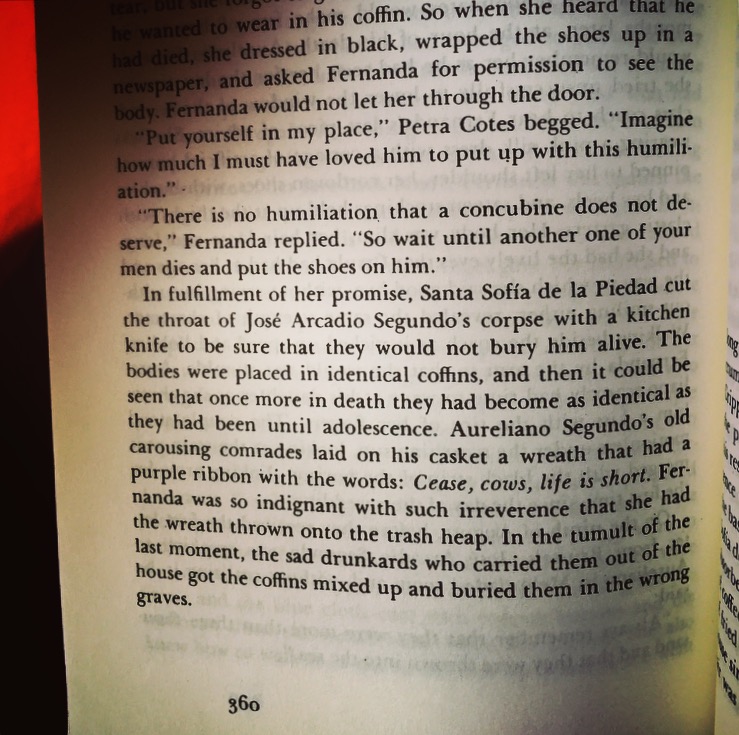
Cease, Cows, Life Is Short

Once in a lifetime, if you’re lucky enough, you manage to finish reading a book that’d make you wish you had read it sooner.

For me, it was One Hundred Years of Solitude.

one-hundred-years-of-solitude-cease-cows-life-is-short

I had begun reading the book as soon as Amazon delivered it to me — about two years ago. Then we had a falling out. I read through about sixty pages before I realised it was too complex and too “out there” for my intellect. I felt intimidated. I couldn’t understand why I couldn’t understand the narrative. Maybe it was the fine print and the font that I didn’t admire, I told myself.

Thinking I’d read it later, I cast the book aside waiting for motivation to strike me hard enough to pick it up again. Some time that time, a friend wanted a book. I suggested One Hundred Years of Solitude, but I also warned her that it had given me a block. She took it nevertheless.

That was the last I saw the book until last month, almost a year and half later.

One cold morning a line from the story popped into my mind: “Colonel Aureliano Buendía was to remember that distant afternoon when his father took him to discover ice.” Even though the book had thrown me off, that queer line had stayed with me. That’s when I realised I should give the book another chance. I got the book back from my friend and dove in right away.

It took me a good one week to finish the book. I whizzed through over half of the story, slowing down as the narrative progressed. Many times, I went back two pages to make sure I followed which Aureliano did what. I had to scan the family tree hundreds of times before I understood who’s child Amarantha was and who her child was.

I speed-read some parts while I cherished other parts of the story. I stopped at beautiful turns of phrases, and gawked at clever word choices. And then I paused and took pictures when I saw words of wonderment.

When I did finish reading it, however, I wanted to kick myself. I chided myself for missing out on so much pleasure the first time I tried reading it. If only I had tried harder to endure the initial confusion, I would’ve enjoyed a glorious read much sooner.

Perhaps it was meant to be. Perhaps I couldn’t read it then because I wasn’t mature enough. Maybe now was the time I needed it the most. Just like the Buendía family had waited a hundred years to decode the prediction of their fortunes and misfortunes, I had let history repeat itself before decoding the joys of One Hundred Years of Solitude.


You should read this book, if you haven’t already. If you have, however, tell me, what was your initial reaction?

A Second Shot

Abandoned it once,

older, I reached out again,

seized this time. Good book.

The Real World

Over the past few weeks, every colleague stopping by my desk would take a look at the book next to me and remark that it was such a classic story. I smiled when it happened for the first time. I had known that, of course.

And yet, as more people said the same thing over and over again, I began to get annoyed. I felt like an idiot because I hadn’t read the book for so long. It was 1984, after all.

The book, and not the year — in case you were wondering.

Now, however, I’m done. I’ve finished reading the book and I feel like kicking myself for not reading it sooner. Nevertheless, the book left me astounded, wondering if there was anything in my life that I think is true is indeed true.

It left me with a deep sense of insecurity and self-doubt. I do realise that it’s fiction, but it oozes reality in so many levels.

I’m a minimalist, but I would never apply the same minimal logic to words and human expression. When it comes to speaking and voicing thoughts, the more ways to say it, the better it is. But here’s what scared me: I agree that we should get rid of stuff that mean no meaning anymore. In that sense, when the concept of freedom itself is no more, it makes sense, in certain sense, to eliminate the word altogether — or forget that we even had such a word. But even to think, for a moment, that we don’t need freedom is a messed-up way of life.

And that’s what the book did to me. It messed me up. It messed with my head, and my ability to cope with the reality of the world. It’s possible that our world would become the next Oceania. The Party is, of course, just a bunch of power-hungry people craving to keep the masses out of their way and the working class in their wake. It’s the reality of every nation in the world. There’s just a tiny tipping point between a real party and the Party. Every day, we hear news of people gone missing, of people rebelling, of the rebels who died in battle, of torture and murder, even suppressed free thought. It’s all happening, each day all around us, right in front of us.

And yet, we call 1984 a fiction. It’s not. It’s our lives. Only, we love the Party too much to realise the truth and think for ourselves. In a world that still penalises people of other beliefs, advocates singularity, and abhors variety in even skin tones and vocal chords, it’s only a matter of time before two plus two become five.