The Tale of a Boy at Sea

Yesterday, I read a unique book that chilled me to the bone. It wasn’t the curious case of an unsolvable mystery, it wasn’t a multi-murder crime thriller, and it wasn’t a sweet romantic proposal story. It was the tale of a young boy stranded at sea for ten days.

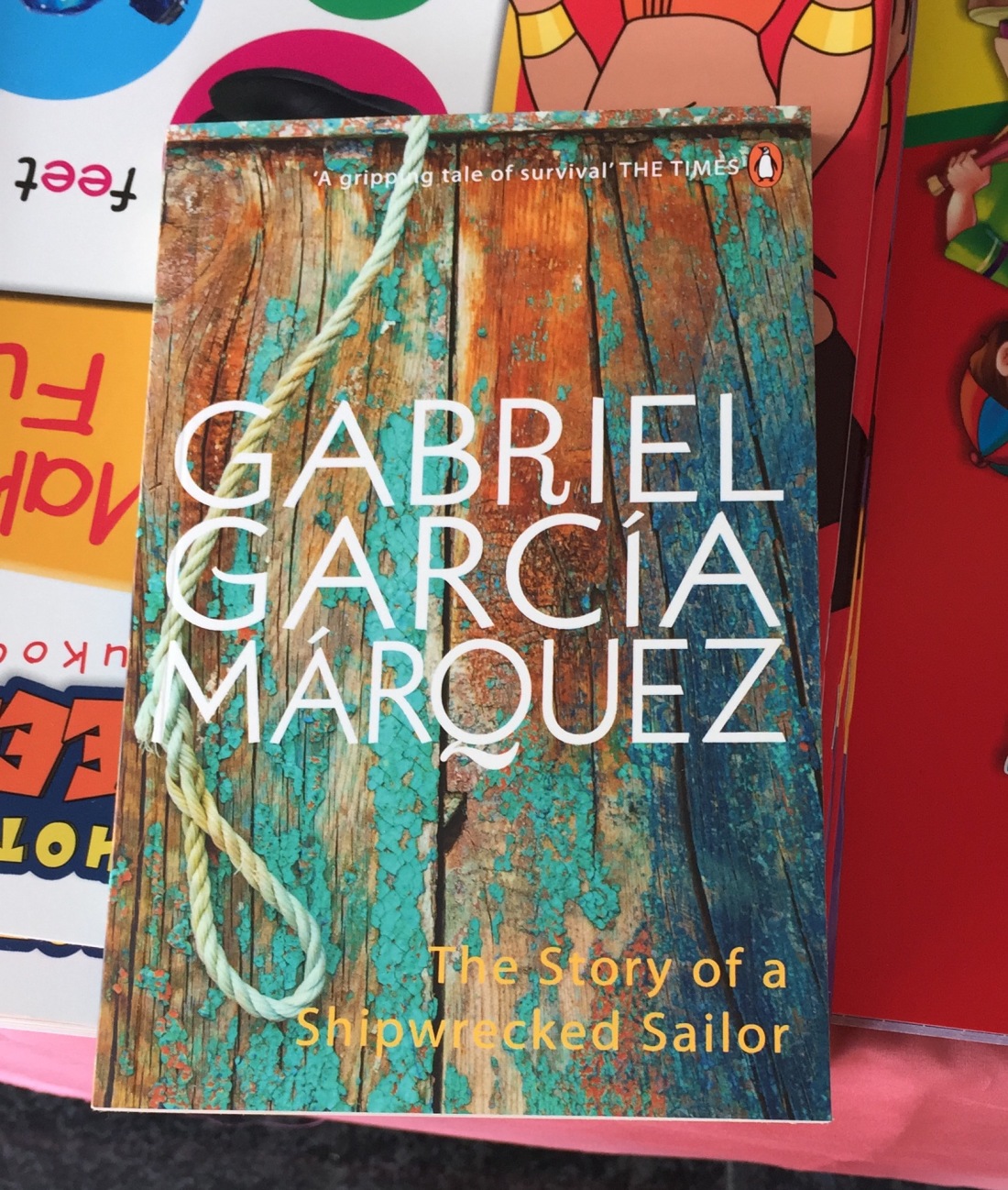
It’s not Life of Pi, but I wouldn’t blame you if you had thought so. That book is ever more popular after its movie counterpart. However, the book I just read is “The Story of a Shipwrecked Sailor,” and the author is Gabriel García Márquez.
the-story-of-a-shipwrecked-sailor-gabriel-garcia-marquez

It surprised me too. I had never heard of Márquez writing such a book. But I was curious. It was a small book, just about 100 pages. And yet as I held the book in my hands contemplating whether to buy it, all my sense of reality told me I should opt for an ebook, instead, because it would take far less physical space. I asked a friend to help me decide, and he warned me that Amazon would have the same book, for a lower price.

And so when I was almost convinced I shouldn’t buy the book, I flipped the book over and read the epilogue. That’s when I realised: this was Márquez’s first book. That piqued my interest. Besides, the cover was gripping, and it even had a review from The Times that called the narrative, “A gripping tale of survival.” And at that moment, I took a chance. I lost all sense of common sense and decided to go for it. After all, I had nothing to lose.

I’m glad I made the decision. I know I shouldn’t have gone by just the cover of the book, but this is one of those times when the gut and the cover got it right. It’s a simple story, in the first person point of view. A boy in a ship leaves for Colombia after being in port for six months. He set out homewards, to his family and soil he could call his own. In the middle of the sea, however, disaster strikes and all of his shipmates go down. He holds on to a raft and survives the sea—amidst sharks, hallucinations, hunger, and thirst—for ten days. He then makes it to land and becomes a national hero.

It’s typical and predictable in all aspects. But the best part of it is that the author narrates all the typicality and the commonness of it in such a matter-of-fact way, that you can’t help but keep turning the pages. You’d want to know what’s coming, even though your sixth sense tells you it’s nothing great for the hero.

The story reeks of emotion. You feel for the hero. When he stretches his neck looking for land, you stretch with him. When he plunges his hand into the sea trying to catch some fish, you gasp knowing that the sharks are waiting around the corner. When he wonders how shoes taste like, you’ll find yourself imagining the taste on your tongue. And as he tries to pry out the soles of his shoes, you wish you could pry it with him.

It’s an ordinary story, but it gives you an extraordinary experience. I now know why Gabriel García Márquez got a Nobel prize for literature.


Understanding  Metamorphosis

I’m not sure what brought it up, but a colleague mentioned Franz Kafka wrote the saddest stories ever. A pathos fan myself, my interest was piqued. My colleague recommended and lent me the ebook version of Metamorphosis, a supposed stunner.

It was a small book, and I managed to tolerate reading it on a screen. I finished it last night and gave it a two-star rating on Goodreads. And then I scrolled through reviews to see what other readers had said thought about the book. I was stunned; a lot of people had given four or five stars, and words like “wonderful,” “amazing,” “deep,” and “emotional” jumped out at me.

I scratched my head. Huh?

Jack

It was as if they had read a different book altogether. I wondered if my copy had been just the preface, and if there was more to the tale than I had read.

I had expected dramatic change, something that would topple the lives of all the characters. I know all that did happen, still, it was too matter-of-fact, like.

It’s not that I didn’t like the story, but I didn’t see what the big deal was. It was well written, sure. It had an uncanny plot, yes. And an unconventional ending. But other than that, I didn’t feel the sadness ebbing from the words, I wasn’t moved to tears, my eyes didn’t burn, my nose didn’t stream, and my neck didn’t hurt from crouching.

It was a good story with a beautiful narrative. It wasn’t gripping or as sad as I had hoped. Nevertheless, the comments on Goodreads unsettles me. I feel almost inhuman not seeing what’s so intriguing about the book.

Have you read Metamorphosis? Pray tell, what did I miss?

Of Poetry

I’ve always enjoyed poetry. But I never understood reason, until now.

Poetry is

It’s true, people write in poems things they can’t speak of, things that are too personal, things that make us vulnerable, that make us cringe at ourselves, laugh at our stupidity, and scorn at our vanity.

Every poem is a bitter reminder of the truth we’d rather not hear. Every rhythm and every rhyming couplet — from “black wires grow on her head,” to “The old Lie: dulce et decorum est pro patria mori” — every piece of poetry is a whiplash to humanity.

And maybe it’s necessary, to take that serum once in a while, to hit ourselves with a dose of poetry and question everything we ever stand by.

Human Weakness

How often do we find ourselves trying hard to convince people of our intentions? Quite often, in my case.

There’s something so weak about human nature that begs to be understood, to be heard, to be trusted, adored, and — in short — to make sense.

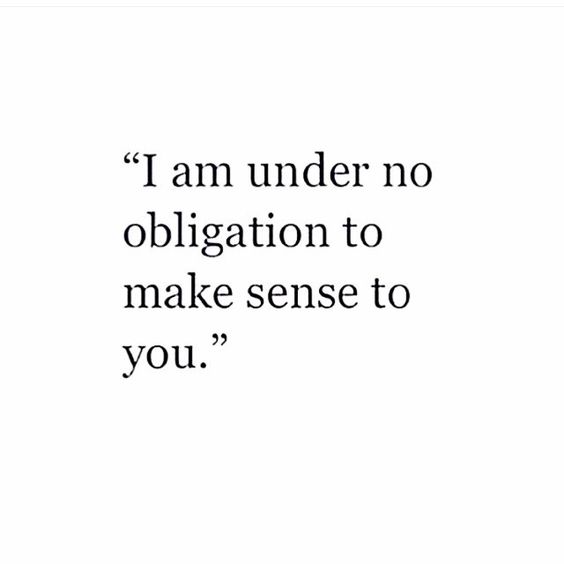
And then I saw this on Pinterest. And it made me question everything.

obligation

Makes sense, huh?

The Devil and Paulo Coelho

paulo coelho
Credits: Google

I’ve begun to lose interest in Paulo Coelho. And trust me, I don’t want to.

Every time I open one of his books, I look for that something I found in The Witch of Portobello. I loved that book, and in comparison, both books I read afterward (By the River Piedra I sat Down and Wept and The Devil and Miss Prym) ended up disappointing me.

The thing with The Devil and Miss Prym is that I got lost plenty of times while reading the book. I admit, I was sleep deprived, but even so, the book was a painful read. Plus, I had a bus journey of about 6 hours to look forward to, and the book was my sole companion.

I almost forced myself to finish reading this book. It’s one of those stupid things they call closure. Unless I finish reading a book, it keeps popping up in my head, bugging me, torturing me, and making me feel all kinds of guilty.

So I leaned back in my seat and, stifling my yawn to avoid my neighbour from judging me, opened the lovely-coloured cover. And every five minutes, I had to tear my eyes off the view of the street and get back into the book. That’s how slow it went.

But with all respect, the book wasn’t all a loser. It was nice, and parts of it were great. With a simple narrative, a solid story, and some good characterisation, it was a decent read.

It just wasn’t my type.

Perhaps it’s just me, but I’ve started to think Paulo Coelho is trying too hard to be philosophical and spiritual. All this talk about what’s right and what’s not, the co-existence of devils and angels, evil and good, the question of conscience, and the unmistakable victory of all things good — and here I am wondering what’s new. It’s the “same ol’ same ol’” story.

But I don’ want to give up yet. One, because I still hope Paulo Coelho had written something as captivating as Athena’s story. And two, because I had already bought a boxed set of his books that I don’t want to leave unread. Oh, and the covers — they’re beautiful with luring fresh print, and my mind seeks closure.

Part of me wants to give up on Paulo Coelho — at least for the time being, but the bigger part of me wants to read the other books too — just in case. I don’t want to miss a great book, just because I didn’t like a couple.