The land owns us

I’m walking Te Araroa (TA) later this year. There, I’ve said it. For the first time since I fell in love with the idea seven years ago and seriously started planning for it last December.

Loosely transliterated to “The Long Pathway,” Te Araroa is a 3000 kilometre (1800 miles, if you’re that way inclined) tramping/running trail that goes through the entire length of New Zealand. From the top of the North Island, Cape Reinga, to the bottom of the South Island, Bluff, the trail snakes through iconic forests, mountains, lakes, rivers, and volcanic craters. It’s one hell of a way to travel through the country.

What I love most about the trail is not its length or its majesty. It’s the fact that this trail only exists because of the kindness and generosity of humans that owe nothing to the people who walk the trail every year.

1800 kilometres of the 3000-km trail is on public land monitored, managed, and cared for by the Department of Conservationโ€”colloquially known as DOC, a little nod to the inimitable healing power the Department and its humans seem to have on the land.

The remaining 1200 kilometres are on private land. The Te Araroa Trust and DOC work closely with these private landowners to make sure the trail continues to live on for people who come from thousands of miles away to experience it. It’s a lot of work, negotiating with and reassuring these owners that hikers aren’t always a scourge on their land, and that the world deserves to see and appreciate Aotearoa in its entirety.

When I lived in India and Australia, I’d often see swathes of private property fenced off with stern signs that trespassers will be frowned upon and prosecuted. I hated that. I yearned for a world where roaming is a basic right and passing through is welcomeโ€”as long as you behave responsibly.

It’s a naive thought. There’s no country in the world that will allow random humans to walk onto and through other people’s property without explicit invitation.

Which is why Te Araroa is special. Anyone is allowed to walk through 1200 kilometres of private property without the fear of retribution.
However, that doesn’t mean that you can do whatever you want on that property. There are rules, written and unwritten. There are protocols, best practices, and basic human decency principles that every walker is expected to follow.

My past self would’ve raised eyebrows at this. I would’ve vehemently argued that land should not be “owned” by private individuals because it’s for everyone to appreciate and enjoy. The land-owning few enforcing rules on the rest of us seemed like a moral wrong to meโ€”especially when the land has been around for far longer than humans.

In the last few years, however, my perspective has shifted.

I still strongly believe that we don’t own the land; the land owns us. I believe that humanity has wasted itself by conjuring rules and regulations around who owns which part of land and for how long.

But now, I also believe that people who’ve invested their life in serving and conserving the land have the right to protect it against pests, humans and otherwise.

I will never let a horse, however sweet and charismatic, into my garden patch of broad beans. It’ll destroy the integrity of the land. I have a responsibility to my broadies and that means keeping out anything that might harm the life of the land.

Everyone who cares for land in the same way has the same responsibility. As soon as I realised that, I understood that this what native land titles were all aboutโ€”not to carve up land for use and abuse but to treat the land with the respect and grace it deserves. First Nations people embody this. I’ve never heard an Indigenous person talk about land ownership as an entitlement. They talk about it as a responsibility and an honour to stand guard.

Australians have a habit of starting every event and gathering with an acknowledgement to Country. It goes something like this: “We acknowledge the [name of native tribe] people, the original custodians of the lands that we’re meeting on today.” Australia didn’t respect the Original Custodians or the Country in its long, brutal, and bloody Colonial history. Even today, native land title is a heated topic in parliaments and dinner tables across the country. Despite that irony, the script reflects something meaningful. We so often unthinkingly utter those words, like a chore almostโ€”but they show the true depth of native land rights.

The land always owns usโ€”not the other way round. But there has also always existed a group of custodians who take on the heavy burden of nurturing the land, and living on the land long after the passers by are gone. So they should have a say in whether and how rest of us can walk through the land.

So when I say Te Araroa is special, it’s because these peopleโ€”both native title holders and those who bought property under the modern ways of lifeโ€”have come to agree to share their homes and back yards with the rest of the world. With no expectation other than we leave it as we find it.


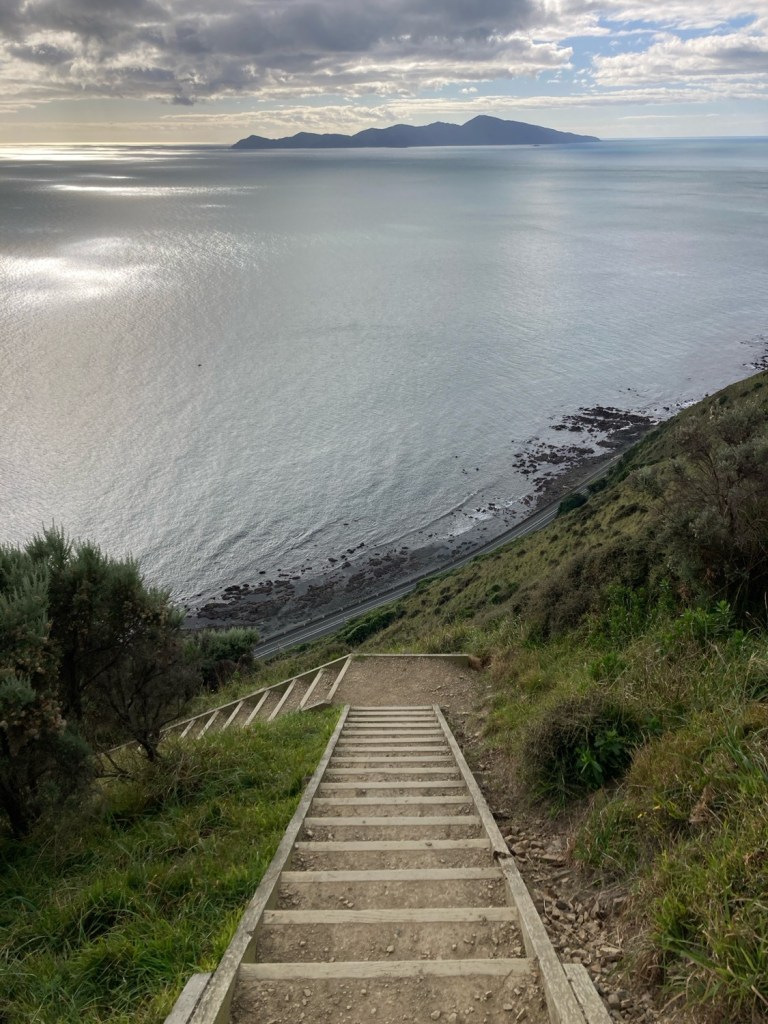
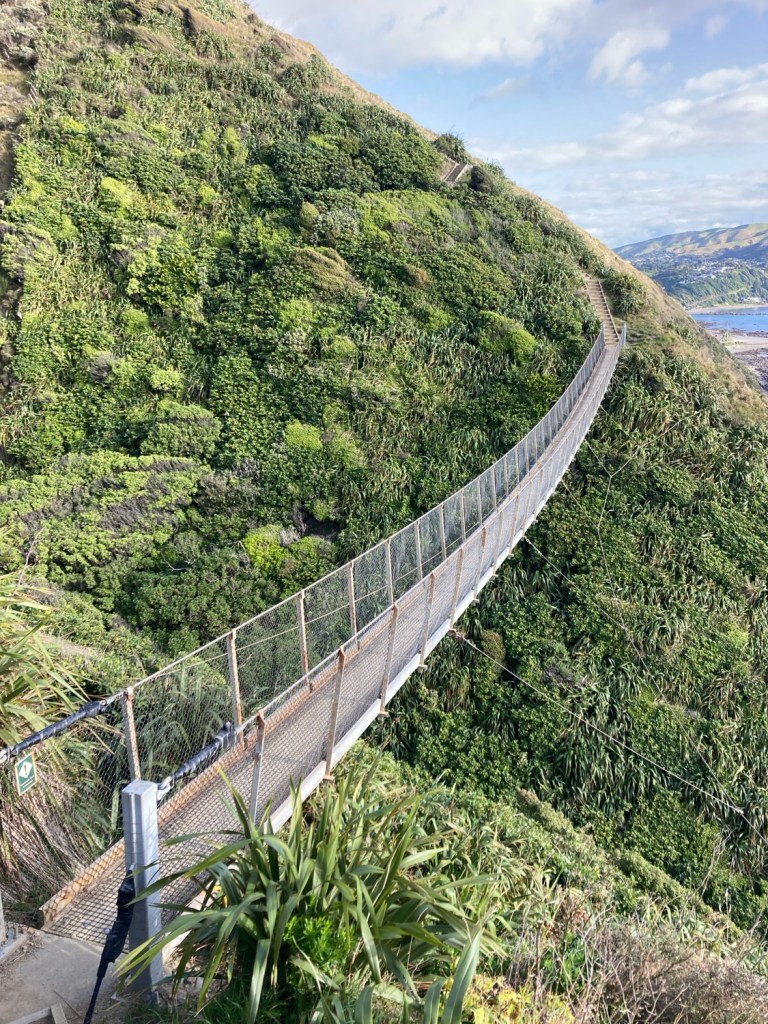
Photos of The Escarpment Track, a 10km trail in Wellington, NZ. This trail forms a part of Te Araroa.

My 2025 in booksโ€”reflecting on the meh, relishing the mastery

Every January, I give myself a target to read a certain number of books during that year. For the first time this year, I read some fantasy fiction that I never would’ve if it hadn’t been for my best friend who loves steampunk, urban fantasy, and exploding worlds in the sky. She chose books we’d read together, so I ended up peering into stories about astronaut schools and moon-hopping rebel cadets; about bone witches discovering their witchiness and bitchiness at the same time; about vampire knitting clubs; and all such woo woo-ness.

Although I enjoyed these strange stories at the time, many of them didn’t challenge me too much. That sounds pretentious, I realise, but they were largely short-lived fun. Not unlike the feeling you get after watching a salacious TV series about steamy affairs and greedy cocaine snorting gangs. You know it’s wrong, and you feel bad that you enjoyed the experience of being embedded in that world, even if just for a few hours.

Surely my year in books wasn’t all that bad?

It wasn’t. I was just blowing things out of proportion. Because when I scrolled through my Goodreads account, I realised I’d also read some fantastic books that kept me obsessed, curious, questioning, and challenging my own assumptions and long-held beliefs.

Like This I Would Kill For by Anne Buist, a book that goes into the mind of a psychiatrist who has bipolar disorder. It was the first time in my life that I’d considered that a mental health physician could live with a complex mental health condition themselves, and that that doesn’t mean they can’t function or do their job admirably.

Or Theory & Practice by Michelle de Krester, a book that challenged my notions of what a story is and how narrative fiction should look and read.

Or The Lasting Harm by Lucia Osborne-Crowley that chronicles a day-by-day account of the now-renown trial of Ghislaine Maxwell, and goes into harrowing details of Epstein’s empire of abuse. This book kept me up at night.

As did the controversial Ayn Rand’s popular Atlas Shrugged that made me think about the parallels between our modern AI-driven world of business and creativity, and the world that John Galt tried to destabilise. I wrote about it, too.

That book nicely sandwiched Cal Newport’s thoughts on the nature of workplace communication in A World Without Email, where he explores how much we’ve let email run our lives even when we’re supposedly switched off, and Johann Hari’s rather disturbing, illuminating, and complementary observations in Stolen Focus: Why You Can’t Pay Attentionโ€”and How to Think Deeply Again.

It was with that solid backdrop that I went into the next great read of the year: The Culture Map: Breaking Through the Invisible Boundaries of Global Business by Erin Meyer, a beautiful and honest exploration of why we sometimes struggle to like our international colleagues, and how our traditions and cultures influence the way we think, work, and approach life and play. This stuff should be essential reading in colleges and universities. This is what young people should know as they step into the real world of The Workforce.

Then there was Chai Time at Cinnamon Gardens by Shankar Chandran. It had been on my list for a few years and is the kind of book that immediately reveals its nature in the title, and stays true to every unspoken promise it made in said title. Having read Song of the Sun God by the same author earlier in the year, and as someone born and raised in Sri Lanka during the civil war, I knew what I was getting into with Chai Time and felt connected to these books in a way that I hadn’t connected with a person this year.

Your Face Belongs to Us: A Secretive Startup’s Quest to End Privacy as We Know It by Kashmir Hill pulled me sharply back to modern day reality, making me pick up my jaw from the ground several times over the course of fabulous narrative prose. The author tells a story I wish weren’t trueโ€”the tale of dangerously powerful people like Hoan Ton-That (an Aussie computer engineer) Richard Schwartz (former Rudy Giuliani advisor), and Peter Thiel, and the unregulated facial recognition technology they championed, offered, and sold to businesses, private investors, and law enforcement agencies. A technology so questionable that even Google and Facebook considered it too immoral to release.

One of my favourite pieces of screenwriting comes from BBC’s Sherlock: “Don’t make people into heroes, John. Heroes don’t exist, and if they did, I wouldn’t be one of them.” Once again this year, I was reminded of how true those words are when I settled into finally reading Flawed Hero: Truth, Lies and War Crimes by Chris Masters. The author, a journalist, explores how Australia fell in love with Ben Roberts-Smith VC MG, the most decorated soldier of the Australian army, who after leaving the force, became the epitome of success and gallantry, and the general manager of Seven Media in Brisbane. Masters goes on to explain the biggest defamation trial in modern Australia, one that shed light into the horrific war crimes, bullying, executions, blooding, and abuse that Ben Roberts-Smith (or BRS for ease) was responsible for. I was living in Australia when the war crimes allegations against BRS came to light and the defamation trial was being heard. So I knew what I was getting into with this book but that didn’t make it any easier to digest. Heroes really don’t exist.

It wasn’t all dismay and despair, though. This year’s reading list also included some gloriously heartwarming stories of love, life, and choices that make your heart sing…

Like Two Steps Onward by Graeme Simsion and Anne Buist, a sequel to the story of two people who first met on the Camino de Santiago (Two Steps Forward), and find that circumstances bring them together again to walk the Chemin dโ€™Assise.

Like Northbound: Four Seasons of Solitude on Te Araroa by Naomi Arnold. This woman, who’d been watching the Te Araroa and dreaming of walking it for 20 years finally did it when she was 41. Te Araroa is a 3000 kilometre through hike that goes through the entire length of New Zealand. Most people take 3-5 months to walk the trail, during the spring-summer walking season. But the author, an adult with life and responsibilities and an active job, did it in 10 months. I love this book because the author talks about how we can become obsessed with the idea of perfection (of walking every damn inch of the trail), and how that sometimes leads to missed opportunities and more pain than pleasure.

Like Tomorrow, and Tomorrow, and Tomorrow by Gabrielle Zevin, a great story about soulmates who aren’t lovers. This is such a deep exploration of love and relationships, how personal insecurities get in the way of happiness and honesty, and all the reasons we hold people close in our lives. All the feels.

Richard Flanagan is one of my favourite Australian writers. His love for Tasmania, nature, people, history, and country shine through in his personal examination of morality and storytelling. Question 7 is one of those books that doesn’t seem all that coherent on a surface level but illustrates how seemingly random events lead to the here and now. Reading Flanagan is like stepping into a dream where you confront reality in poetic form.

I can’t speak of poetry and dreams without paying homage to Dirrayawadha by Anita Heiss. The author of Bila Yarrudhanggalangdhuray (glorious read, btw), Heiss has a way with words and stories that made me fall in love with Australia’s aboriginal heritage like nothing else did. She sets humble fiction within the harsh history of Australia; her simple prose slices through any illusions that modern/migrant Australia might still have about the role of invasion in the destruction of aboriginal culture and lifestyle; and she shows that love stories and happily ever afters are so much more nuanced than “boy meets girl.”

So there you have itโ€”the end of another year of reading, thinking, learning about life, work, and the purpose of everything. It’s been a great year of pushing boundaries, sitting in discomfort, keeping an open mind (as much as possible), and reading more of writing that brings me joy.

What are your favourite reads from this year, and what’re you looking forward to reading in the next?


My bookshelf from 2025 – full list of books I enjoyed this year.

Book of Colours

Who doesnโ€™t love a determined, self-sufficient heroine? One that doesnโ€™t need saving from her male counterpart. Or even from herselfโ€”a common theme in feminist novels nowadays.

Tangent aside, a female lead who knows what she wants, accepts her hurdles, and yet still strategically perseveres towards achieving her passion is someone born for that. We often say talent is inherent. But everyone is talented in some way or the other. What matters is how much they invest in honing that talent. Thatโ€™s the difference between Van Gogh and Random Dude. I bring this all up now because Iโ€™ve just read Book of Colours, an excellent historical fiction that celebrates a woman artistโ€”or in this case, a limner.

Cover of 'Book of Colours' by Robyn Cadwallader

I know how that sounds, but itโ€™s not what youโ€™d expect. Itโ€™s not the story of a young girl who finds her passion for art, grows up facing many challenges, and finally gets the recognition she deserves. Thatโ€™s the equivalent of the โ€˜damsel in distress saved by the heroโ€™ narrativeโ€”the typical, proven theory that satisfies the masses on any given day. Though such a plot has its place in novel writing, this one is way different.

Itโ€™s about a woman whoโ€™s painted all her lifeโ€”from childhood, assisting her father, also a limner. Everyone around her knows her capabilities. However, sheโ€™s a 14th-century woman in England. Women of that period werenโ€™t even allowed to read, let alone paint. This is the story of Gemma, the brilliant artist, and her husband, whoโ€™s also a brilliant artist, except heโ€™s known nationwide for his talent. They receive a project to design and create a Book of Hours (an illustrated book of prayers) for a wealthy landlord far, far away.

But this is not the story of Gemma. The writer never once tells the reader that Gemma is the main character. You either realise it, or you donโ€™t. Either way, youโ€™ll enjoy the book.

As the story begins, we follow Will, a young artist running away from his hometown. He ends up working with the master limner and his wife, Gemma. From there, we watch as Willโ€™s life unfoldsโ€”as he works with the couple on their project, how he becomes essential for the book and its owner, and how he blends into the family.

Our introduction to Gemma comes through Willโ€™s eyes. And so we see her as a cold, doubtful woman who clearly hates him from the moment her husband invited him in. Heโ€™s shocked when he realises she paints, torn between her knack for translating words into pictures and the unacceptable reality of her being allowed to paint. And yet, between them grows a friendship thatโ€™s unlike any other. As highly-gifted artists, they spend a lot of time in each otherโ€™s presence, heads bent low, each immersed in their own battle.

Like all good characters, Will also evolves from a typical man who looks down on a woman painter to accepting her skill. But that transition is so artfully doneโ€”he doesnโ€™t run into a raging feminist who changes his mind about women doing other than housework. He doesnโ€™t have a flash of understanding about patriarchy that completely changes him overnight. Instead, itโ€™s a gradual change of mind, a progression thatโ€™s incomplete even as the story ends. As a skilful limner himself, he admires Gemmaโ€™s talent.

For a long time, he believes sheโ€™s protected only by his and her husbandโ€™s silence. As someone who enjoys realistic characters, it was refreshing to see that Will still had a lot of room to grow. Heโ€™s not perfect, and thatโ€™s a perfect place to end his story.

Though Gemma herself goes through many changes as the story progresses, her situation largely remains unchangedโ€”quite an unexpected ending for a character of that magnitude. She doesnโ€™t get the recognition she deserves. Only the characters who knew about her passion for the art at the beginning know about it in the endโ€”plus Will, of course. And yet, we see her evolve into a more complete and aware person. Sheโ€™s another example of a realistic characterโ€”no drastic, dramatic incidents to topple her underlying beliefs. Every good change happens gradually. And thatโ€™s why this book is such a good read. The author has done one hell of a job, and Iโ€™m glad I read it.