My Big Fat Fake Society

If you look up “caste” in Wikipedia, the first thing you’d see is a detailed explanation of India’s caste system. We pioneered the art of classifying people according to their birth. We mark and judge others by something they have no control over themselves. We are the vile people who shun our fellows because they’re different. Oh, and we’re also the first ones to name America a racist country.

We, Indians, are a fake society. Here’s how our system works: We live inside a cocoon of a society pretending we’re all-inclusive forward-thinkers. However, every day, every meaningless conversation at home or at familial gatherings would revolve around caste.

Shocking? Wait till you hear the rest.

If I announce to my family, at dinner, that a friend is getting married the following month, their first question would be if the couple is from the same caste. The second question, whether they belong to our caste.

And if I even dare to tell my family that I’m considering working abroad, their biggest worry would be to find a groom (in our caste) who wouldn’t be threatened by such a wife. My, it’s an abomination to want to live in a foreign country alone.

Even though plenty of men (in our caste) nowadays live in first-world countries, they’re nevertheless reluctant to marry a girl who’d talk about something more than what’s for dinner. It hurt a lot to hear it from my mother herself because I only see absurdity sprawled all over such a situation.

I had thought no one would be so silly now, but when I look around, all my married cousins went through the same excruciating filter. Pity some of them didn’t even recognize it. Some, of course, just didn’t care because they could immigrate to a country that sees snow. I know a friend whose parents had her blood group matched with her husband’s; she didn’t care a bit. It’s a little unrelated, but you get the idea.

It’s one thing to live amidst a limiting society, but another thing altogether to live in a closed caste system. There are plenty of tribes and societies across the world imposing unthinkable restrictions on women and children. But the difference is that they don’t hide it. They declare it as their tradition and take pride in it. (Whether it’s right or not is a debate for another time.)

The beloved caste system I’m in, however, hides in plain sight. It isn’t uncommon for a bunch of men at a family wedding, to brag about how shaving twice a day, every day would uphold their caste pride — because some castes ban men from growing facial hair. Amidst a larger crowd, though, they’d pretend as if caste is the last thing in their mind. Sad story: Until a few weeks ago, their pretense had me fooled too. It’s little things like these that make the biggest mark and hurt the most. And it’s shenanigans like these that degrade and warp the minds of every youngster in our society.

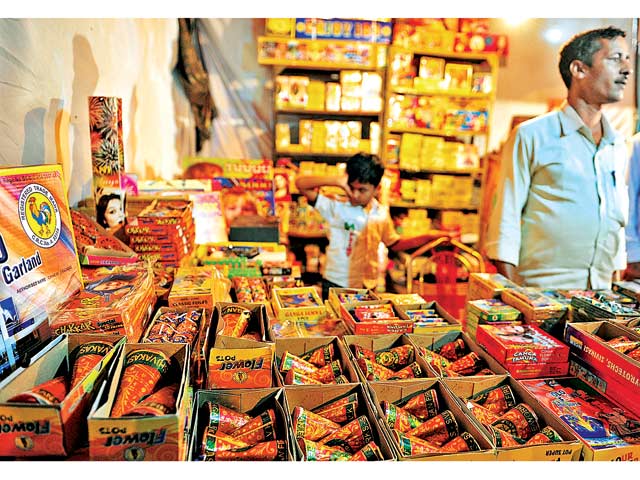
What’s the Point of Fireworks?

For once, I’m glad the weekend’s over. For two whole days, fireworks have been cracking and popping outside my window and all I could think of was what’s the point of it all?

It’s funny that people work hard all year and throw away all their bonus cash on rolled up gunpowder that could blow up a finger. It happens too, at least five times every year. And most of the time, it’s more than a finger. Sometimes even entire houses near a fireworks shop go up in flames just because some random guy lit a cigarette. Fireworks are unstable, risky, and they turn cash into ash right in front of your eyes.

As if wasting money weren’t enough, there’s the nuisance of noise and smoke. I kept jumping every now and again — and not because of the plot twist in the book I was reading. One kid’s thrill for roaring rockets and blasted bombs made the two-month-old next door wail all night which in turn kept me up all night. The noise even drowned out the environmentalists who orated ozone overtures on television. Not even an hour of silence.

But there’s another side to fireworks. A side that’s as pathetic as the aftermath that garbage collectors have to deal with.

About three months before the festival season begins, Sivakasi and the rest of fireworks-producing areas rejoices. Fireworks are their livelihood. They’d lock themselves up in a dingy room, stuffing charcoal into sulfur and sickness into children. And with every pack of fireworks they sold, the lights in their houses would burn brighter and their kids would get a better chance at primary education. The lighter our purses become, the heavier their stomachs become. These people feed on fireworks while people in white coats argue for boycotting the poisonous epidemic.

Nevertheless, fireworks aren’t military. There’s no point in pretending they are a necessary evil. We know the destruction fireworks cause, but we also know the families that hinge on them. And that’s the saddest stature of Indian society. A large portion of our people would die if the larger portion doesn’t kill the environment (in a way).

Unless we take a stand. Unless primary school textbooks refine their definition of Sivakasi being synonymous with fireworks. Unless we do more than boycotting fireworks. Unless we find alternative employment opportunities for those who survive in charcoal, we won’t rid ourselves of pointless fires.

A Festival of Darkness

I’m home alone, marvelling Pirates of the Caribbean for the uncountable time. My room mates have left for their hometowns and so have my colleagues and friends.

Today is Diwali or Deepawali, a special Indian holiday. People working away from their hometowns throng home to spend the day with family. Most religions celebrate this day as the day good destroyed the evil in the world.

diwali-fiewworks
Not real bombs. Just fireworks.

Yet it’s ironic that we celebrate the end of all evil by spreading more evil.

We all love spending time with our families, sharing a meal, and smiling at the kids who run around the neighbourhood fighting over candy while parents share a drink. That’s how foreigners see Diwali. It’s a day of joy and sweets and all things nice. There’s no evil in that.

So it would seem.

Diwali is the festival of lights. And the reason: We celebrate the day lighting firecrackers and scaring the crap out of our domestic animals. It’s common for people to have cows and buffalos as pets, along with dogs, cats, and fish. And while I enjoy Jack Sparrow’s adventures in my room, I hear these bigger animals wailing in fear as the fireworks go up a little too close to their feet.

As I shake my head disgusted at parents who let their kids torment animals, my phone lights up with flash news: “Fire in Gujarat’s fireworks shop, over 10 people dead.” Every year, Diwali brings a handful of fire accidents in fireworks shops. And every year people debate whether we should continue selling and manufacturing fireworks because of all the death and destruction. And yet, year after year, people light up their stash of smoky hell, laughing at lights and lolling like maniacs.

fireworks-shop
Fireworks. A livelihood.

There’s more to Diwali than killing lives and scaring animals, though. Fireworks are expensive. And every household with children or light-liking adults spends about $30 in fireworks. Not to mention other expenses like buying sweets and savouries and new clothes for the entire family. These don’t come cheap. Tis the season where employers give employees a Diwali bonus, too.

On the day of Diwali, people wake up early, clean up real good, wear new clothes, have breakfast, and go outdoors to light up fireworks. An hour or two later they’d break for coffee and snacks. Then again, they go back for more fireworks. and in between the festivities, comes other traditions like visiting neighbours and friends to give away snacks, and all-day feasting in cholesterol-full foods. The whole day wanes, and we call this the single biggest festival of the year.

However, like all things Indian, there’s also a counter-culture to this Diwali madness. There are some who don’t throw money away on fireworks or shopping. They don’t spend all day indulging guilt-free on guilt foods, laugh at animals cowering in fear, or trigger heart attacks in patients in a nearby hospital.

These are the ones who see festivals as a chance reconnect with their family without tearing other families apart. We are the misfits, the tradition-less, and the unholy. We call Diwali the festival of darkness because we are the ones who care for the greater good.

Brunch and the Buck

Black Buck
No. Not this one.

It was Sunday and I was brunching with a few foreigner friends. And with us were an Indian couple who loved talking about their exotic trips to various parts of the world.

Everything was fine. Sushi is deceptive, I learnt. They packed my unsuspecting mouth with so much of rice and flavour that three rolls stuffed me. Though it could’ve been because I had also eaten some risotto, bread and brie, and noodles, washing it all down with a tall glass of Mocktail.

By the time the storytellers began their cruise somewhere in central Europe, I had almost dozed off. But it was a party, and I had to play my part. I smiled and nodded as if it was the most interesting thing I had ever heard. It was, too, to an extent. I even felt a tinge of jealousy that they could lounge in a jacuzzi for thirty minutes while on a ship that in itself was a large jacuzzi.

And then the man of the couple began narrating the incredible story of his iPhone meeting water. Since they were in the middle of the sea, mobile network was out of the picture. Great. But he had taken his phone over to a water tub — a jacuzzi if you prefer the fancy term — to take pictures. Pictures of what, he didn’t say, and I didn’t know him well enough to ask. Anyway, he had become engrossed in the water to remember the phone in his pocket.

To summarise, he had spent a fortune on the cruise and had gone into the jacuzzi with his phone still in his pants. Awesome. Thirty minutes he relaxed before kicking himself for losing his iPhone to the perilous chemicals of h2o.

Social convention seemed to dictate we laugh at this point. So we did.

He went on. His heart had broken and his phone’s soul had shattered, but he had given it a royal goodbye. At this point, I didn’t know whether I should laugh or put on a sad face. I decided to plaster a smile, showing I was politely interested. Not too much, not too little I thought to myself.

While I had been busy thinking, he had been talking. When I turned my attention to him again, he began telling us tough it was to replace the phone he had just finished mourning. It’s hard, I heard, to get an iPhone replaced. They ask a lot of questions. And a lot of money. Not too surprising, since we were talking Apple and a drenched iPhone that they never claimed was water-proof. “It cost me a bloody 20,000 bucks!”

Hold it right there, buddy.

I was wide awake now. “20,000 bucks”?

A lot of Indians used “Rupee” and “buck” to mean the same thing, but our North American friends — from the looks on the faces — didn’t. The storyteller seemed too invested in his story to notice, but for a moment, there was silence. And “buck” was the culprit.

Plenty of my close colleagues say “buck” when they mean “Rupee” and it always left me with a knot in my stomach. I’d ache to give them a stern look over my glasses and correct their distinct sense of senselessness. They are two different things; a buck in America is 65 rupees in India, which is the approximate cost of a cup of coffee in a semi-fancy restaurant.

Twenty thousand Indian rupees is about $300. And I could imagine our company’s horror when they heard a figure that meant $20,000 to them. Sure, they were all too nice to blurt it out to my Indian friend, but he did sound silly.

We might spend weekends watching Hollywood movies or pretend to read modern American literature, or even chat on Tinder with people from the other side of the world. But some things don’t change. The “Rupee” couldn’t ever become the “buck.” And I wish my iPhone-losing friend hadn’t interwoven our economies like that, given how unstable they are. (But that’s for another time.)

The Twentieth Century

Here in India, we love the West. And by West, I mean the Western culture — or what we think we know about it. As technology crossed the seas and landed the television in an otherwise untelevised society, we became adept at making Friends our weeknight companions. We went from staring at stars in the sky to staring at stars on the screen.

While we indulged in “Seinfeld” and “The 70s Show,” and laughed at Homer’s jokes, the British came over telling us to “Mind Your Language.”

And we thought that was funny. Every time a funny episode aired, we’d huddle around and gape at white women sporting little black dresses and short shiny skirts. And as time went by, it didn’t feel awkward anymore. The white men in the sitcoms didn’t think it weird, so perhaps it isn’t.

Our women tried fancy clothes and our men tried perfumed sprays. Oiled hair became gelled hair, and the once turmeric-clad skin now looked “up to ten years younger.”
Thirteen-year-old girls went to school instead of their mother-in-law’s house. They learned to do their homework rather than their home work.

India — or a part — of it, saw a whole new world blooming under the influence of the West. There was a time when we got goosebumps as the hero and heroine made eye contact, but now, not even public display of affection (or PDA!) makes us flinch.

And we have fewer 19-year-old mothers cradling 2-year-old children. The system of the woman in the kitchen and the man on the porch reading a newspaper made less sense to a breed of youngsters born in a new era.

We’re now in a world of promise and freedom of thought. From being a suppressed generation of youth, we’ve embraced the wisdom that came with booze and books. We learned, and we craved for more. We adopted new ways and gave way to newfangled emotions.

We fell in love with the modernity that the West showed us. And we shunned the peculiarity that home instilled in us.

From being a society that had its eyes cast down, we began looking up at others. We started talking to the others, dating, falling in love, and did everything else we hadn’t heard of before. Arranged marriages are no longer the norm. We’ve dabbled in life and experienced things we’ve seen only in sitcoms before, like nuclear families, sex before marriage, pregnancy before you’re ready, miscarriage, abortion, divorce, and — distortion of reality.

We thought we had become forward. We thought we had it all figured out. We thought we’d become trendy folks, that we’re revolutionary, that we’d gained the right to free speech and opinionated blog posts.

We love the West because we think it changed our thinking.

It didn’t. The West changed our thinking about thinking. We think we’re more open-minded and free . We live in fallacy. Because, every day, at least one person undergoes harassment and abuse because of our “modern thinking.”

It’s not the fancy skirt, and it’s not the drinking. It’s the thinking.

We’ve adopted many important practices from the West, but we missed the vital ones. Sex is fine but talking about it isn’t. We don’t have sex education in school but encourage aborting unwanted pregnancies. We say love is universal but *gulp* men holding hands? We talk about the wage gap in careers and ignore the chore gap at home. We think like the West, and we stop at thinking. Thinking is no good unless we do something.

It’s the twenty-first century. But for most of India, it’s still the twentieth. We’ve moved on from vintage to montage, but most people live under taboos and traditions. We’re nowhere close to the West of twenty years ago. We are not modern. We just live in a fake version of reality that we created to feel good about ourselves.

Even though we haven’t moved on since Friends, the world has. Sure, technology will bring us closer to the West, but we need more than ideal ideas and tall talks.

Otherwise, we’re just a powerful society clueless about the power they hold.