Cease, Cows, Life Is Short

Once in a lifetime, if you’re lucky enough, you manage to finish reading a book that’d make you wish you had read it sooner.

For me, it was One Hundred Years of Solitude.
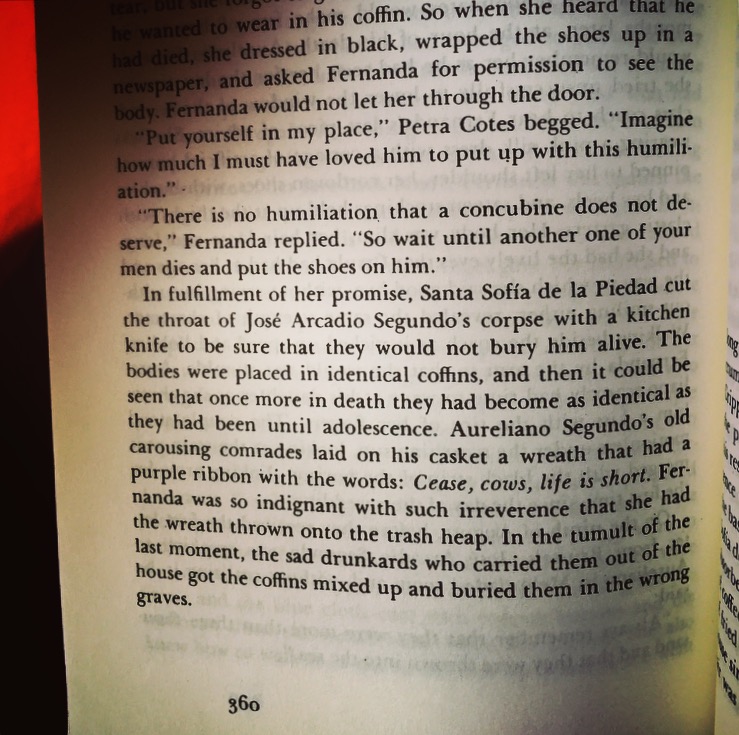
one-hundred-years-of-solitude-cease-cows-life-is-short

I had begun reading the book as soon as Amazon delivered it to me — about two years ago. Then we had a falling out. I read through about sixty pages before I realised it was too complex and too “out there” for my intellect. I felt intimidated. I couldn’t understand why I couldn’t understand the narrative. Maybe it was the fine print and the font that I didn’t admire, I told myself.

Thinking I’d read it later, I cast the book aside waiting for motivation to strike me hard enough to pick it up again. Some time that time, a friend wanted a book. I suggested One Hundred Years of Solitude, but I also warned her that it had given me a block. She took it nevertheless.

That was the last I saw the book until last month, almost a year and half later.

One cold morning a line from the story popped into my mind: “Colonel Aureliano Buendía was to remember that distant afternoon when his father took him to discover ice.” Even though the book had thrown me off, that queer line had stayed with me. That’s when I realised I should give the book another chance. I got the book back from my friend and dove in right away.

It took me a good one week to finish the book. I whizzed through over half of the story, slowing down as the narrative progressed. Many times, I went back two pages to make sure I followed which Aureliano did what. I had to scan the family tree hundreds of times before I understood who’s child Amarantha was and who her child was.

I speed-read some parts while I cherished other parts of the story. I stopped at beautiful turns of phrases, and gawked at clever word choices. And then I paused and took pictures when I saw words of wonderment.

When I did finish reading it, however, I wanted to kick myself. I chided myself for missing out on so much pleasure the first time I tried reading it. If only I had tried harder to endure the initial confusion, I would’ve enjoyed a glorious read much sooner.

Perhaps it was meant to be. Perhaps I couldn’t read it then because I wasn’t mature enough. Maybe now was the time I needed it the most. Just like the Buendía family had waited a hundred years to decode the prediction of their fortunes and misfortunes, I had let history repeat itself before decoding the joys of One Hundred Years of Solitude.


You should read this book, if you haven’t already. If you have, however, tell me, what was your initial reaction?
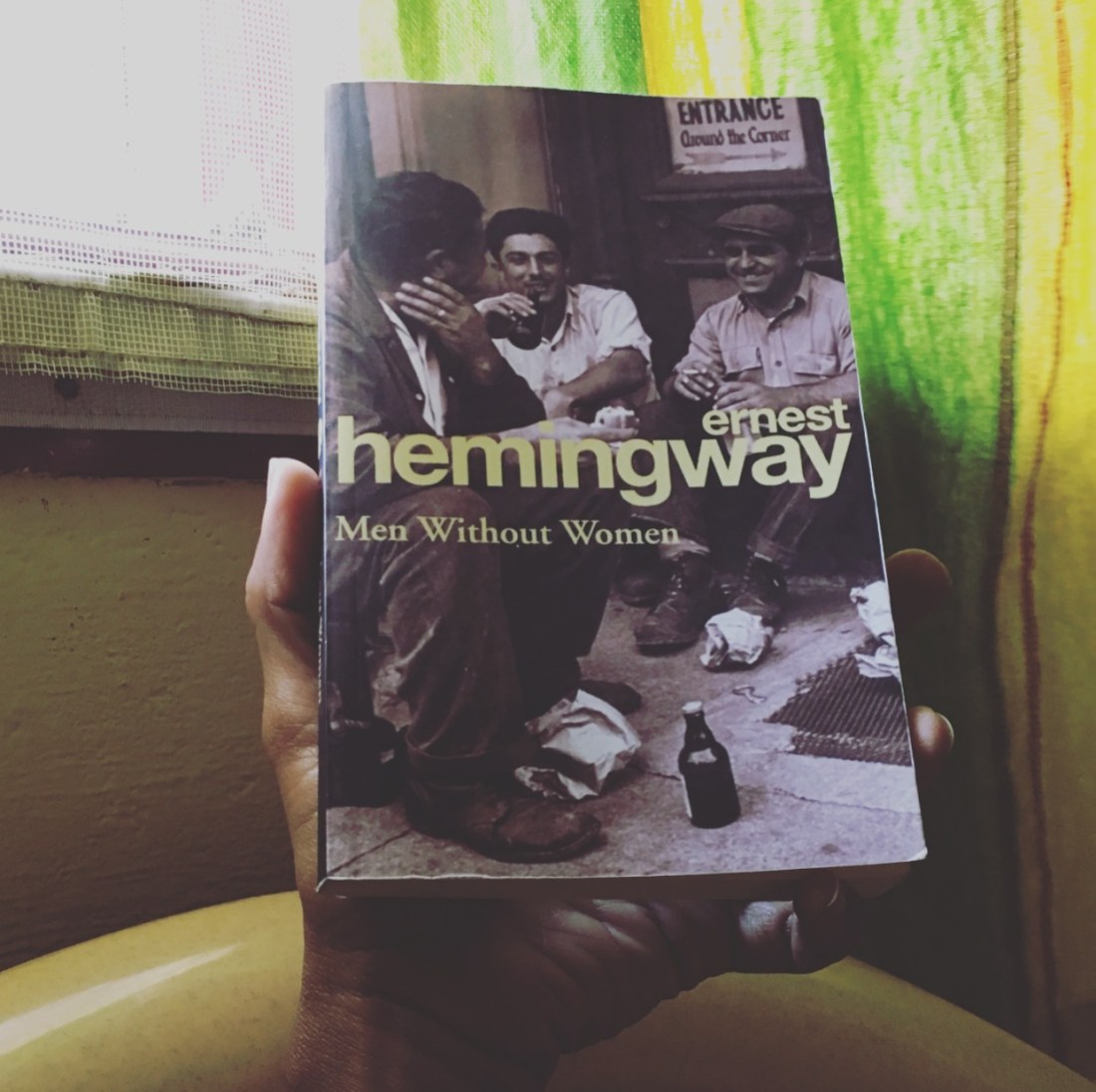
Men Without Women

men-without-women

When I first read it, the title bemused me. That’s not the kind of topic anyone at Hemingway’s time would’ve spoken about. Nowadays, sure. In the age of vapid vanity masquerading as fierce feminism, people would be more than happy to talk about men without women.

But Hemingway doing so? I wanted to go in and find out for myself why.

Like always, I read through the contents page. There were a list of lines that seemed like the titles of short stories rather than chapter names of a novel. Since the title on the cover felt like one for a novel, I hoped to read a thrilling tale of a group of men who lived without womenfolk.

Instead, I stumbled on many little stories and into the lives of many men whose egos, societal pressure, and selfish greed for power had hardened them. I had opened the book and fallen into a world of men, all of whom had no sense of what they were missing in life.

The book had a total of fourteen tales, and every one of them had vivid characters that jumped out at me. At least one character in a story refused to give in to his surroundings. I don’t know how having a woman in their lives would’ve changed their actions, but as a woman reading these men, I realised they were just jerks. And at some parts, their actions went beyond enlightening and entertained as well.

But it wasn’t all proud men wearing garlands of thorns. Some of the stories were a little dull, I admit. But every time I closed the book, thinking I’d read it later, the men on the cover called out to me. There was something about the picture on the cover, something about the three men smiling without a care in the world. As the book lay on my table, it made me wonder who those men would be and how the title of the book related to them. Men drinking and smoking, laughing and chatting — what did they speak of? Just the sight of the cover made me open the book again, hoping I’d find the answer in one of the stories.

I didn’t find the answer or the relationship between the title and the stories until after I finished the book. Two days after I had read the final story, it dawned on me how each story developed, and how every man in every story was walking proof of an empty life. And that’s when I appreciated the true power of Hemingway’s writing.

Whenever the plot vaned, Hemingway soared with the narrative. For a long time, I’ve basked in the image of Ernest Hemingway being an earnest writer. And this book proved it again. Some of the sentences and word choices popped out from print, making me gawk in awe at Hemingway’s simplicity with narrative. It’s unbelievable how basic words, with basic structure, can radiate depths of meaning. Such was Men Without Women — a joyous read.

Bird in a Tree

bird-feet-shadow

Walking in the park,

catching bird feet in a tree

misleading shadows.


I took this photo at the Vandalur nature reserve in Chennai. The timing was perfect. My friend and I were walking around for about three hours before sunset, and a tree became a shadow.

It’s a Fine Line

Her mother once told her, “Handcrafts are a girl’s best friend.”

She had always had a knack for weaving tight knots. She adored the complexity in the bonds and the scrutiny that it demanded.

It was like meditation for her; first in, then out, squirming through loopholes and around shady corners. Whenever she took a wrong turn, someone always showed up, armed with help. Every plan she wove became an adventure, and every day an action-packed, adrenaline-pumping endeavour.

And as the lawmakers came after her, they realised she was best friends with the crafty and not the handcrafts.

The Absolution That Comes From Unrest

If you think that that’s one scary title, let me break it down: it’s a trap being like everyone else.

Throughout our lives, we’ve been taught to blend in, conform, adjust, and settle without complaint. And to make it all worse, our parents tell us to think about the ones who aren’t as lucky as we are; that ought to shut up a whiny kid.

Since a young age, we are moulded to be like everyone else, and accept what we get. We don’t think beyond what’s given. We are discouraged to, in fact. Even in school, the hyper kid is the first to get punished. If a kid sits in class without questioning the teacher (or throwing paper balls at the board), all would be well.

So we obey the rules, follow the orders, take what we get, compromise when we’re overpowered, and just grow up to be the average tax payer.

It’s the curse of being human. We don’t ask for more.

And it’s everywhere, even in the literature that we cherish and appreciate. Look at our Oliver, for instance. They chased him out of school and cast him into a world of misery — all because he asked for more.

However, what we often forget about Oliver Twist is that if he hadn’t asked for more, we wouldn’t’ve heard of him at all. He could’ve stayed in his bench, licked his bowl clean, and went off to bed. But he didn’t. The moment he asked for more, Oliver broke though all barriers and went beyond every line. The result, changed the course of literature and the life of Dickens.

That’s the power of a rebellion, of unrest.

For as long as we stay with the herd, as long as we settle, we limit ourselves. But when we think beyond the borders of the square we’ve been thrust into, we can reshape our lives.