
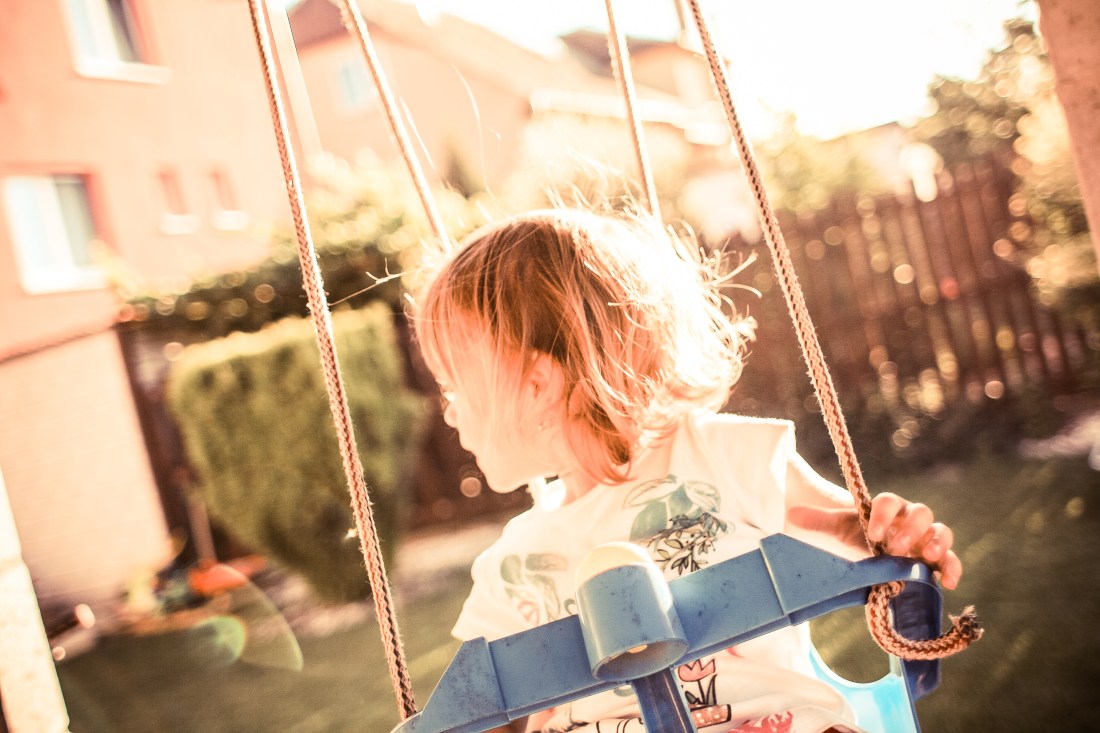
No bird sang sweeter,
than his child, his pearl, his world
voicing her first word.
I woke up today to raindrops pattering on my window, an experience I hadn’t had since last June. Plastering a smile on my lips, I got up ready to get ready for work. And even as I brushed my teeth, the rain waned into a drizzle, and the drizzle then became an occasional droplet. Then, silence — all in a span of five minutes.
Finishing my daily chores, I peeked through the window again. An early bird chirped from its nestled castle in a tree nearby, the sole creature bold enough to break the silence. Sipping my cup of tea, I stared at my cup of tea: the sky lightened and the dark clouds of last night whitened.
I took a deep breath for it felt like a good day.
I left home and locked the door behind me, hoping for a productive day at work. And as I stepped out of the house, the sun peeked out from the horizon, braving the vagaries of the early morning’s slight storm, and sending a shot of warmth through me.
I flashed a smile at the soldier and headed out the street. A good day to take a walk.
On my way, I saw the age-old banyan tree swaying like a wise old woman nodding her white head at me, while a pale orange leaf disengaged itself from its kin to fall onto my path. And along with it, I got the scent of dug up earth and the sight of earthworms wiggling their way back into the soothing heat of the soil.
To cap my walk, came a gentle breeze blowing my already-messy hair into a disarray, and bringing in its wake, a single drop of rain.
Looking up, I saw the white clouds darkening again and the sun retreating. I could feel the breeze getting colder and damper. As that single droplet expanded into a mild drizzle, I stepped up my pace — I had just a few more feet to go.
The drizzle, however, had coated my glasses while I rushed into the shelter of my office. Walking into the towering glass structure, behind me, I heard the whizzing wind gushing through the gap in the door.
Worrying about the clothes I had put to dry on the terrace, I took the elevator up to the 12th floor, coming to a halt by the window. I looked down at the street. The roads were wet, but the drizzle had moved on. The wind had died down, and the sun seemed ready to show her face again.
Shaking my head, I turned around with my arms outstretched announcing to the floor at large, “Monsoon’s here, people.” Lucky for me, the place was deserted. I am the early bird at work.
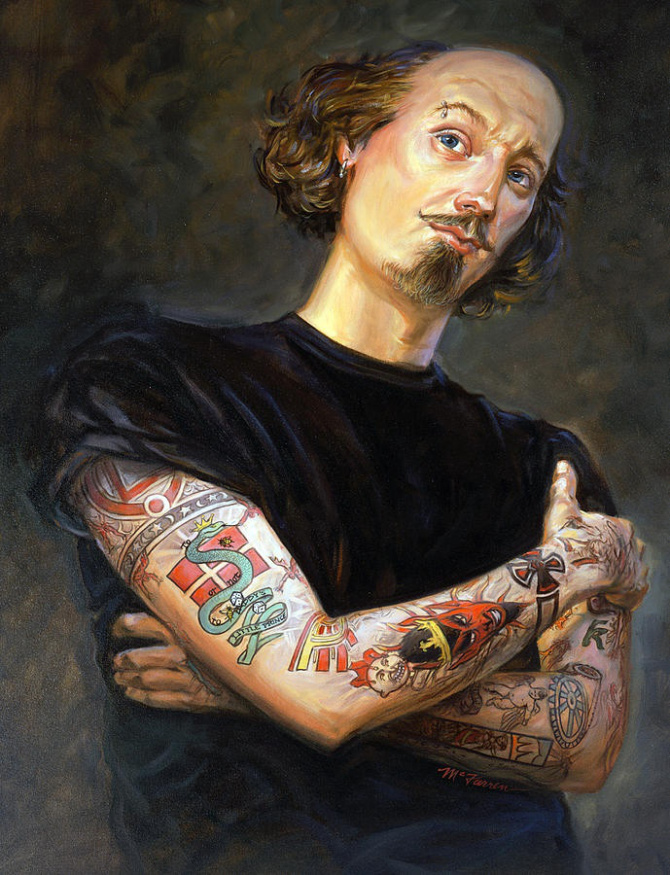
Some of us, more than others, have taken those Shakespeare lessons in school a little too close to heart. So much so that we decided to delve deeper into the man’s mastery with words, words, and more words.
Shakespeare was the father — or one of the fathers (with the utmost respect to Homer and Johnson and Marlowe) — of English literature. And that’s one of the reasons people study Shakespeare; he’s done most of the heavy lifting already. When you study Shakespeare as a subject, you don’t have to create anything from scratch. There are no eureka moments. (As the ignorant people would say, but that’s for another time.)
As a student, you’d have to memorise the structure, the poetry and find the prose that’s hidden within. It’s not medical science, it’s not astronomy, and it sure as hell ain’t math.
At least in India, studying Shakespeare is transferring the textbook onto your answer sheet. Once you’re done, you’re ready to graduate with a degree in Shakespeare. That’s our education system — it’s all text and nothing more.
That’s why it’s so sexy — because it’s easy. Literature students thrive in repetition, and the concept of repeating book words appeals to housewives who’re busy with kids running around the house. It appeals to their husbands who advocate women education and empowerment. It appeals to the losers who can’t do math and science at school. Because, well, let’s face it, people think it’s easier to count metre and Iambs than it is to count metre per second. And who’d want to fumble with computer programmes when they could just scribble lines of rhyme “as defined in the textbook?”
Plus, in Shakespeare, you’re studying plays with words and words with plays; tone and tenor, method and manner. All that sounds far easier than calculus.
Here’s another reason people study Shakespeare: It sounds exciting in the preface of the textbook, but when you flip the cover and cradle the pages, you’ll stare at opinions. Not prose, not poetry, just random interpretations of Bard’s rhetoric.
Your question paper wants observations of moderators, not your own. You think you’re studying Shakespeare when, in fact, you’re studying summaries of the original piece that — this is called irony in literature — never made it the text.
That’s what they do to you when you want to study Shakespeare. They make you study the ones who’ve studied Shakespeare, and not Shakespeare himself. They divulge the amateur as the master; a blunder if there ever was one.
Alas, a formal study of Shakespeare includes none of his actual works and all of misleading citations and cheap caricatures. And to continue studying Shakespeare would endanger our minds, and force us into thinking like the wannabes desperate for a sliver of Shakespearean glory. We’d limit our thoughts and diminish our ability to differentiate witty wit from winding word choice.
And that’s why you should never study Shakespeare. He wasn’t meant to be studied. He was meant to be experienced.
His works are to laugh at, to cry over, and to pine about with bottles of wine. Shakespeare, the man, stomped on rules. He cut licences from rule books. He had a way of doing things, of seeing things. And you won’t get that by reading what others say he says.
You won’t see it when others tell you. You will see it when you see it for yourself. Shakespeare speaks to the reader, textbooks speak at the reader.
You’d study for the marks, but you experience for the thrill it gives you. Shakespeare visualises life and body and love and beauty — he talks human traits. That’s not something to study, that’s the essence of life you inhale, that’s what pierces you, transcending emotions that translate into words.
Studying Shakespeare sticks words to your head. Experiencing it tugs at your heart.

I’ve spent restless nights for the sun to come up so I could click a picture.
I’ve zoomed in far more than I should, just to get a clear shot of a waning moon as darkness engulfed it.
I’ve pointed my camera at many places, trying to land a perfect angle. I should have just gaped open-mouthed, instead.
Photography is addictive. I’ve got a great phone that takes stunning images, with a precise focus. Plus, it’s so fancy I need to flaunt it. And I also have a craving to capture scenic, yet uncommon, sights of everyday life.
That’s what makes me flip out my phone every time I’m at a restaurant. Or stop short in the street to click a picture of a witty billboard. It’s what makes me lean over pointy plants and hover over a blooming flower.
It felt therapeutic at first to scroll through photos and pretend I had more memories than I could remember. But then, I didn’t remember those moments because I never paid attention.
And as I went to the terrace this morning, I saw the sun pushing its way through dense clouds, illuminating the sky with orange rays. As the clouds lined gold, a balloon of joy erupted within me. And in an instant, I wished I had my phone in hand.
Without thinking, I wanted to freeze the moment rather than enjoy it. I wasn’t in the present but was thinking about taking it to the future.
It was sad. Nature had given me a glorious sight, and there I was my eyes clouded behind the veil of a camera lens. What’s the point of looking at something and not seeing it?
In truth, photography means nothing to me. I’m no professional, and I don’t intend to be.
I don’t have a fancy camera or the knowledge of perfecting lighting, angles, or aperture.
I shouldn’t mind sacrificing a few photos if it meant I could eat a meal while it’s still warm. It’s fine to stare at the moon for five minutes without panicking over an unfocused photo. And ok to look at the sky, calling out, “Bring me that horizon.”
Sure, I should still get a good photo or two of momos — because they’re too good to resist. But for me, photography is a hobby, and it shouldn’t get in the way of living my life.
“The situation in America, the most highly monetized society the world has ever known, is this: some of our needs are vastly overfulfilled while others go tragically unmet. We in the richest societies have too many calories even as we starve for beautiful, fresh food; we have overlarge houses but lack spaces that truly embody our individuality and connectedness; media surround us everywhere while we starve for authentic communication. We are offered entertainment every second of the day but lack the chance to play. In the ubiquitous realm of money, we hunger for all that is intimate, personal, and unique. We know more about the lives of Michael Jackson, Princess Diana, and Lindsay Lohan than we do about our own neighbors, with the result that we really don’t know anyone, and are barely known by anyone either.”
“The things we need the most are the things we have become most afraid of, such as adventure, intimacy, and authentic communication. We avert our eyes and stick to comfortable topics. . . . We are uncomfortable with intimacy and connection, which are among the greatest of our unmet needs today. To be truly seen and heard, to be truly known, is a deep human need. Our hunger for it is so omnipresent, so much a part of our experience of life, that we no more know what it is we are missing than a fish knows it is wet. We need way more intimacy than nearly anyone considers normal. Always hungry for it, we seek solace and sustenance in the closest available substitutes: television, shopping, pornography, conspicuous consumption — anything to ease the hurt, to feel connected, or to project an image by which we might be seen and known, or at least see and know ourselves.” – Source
I was stunned.
We live a paradoxical life without even realising it. That’s when I decided I should read this book. It’s out of my comfort zone; it’s non-fiction, it’s about money, and it’s called Sacred Economics.
Of the 23 chapters, I’ve stepped into the eighth, and it’s been great so far. There are dull parts of it, parts I cruise over without feeling the words, but there are also parts of the book that I linger, reread, inhale, and wonder in wonder. Not everyone would enjoy reading it, but everyone should understand the essence of it.
I’ve scratched just the surface of the book, but my view of our society’s monetary system has changed forever, already.
 The Chaos Within