

rows of hardy green
shoving their faces on mine
driving down the aisle
Roadtrip
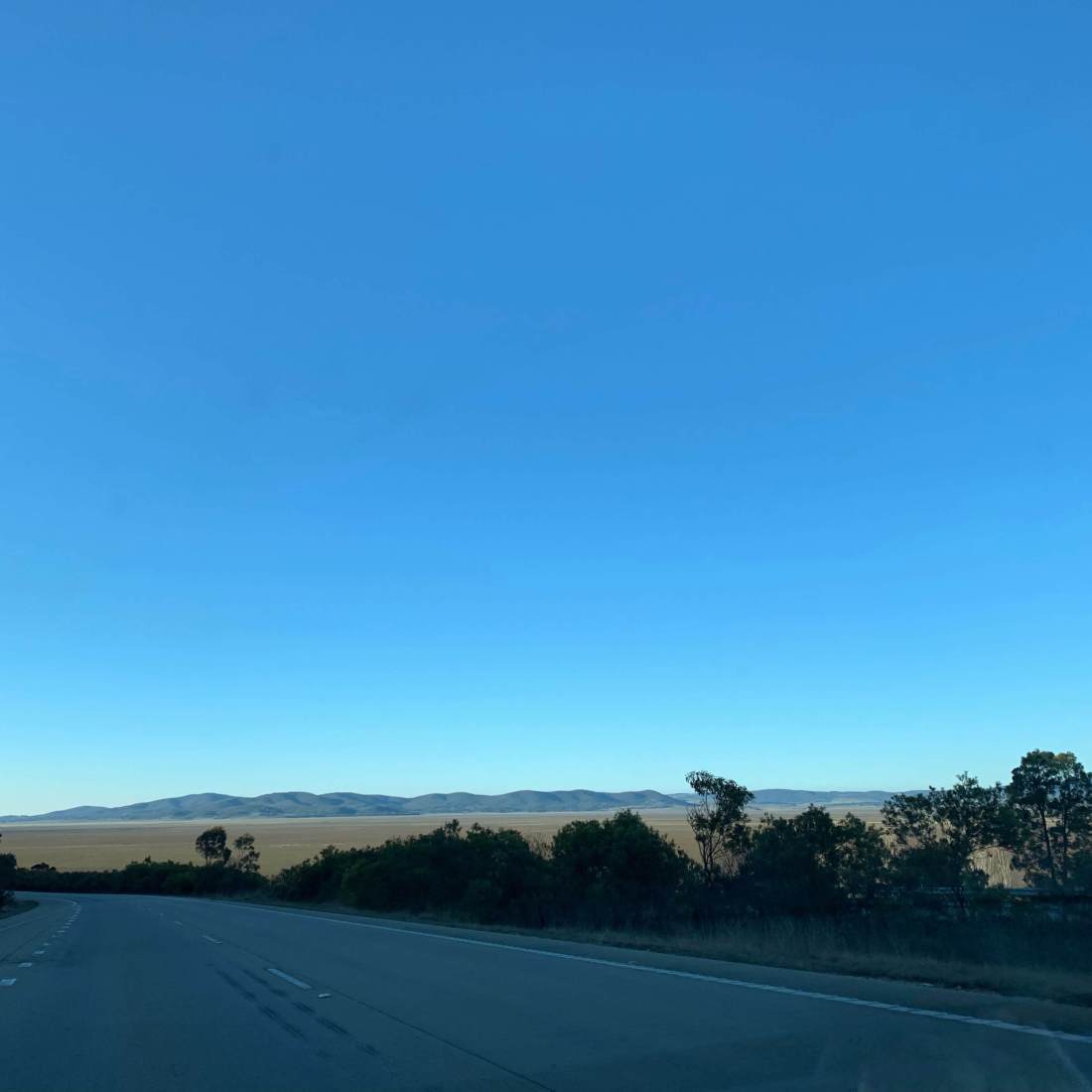
rows of hardy green
shoving their faces on mine
driving down the aisle
He didn’t know what it meant
when, eyes pitiful,
doctor said:
parkinson’s
common disease
wrecks, wracks lives
yet much to hope—
apparently.
She didn’t know what it meant
when, eyes screwed,
husband whined
deafness
another sign of age
comes to all, all in good time
one ear to another
infecting.
When her walk faltered
as staff he stood
to lean and to love
supporting.
She showed, never told
as his ears waned
for speech had lost
sensibility.
Trembled her throat
only trebles escaping
with none to talk
the mute.
World fell silent
as extinguished flame
calmed his mind
undisturbed.
They didn’t know what it meant,
a balance in life,
for time deemed obsolete
communication.
Like most teenagers who didn’t have many friends to hang out with after work, I developed an interest in cooking as a way to entertain myself. Almost every recipe I saw (that I liked) involved tools I didn’t have access to, like a grill, a waffle maker, stand mixers, oven—you get the idea.
Most Asian homes don’t have those appliances—and more importantly, they have no use for them in their kitchens. Generations of Indians lived full, healthy, and happy lives eating wholesome meals without even setting eyes on a microwave or an oven. Cooking heat came from firewood stoves and kerosene or oil lamp burners, both almost extinct now. Modern homes have induction or gas stoves. As a child I sat beside my mother watching her blow through a kerosene stove awaiting the water to boil.
On a side note, she also had a vintage oven in which she baked buns—buttered with a sesame-strewn crust—for us each week, but it was still a phenomenon in a society far more accustomed to traditional cooking methods.
By the time I was old enough to understand its functionality, my mother’s oven had fallen prey to rust and disuse. That’s why the oven fascinated me so. When I saw a video of bread rising behind the glass, as a flower to the sun, my heart swelled in longing. Buying an oven went right on top my list.
But it was also an investment and my inner miser took long enough to weigh the benefits and the possibilities of me making optimum use of the purchase. After years of being on my need-to-buy list, my inner logic won, pushing the oven to the more idealistic nice-to-have-but-high-maintenance list. And so, despite spending almost four years wishing, I never bought an oven.
Then as planned my move to Australia, I realised an oven was a household staple in the first world. Of course, that’s why every recipe called for preheating at 400 degrees F or 200 degrees C. My joy knew no bounds. I couldn’t wait to get started, to bake my aches away, to watch bread that I kneaded rise to the occasion.
Except, it took me over two months to pluck the courage to open the oven.
It was the first thing I saw in the kitchen. Unmissable, wide and thick-skinned, with knobs and symbols, and a clock that showed the wrong time—the oven was too much to take.
The oven, an appliance I’d imagined to love and cherish, felt alien and condescending. For the love of bread I couldn’t figure out what the symbols meant. How hard was it to add explanatory text in there? And why was the fan so big, staring at me as I peeped in, as though from behind soot-studded bars?
It was scary. I forgot all about the wonderful recipes I’d planned—choosing instead to cradle the comfort of the pot. Who needs roasted pumpkins when you could boil them instead? After all, the result was the same—softness, edibility.
And so it was a whole two months before my housemate, trying hard not to snigger at my ancient reluctance to modern equipment, explained the symbols and nudged me to live a little.
And since then I’ve been roasting chickpeas, baking crackers from intended cookie dough, making crispy onion flowers, and toasting oats with tahini and Vegemite (trust me, it’s good stuff if you like savoury stuff). I’ve been on an experimental rampage, throwing everything in the oven, testing temperatures, resting my palms in the glass as winter raged outdoors, and appreciating the oven for its might.
Then one day, too confident to wear oven mitts, I used a cloth to pull out the tray, singeing a small part of skin on the tray above it. It wasn’t painful for I’d pulled my hand out instantly. But the scar lingers, as a visual reminder of my adventures with the oven, with the power of heat, a power beyond my control, a power that I took for granted—that we all often take for granted.
As I look at the scar now, weeks later, I think of my carelessness, but also my growth as an individual. In just a few months, I’d gone from not knowing what an oven is to being so comfortable that I shrug off a small burn without a flinch.
Not to underestimate the importance of kitchen safety, but I can’t help but amuse myself of how ingrained the oven’s become in my life. It’s a reflection of a bigger picture—a sign of my adapting to a new society, and melding in without much friction.
We seldom realise it in our everyday rush, but when you’ve moved to a new place, things that once overwhelmed you soon become part of you. I paused to realise: that’s how oven and I are now.

old, wise, grumpy
and swimming
heels over head
in tears of past,
consciousness
in a costly drink
When I was five or six, my school teacher instilled in me the importance of the clock. Until then it was a round face on the wall, eye-less, needles circling past numbers one through twelve. Then, all of a sudden, time played into everyday conversation, and making my own clock at home became a school project.
I sat at the dining table on a Saturday morning, moping about the impending workload, all the while outlining a kitchen bowl on crisp board. My mother drew slices of arrows, one short fat and another longer slender with perfect, pointy ends. And even though I was familiar with the workings of a clock, I never figured why they had to have “hands” or why those hands had to be one over the other—the shorter one always on top. Regardless, with a pin I pierced, securing them in place, sticking a slice of eraser at the back, for I knew well from experience why that mattered.
That took all morning, with the hour after lunch reserved for penciling numbers on the circular board. It required so much precision, that there was no way a-six-year-old would do it without complaining. Or a cartoon break.
All that hoopla came to an end when on Monday my smiling teacher, approving my effort, gave me a red star.
It meant the world.
She then used the same cardboard clock to teach us how to read the time, making us write as we read—twelve o’clock, half past six, quarter to ten, quarter past nine, 20 minutes past eight—gah, I hated the secret math involved in calculating how many minutes had past or were to an hour. It seemed an unnecessary complication to think of the first half of the hour as “past” and the next half as “to”—as if thirty was the secret number around which the world revolved. As if conspiracy theories would unravel how three with its hunched shoulders and zero with its perfect nothingness made the entire world dance to their tune.
But it was important. A child who told the time well was a child who’d succeed in life. At least that’s what they told us so we’d work hard for the test.
It soon grew far more convoluted, however. As I observed the world around me, I noticed that no one said 23 minutes to ten. They said nine-forty instead. It was’t accurate, but it was close enough. And to my utter dismay, close enough was good enough. Three meagre minutes, give or take, wouldn’t kill us now, would it? Or better yet—some said nine forty-five. Rather be early than late.
I was going berserk. People didn’t stick to the rules. As if the rules were more like guidelines anyway. No one said the time as I was taught to, or as the clock showed it.
Then one day, our clock at home stopped running. “Ma, it’s half past ten,” I called out, rather proud of myself, after breakfast on a Saturday. She was making chicken and wanted to know how long it’d had been since the bird fell in the pot.
Hours afterwards, I glanced at the clock again—the chicken now eaten and almost digested—and it was still half past ten.
Oh, the horror.
Not only were people not telling the time right, time itself no longer showed it right.
Ah, stupidity of a six year old. Some even call it innocence.
And then everything changed. From being so important in life, to life, time became… convenient. My father set his clock five minutes faster than everyone else’s. My watch matched the school’s recess bells, my mother followed our good ol’ clock in the living room, and my brother in his room, had clocks from America, UK, Australia, and India.
From being dictated by time, we had for once conquered time, manipulating it into our disposal.
 The Chaos Within