A Walk Down the Memory Lane

Alethea chanced a glance at the large clock on the wall. It was ten AM. She had packed the husband off to work and the kids off to school. She had woken up at 5 am to make sure the kids got solid breakfast. They were going on a field trip that day and had to be at school by 7 am, which was much earlier than the usual 9 am.

As she shuffled around in the kitchen packing some extra sandwiches for the ride and her kids’ friends who couldn’t resist her homemade peanut butter and jelly, Alethea’s husband walked in with red swollen eyes. He had had a rough week at work, and it was disrupting his sleeping patterns. She whipped up another pair of sandwiches for him and tried to coax him into taking the day off. And when that didn’t work out, she resorted to making some soup to soothe him.

After making sure everyone she cared about had had a good morning, Alethea decided to clean up the basement. It had been on the to-do list for far too long now. She and her husband had talked about turning the basement into a smaller recreational room, and he had volunteered to do the cleaning himself. However, given the state of his work pressure, Alethea decided to do it herself. A decision she came to regret soon enough. As soon as she opened the door to the basement, she came up with a sneezing fit.

Once the air around her cleared a bit, she looked around at the mess and slapped herself hard on the head. It had been fifteen years since she and her husband had graduated high school, and yet, she still preserved her old school notebooks and scrap papers. It had seemed important at the time, but now when she looked at them, she wanted nothing more than to kick herself. She spent over an hour sorting out her things from her husband’s. They had both been complete idiots, she told herself over and over again. And when the clock struck ten, she knew she needed a break. She picked up a couple of old notebooks from the pile and went up to the kitchen.

Letting a pot of coffee brew, she sat down at the table and opened one of the notebooks which hadn’t had her touch in over 15 years. The pages had frayed in the corners, and she felt them stiffened by the coffee stains of a lifetime ago. One by one, she turned the pages, unable to recollect why she elected French because she had gone on to teach German. She kept turning the pages, smiling as she looked at the little drawings she had done in the margins. She couldn’t contain herself as she recognised a rude caricature of a teacher she hated in school.

By the time she took a large swig of her black and sugarless coffee, she had reached the end of the notebook. She looked at the scribble on the last page and realised her kids’ notebooks had similar scribblings. No matter how many years passed, some things never change, she mused. And then she noticed something. Sketched in the corner, hidden behind a bunch of meaningless pencil strokes, was something she had revered back then. It was her and James’s names written one below the other and the common letters in both their names scratched off. Next to their names was the word “FLAMES” with all letters but “M” scratched out.

James had died in a car crash the next day.
The Tale of a Boy at Sea

Yesterday, I read a unique book that chilled me to the bone. It wasn’t the curious case of an unsolvable mystery, it wasn’t a multi-murder crime thriller, and it wasn’t a sweet romantic proposal story. It was the tale of a young boy stranded at sea for ten days.

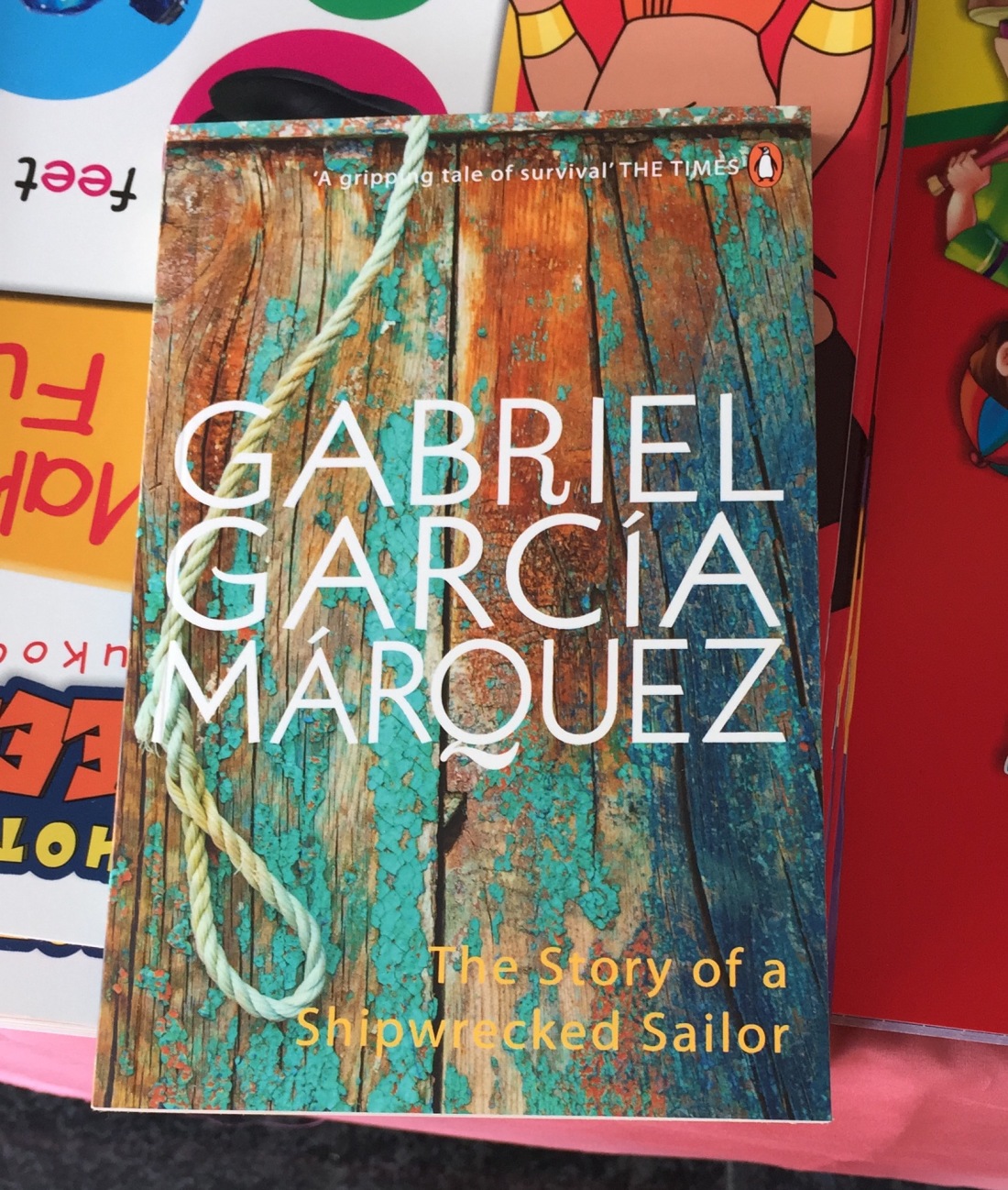
It’s not Life of Pi, but I wouldn’t blame you if you had thought so. That book is ever more popular after its movie counterpart. However, the book I just read is “The Story of a Shipwrecked Sailor,” and the author is Gabriel García Márquez.

the-story-of-a-shipwrecked-sailor-gabriel-garcia-marquez

It surprised me too. I had never heard of Márquez writing such a book. But I was curious. It was a small book, just about 100 pages. And yet as I held the book in my hands contemplating whether to buy it, all my sense of reality told me I should opt for an ebook, instead, because it would take far less physical space. I asked a friend to help me decide, and he warned me that Amazon would have the same book, for a lower price.

And so when I was almost convinced I shouldn’t buy the book, I flipped the book over and read the epilogue. That’s when I realised: this was Márquez’s first book. That piqued my interest. Besides, the cover was gripping, and it even had a review from The Times that called the narrative, “A gripping tale of survival.” And at that moment, I took a chance. I lost all sense of common sense and decided to go for it. After all, I had nothing to lose.

I’m glad I made the decision. I know I shouldn’t have gone by just the cover of the book, but this is one of those times when the gut and the cover got it right. It’s a simple story, in the first person point of view. A boy in a ship leaves for Colombia after being in port for six months. He set out homewards, to his family and soil he could call his own. In the middle of the sea, however, disaster strikes and all of his shipmates go down. He holds on to a raft and survives the sea—amidst sharks, hallucinations, hunger, and thirst—for ten days. He then makes it to land and becomes a national hero.

It’s typical and predictable in all aspects. But the best part of it is that the author narrates all the typicality and the commonness of it in such a matter-of-fact way, that you can’t help but keep turning the pages. You’d want to know what’s coming, even though your sixth sense tells you it’s nothing great for the hero.

The story reeks of emotion. You feel for the hero. When he stretches his neck looking for land, you stretch with him. When he plunges his hand into the sea trying to catch some fish, you gasp knowing that the sharks are waiting around the corner. When he wonders how shoes taste like, you’ll find yourself imagining the taste on your tongue. And as he tries to pry out the soles of his shoes, you wish you could pry it with him.

It’s an ordinary story, but it gives you an extraordinary experience. I now know why Gabriel García Márquez got a Nobel prize for literature.

All Will Be Well

When you’re so unsure of yourself, when you know nothing’s going your way, when all around you there’s nothing but thorns and roadblocks, you should take a walk.

And that’s what I did one Sunday afternoon. I walked around the Vandalur national park looking for a sign from the trees and fresh air around me, something to help clear my head.

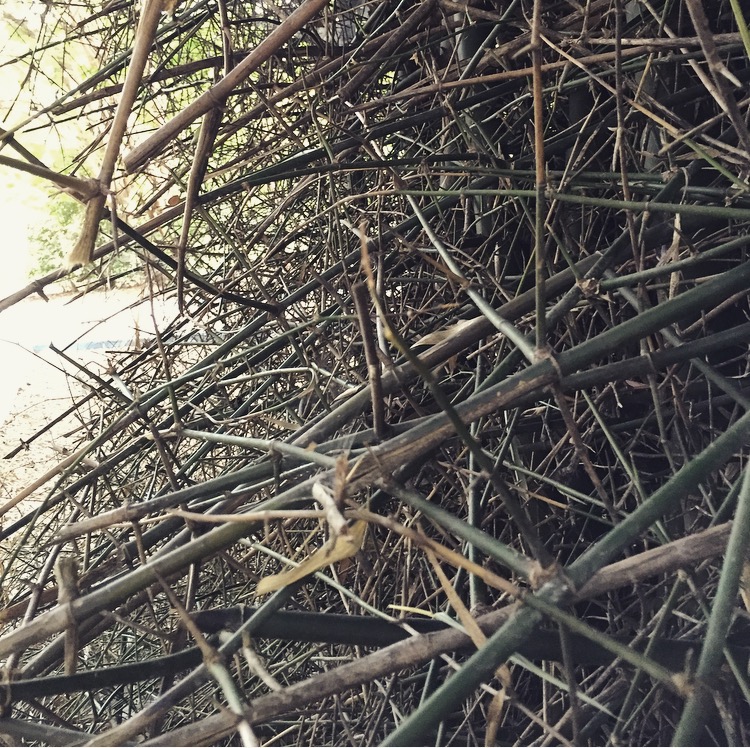
I saw a bunch of dried branches, all piled together and jutting out in odd corners. And all of a sudden, I felt calm.

I stood staring at it for a moment before realising that sometimes even the earth falls into chaos. That doesn’t mean all is lost, though. It’s a sign; from chaos comes composure and reassurance that all will be well.

chaos

The Start of an Era

“No matter what happened, this would be a historic day,” Kevin thought to himself as he adjusted his tie for the fourth time that morning. Everything had to be as perfect as planned. His had his suit custom-made so that not a stitch would be out of line. It was an important day.

A few blocks down the street, Mary was examining her long dress in the mirror. She wanted to make sure nothing had gone amiss. If anyone noticed even a small flaw in her dress, it would become her nightmare. Her parents would be disappointed and her brother even more so. She couldn’t afford anything going wrong. It was an important day.

All the hard work of the last few months had led to this day. For far too long now, they had both given up their personal lives, working through long days and longer nights. And as they both looked at the unmistakable dark circles under their eyes, they thought, with a tinge of regret, of the barrels of coffee they had drowned. It had led them to this. It was an important day.

They left their buildings at the same time. He in his Hyundai Sonata with his best friend at the wheel, and she in her Chevrolet Cruze cruising down the street towards the same towering white building.

It was an important day. Over a year of campaigning and cheering and jeering had resulted in the whole world talking about the election. And yet, no one knew that the lead staff of both candidates were just about to get married.

“No matter what happened, this would be a historic day,” the pastor began.

Striving for Simplicity

Heard of the phrase, “Easy reading is damn hard writing”? It’s too familiar to miss. But here’s something (and different altogether) that you may have missed: Simple living is expensive.

Before you think Gandhi, think of the last time you browsed online for a pair of flip-flops. I last did it last night. A solid black rubber flip-flop costs INR 700 ($10) while a fancy, multicoloured, studded pair of women’s footwear costs INR 300 ($4).

True story.

Maybe it’s just footwear I thought, moving onto tee shirts. Again, the plain ones cost more than the printed, designed, and layered ones.

I didn’t understand the difference in pricing. But it’s a fact: Being simple is expensive. And the weird thing is, it shouldn’t be this expensive at all. Look at Gandhi, for instance. That man symbolised simplicity, and it doesn’t look like it cost him much. Except, perhaps, the initial cost of the spinning wheel. Nevertheless, he taught the world that minimalism is simplicity and less is more. And yet, despite all the history and the lessons, it still costs me double to buy simple clothes than it does to buy flashy clothes— or even footwear. Less is more, except in pricing.

I blame Gandhi. He made simplicity the new cool. It’s the trend, the hip, the new classy. Nowadays more and more people prefer classy over glossy. Everyone wants to look minimal. Everyone runs towards a “simpler lifestyle.” And to wear something flashy in the presence of the “minimalists” is uncool and unacceptable. And if the cost of being accepted is a few extra notes, people will pay.

So because the modern lifestyle is the simple lifestyle, brands seize their opportunity. They make simple-looking products, give it a clean finish, and put a hefty price on it. And because simplicity is now synonymous with classy, and classy is synonymous with expensive, anything flashy becomes trashy and cheap. And all this I realised when I saw that cheap-looking footwear had a pricier tag than sleek-looking footwear.

As for Gandhi’s simplicity, it’s a goner, just like the advocate. Simple, now, means expensive brands, single-coloured clothing, and fancy converse. The more expensive your attire, the more casual you appear, and the more casual you look, the classier you feel. Actual casual is now a casualty.