Olympics Aftermath

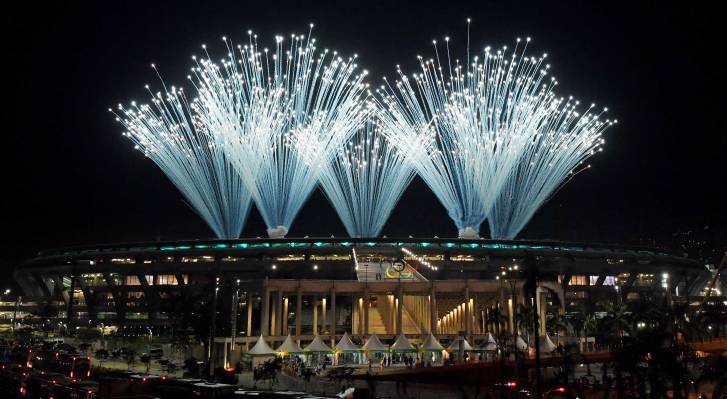
I just read that to glitter for one month, the city of Rio de Janeiro had displaced 80 000 of its citizens.
rio

If that doesn’t shame a country, I don’t know what else does.

The Olympics is a big deal, sure. It’s a mass congregation, the world’s largest sports convention, the holy godmother of all sporting events, yada, yada, yada.

And while the rest of the world saw the sugar, spice, and all other things nice, reality shoved its ugly face on the people of Rio. They wouldn’t have liked the idea of the entire world coming to — taking over, rather — their home.

It’s not just Rio. We saw a similar picture the last time Olympics went to London and Beijing before that. Countless glorious venues now lie barren and play host to a meagre number of tourists. And to make matters worse, the Bird’s Nest costs $11 million a year just to maintain. And nothing worthwhile came off setting up the Olympic Village either.

As for Athens, the first Olympics I cherished, went $15 billion above their budget to put on a show that’s now in disarray and disuse.

Millions of people thrown into the labour of making these stadia, setting up seating, and fitting in lightings— all for attendees staying less than a month. So much time, money, sweat, and blood shed for the vain pride of hosting Olympics. And at the end of glow and show of sportsmanship, the rings get rusty, and we go back to hating each other.

Nothing about the Games was a game to Rio’s now homeless, squashed under its crushing weight.

And here we are, just days after the closing ceremony, complaining on Facebook that another country outperformed us in track events. We should, instead, be ashamed; blinded by our so-called national pride, we ignored a nation that groaned under the pressure of treating us assholes for a fortnight.

We somehow played a part in uprooting the lives of 80 000 people, and that makes me guilty. Some of those people were school children, pregnant women, infants, and single-meal breadwinners. Even budding athletes.

Come to think of it, Rio 2016 (and every Olympics before that) could’ve destroyed a generation of future sportsmen and women.

The Paradox of Life

“The situation in America, the most highly monetized society the world has ever known, is this: some of our needs are vastly overfulfilled while others go tragically unmet. We in the richest societies have too many calories even as we starve for beautiful, fresh food; we have overlarge houses but lack spaces that truly embody our individuality and connectedness; media surround us everywhere while we starve for authentic communication. We are offered entertainment every second of the day but lack the chance to play. In the ubiquitous realm of money, we hunger for all that is intimate, personal, and unique. We know more about the lives of Michael Jackson, Princess Diana, and Lindsay Lohan than we do about our own neighbors, with the result that we really don’t know anyone, and are barely known by anyone either.”

“The things we need the most are the things we have become most afraid of, such as adventure, intimacy, and authentic communication. We avert our eyes and stick to comfortable topics. . . . We are uncomfortable with intimacy and connection, which are among the greatest of our unmet needs today. To be truly seen and heard, to be truly known, is a deep human need. Our hunger for it is so omnipresent, so much a part of our experience of life, that we no more know what it is we are missing than a fish knows it is wet. We need way more intimacy than nearly anyone considers normal. Always hungry for it, we seek solace and sustenance in the closest available substitutes: television, shopping, pornography, conspicuous consumption — anything to ease the hurt, to feel connected, or to project an image by which we might be seen and known, or at least see and know ourselves.” – Source

I was stunned.

We live a paradoxical life without even realising it. That’s when I decided I should read this book. It’s out of my comfort zone; it’s non-fiction, it’s about money, and it’s called Sacred Economics.

Of the 23 chapters, I’ve stepped into the eighth, and it’s been great so far. There are dull parts of it, parts I cruise over without feeling the words, but there are also parts of the book that I linger, reread, inhale, and wonder in wonder. Not everyone would enjoy reading it, but everyone should understand the essence of it.

I’ve scratched just the surface of the book, but my view of our society’s monetary system has changed forever, already.

To Be a Teenager

teenage

I once told my mother that I didn’t want her to be my friend. She was my mother, and I wanted her to be just that. But she had got it into her head from some hip self-help book that parents of teenagers should be their friends.

And I didn’t want that. After reading similar emotions on Quora, I realised I wasn’t the only one. And for good reason too.

Teenage is wonderful. It’s when we get to see the world in a new light, experience the pangs of attraction, affection, and even lust. It’s the time to roam around carefree and enjoy life for what it is.

Except, teenage is also when a child goes through a lot of things she doesn’t understand. Like the physical changes in her body, the unpronounceable hormones that show up from nowhere, attraction (or aversion) to people, and (goodness!) mood swings that are just too confusing to comprehend.

What’s more, we’re in the mobile era. The world expects teenagers to know everything; to discuss the latest tech buzz during dinner, finish a 30-inch essay in minutes, do some sort of sport, and break (even Olympic) records that they’ve never heard of before. The 21st century is not the teenager’s haven.

For a child starting out to navigate our conniving society, handle breakups and peer pressure, understand that mom and dad don’t talk to each other, and still perform well in school is too much of an ask.

Their heads are filled with emotions they can’t identify, thoughts they don’t know to express, and doubts they can’t clarify. They’d go to school happy and come back with a broken heart and no clue as to why they feel that way. Is it the teacher yelling at them for a silly grammar mistake, friends getting lunch without them, or that the cute boy in class hadn’t shown up that day? Anything could break their hearts. Because teenage is a myriad of hormones.

That’s why they need direction. They don’t need yet another friend to talk to because their friends have the same problems. What’s more, sometimes they don’t even trust friends.

Teenagers don’t need another friend in their parents. They need advice, instead. They want parents to teach them to handle a situation, not just acknowledge it — as friends do.

Children realise that their parents have already tackled the reins of teenage. And no matter how much they argue, complain, or swear at their parents for imposing a curfew after 10 pm, they know it’s for their good. Deep down, teenagers love their parents for those tiny rules because they know mom’s got their back. After all, a parent is always a stronger authority than a friend.

That’s why teenagers want parents to be parents. Because a mom who’s got her life sorted is motivation for a child to get her’s too.

What Are We If Not Dreamers?

Like a leather bound book
That’s fancy to the eyes
Like the black velvet cloth
That wraps the wealth within
Like the shiny sheen and glow
That invites an eager hand
Perched on a shelf lies the book
Too beautiful to feel and look
I reach out a quivering hand
And hope to grab my reward
My fingers close on the cover
Imagining sturdiness all over
Alas!
It crumbles under my fingers
Of neglect through the years
Silver fish had made it home
Chipping away under the dome
Fine and glorious it looked from afar
Like men who put over dreams a bar.

Walk in the Park

It was just another Saturday evening. I lay on the floor of my sweltering room, looking up at the fan swirling without a touch of breeze. I was bored. I had nothing to do. I was tired of sitting indoors all day watching TV series from the 70s. I had done nothing else the whole of that day and I wanted the next day to not be the same.

I messaged my friend and set up a plan to visit the nearest zoological park. And to think I hated zoos and crowds of people! But that’s how desperate I was. The urge to do… something, led me to nod to plan that’d been in discussion for a long time.

I woke up early, and washed my hair.

At about 2.30 pm, we left braving the vegaries of the unusual monsoon heat, with cotton shawls over our heads and swelling anticipation in our hearts.

zoo 1

As we stepped into the first few inches of the spanning 1,490 acres, a chill ran through my spine. It is a large forest; people come here for day trips and picnics. And we had come for just a walk. We started out with a massive crowd hogging its way into the park, but it thinned out as people moved away exploring on their own.

That was the best part of the visit. It wasn’t anything like the school excursions we used to go on. We didn’t have to hold hands with our partners and walk in lines. We didn’t have to split our attention between the trees, animals, and to the teachers lest they made announcements. And we didn’t have to time ourselves so as to leave early.

We could take all the time we needed.

I never liked gawking at animals in a cage. Or pointing a camera, teasing them to turn around and stand still so I could take a picture for my friends to “ooh” and “aah” at later. So we stuck to the pathway not going up to the enclosures. And lucky for us, most people clung to the enclosures, giving us enough space to strut the path.

We walked around with lusciousness looking down at us from every corner. Tiny nectar plants attracted butterflies of all colours. There even was one with a chocolate-coloured coat.

Trees of all kinds and sizes stood by our way, letting through the setting sun, leaves swaying to the breeze, and looming shadows starting to show. Some other trees had begun to stoop realising night coming.

The way was paved well, easy to walk on even for hours along. We roamed about looking around, gaping at heights, pointing out squirrels in bird cages, and catching a glimpse of the white marvel peacock with her sad eyes and drooping head.

zoo 2

Looking up at decade-old tree barks, peeling off skin and sprouting new ones, I realised the value of nature. There was a time when trees, plants, and shrubs just grew every where, unbound. But we now have confined these forests behind stone walls, enclosing animals along with it, naming it a zoo, making a fortune in maintenance fees, and calling it preservation.

Sure, it was a well-kept park. Neat and tidy, with snack parlours and ice cream stores. It was a perfect place for human entertainment. But if we had left them be, unpruned and un-sheared, there would’ve been more.