The land owns us

I’m walking Te Araroa (TA) later this year. There, I’ve said it. For the first time since I fell in love with the idea seven years ago and seriously started planning for it last December.

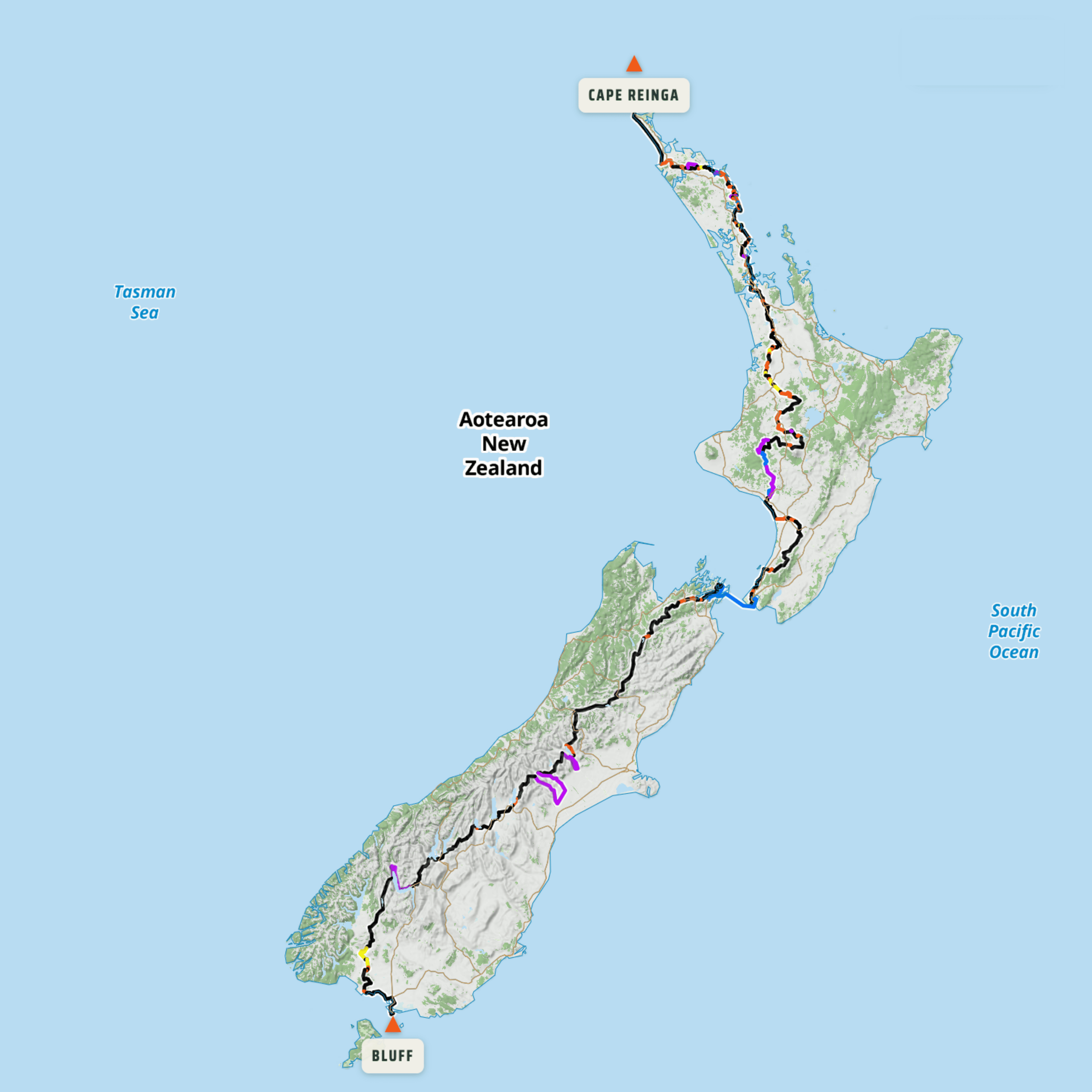
Loosely transliterated to “The Long Pathway,” Te Araroa is a 3000 kilometre (1800 miles, if you’re that way inclined) tramping/running trail that goes through the entire length of New Zealand. From the top of the North Island, Cape Reinga, to the bottom of the South Island, Bluff, the trail snakes through iconic forests, mountains, lakes, rivers, and volcanic craters. It’s one hell of a way to travel through the country.

What I love most about the trail is not its length or its majesty. It’s the fact that this trail only exists because of the kindness and generosity of humans that owe nothing to the people who walk the trail every year.

1800 kilometres of the 3000-km trail is on public land monitored, managed, and cared for by the Department of Conservationโ€”colloquially known as DOC, a little nod to the inimitable healing power the Department and its humans seem to have on the land.

The remaining 1200 kilometres are on private land. The Te Araroa Trust and DOC work closely with these private landowners to make sure the trail continues to live on for people who come from thousands of miles away to experience it. It’s a lot of work, negotiating with and reassuring these owners that hikers aren’t always a scourge on their land, and that the world deserves to see and appreciate Aotearoa in its entirety.

When I lived in India and Australia, I’d often see swathes of private property fenced off with stern signs that trespassers will be frowned upon and prosecuted. I hated that. I yearned for a world where roaming is a basic right and passing through is welcomeโ€”as long as you behave responsibly.

It’s a naive thought. There’s no country in the world that will allow random humans to walk onto and through other people’s property without explicit invitation.

Which is why Te Araroa is special. Anyone is allowed to walk through 1200 kilometres of private property without the fear of retribution.

However, that doesn’t mean that you can do whatever you want on that property. There are rules, written and unwritten. There are protocols, best practices, and basic human decency principles that every walker is expected to follow.

My past self would’ve raised eyebrows at this. I would’ve vehemently argued that land should not be “owned” by private individuals because it’s for everyone to appreciate and enjoy. The land-owning few enforcing rules on the rest of us seemed like a moral wrong to meโ€”especially when the land has been around for far longer than humans.

In the last few years, however, my perspective has shifted.

I still strongly believe that we don’t own the land; the land owns us. I believe that humanity has wasted itself by conjuring rules and regulations around who owns which part of land and for how long.

But now, I also believe that people who’ve invested their life in serving and conserving the land have the right to protect it against pests, humans and otherwise.

I will never let a horse, however sweet and charismatic, into my garden patch of broad beans. It’ll destroy the integrity of the land. I have a responsibility to my broadies and that means keeping out anything that might harm the life of the land.

Everyone who cares for land in the same way has the same responsibility. As soon as I realised that, I understood that this what native land titles were all aboutโ€”not to carve up land for use and abuse but to treat the land with the respect and grace it deserves. First Nations people embody this. I’ve never heard an Indigenous person talk about land ownership as an entitlement. They talk about it as a responsibility and an honour to stand guard.

Australians have a habit of starting every event and gathering with an acknowledgement to Country. It goes something like this: “We acknowledge the [name of native tribe] people, the original custodians of the lands that we’re meeting on today.” Australia didn’t respect the Original Custodians or the Country in its long, brutal, and bloody Colonial history. Even today, native land title is a heated topic in parliaments and dinner tables across the country. Despite that irony, the script reflects something meaningful. We so often unthinkingly utter those words, like a chore almostโ€”but they show the true depth of native land rights.

The land always owns usโ€”not the other way round. But there has also always existed a group of custodians who take on the heavy burden of nurturing the land, and living on the land long after the passers by are gone. So they should have a say in whether and how rest of us can walk through the land.

So when I say Te Araroa is special, it’s because these peopleโ€”both native title holders and those who bought property under the modern ways of lifeโ€”have come to agree to share their homes and back yards with the rest of the world. With no expectation other than we leave it as we find it.


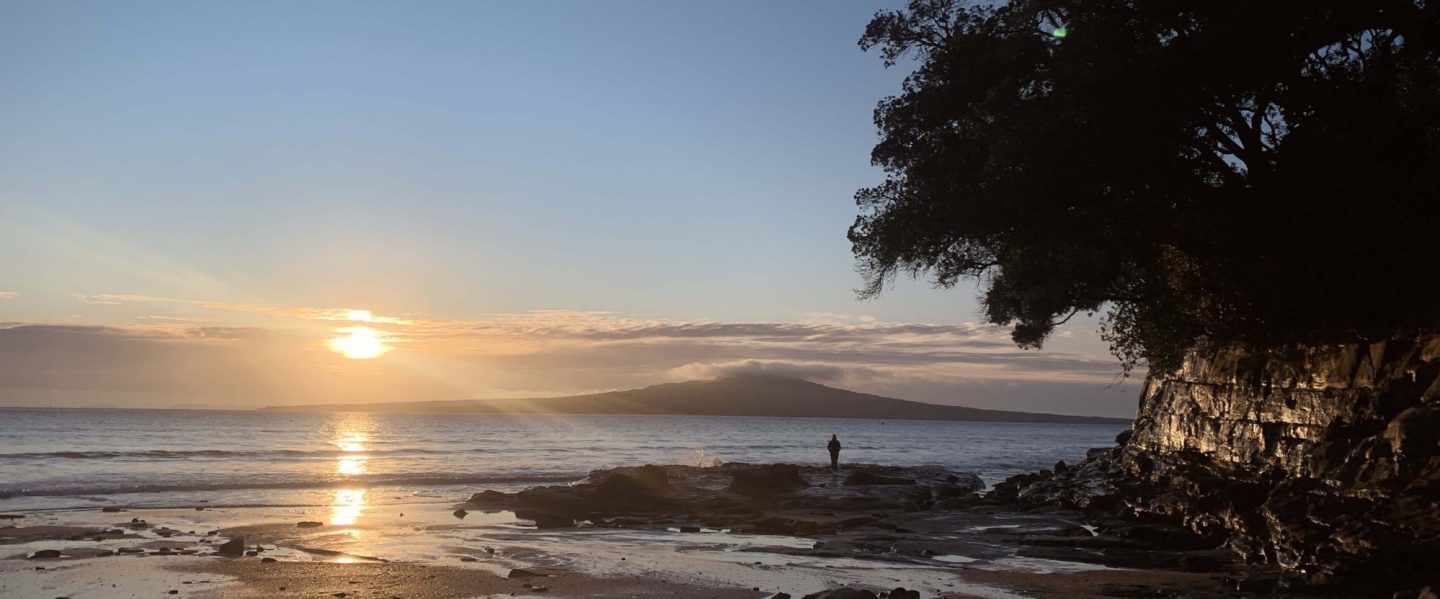
Photos of The Escarpment Track, a 10km trail in Wellington, NZ. This trail forms a part of Te Araroa.

Could I be happy?

I was chatting with a friend recently and said I could be happy stacking shelves at the supermarket.

Walking home after that meeting, I kept replaying that moment. Because I’d said the quiet part aloud, and I wondered what that’d sound like to someone who values their career growth and ambition.

But the bigger internal question was whether I’d truly be happy stacking shelves, or if I just said that because my best friend recently started a job stacking shelves, and I’ve been hearing all about it.

For the record, my friend thinks itโ€™s a boring job. Itโ€™s a lot of heavy lifting and staring at hundreds and hundreds of chip packets and cola bottles and stifling the urge to comment on why we have a health crisisโ€”for about 10 hours a day.

Iโ€™d be bored, too. Itโ€™s like hand weeding your garden in winter. Thereโ€™s so much to do with so few creative challenges, and it feels never ending.

Could I be happy, though?

In hindsight, weeding my garden every other Saturday with my friend brought me so much joy. It was a comfortable routineโ€”it didnโ€™t require me to talk or perform all the time, I could find a comfortable position to sit at, and when we stopped for coffee, we saw the meaningful change our work had made.

Now, obviously, the stress is different when itโ€™s your livelihood and not just a hobby.

But I also think we tend to mix up happiness with a certain job description. Happiness can come from being content with where we are and what we do. For some people, that sounds like having a low bar, but Iโ€™ve found that that doesnโ€™t prevent me from chasing big goals, doing hard things, and giving my 100%. It just means that joy doesn’t have to depend too much on those things.

In a time…

When artificial intelligence scrapes everything weโ€™ve created,
every poem, every song, every essay, and news article,
that story of you crying in the bathroom over a girlโ€”spilt milk, of looking at supermarket deli meat and remembering your dead mumโ€™s curry, of celebrating with your dad after a football win.
Everything remembered, synthesised, now artificially recreated.

In a time when artificial intelligence scrapes everything weโ€™ve created,
showing us what life used to be like
reminding us of that time we asked ourselvesโ€ฆ
what would we do if money werenโ€™t an object?
We’re not quite sure, we argue over it
mourn the loss of a private memory, like a child whose pencil’s been snatched away from herโ€ฆ

In a time when artificial intelligence scrapes everything weโ€™ve created,
uniting us by our miseries
and fearsโ€”
we return to those spaces we used to inhabit
the back of coffee shops
window seats at double decker buses
nooks and crannies of the city library
and the depths of spoken word communities
to seek solace
hoping for others who seek it, too

Book review: I’m Not Okay and That’s Okay

Self-help books sound a bit patronising to me. Occasionally I find useful nuggets in the genre but because of its typical narrative style, I also donโ€™t read too many self-help books. So when I first borrowed this book from my audio library, I didn’t know it was in the self-help category. It was an interesting title, and I like reading and learning about the macabre and mental illness so expected some sort of analysis of mental health. Alas, it wasn’t to be.

That’s on me. I don’t always read the blurbs before borrowing a book (I like the mystery) so I often find out about a book as I go along.

It wasn’t a total disaster. I gave this book a 3/5 on Goodreads, and my rating is a reflection of how I processed this book, and not of the content or the writing.

This isnโ€™t the kind of book you read on the bus or listen on your run. I learnt that the hard wayโ€”I was mid-run when I finished a book. I’d already set up this book to play next so I did. Had to stop after about 10 minutes because it just wasn’t the kind of help I needed to finish my run.


This is the kind of book you have on your shelf and reach for whenever youโ€™re having a rough time. If you have a nighttime routine that includes reflection or meditation, this might be a book you slot into that routineโ€”a chapter a day would be more than enough. This is a slow read. It feels like a workbook with some strategies sprinkled in, and it gives you active time and space to work through said strategies. If that’s what you need in life right now, itโ€™s a good little book.

Itโ€™s also an easy-to-read book. The language is simple and direct, which is important when youโ€™re physically or mentally going through a difficult period. But itโ€™s not a shallow readโ€”it touches on some potentially confronting topics and ideas. But it doesnโ€™t add to your cognitive load. Itโ€™s not an alternative to therapy, in other words. Youโ€™re still going to have to do the work yourself (whatever that looks like to you)โ€”but the book can be a useful supplement.

On the other hand, parts of the book felt repetitive and rather obvious, for the lack of a better word. Most people will have come across some of the advice and strategies in the book. Sometimes, hearing the same advice from various sources can be reassuring, adding credence to the authorโ€™s expertise. Unfortunately, that can also make the book feel the same as others in the genre.

Strange thoughts

When I saw that my favourite podcast had an episode with Jacinda Ardern as the guest, I instinctively tapped to listen.

Iโ€™m one of the millions of people who admired Jacinda Ardernโ€™s leadership from afar.ย When she was prime minister, I only knew about New Zealand as a great hiking spot. My view of her work and approach to leadership was rather narrow. But since moving here, Iโ€™ve heard lots of varying perspectives of her time as leader, and grown to appreciate the nuances that come with a job like that. Iโ€™ve also concluded that political theatre is sadly not an accurate reflection of the kind of society we ought to be building.

The podcast episode was lovely. Jacinda was honest and funny and surprisingly relatable. I enjoyed hearing about her childhood in the Mormon Church and then the sharp contrast of her adult life of sharing a flat with three gay men. Life has a wonderful way of making us confront our discomforts.

But then she and the host had an exchange that made me gasp. Iโ€™m paraphrasing:

JA: It (breast cancer scare) wasnโ€™t the primary catalyst for leaving, but it was the first moment I remember thinking, โ€œOh, maybe you could leave.โ€œ And I thought, โ€œWell, thatโ€™s a dark thought, isn’t it?โ€

Host: I think a lot of women have that thought, โ€œIf I get sick I can leave!โ€

JA: Yes! Honestly when you start thinking that way, that has to be a catalyst for sitting down and having a serious internal conversation.

That little conversation caught me off guard because I recognise it, in myself and others. I know both women and menโ€”but mostly womenโ€”who find it easier (and preferable) to have an external factor make that decision for them, whether at work or in life, rather than taking on the cognitive burden of making the call themselves.

What is it about living that makes us think that way?