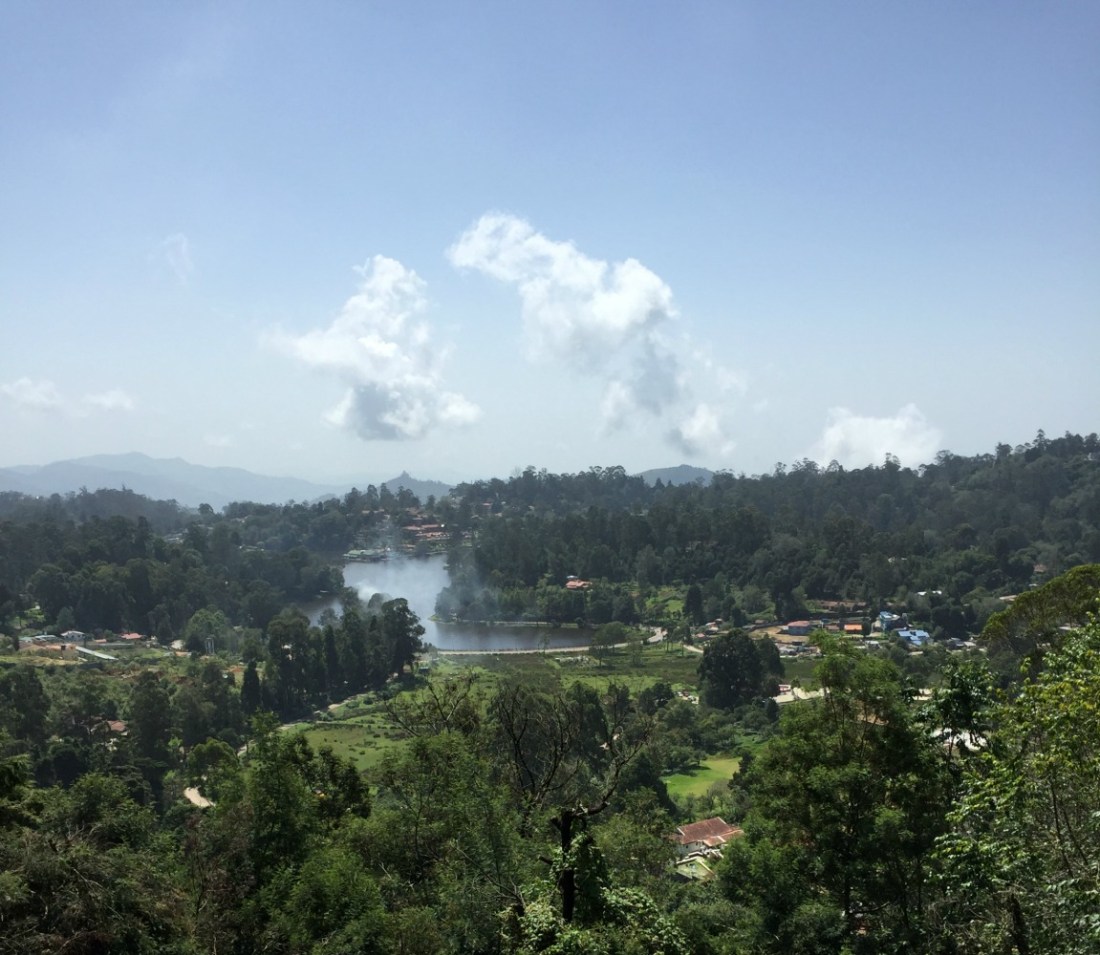
A Simpler Time

If there’s one thing about my childhood that I cherish, it’s the endless sea of tea plantation and me trying to stand straight on a sloping ground that’s more slippery than a bathtub.

I like to think I had happy summers and Christmases there in the Nilgiri where an uncle of mine owned a tea estate. Every time school closed for a holiday we’d pack up our trunks, pick up a truck, and head up the hills. And no matter how many times we’d been up there, round and round the hairpin bends, squashing against each other at steep curves, and spilling juice all over the seats, the trip would be filled with fun and laughter. Plus, when we cousins got together, we’d just hang around and find reasons to drink more tea than usual.

It was a simpler time when ego was unheard of, and adolescent mood swings were in the unseeable future. My uncle’s house was set deep inside an estate, and we’d often take walks around the house exploring unkempt trees and unfamiliar plants. We’d find a new fruit each day only to hear from the well-trained estate folk that we’d discovered poisonous plants. We’d run around barefoot and come home crying with a bruised knee and a guilty-looking cousin. And our biggest problem was coming back before the bears got to us.

But then we got older. What once seemed impossible became the ugly reality. We had grown up, and in the process, lost our innocence to society’s poison that our estate friends failed to warn us about. We drifted apart, seeking joy in movies rather than the open lands. We once walked into dense nature just to live the moment, but as our hair grew, so did our passion for attention, and our attraction to selfies. We are cousins who don’t even visit each other anymore. Some of us married, some happy, some looking, and some others still finding joy in brewing tea.

Life doused our faces with reality, yet the memories linger of a childhood worth cherishing.
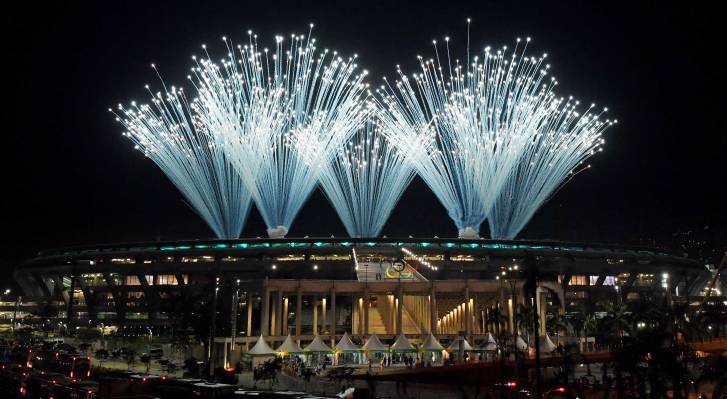
Olympics Aftermath

I just read that to glitter for one month, the city of Rio de Janeiro had displaced 80 000 of its citizens.

rio

If that doesn’t shame a country, I don’t know what else does.

The Olympics is a big deal, sure. It’s a mass congregation, the world’s largest sports convention, the holy godmother of all sporting events, yada, yada, yada.

And while the rest of the world saw the sugar, spice, and all other things nice, reality shoved its ugly face on the people of Rio. They wouldn’t have liked the idea of the entire world coming to — taking over, rather — their home.

It’s not just Rio. We saw a similar picture the last time Olympics went to London and Beijing before that. Countless glorious venues now lie barren and play host to a meagre number of tourists. And to make matters worse, the Bird’s Nest costs $11 million a year just to maintain. And nothing worthwhile came off setting up the Olympic Village either.

As for Athens, the first Olympics I cherished, went $15 billion above their budget to put on a show that’s now in disarray and disuse.

Millions of people thrown into the labour of making these stadia, setting up seating, and fitting in lightings— all for attendees staying less than a month. So much time, money, sweat, and blood shed for the vain pride of hosting Olympics. And at the end of glow and show of sportsmanship, the rings get rusty, and we go back to hating each other.

Nothing about the Games was a game to Rio’s now homeless, squashed under its crushing weight.

And here we are, just days after the closing ceremony, complaining on Facebook that another country outperformed us in track events. We should, instead, be ashamed; blinded by our so-called national pride, we ignored a nation that groaned under the pressure of treating us assholes for a fortnight.

We somehow played a part in uprooting the lives of 80 000 people, and that makes me guilty. Some of those people were school children, pregnant women, infants, and single-meal breadwinners. Even budding athletes.

Come to think of it, Rio 2016 (and every Olympics before that) could’ve destroyed a generation of future sportsmen and women.

Talk About Health

They say it’s unhealthy
if you eat too healthy
but what am I to do
when everything I do
makes me fat as a cat
stuffed inside a hat
but what am I to do
there’s so much ado
apples, pears are body shapes
kale and fads, women of shams
it’s all just a scam
all I want is some ham
to stuff in my fancy bread
that’s all grain, oat, and dread
Oh, what’s the point of dieting
If it’s about hiding your craving?

What’s the Point of Working…*

*…if money were no object?

I don’t think there’s any point in working if money were out of the equation. If we all had abundant food and full-time entertainment, we wouldn’t need anything else. We wouldn’t have to work at all, we could fool around and have a ball, even.

Some say, if money were no object, we’d have a fuller life. That we’d do more of what we loved, of what made us happy. That we’d follow our passions.

But is it so?

There’d be no point in waking up to a blaring alarm, fighting an urge to snooze, or ignoring the top palate while brushing.

There’d be no point in rushing out of the house, or remembering you hadn’t locked the door after you’d walked down two flights of stairs.

There’d be no point in clocking in 2 minutes before the penalty time, or skipping lunch to write a poem, or staying late to discuss the ANUS that had fallen to an all-time low.

If money were not an object, there’d be no point at all in getting out of bed every day. There’d be no traffic, no blaring horns, and no headlights blinding you when you walk home after a long day at the office.

If not for want of money, we’d have no reason to listen to the boss lecturing, or tolerate water cooler gossip. There’d be no dinner dates with attractive sales reps or compulsive flirting with the blond receptionist.

If we didn’t get up, suck up and go to work, we’d be at home on our couch, nibbling on potato chips, thinking about making art, talking about zen, and adding weight to the planet.

No, we wouldn’t follow our dreams, we wouldn’t even dream.

There’s a Lake in Kodaikkanal

When I sat waiting for my tea in a restaurant by the Kodaikanal lake, I didn’t know the lake staring at me was artificial.

I later learnt that most tourists assumed the lake was a natural phenomenon, when in fact, it was created during the British reign by the Collector of Kodaikkanal, Sir Vere Henry Levinge.

kodaikkanal lake

I’ve seen a lot of lakes since, larger and more natural lakes than that one, but the thought of it still amazes me. It was like Coleridge said,

“Water, water, everywhere and not a drop to drink.”

And just then, it started to rain. It was the monsoon season, and rain would come and go as she pleased. It was cold enough already, and the rain made me turn towards the kitchen to see if my tea was ready yet.

My tea and samosa arrived, and I welcomed the puff of steamy air that blurred my glasses. I sipped my tea and bit into the samosa. And some of the spiciest and heartening mashed potato masala landed in my mouth. I took a second sip of my tea and warmed up me from the inside as it trickled down my throat.

I looked at the lake, watching drops of water scattering ripples through the surface. It wasn’t a heavy rain, and I could see a few boats rippling through the lake.

Kodaikanal is a famous honeymoon spot, and sure enough, there were couples paddling away, while thousands of tiny fish surfaced for seaweed and breadcrumbs.

A few others – the restaurant folks, by the look of them — threw nets into the lake, trying to catch fish. The kitchens seemed to have run out of fish pretty fast.

I finished my snack and we retraced our way to the hotel. We had to drive around the lake for at least half hour. It was a centre hub, around which countless locals went about their chores while tourists shopped for fancy bead chains and souvenirs.

The lake spans 60 acres. As we drove on, we reached a part of the lake that seemed dented in one place. Somehow, the people who created the lake didn’t like flawless ovals.

The entire lake seemed like a giant’s idea of a puddle, and as if someone had made an awful lot of mess in one corner.

By the time I reached the hotel, I had been among such serenity that I felt satiated; eyes, soul, stomach, and all.