Exchange Offer

I screamed, and screamed, and screamed.

I swore, I cried, and I tried

I want you back to rest on my back

And love like we swore we would

But when you went under that bumper

And I saw just your jumper

I knew you were gone.

I knew we were gone.

But then came Jimmy,

Someone, they said, to love,

To heal the scars you left me with.

But one dog for another —

Love doesn’t work that way.

I Fell in Love with Writing. Again.

I love my life. Because I write for a living, and writing is my passion. Sometimes I write good stuff, and sometimes crap I’m not proud of.
I fell in love with writing.jpg

Whatever I write though, I edit. People say crisp sentences are strong, and have a stronger impact in the reader. And that’s why I taught myself to “kill my darlings.”

And during one of my self-editing sessions, I fell in love with the language all over again. Because I learnt an important lesson: Longer sentences can be strong too.

I had this sentence.

Writing is one thing technology can’t conquer, because writing is human.

My internal editor went berserk, and we ended up with this.

Writing is human, and technology can never conquer it.

At first, both sentences made perfect sense to me. And then I read and re-read them aloud. And that’s when it hit me.

Everything about these statements was different.

Writing is one thing technology can’t conquer, because writing is human.

The sentence starts with “writing”. That says writing is important. And then it says why writing is important. Because it’s the ‘one thing technology can’t conquer.’

It’s ‘the one thing.’ That’s to say, writing is beyond all things technology can conquer. We acknowledge the power of technology, but declare writing is more powerful. And why is writing so powerful? Because, ‘writing is human’.

When you connect writing with being human, it’s clear that technology isn’t. It’s emphasising the obvious. But at the end, writing seems in the better light, because we can relate to it as human — that it’s the one thing unhuman technology will never conquer.

There’s emotion in this sentence. There’s human.

And then there’s this.

Writing is human, and technology can never conquer it.

The sentence, again, starts with writing. But, instead of a period there’s a comma — a pause as if we’re waiting for something important — and then comes the phrase, ‘and technology can never conquer it.’

I read this line, and realised: I had combined writing and human in one phrase, and added technology in the immediate next. It had deteriorated the power of writing which was evident in the previous version. The emphasis, now, had shifted to the word “technology.” But as a reader, I’d be reading out ‘technology can never conquer it,’ in just one breath — not a breath-taking line.

I had confined the most important part of the sentence to the first line, and made it sound bland. With the comma, I had brushed aside the human element in writing, and focussed on technology instead. And that had made the whole sentence more of an observation than an emotion.

Sometimes, we say things in an impulse, in an emotion. And sometimes, this spontaneity needs much editing before anyone sees it. But in some odd cases, we just over-edit. That’s what happened to me.

I wrote, I rewrote, I read, and re-read my words. And when I saw the difference, I felt a rushing love towards the English language. How can a language be so beautiful, and so complicated at the same time?

Tea Talk

Sometimes, to understand some things, you have to be there. That’s how Darjeeling is. I had to be there to realize what the most talked-about tea was all about.

It’s just tea. But the mystic romanticism involved with Darjeeling tea is enough to make any dog out peep through the window.

That’s why I had to know what the ruckus was about. From my research, I learnt that locals add unsalted butter to their tea. Well, with plummeting temperatures, they need to be bulletproof of course.

We never got to try it though. It could be because we were just a fancy group of people walking around with flashy phones and discount DSLRs, pretending to be professionals. Typical tourists tend to put the locals off.

Nevertheless, there was tea. There’s always tea.

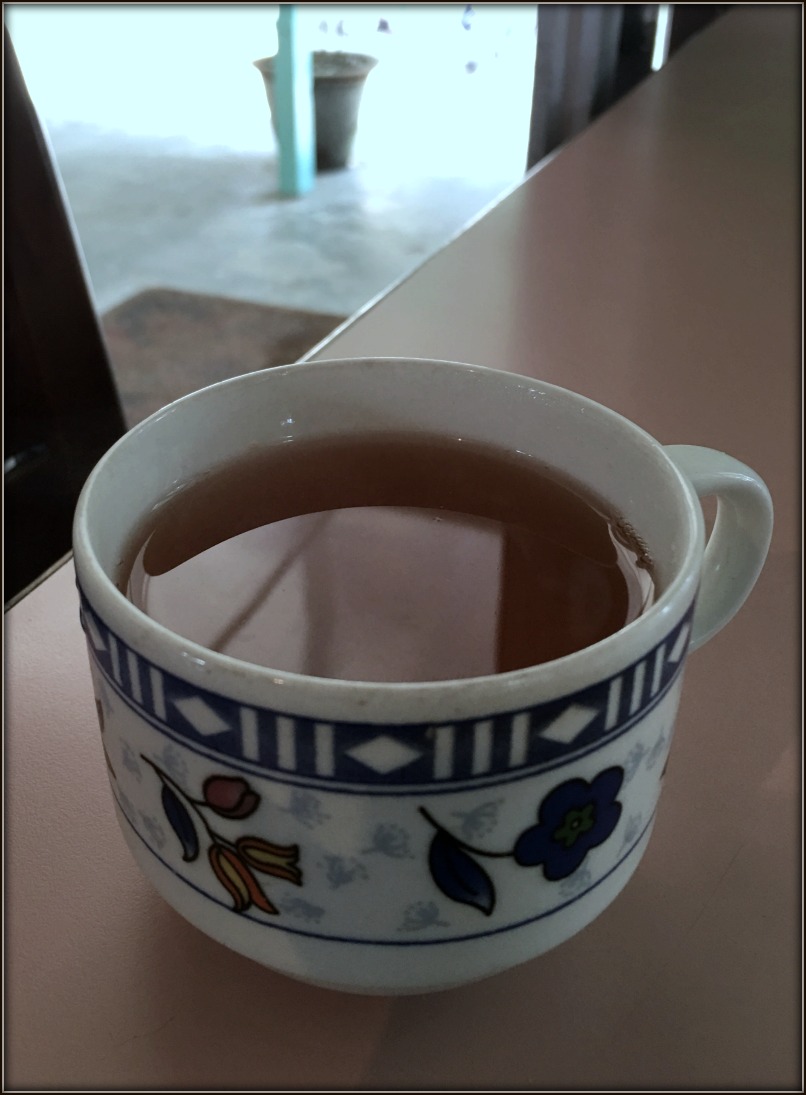
cups

But it was commercialised tea. Good, yes, but some shops denied justice to the perfect combination of milk and water. Because milk does’t suit Darjeeling. We shouldn’t have expected a perfect cup of tea with full cream milk and two spoons of sugar.

When in Darjeeling, you should drink tea without milk. As for the sugar, maybe a little. That’s the essence of tea in that hill.

I love tea in all forms. I adore the strong smell wafting through my nostrils, invigorating the brain all the way to the last bone. And the earthy flavour that lingers in my throat, even hours afterward.

Milk just ruins the whole experience. At least in Darjeeling.

As an avid tea-fanatic, I can vouch that colour is most important while drinking tea. And if you like your milk strong, you can’t have your tea as strong. Darjeeling is famous for leaf-based tea, and not the dust that’s common throughout the rest of India. That’s what makes Darjeeling tea unique: It’s all leaf and no powder. And that’s why it needs to brew, not cook.

Tea making is an art. Making Darjeeling tea is another one altogether. It’s a process: You put the pot to boil, and wait for the bubbles to pop up, threatening to evaporate all your water. You switch off the stove, and let it sit for a few seconds while you measure out a few leaves. Sniff in the scent of fresh toxic before throwing them into the pot and closing the lid.

And then you wait.

For a minute or two. For the leaves to seep through the heat, to distil the purest of flavours, and transform plain water into a royal drink. Then strain and enjoy. It’s worth the whole 2 minutes you’d have spent standing by the pot.

tea

But making Darjeeling tea isn’t as easy as four steps. Let it seep for an extra few minutes, and you’d end up with some bitter tea that’ll make you feel like a dethroned royal.

Despite that, I bought back five packets of Darjeeling tea. I know, some days would be bad tea days. But every day, I’d be royal.