Of resolutions

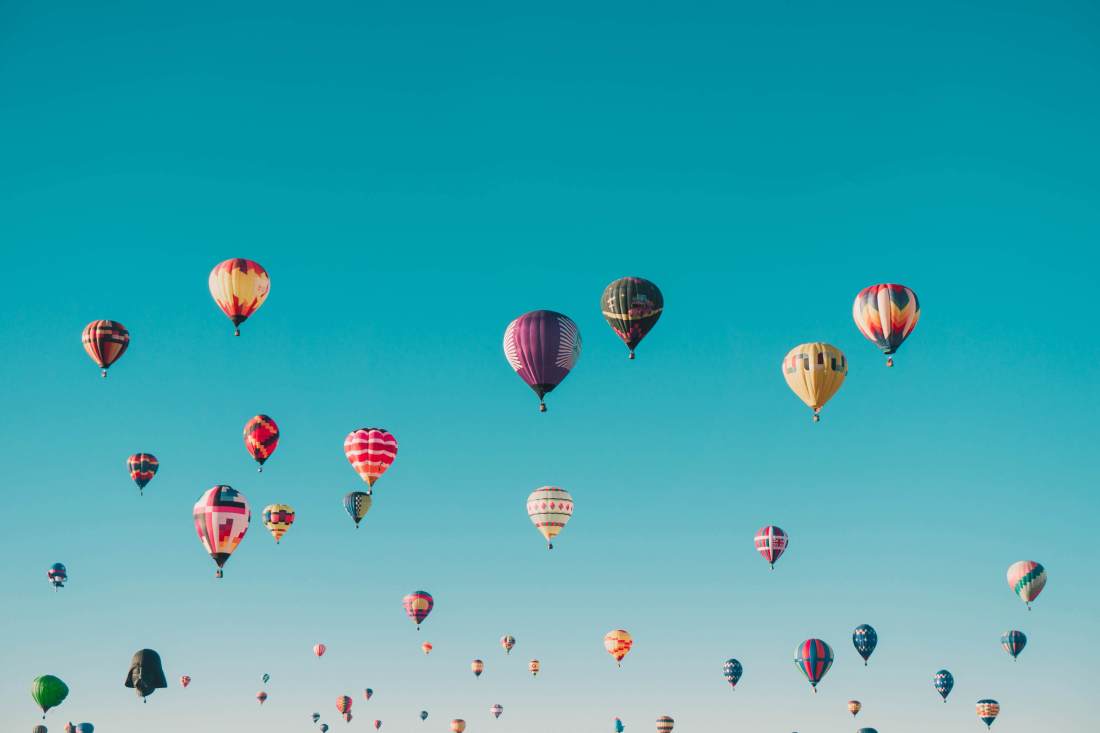
Hot air balloons | Unspalsh.com

Every year around this time, everyone talks about one thing: new goals for the new year. And without a doubt, every time, we share big plans with others, spending an entire evening rambling and trying to prove to ourselves that we can achieve whatever we set our minds to.

Why do we do that, though?

Why do we have the urge to tell others, to share our life plans with external stakeholders, to allow them the power to hold or words against us when we fail?

It’s because we all feel the need to be accountable. Deep within us, we know that letting someone in on a secret or running an idea by them helps solidify it. The more the number of people know about our plan and agree with it, the stronger is the possibility of its success.

That’s why most of us inflict our most profound plans and ideas in the world, in the last few days of the year because new years are new beginnings.

I’ve never made a special New Year’s Resolution (or NYR as the text-speakers call it) because I don’t need the first of January to start working on something I care about. Any day is the beginning of a new year for me. I know what I want to do next week or next month, and what I want to achieve by the end of the year.

That said, sometimes I don’t know what I want to do this week. And that’s fine too. Perhaps I’ll go to work and see what challenges come at me.

It’s nice to have someone enquire how things are going and offer to help, but we needn’t force ourselves to figure out a goal so that we have something to say when it’s our turn.

“What’s your resolution for this year?” — That question is a mere conversation starter. Perhaps a good way to diffuse the tension around a family dinner table or at a boring work party.

Family and friends might wish us well when we tell them we want to lose 15 pounds. Or make a ton of money, or end debt, or work harder, or spend more time for personal wellness.

Beyond that, however, it doesn’t matter to other people what our resolution is or why we chose that one in particular.

But the idea of forming a plan, a proper outline for how I want the rest of my days to turn out is a lot of pressure. After all, no matter how much we plan and plan, life will throw surprises and disasters our way.

New Year’s resolutions are overrated. People make something up every year and promise to uphold it even if they know they won’t. New Year’s Eve isn’t about trying to think of something almost achievable that we don’t feel inadequate at the party later, but it’s more about reflecting on our mistakes from the previous year and learn never to make those mistakes again.

Real goals don’t sound like weak NYRs. Real goals are inclusive of the unfamiliar, respective of the uncontrollable, and realistic to the core.

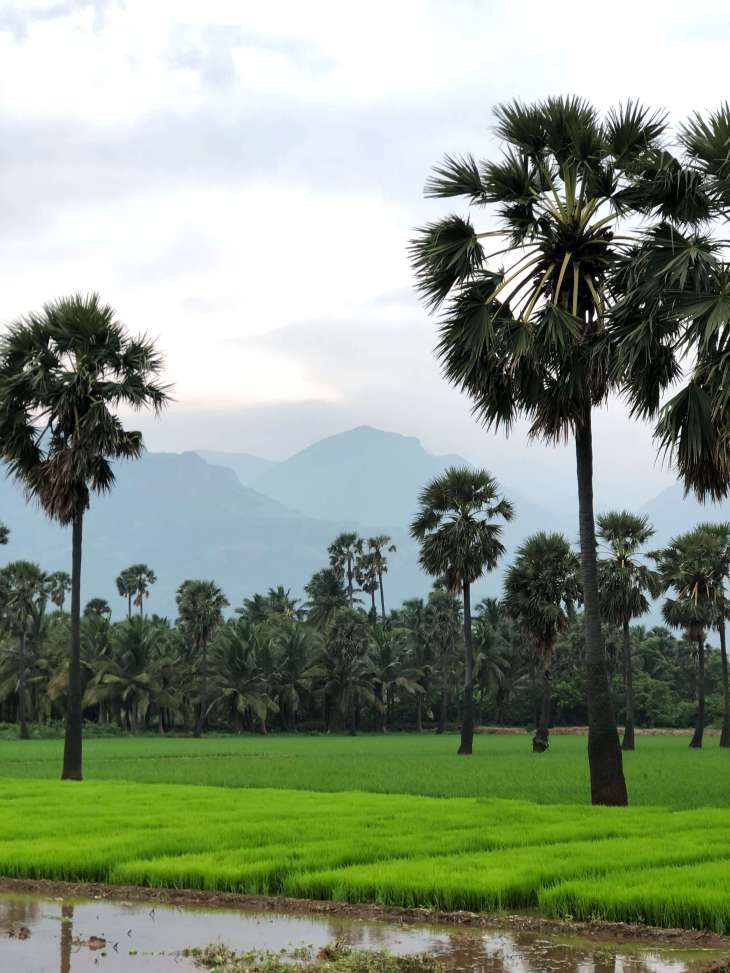
Image source: Unsplash.com

If I were to die next week…

Here’s a thought: If I knew today that’d I’d be dead by this time next week, what secrets would I want buried with me?

As I sat down to think about all the things that I hold precious, the physical baggage that I won’t be able to carry to my grave, I realised none of it matters as much.

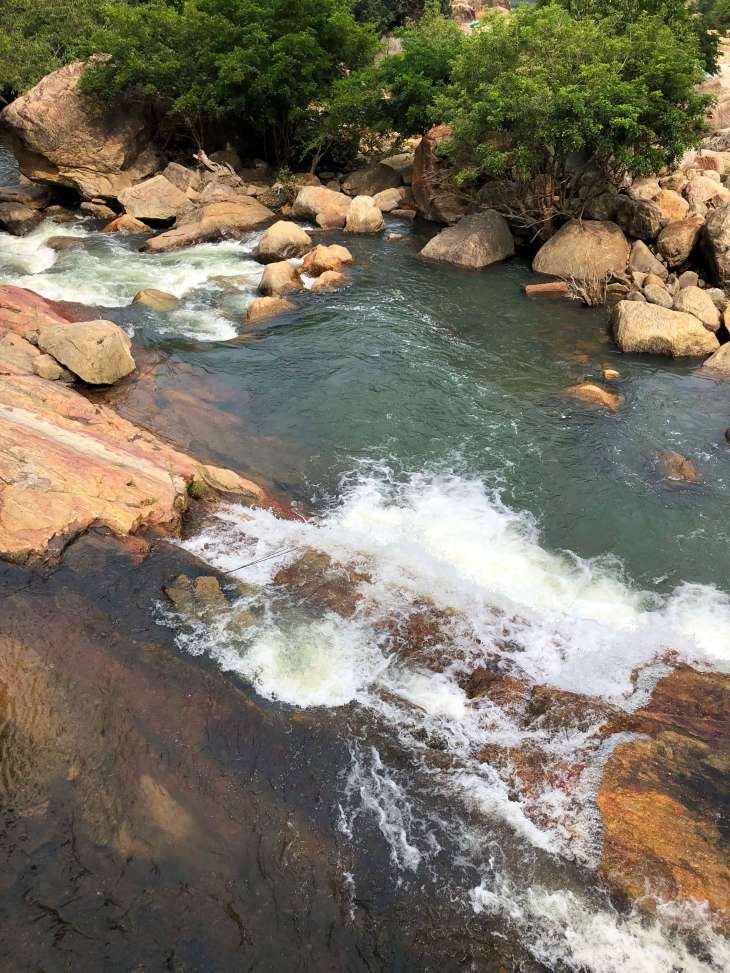
A few weeks ago, I was on a trip with my colleagues. We were at a dam called Manimutharu, and although the waterfalls were too savage for us to shower in, we still explored the lower end of it where the water washed through polished and uncut rocks. I was climbing up one rock from the one I stood on and slipped. I fell face forwards into the water, right in between two big rocks. My head grazed the stone but missed a catastrophic collision by mere inches. My immediate reflex was to get back on my feet and protect my phone. But it took me a couple of seconds to recognise I’d lost my spectacles in the interim. It was a heavy current and all our efforts to find my glasses went in vain. 

Now that was an expensive pair of spectacles. It was sun tinted with a cat’s eye frame. No one in my family liked it, but I’d insisted on it. I loved the way I looked wearing it and washed it every day to ensure maximum clarity. And it was gone.

To my surprise, I didn’t care. I knew I’d lost a lot when I lost my glasses, but it didn’t bother me at all. I was just thankful to be standing on my feet again. 

That’s when it hit me. Even though I valued that spectacles so much, the experience of falling into the water changed my priorities altogether. 

The moment I knew I’d escaped colossal accident, nothing material mattered anymore. 

With that experience, I wondered again: do I have anything that I’d want to take away with me when I die?

It took me a while, but there was one thing I didn’t want my family to see: my diary.

When I started writing a journal, it was my emotional outlet. I poured out my happiness, sadness, pain, anger, and frustration to an inanimate character I named, X. 

I complained about homework, summarised episodes of my then favourite television series, Robin Hood, and droned on and on about my parents. My family was in disarray, and I was going through a hard time. Every day was a struggle against the depression and self-deprecation that engulfed me.

It was an account of a disturbed teenager’s life. Now that I think about it, I took my inspiration from Anne Frank, one of the many Holocaust victims who died in a concentration camp. Her father published her diary years after her death, and it at once became a chilling reminder for the rest of the world of a time we all wish we could forget. 

Although I read and appreciated Anne Frank’s thoughts and emotions, I never wanted others to read mine.

My journal portrayed me in the most vulnerable state I could ever be in. And years later when I moved out of my parents’ house, the diary remained there. I’d made my mother swear never to read it, but I’ve spent many days worrying for the secrecy of its contents. It disturbed my peace so much that I regretted having written it in the first place. 

That’s the only thing I’d want to take to my grave.

But last week, I burnt it all.

My dad was getting rid of some weeds in his garden and wanted some papers to help ignite a fire. And as I watched years of diary entries crumble into ashes, I felt an incredible sense of calm. 

I’m happy I wrote those emotions down—it was a physical way of letting them go. Now I’m also glad that all that I’d let go will stay gone forever.

If I die next week, I will take nothing but memories.

How about you?

The best place on Earth

I came across a writing prompt today:

“If aliens made contact with you asking for the best place to land, what would you tell them?”

Sunset in the International Rose Test Garden, Portland

Switzerland! Screamed my head.

Portland, said my heart that likes to think it’s well-travelled.

Somewhere in the mountains, quipped my analytical brain.

The more I thought about it, however, the less I wanted to recommend a place at all. Yes, of course, Portland is one of my favourite places. I spent five days exploring the city and I’d move there in a heart beat.

I felt rather the same way about Austin. It was hot and I got tanned on the first afternoon there, but I still enjoyed the greenery that filled my eyes and the breeze that kissed my freckled cheeks.

Seattle was nice too, with Pick Place Market being a great place for an afternoon walk and Alki Beach, a necessary reminder of human history.

Then there’s the place I call home—Trichy—with the Rockfort Temple, a massive rock that people claim to be half as old as our world itself. I had no idea—I just love scaling the mountain to look down at the city and feel ecstatic.

Or Chennai. Or Banaglore. Or Mumbai or Delhi—all the grand metropolitan cities in India.

Times Square perhaps, if the aliens don’t mind getting squashed in the thronging crowds. I can’t help but smile at the thought.

But, no. I would recommend none of these places to an alien visiting Earth.
I would instead ask, why come in the first place?

As I tried to identify the best place for a foreigner to visit, I found myself thinking about the least polluted, least ugly, and least offensive place. And that’s when I realised that although there’re plenty of places that fit the description, there’re also countless undesirable places—polluted, ugly, and so offensive that I wouldn’t wish it upon even my vilest enemy.

Our world’s hurting. It’s tearing at the seams and bleeding from within, and that’s only the physical damage. Aside from the tsunamis, the volcanic eruptions, and the random calamities we label “natural,” we’ve also become the termites that gnaw at the Earth bit by bit.

Just look around—children on a shooting rampage within the school campus, familial relationships crushing under the weight of egotistical self-worth, vulnerable people becoming targets of physical and emotional abuse—there’s no place on Earth left that an alien would feel welcome.

All the world’s travelogues, vlogs, and holiday destination businesses sell a Utopian dream of what the world should be. None of it’s true. I loved Chicago for its grandeur, but I also saw homelessness on every other corner. I cherish New York City’s cultural diversity, but there’re alleyways I couldn’t go past without fearing for my life.

That’s the reality of the world—it’s not a walk on roses. It’s a bleeding, sweating, rotting mess of human flesh.

And if aliens still want to visit, it doesn’t matter where they land because everywhere on Earth has a beautiful spread that’s also spreading thin. Alas, there’s a bitter pill to swallow as we look forward to closing another year on this Earth.

Hasty

The girl squirmed as she replied to the hooded man. She wasn’t impressed with whatever he was selling either. His hung his head low, spoke as in a whisper, and looked straight into the eyes of the girl who was now regretting taking the bus to work that day. 

Across the bus stop, the policeman observed everything. He wanted to intervene, to nab the vermin that injected evil drugs into his society. But it was neither his place nor right to disturb unless the woman called for help.

After about ten minutes, it was becoming clear that the shady salesman wouldn’t accept no for an answer.

Jeff threw caution to the winds. So what if he was under suspension for wrong accusations? He knew a drug dealer when he saw one. Inspired from super cop movies, Jeff jumped in on the scene, “Hey, mister. You’re coming with me for drug trafficking.”

He pulled at the man’s hood. 

An old beggar woman stared back at him. Not a drug dealer, but instead a gypsy selling beads.

Prompt: Today’s Author

When solo traveller goes with a group

I’m not as well-travelled as I’d like to be, but everywhere I’ve been to, I’ve been with other people. Even my three visits to the US were work trips with colleagues close behind me. However, when we weren’t working, and when it was time to explore, I’d leave them to their plans and fly solo.

I’ve always been that way, and I’ve never felt bad about it either. My reasons are simple enough: I don’t want to go to the same places they do, and I don’t want to do the same activities as they. When I’m travelling with colleagues, no matter where we’re at, they will always want to go shopping. Which is fine by me, except they have people to give things to and I don’t. I’ve never been much of a shopaholic or the typical tourist, but my colleagues are. And that’s the reason I head out on my own. Of course, it’s unfair to ask them to spend time with me on activities they’d rather not indulge in.

With such strong reasoning, I discovered the joys of travelling solo. And it taught me a lot of great things too. For the first time, I was responsible for myself. And it wasn’t as scary as my parents had told me it’d be. On the contrary, it was fun. It was, of course, little unnerving at times, when I struggled to figure out the way ahead or how to handle situations, but I got through them fine. And I realised the benefits of solo travel far outweighed its negatives.

Never compromise

The inevitable factor about social living is that we have to compromise. And I did compromise in my work trips, with the flight preferences, hotel reservations, seats and transport modes, and sometimes even food. But as soon as I ventured on my own, I didn’t have to compromise anymore. I could take the bus if I wanted to or save time eating a bagel on the way rather than waiting for my co-travellers to finish a five-course veal meal. I could, most of all, stop where my heard did. 

It was the best feeling ever—freedom in every sense of the word. Since I didn’t have to endure their endeavours for souvenirs or their selfie experiments, I got more time to do what I like—whether it’s window shopping at a bakery or hiking up a hill for the breathtaking views, I loved having complete autonomy.

While I was basking in the glory of travelling alone, my teammates planned a team trip. And I was to go along with about ten other people. I had misgivings even before we left. Unused to going along with others, I didn’t know if I’d manage it. I even asked myself if it’s worth going at all, knowing full well I won’t have a good time.

But I went anyway. And I wasn’t all wrong. It wasn’t easy for me to adjust to others’ routines and plans. It wasn’t the best experience squishing seven people in a five-seater car or listening to music I don’t like all the way on a road trip. Although most of us wanted to go on a sunrise drive, I hated waking the reluctant others at 3:00 am. It pained me to be the plant eater in a meat restaurant watching the group order piece after piece.

Regardless of all this, every time we were out together, at a waterfall or a bridge, or a street walk, I enjoyed myself in spite of myself. Sure, I wish we hadn’t taken so many group photos and selfies or spent so much time waiting for the others to get ready, but I also had small moments I cherish to this day.

I didn’t have to be the only responsible one throughout. Or watch behind my shoulders all the time. Or ask for directions or pay for every meal. For once, I was part of something bigger than myself. Yes, I had to check we were heading in the right direction, and stay awake talking to prevent our driver from falling asleep, but at the end of it, it wasn’t only about me, and that didn’t feel so bad.

Go with the flow

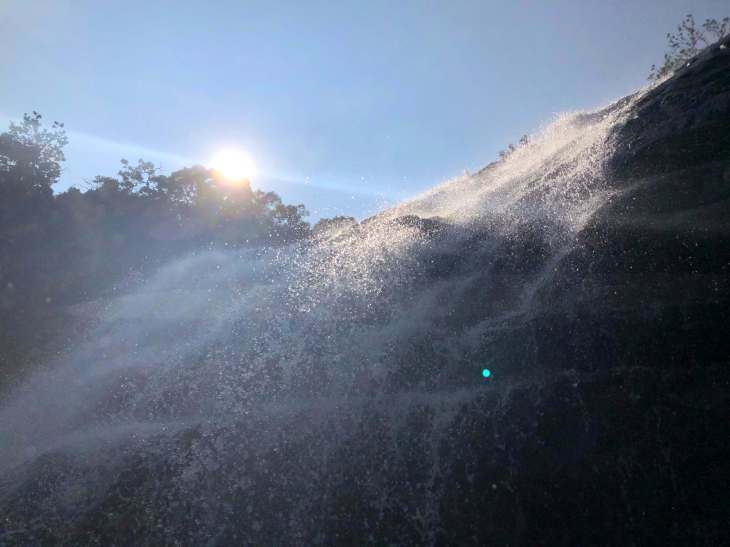
I’d visited countless waterfalls before. But for the first time, I showered in a waterfall during the team trip. As I saw my colleagues run into the water, I was happy to join them without worrying who’ll watch my stuff (lucky for me, some of my team-mates are afraid of water).

I learnt to let the inevitable flow of events engulf me, and to my surprise, I had fun. I laughed more than I thought I would, made friends of unexpected people, and even had someone interested in taking my picture. Travelling with a group, I realised, isn’t so bad after all. After all, you get to know for real about people you thought you knew.

Solo travel makes you feel like you own the world, while group travel makes you feel belonged.

Which is better, though, is subjective. I’ll always vote for going alone, but I wouldn’t negate the thrill of travelling with others.