Well, hello there, Hollywood!

The only time I had the opportunity to visit Hollywood, I didn’t want to. My colleagues and I were in Pasadena for an event and we’d spent the weekend afternoon in a rather unusual way at the Santa Monica beach and pier.

Next stop, my team was all jumpy about it, was to be Hollywood. After all, as one of my friends pointed out, we were so close that it’d be a shame not to stop by. For you see, even in the nation that gave Bollywood to the world, the American version is quite popular.

Except, I didn’t want to go.

However, peer pressure works in weird ways and having spent the first half of my day with the team, I gave in and ended up taking the window seat in the cab. Our destination was the Walk of Fame. I wasn’t sure what incredible experiences awaited us, but my fellow travellers seemed to know what they were doing. And so for the first time in a long time, I just went along with someone else’s plans.

About 20-30 minutes later, our driver pulled up. It was time to get down. Just before the doors opened, I happened to turn to my left. There, nestled amidst the fog and the mountains, was a big fancy sign—Hollywood. We were there.
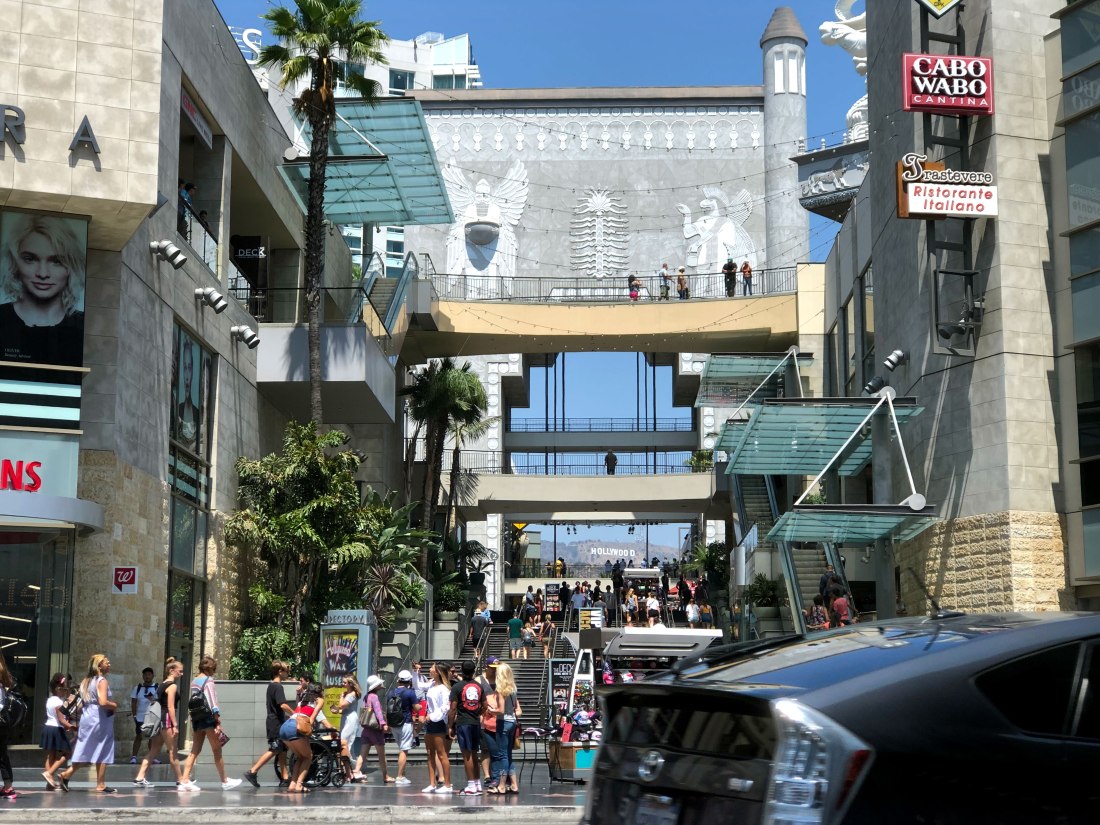
Hollywood sign as seen from Hollywood Blvd
Hollywood sign as seen from Hollywood Blvd.

I pointed it out to my colleagues and in a fleeting second, their dreams shattered. They hadn’t expected to see the sign that way—crouching, peeping through a rather spotted glass window, squinting to get a better view. But that was it. We’d seen the sign.

Our driver seemed to share our disappointment, although for another reason altogether. Hearing frustrated “ahem”s, we realised with a jolt that we should let him go. Thanking and apologising at the same time, we got down looking all sides for the Walk of Fame. We turned this way and that for a while trying to spot directions before I looked down and saw I was standing right on top of it.

The sidewalks on both sides of the street was the Hollywood Walk of Fame. I couldn’t help but laugh out loud.

“So what next?” I asked my colleagues. We’d seen the Hollywood sign, we’d walked the Walk of Fame. The only thing left to do—in my opinion—was to go back or go elsewhere. For goodness sake, we’d even seen a statue of Lord Ganesh!

Everywhere I turned, tourists clutching over-priced souvenirs, licking extra-large ice creams, or wearing over-the-top hats. People pointed in random directions, peered at their mobile maps, got on an off tourist buses. A few locals strode in and out of shopping malls, branded bags weighing them down. It was a hot spot, for sure. But boring unless you have a ton of money and the excitement to spend it all right away.

I’d had enough. But my friends had other ideas. They wanted to visit the Madame Tussauds wax museum down the street, and then grab lunch at the California Pizza Kitchen.

Excusing myself, I walked in search of the nearest train station. I caught some interesting attractions along the way, but I’d had enough of Hollywood. I headed, instead, to the Griffith Observatory.
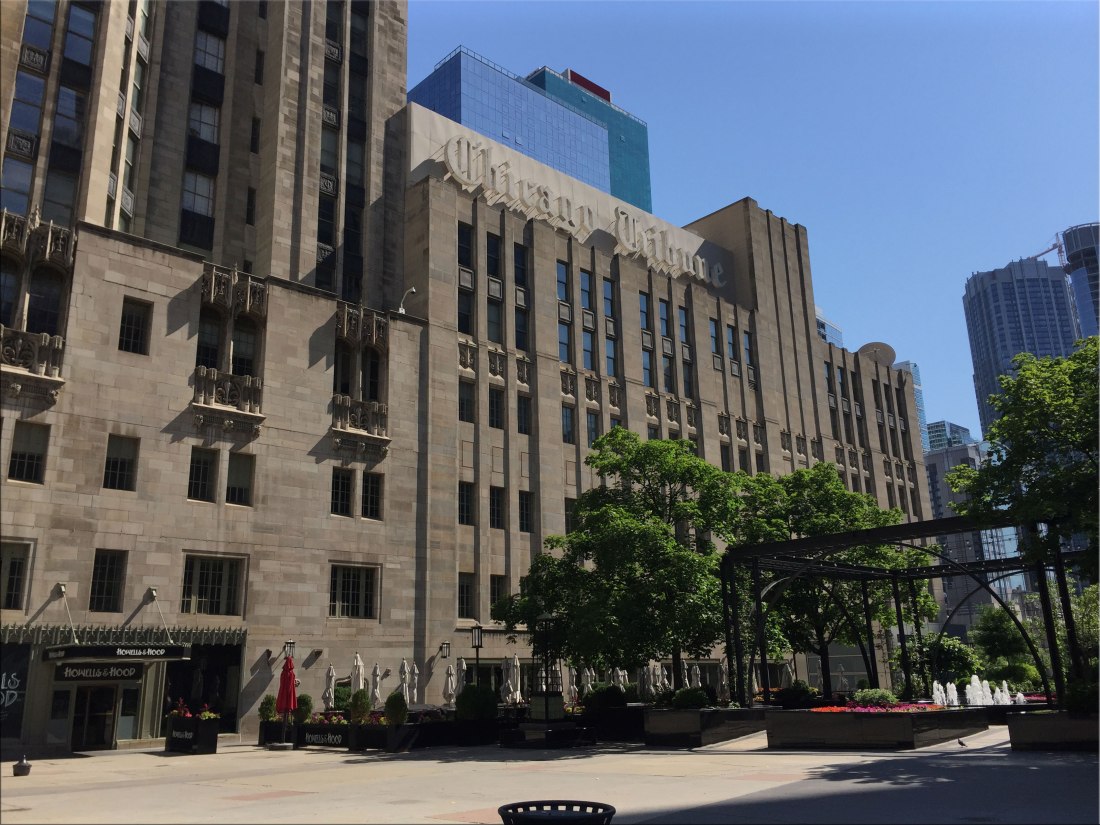
Tribute to the Tribune

Tribune Tower, Chicago

Although it’s been around for ages, media wasn’t always as aggressive as it is today. At least that’s what I thought before I arrived at the Tribune Tower, home of the Chicago Tribune.

Erected in 1925, the tower is a living testament to thousands of targeted publishing and outreach activities through the years. The frame of the building itself holds historical stones and rocks—relics from correspondents’ time abroad researching and reporting what’s what.

It was a novel idea, and until I looked it up once I got back home, I didn’t realise that the remains of global constructions came upon the Tribune as a natural progression of events—I’d assumed architects thought it through first and then found the stones as decor. How naive of me, when in fact they had incorporated those stones just because they had a story to tell.

Still a living, working entity, the insides of the building is even more marvellous, if that’s possible. Beyond the lobby area is also off-limits to tourists.

The lobby, though.

Words of wisdom, words of courage, words of wonderment, and even debarment and endearment lined those walls. Each quote revealed painful precision—according to the receptionist, the architects wrote them all by hand. Hard to believe there was a time when humans wrote on walls, words we’d read generations later. And how assuring that that’s not in the time of Facebook.

The Tribune Tower was just that—a massive building with impressive exterior and interiors. But it’s also a lot more than that. Even though there’s not much to observe in the building and only Tribune employees have access to its interior, the tower remains a reminder of what true journalism is all about. In this time of skewed media and sensationalisation, it’s quite amazing that the journalism of the past still survives and attracts people.

Epiphany at the American Writers Museum

Say Chicago and most people think about The Bean in the Millennium Park. Or the architecture tour, or the Sky Deck.

They’re all great, for sure. But there’s so much more to Chicago than that. So much that never makes it to the tourism blogs or brochures.

Like the homeless people who stay by the Magnificent Mile. Or the tea shop near the Millennium Park that has over 150 flavours (David’s Tea, I learnt later, is a popular brand with stores across the US). Or the writers museum.

Yes. Chicago is home to the American Writers Museum.

I hadn’t heard of it anywhere. No one insisted that I visit it. And I wouldn’t have known of its existence if I hadn’t stumbled upon it while wandering the streets looking for nothing in particular.

As soon as I saw it, though, I knew I had to go in. Although I’m always wary of unreasonable entrance charges in museums, this time I didn’t care.

As I entered the hallway, a long wave of American history hit me. I spent over two hours walking through aisles of portraits and photos that enacted the lives of authors who made American literature great in the first place.

Looking at them, I realised making a living by writing isn’t easy. It’s not all fine and dandy, and life will not be as kind as we want it to be.

So many writers survived backlashes, self-doubt, and discouragement before creating anything worthwhile. And it made me appreciate them even more than I ever did.

Seeing their books, quotes, and anecdotes made me understand that writing isn’t just about putting words on a paper. Writing is about reflecting the world. Sometimes it’s the real world, and sometimes it’s an imaginary one. Either way, writing brings to life, life as we don’t know it. It depicts both the good and the bad around us. And that’s when it hit me: a writer has the power to create history.

Inside of a writer’s mind lies an entire generation’s perspective of the world. If that’s not power, I don’t know what else is.