


Strangers seized their chance
and pillaged her decisions,
while heart warred her mind.
We’re all always judging others. We take one look at people and pass decisions. Attire, attitude, or anything in between, could make us roll our eyes and drop our jaw.
I do it quite a lot, too. When I see someone hailing a cab, for instance, for a distance they could cover in public transport, I raise eyebrows. They’re the cause for jammed roads and blocked walkways. And yet, today, when I took a long-distance cab, I requested my driver to drop me at the doorstep. I could have just walked from the street to my door — that’s what I always do — but I’d had a bad day and was too distraught to walk that little distance.
That’s when I wondered. How would’ve I reacted if it had been someone else? The painful realisation: I would’ve raised eyebrows and shaken my head in disapproval.
Sometimes, it’s just too easy to assume. It’s too easy to brand someone as lazy, selfish, or arrogant. What’s difficult, though, is understanding their situation. We expect others to sympathise with our problems before naming us names. But when the table turns, when we have to understand someone else’s situation, we’re seldom willing.
We think first impressions make the best, but we forget that anyone could have a bad day. We think second chances don’t make a difference, but they mean the world sometimes.
Today, I learned a lesson: never judge a person on the first encounter. We could be correct, but we could also be in the wrong. Because we’d never anticipate who’d surprise us when.
And Bob Marley said it best:
Judge not
Before you judge yourself.
Judge not
If you’re not ready for judgement.
If you look up “caste” in Wikipedia, the first thing you’d see is a detailed explanation of India’s caste system. We pioneered the art of classifying people according to their birth. We mark and judge others by something they have no control over themselves. We are the vile people who shun our fellows because they’re different. Oh, and we’re also the first ones to name America a racist country.
We, Indians, are a fake society. Here’s how our system works: We live inside a cocoon of a society pretending we’re all-inclusive forward-thinkers. However, every day, every meaningless conversation at home or at familial gatherings would revolve around caste.
Shocking? Wait till you hear the rest.
If I announce to my family, at dinner, that a friend is getting married the following month, their first question would be if the couple is from the same caste. The second question, whether they belong to our caste.
And if I even dare to tell my family that I’m considering working abroad, their biggest worry would be to find a groom (in our caste) who wouldn’t be threatened by such a wife. My, it’s an abomination to want to live in a foreign country alone.
Even though plenty of men (in our caste) nowadays live in first-world countries, they’re nevertheless reluctant to marry a girl who’d talk about something more than what’s for dinner. It hurt a lot to hear it from my mother herself because I only see absurdity sprawled all over such a situation.
I had thought no one would be so silly now, but when I look around, all my married cousins went through the same excruciating filter. Pity some of them didn’t even recognize it. Some, of course, just didn’t care because they could immigrate to a country that sees snow. I know a friend whose parents had her blood group matched with her husband’s; she didn’t care a bit. It’s a little unrelated, but you get the idea.
It’s one thing to live amidst a limiting society, but another thing altogether to live in a closed caste system. There are plenty of tribes and societies across the world imposing unthinkable restrictions on women and children. But the difference is that they don’t hide it. They declare it as their tradition and take pride in it. (Whether it’s right or not is a debate for another time.)
The beloved caste system I’m in, however, hides in plain sight. It isn’t uncommon for a bunch of men at a family wedding, to brag about how shaving twice a day, every day would uphold their caste pride — because some castes ban men from growing facial hair. Amidst a larger crowd, though, they’d pretend as if caste is the last thing in their mind. Sad story: Until a few weeks ago, their pretense had me fooled too. It’s little things like these that make the biggest mark and hurt the most. And it’s shenanigans like these that degrade and warp the minds of every youngster in our society.
It had been a rough day. Judge Marsh had sentenced a teenager for pursuing his high school crush. She, the mayor’s daughter, had complained of his misbehaviour. The judge understood only too well.
“Darkness is in his blood,” the judge shook his head as his apprentice gathered his things. Eager to please, “Oh, yes sir!” echoed the disagreeing lad.
They left, fastening their coats against the snowy breeze. Looking at the team of horses outside, the apprentice couldn’t help but smile.
“Beautiful,” he remarked turning to his boss. “Horses don’t recognize colours do they, sir? Perhaps that’s why they’re inclusive.”
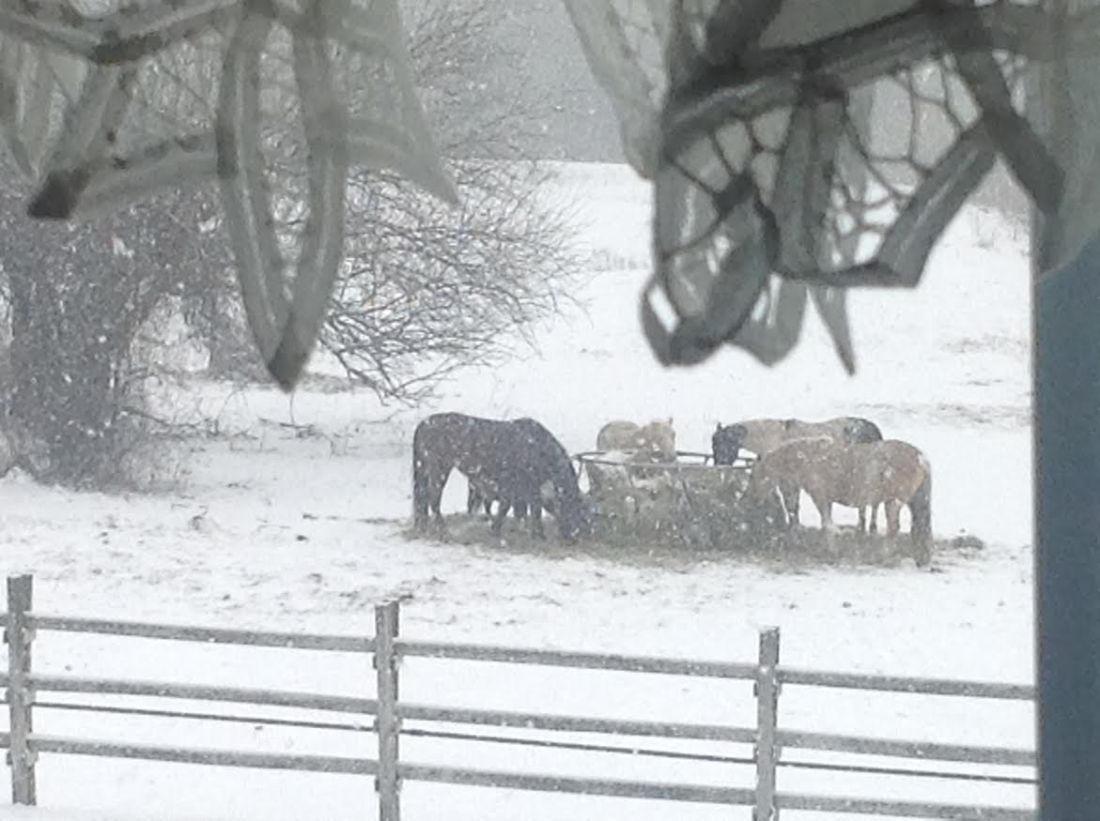
A work of fiction for Friday Fictioneers.
About three years ago, I was thrilled when I finished writing an entire novel. I had great expectations for it. It didn’t see the darkness of the press or sit in bookstores where fans cradled it and smelled the fresh print, as I had hoped. But it’s on Inkitt.com, and that’s better than it being locked inside my cupboard. A few days ago, I got an email from Inkitt about a new contest called the Teaser Awards. It’s pretty straightforward: I have to write a 200-character teaser for my novel.
Fun, I thought. It would be a great way to persuade people to read my story. I needed more readers because most of my cheerleaders (immediate friends and family) didn’t even get past the first chapter. It’s not because the story was crappy, (I checked), but other pressing stuff came up. And with this teaser assignment, I thought I’d use my creativity to re-ask my friends and family to give my novel a second chance.
I sat down to write.
Three years was a long time ago. Of course, I know every scene almost by heart, but when I had to drill it down to a 200-character teaser, I got stuck. Not that I had so much to say and didn’t know what to pick, but because I had nothing at all to say. All of a sudden, the story I spent hours pondering on and nurturing, didn’t seem interesting enough. I tried digging my memory for something worth talking about, and it was as if my story was worth nothing. I didn’t have adrenaline pumping action, no sword fights, no heated arguments, not even a trace of romance. For fifty chapters, I had rambled on an on about a normal girl going about her normal life. I didn’t know what to say in my teaser.
I panicked. If I couldn’t find excitement in the story, myself, how would anyone else find it? I was so shattered I couldn’t work on my teaser anymore. I gave it a break, a day. Then it hit me: perhaps that’s why my family couldn’t read the story. Because there was nothing interesting about the everyday life of a teenager.
It was a depressing revelation, because when I wrote the story, I thought I’d made it as relatable as possible. A handful of readers told me they got bored after the first few chapters, but again, folks who did manage to read the whole story told me they loved it. (Well, not “I loved it” verbatim, but most of them said things like, “great work.”) And now every time someone tells me I’ve done a decent job, I can’t help my widening lips, my glowing face, and my joyous swelling, heart.
That’s how it is: You’d never know how others would react to your stories. There will always be mixed feelings and varied reviews. Some would like your story, some would hurl at it. Some give you constructive feedback, some would just throw unhelpful opinions. Variety is the essence of life. And it’s also the curse of writing.
I did rework my teaser to this:
What if you don’t know your calling? You’d try to figure it out, making decisions you’d regret – or love. You’d break your heart a few times, too. Until one day, you’ll succeed and all will be well.
If you think it works, you can read the story here. I would appreciate your feedback, whether good and bad.

