Aftermath of a Challenge

One morning a couple of weeks ago, I sat in front of an open document, fingers poised over my keyboard waiting for the words to flow.

They didn’t.

I was stuck. I didn’t know what to do. I sat there for about an hour before deciding to do something else. I browsed through The Daily Post looking for ideas when I found the section on blogging challenges.

It couldn’t hurt, I thought and dove in. The first challenge that interested me was the Incredible Blogger Marathon Challenge. Now that is one good title. It triggered my curiosity and piqued my ego to just the right level. I wanted to be that Incredible Blogger. And a posting marathon is a challenge I could take.

incredible-blogger-marathon-challenge

I took it. It was a ten-post challenge, but I could take up to 15 days to complete it. I challenged myself to publish a post a day and finish the challenge in ten days.

The next two weeks was one of the best spells I’ve had in my blogging experience. It wasn’t easy as eating pie. It was as complex as baking one myself. But it was great fun. I had to think in ways I hadn’t done before. And the weirdest thing is that I had to first explain to myself how I felt about certain topics, before giving words to my thoughts.

It warped my head, but it gave me something to write about every day. It kept me going, even if I didn’t want to.

And now, it feels wonderful when I look back. It forced me to explore a whole new area in writing and I’m glad I took the challenge.

Have you ever taken up a blogging challenge? How did you feel afterward?

Coping with Thanksgiving

“In light of recent world events (the election of Donald Trump), many Americans are facing a particularly daunting Thanksgiving dinner with relatives who voted differently on Election Day, and may be in need of a lighthearted activity to reach across the aisle. Here are some art projects to help you and your family work through your feelings and heal political divisions — if only for an hour or two.” Source

It’s weird that the world has come to this. Thanksgiving was always a fun holiday, but it was also always a nightmare for folks who don’t get along with their folks. And that’s a lot of people.

In the same way, the US election has had the world — and the US, of course — divided beyond recognition. With red and blue flags waving all around, some people standing with her, yet some others vouching to make America great again, I’m pretty sure Thanksgiving isn’t the most anticipated holiday right now. And it’s understandable too. After all, I wouldn’t want to talk about politics with my family. Or talk about anything at all, if I could.

But times are blue and red has taken over. So how would you deal with a whole day locked up in a room with people you don’t like, stuffing yourself with stuffed turkey? Alanna Martinez from the Observer (quoted above) says you should do some craftwork together. It builds teamwork and can keep you from raging into a political debate, she says.

I agree. Crafting is a nice activity and it would make the day all the more bearable. But here’s what I don’t understand: why have we come to a situation where we need art to keep our mouths shut?

Sure, art soothes your soul, calms your nerves, and helps you dial down your tone when speaking to the uncle, twice removed. But as a humanities student myself, I can say that the Arts are a way of life, and not something you do when you can’t find an alternative coping mechanism.

In this piece, the author explains a few specific “Thanksgivingy” crafts which, I think, are all great. What I can’t agree, though, is that we need a reason—president-elect Trump in this case— to make these crafts. People should turn to art because they like creating art and not just because their therapist told them to. Proud though I am that therapists recommend art, it’s still an insult to us who’ve been insulted our whole lives just because we spend our lives on arts.

I’d share this article with my friends, I’d tell them it’s all true and that making these crafts together with their families would make Thanksgiving more like giving thanks than giving sparks. However, I still believe that by limiting arts and crafts to such petty issues, we limit the potential of art itself. We don’t need art as a temporary stress buster. Art for the sake of art — that’s what we need more of.


incredible-blogger-marathon-challenge-7I’ve signed up for the Incredible Blogger Marathon Challenge. It’s a ten-task-challenge that can span up to fifteen days. This post is my response to the seventh day: The News and Paper Challenge. The challenge is to discuss my views on a news article.
Making the Meaningful Meaningless

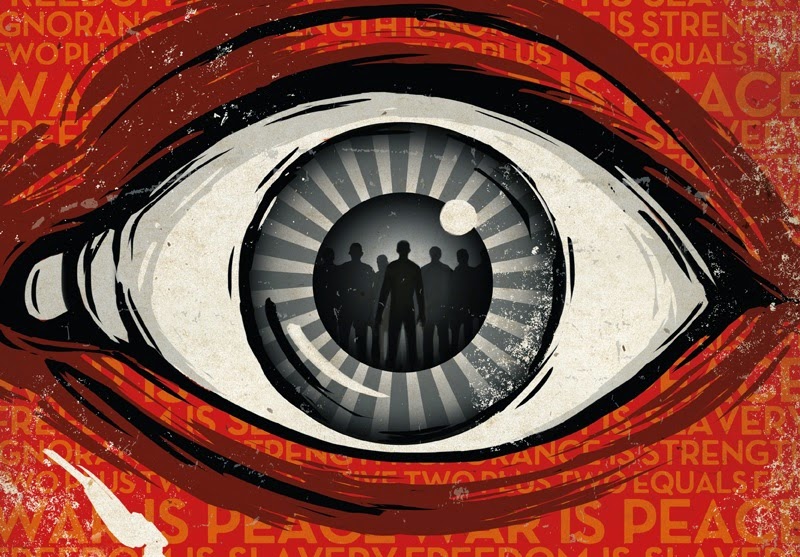
So many of my friends had told me about the wonderfulness that’s 1984. The book, I mean.

big-brother-1984

I, however, never had the chance to read the book, until now. I started reading it a while ago, and as much as I’d love to get through it in one sitting, reality keeps distracting me. Nevertheless, every chance I get, I try to sneak in a page or two in the least. And with every page I turn, I turn over a new perspective.

I haven’t even crossed a hundred pages yet, and yet every statement hits me hard in the face making me glad I’m not in 1984. To say that Orwell has a way with words is an understatement. He twists and warps simple words to suit his needs and instills fear and aversion in the reader.

As a lover of words myself, when I took in words that claimed it was a beautiful thing to destroy the words themselves, I felt my deepest horrors renewed.

After all, what justification is there for a word which is simply the opposite of some other words?

That’s a way of looking at words, unlike any way I’d come to accept. Words, for me, are not just means of expression but also means of expression in every wild way imaginable. It’s wonderful that we have so many different words describing the same thing; it’s what gives rise to rhyming words and rhythmic prose and just plain readable writing.

In the end the whole notion of goodness and badness will be covered by only six words — in reality, only one word. Don’t you see the beauty of that, Winston?

I don’t. I don’t see the beauty of it, and instead, I see only the barrenness of it. What’s the point of communication if you can’t communicate as you’d like to? If we could strip down the English language to a mere handful, then that would become the end of human interaction. We’d speak to convey messages and not ideas. We’d talk sense but wouldn’t talk from our senses. We’d think we’re free to speak, without realising we’re free from language itself.

The book throws terrifying ideas. It outlines everything that could go wrong with the world, and everything that could happen as a consequence. And shocked though I am, it makes me want to keep reading.

To Visit or Not to Visit

I love my parents. Well, who doesn’t? They raised me all these years, taught me what’s good and what’s not good, tried to teach me to make my own bed, and even instilled in me some values of cleanliness. They are the best parents I could’ve ever asked for, and I even considered giving my dad a “World’s best Dad” mug for his sixtieth birthday—which is all so normal and obvious.

That’s what parents are like; sweet, caring, nurturing, and deserving of our affection and compassion. Nothing wrong with any of those things.

All these aside, though, I still have second thoughts about visiting my parents. I can’t stand the thought of them looking up and down at me with crinkled eyebrows, and commenting I’ve lost far too much weight. I cringe to think of spending two days trying to endure their manipulating talks about saving up to build a house, gaining weight so I look my age, and not cutting my hair any shorter. Home for me is just a weekend of torture.

Is it just me, I often wonder.

And I realise it’s not just me. Most of my friends are like me: Dreading visiting parents. But then I spoke to another colleague. She loves to visit her parents. She plans her weekends in advance and allocates time for everyone that matter to her. She’d set up a movie date with her mother, a dinner with her schoolmate, and a tiny lunch party with the entire family. And when she comes back from home, she’d be downcast for a couple of days in the least.

It was a wonder to me.

And then I realised I don’t hate my parents. Despite being reluctant to visit them, I still care for my parents. So much so that I’d call them up to ensure they take their medication on time. I love spending time with them. I love the little chats my mother and I share while we make a mid-day meal. I cherish holding my dad’s hand while we walk to the grocery store. I crave for those moments when I catch up with their stories, smile at their weak attempts at making jokes, and even when I help them navigate the technology I have trouble with myself. I value those little hours we spend for each other. Nevertheless, every time I enter the house, I also look forward to leaving.

People talk so much about parenting, the rules, and best practices of being a good parent. But not enough people realise the challenges of being a daughter, a child. It pains me to yell at my mother who calls me at work because she’s bored at home. How would I tell her to do something for herself, something she’d enjoy doing (other than talking to me)? That is, alas, a question no one can answer. Good “daughtering” is all about finding the sweet spot between spending too much time and too little time with your parents. And I’m still looking for it. Any advice? Please shoot.

Striving for Simplicity

Heard of the phrase, “Easy reading is damn hard writing”? It’s too familiar to miss. But here’s something (and different altogether) that you may have missed: Simple living is expensive.

Before you think Gandhi, think of the last time you browsed online for a pair of flip-flops. I last did it last night. A solid black rubber flip-flop costs INR 700 ($10) while a fancy, multicoloured, studded pair of women’s footwear costs INR 300 ($4).

True story.

Maybe it’s just footwear I thought, moving onto tee shirts. Again, the plain ones cost more than the printed, designed, and layered ones.

I didn’t understand the difference in pricing. But it’s a fact: Being simple is expensive. And the weird thing is, it shouldn’t be this expensive at all. Look at Gandhi, for instance. That man symbolised simplicity, and it doesn’t look like it cost him much. Except, perhaps, the initial cost of the spinning wheel. Nevertheless, he taught the world that minimalism is simplicity and less is more. And yet, despite all the history and the lessons, it still costs me double to buy simple clothes than it does to buy flashy clothes— or even footwear. Less is more, except in pricing.

I blame Gandhi. He made simplicity the new cool. It’s the trend, the hip, the new classy. Nowadays more and more people prefer classy over glossy. Everyone wants to look minimal. Everyone runs towards a “simpler lifestyle.” And to wear something flashy in the presence of the “minimalists” is uncool and unacceptable. And if the cost of being accepted is a few extra notes, people will pay.

So because the modern lifestyle is the simple lifestyle, brands seize their opportunity. They make simple-looking products, give it a clean finish, and put a hefty price on it. And because simplicity is now synonymous with classy, and classy is synonymous with expensive, anything flashy becomes trashy and cheap. And all this I realised when I saw that cheap-looking footwear had a pricier tag than sleek-looking footwear.

As for Gandhi’s simplicity, it’s a goner, just like the advocate. Simple, now, means expensive brands, single-coloured clothing, and fancy converse. The more expensive your attire, the more casual you appear, and the more casual you look, the classier you feel. Actual casual is now a casualty.